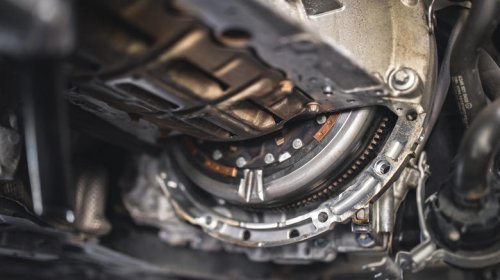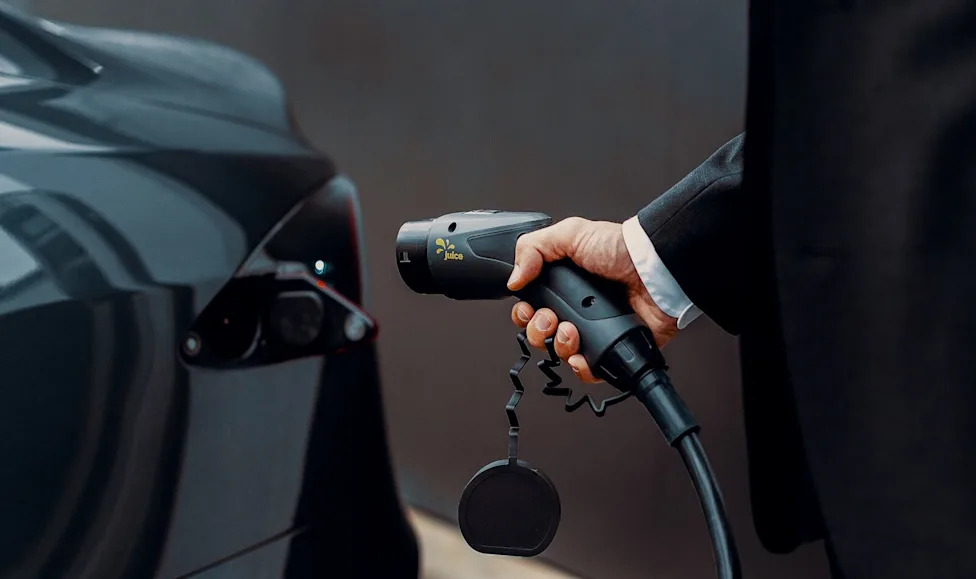


























If you're at the right legal age to finally drive and acquire a license, you're probably evaluating what's a great car to practice honing your driving skills. For reference, I'm 30 years old, and if you're younger than me, there's a high chance you've never learned how to drive a manual transmission. That's a bummer from a car enthusiast's perspective, but if all you want is to learn how to drive as a means of getting around, then learning how to drive an electric vehicle (EV) is a great way to gain confidence behind the wheel.However, while learning how to drive in an EV is mostly a great thing, it also means missing out on certain skills and mindsets. At best, the student driver should still experience driving an internal combustion engine (ICE) car. Here's why EVs are great for student drivers, but also the possible challenges of learning how to drive in a silent vehicle with instantaneous power.To give you the most up-to-date and accurate information possible, the data used to compile this article was sourced from various manufacturers and other authoritative sources. Why EVs Are Great For Student Drivers William Clavey | TopSpeed To my fellow '90s babies, I'm confident that all of us at some point struggled to get a manual car moving. The thought of doing a balancing act in the clutch so that the engine wouldn't stall was already hard to grasp in our high-strung minds as we went through puberty. Automatic cars took that away, but in an EV, oh boy, instant gratification is a real concept these days. Simpler To Drive Than Any ICE Vehicle Noah Washington In an EV, the concept of getting up and going couldn't be any more real. Most EVs have smart entry with push-button start, while an increasing number of EVs are even ditching the startup sequence altogether in favor of simply starting up the moment you shift to Drive. An EV isn't a manual either, so you don't have the mental gymnastics required for managing a clutch.Also, the lack of engine noise sometimes makes things even more straightforward. Most people aren't car enthusiasts anyway, and as kids, they've most likely been in one of those bump cars at a local theme park. The shift from those kinds of amusement park rides to an EV will most likely be less jarring and will form a perception that EVs are going to be toy-like to drive. The only thing that will be new to these drivers will be an EV's available one-pedal driving mode. It's a feature that they don't have to learn immediately anyway, so this feature shouldn't be a problem. It Can Make Student Drivers Confident William Clavey | TopSpeed Student drivers often have a challenge with merging, but an EV can make such drivers confident with highway merging due to the instant torque an EV provides. Simply stepping on the throttle will give you instant gratification, without the need to plan your merges, since there's no more downshifting from a multi-speed transmission or a power build-up from an ICE. It's pretty much the same case with overtaking at two-lane roads, where an EV's instant torque won't require as much mental planning as when a student driver handles an ICE car with plenty of gears to deal with.Furthermore, an EV also has more ground-hugging handling, mostly due to its batteries, making it more stable around corners. They're not light cars, though, but today's electric power-steering systems make vehicles lighter than they are to maneuver, thus masking the weight of most cars anyway, at least from your fingertips. As a result, you'll probably feel more confident tackling corners at higher speeds with an EV than with other vehicles. However, The Challenge Lies With Usability Tesla Unfortunately, driving an EV is different from operating one. That's because, as automakers try their best to make EVs seem so futuristic and out of this world, this has led to an unnecessary amount of reinvention of vehicle controls we've become familiar with in the past century. Don't Fix What Isn't Broken Tesla The textbook example of this is Tesla, because its cost-cutting measures disguised as minimalism have reinvented the controls of its vehicles, for better or worse. For one, the controversial move to remove any semblance of stalks on the Model 3 has sparked internet debate. Though the Model 3 remains popular since it's America's best-selling electric sedan, it's still hard to tell if the brand's continued sales decline worldwide is also due to the brand's ergonomic choices.The removal of the stalks also meant that its PRND controls have now been moved to the infotainment system or to the overhead console if the touchscreen fails. Imagine telling a high-strung teenager this control layout, especially if they've been raised in a household with a car that has a traditional gear lever, and this will surely give them initial intimidation about operating the Tesla. Take note, however, that this isn't limited to Tesla. Pretty much any automaker making EVs has decided that making the driving controls more confusing is a worthy compromise for a supposedly futuristic driving experience. Charging Isn't As Straightforward Hyundai Teaching a student driver or a teenager about charging is more complex than teaching them how to fill a car up with gas. That's because, unlike fueling a car, which is pretty much consistent, whatever the gas pump or the vehicle type. Charging, on the other hand, is more complex.First, you'll have to deal with the various charging companies, and their payment schemes aren't even common across all of them. Also, chargers come with varying outputs, while the charge rate an EV can accept also varies. Oh, and there's DC and AC charging, too. Confused? Well, thankfully, we've got a handy guide; read it, and you'll learn the optimal way to charge an EV. Besides, if you do have a home charger, you'll barely be using public chargers anyway. Yes, EVs Are Great For New Drivers Overall, the pros of learning how to drive an EV outweigh the cons. That's because all of its cons are mostly due to their possibly confusing ergonomics, which are highly dependent on the brand anyway. Finally, charging is a matter of lifestyle change, and once new drivers understand our guide to optimal EV charging, this should eventually be second nature, whatever the EV you own. Get An EV With Balanced Power TopSpeed | Michael Frank If you're a newbie driver or planning to buy an EV for your teen who's ready to drive to college, opt for an EV that comes with just the right amount of power. It's also worth looking into the used car market, because as we've learned over the past years, EVs depreciate faster than ICE cars. Also, an older EV, while not as sophisticated as today's models, will have interiors that are often less polarizing and easier to operate.But if you're thinking of going brand new, check out the 2026 Nissan Leaf. The base S+ offers the most range at 303 miles, all for under $29,990. It's therefore the cheapest EV in America, and the cheapest 300-mile EV in America. At 214 horsepower, it isn't too powerful, but it also isn't sluggish, either. Besides, an EV's instant torque for overtaking and increased stability due to the batteries lowering its center of gravity should help newbie drivers gain confidence in handling this car. Lastly, with an NACS port, charging the new Leaf should leave your teen with the least mental gymnastics in dealing with the various charging operators across the country. This EV Is Also Great For Usability Nissan Lastly, newbie drivers shouldn't be relearning old habits, and with the 2026 Nissan Leaf, this vehicle's interior isn't too polarizing from an ergonomics perspective. Instead of some weird joystick or rotary knob to control the gears, the Leaf has a more straightforward PRND button arrangement on its dashboard. The electronic parking brake simply automatically activates and deactivates, so that's another driving component that you don't need to think about anymore. As far as "normality" goes, the Nissan Leaf is one of the least polarizing EVs to learn how to drive, and it's a vehicle that should be on your shortlist if you're a first-time car buyer in general, or you're buying it for your teen driver.