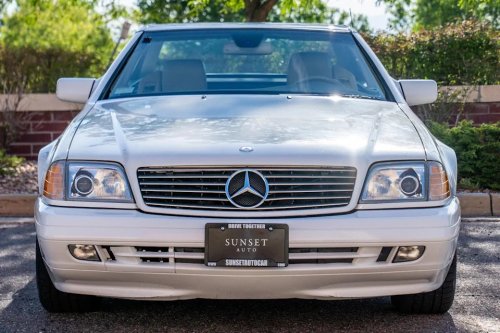
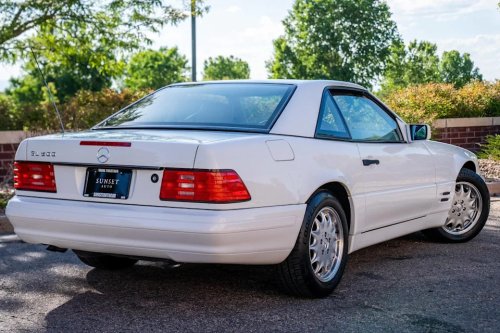
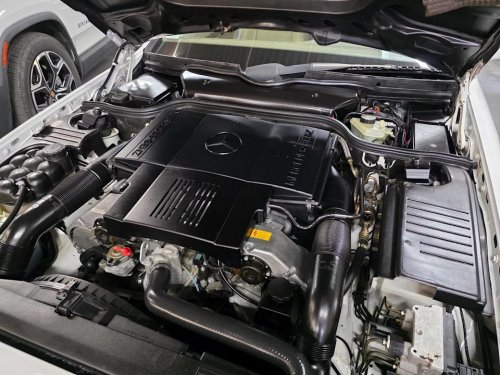
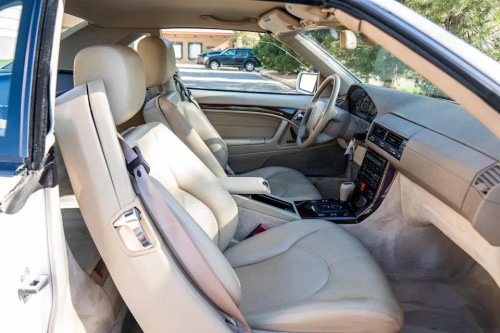
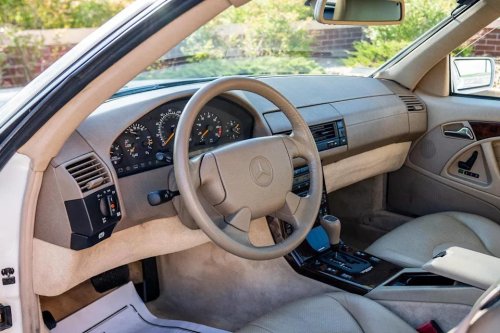
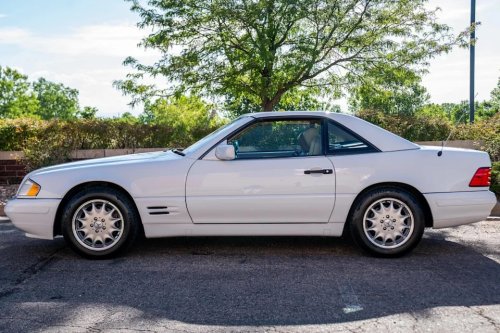
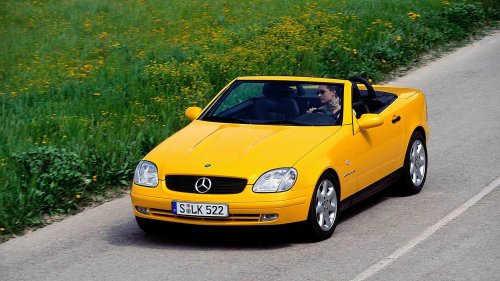
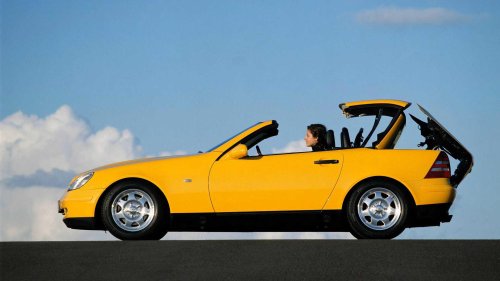
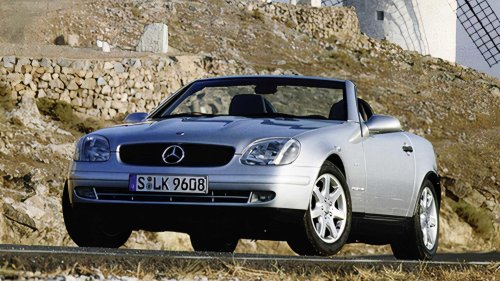
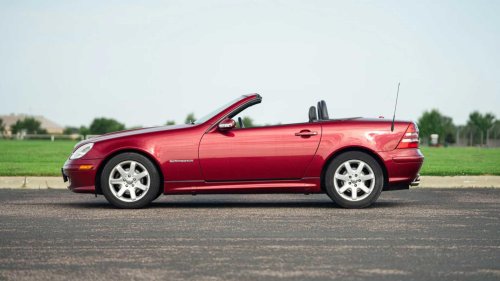
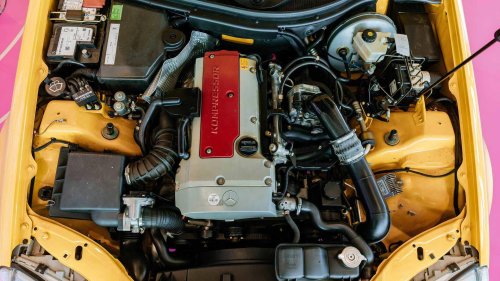
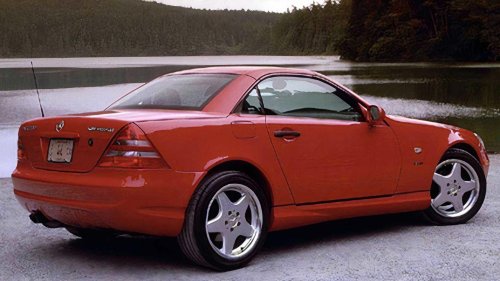
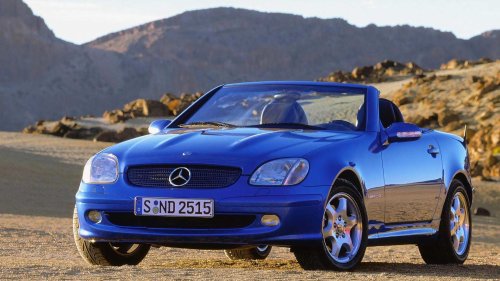
These days, purchasing a new Mercedes-Benz convertible will give your bank account a proper bit of exercise. The very cheapest is the 2026 CLE Cabriolet, but even this will set you back a shade over $68,000. The sportier SL model is only available in AMG form, which means you'll have to hand over north of $112,000 to have one on your driveway. As a result, the best way for most gearheads to get one is by trawling the used market.One of the most affordable is the first SLK model, the R170 generation. Tidy examples with different engine options can be had for around $10k, making it a very tempting proposition. It is a full-blooded Mercedes after all, and you'll save a juicy $100k by not having to fork out for a sporty modern version. Mercedes Launched The SLK During The '90s Roadster Boom Mercedes-Benz Following years of relative dormancy, the two-door roadster market went crazy throughout the 1990s. The likes of the Mazda Miata had lit a fire when it was released in 1989, with the Japanese hero selling like hot cakes. Rival brands saw dollar signs, and soon got to work building rivals to try and secure a slice of the market. Alfa Romeo cooked up the stunning Spider, BMW cooked up the Z3, and even Porsche got involved with its Boxster.These were just some of the options on the table, and Mercedes wasn't interested in missing out on this potentially lucrative opportunity. It therefore developed its own entry to the market named the SLK. The SLK Proved To Be A Success For Mercedes Mercedes-Benz Mercedes' new drop-top was built to be light and sporty, hence its name. SLK stands for 'Sportlich, Leicht, and Kurz (Sporty, Light and Compact in German), and was aimed at the likes of the Boxster, Z3 and Audi's upcoming TT model. Like these other models, the SLK was designed to be more of a quality product, as opposed to cheaper convertibles like the MX-5. This was partly illustrated by the SLK's advanced roof arrangement, which was called the Vario-Roof. This was a two-part steel design that folded electrically into the trunk, which allowed for two different machines.When down, the SLK was a two-door roadster that could be used to get the wind flowing through your hair, while when erected, the car morphed into a refined hard-top coupe. This combination proved popular, and Merc consistently shifted north of 50,000 SLKs worldwide per year. The SLK was arguably the car that brought the retractable hard-top mass market, though despite this, they're surprisingly affordable in the current used market. A Range Of SLKs Are Available For Around The $10k Mark Mercedes-Benz The good news is that you'll only need a relatively modest budget of $10,000 to be able to find a tidy R170 SLK example with good mileage. There are three main models you can get for the US market, with the most prolific being the SLK 230 Kompressor. This boasted a 2.3-liter supercharged inline-four, and was produced between 1996 and 2004. Also on the market at this budget are the larger-engined SLK 320, which has a 3.2-liter V6, and supercharged 3.2-liter V6 SLK 32 AMG models. These variants were introduced later, and were available from 2000 and 2001 until 2004, respectively.Getting an SLK 32 AMG is trickier at this price point, and you'll have to make do with a car with around 100,000 miles on the odometer. SLK 230 and 320 models are more realistic, with various examples of the latter available with less than 100k on the clock at this price, but nowhere near as many as the former. Of course, there's nothing wrong with buying a car of this age with over 100,000 miles, but you'll need to make sure all the technical bits have been taken care of over the years. Look out for a comprehensive service history, as this is a good indicator that the car has been cherished. SLK 230s Offer The Most Realistic Entry Point At This Price Bring A Trailer The SLK 230 doesn't offer quite as much pace as its bigger-engined siblings, which means it sits lower in the value pecking order. These are by far the more plentiful models at the $10k mark, with plenty of examples with under 100,000 miles waiting on the market for a new owner for less than this. Bear in mind you get that cool steel folding roof, cruise control, a leather steering wheel, and a Bose sound system for this outlay, and the SLK looks like a pretty good deal.Post 2000 cars present a facelifted design that better reflected Mercedes' future aesthetic direction, but also introduced more comfortable seats, as well as a larger fuel tank. Find one from 2001 and after with a manual, and you'll have a six-speed at your fingertips rather than the five-speed unit available with older examples. The SLK Boasts Respectable Performance Mercedes-Benz If you opt for the SLK 230, the supercharged I4 engine sends 192 horsepower the way of the rear axle. The V6-powered 320 and 32 AMG versions produce 215 hp and 349 hp respectively, making them more suitable for those after a thrilling drive. While the 230 Kompressor can clear the 60 mph barrier in around seven seconds with either an automatic or manual gearbox, the 320 can get the job done in 6.6 seconds with either option. The SLK 32 AMG is only available with a five-speed automatic unit, though its extra grunt means it can blast past 60 mph in 4.8 seconds.These figures put it in a similar ballpark to the likes of the Porsche Boxster when it came to power, and generally ahead of the Z3. Mercedes' Entry-Level Convertible Wasn't As Sharp As Its Rivals Mercedes-Benz While the SLK could compete with the competition in a straight line, it wasn't quite so capable in the bends. It came with an advanced independent suspension configuration front and rear, though it was tuned to try and capture some form of smoothness to make it a decent cruiser as well as provide a relatively sporty drive. The compromise meant it didn't excel in either arena, and left it in a strange middle-of-the-road setting where it wasn't as agile or engaging as its rivals, but nor was it that comfortable either.This characteristic was further fed into by its vague recirculating-ball steering setup, which lacked the feel of its rivals' more modern and engaging rack-and-pinion designs. Plus, that steel roof may have looked cool and provided a more refined experience when up, but it also added considerable weight to the car. This blunted its handling even further, especially when compared to challengers like the Boxster and Z3. The SLK May Have Been Successful, But That Didn't Save It From Criticism Mercedes-Benz Its compromised handling meant that it was better as a poser's car than the sporty and light machine Mercedes marketed it as, especially considering it was up against several rivals that offered a much more engaging drive. This may have been OK with larger drop-tops angled more towards being comfortable cruisers, but this end of the market demanded a car that was fun to drive above all else, and the SLK came up short. The hardened SLK 32 AMG was better in this regard, but it still lacked poise when compared to the Boxster S, which was also $3k cheaper.Arguably, the bigger issue with the first-gen SLK was its various quality problems. The late 1990s signified a tough period for Merc when it came to the quality control of its models, with the brand moving towards cheaper steel and interior materials to try and save on operating costs. SLKs of this vintage suffer from body corrosion due to this sub-par steel, while the cabin furnishings are much more likely to break than their predecessors. These reasons are why the R170 hasn't held its value particularly well over the years, but they're still a great avenue to explore if you're after a drop-top with a good badge.It is also mechanically solid, with the four and six-cylinder engines both being robust when properly looked after, and the same can be said about the transmission options. Just don't expect it to handle like a light and agile sports car, as you'll be left disappointed. If this bothers you, then you can have a Boxster S for very little in 2026.Sources: Mercedes-Benz.


















 +27 others