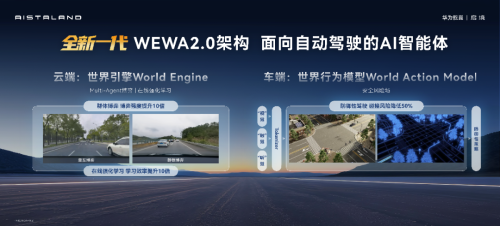
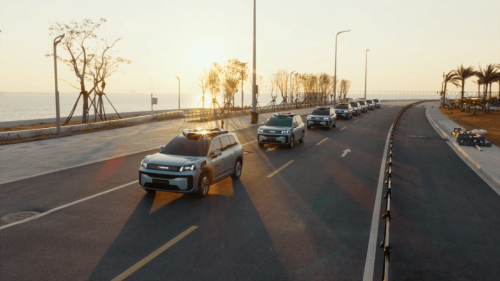
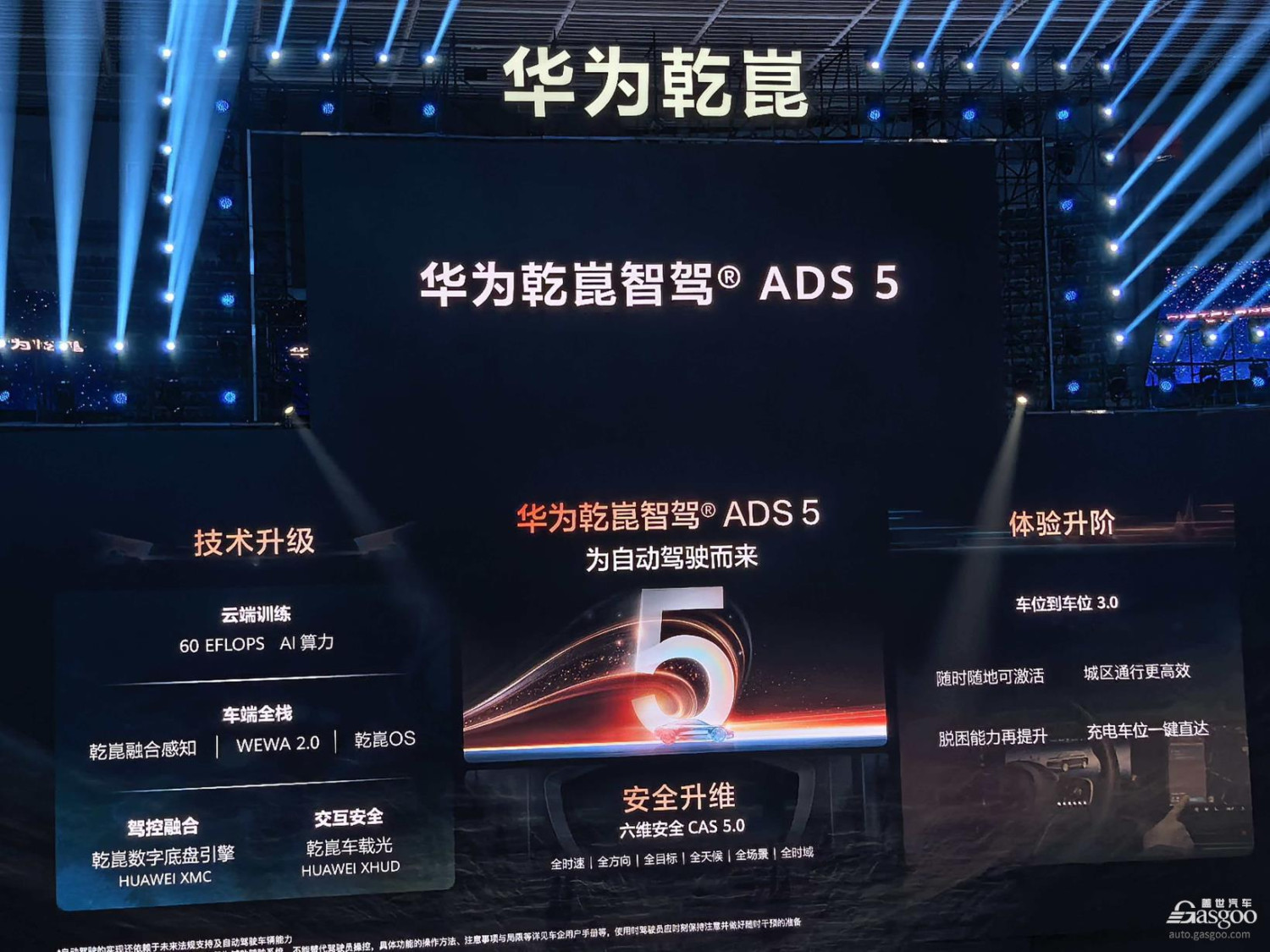
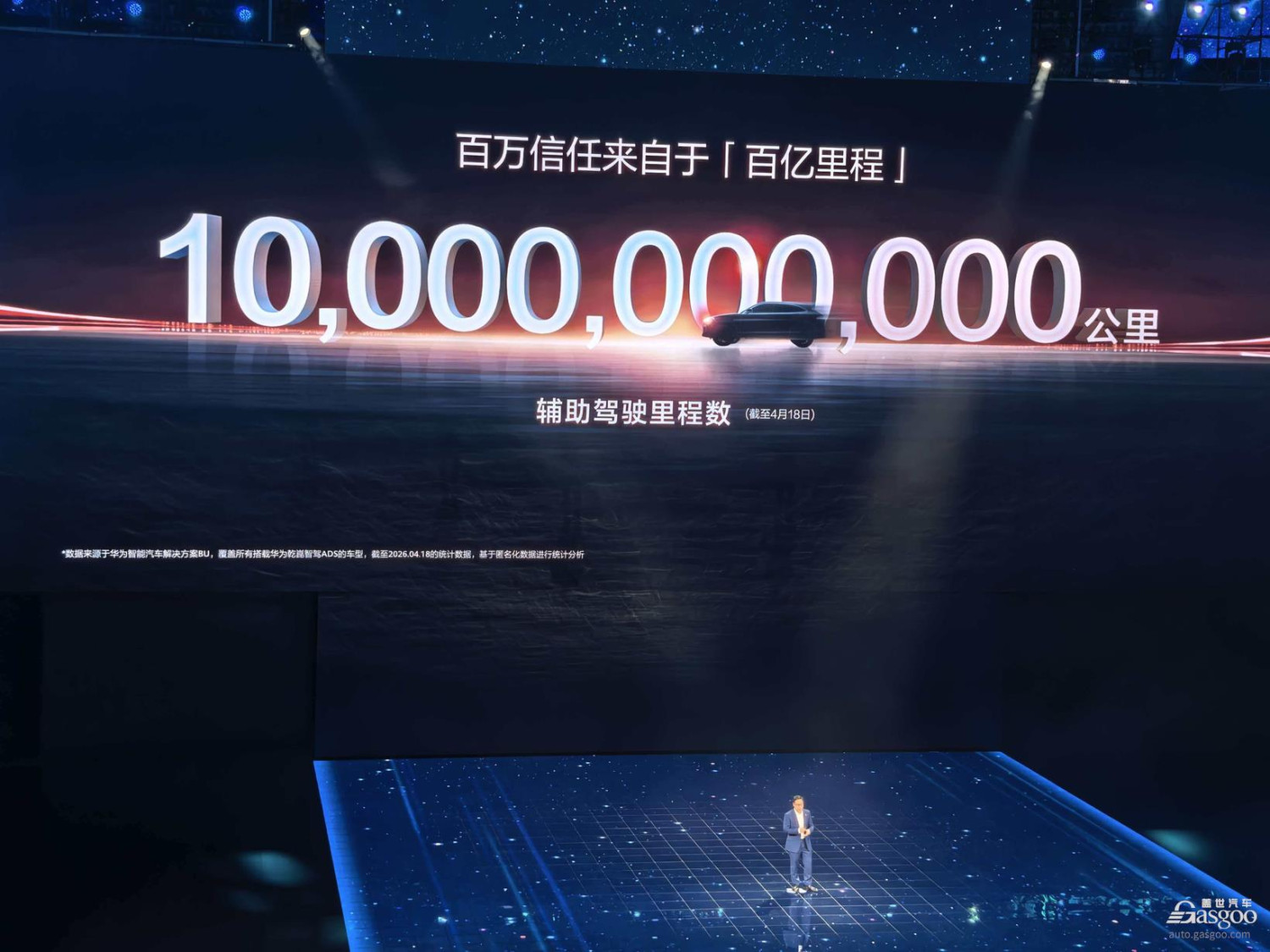
Gasgoo Munich- As the global auto industry stands on the threshold of mass commercializing Level 3 autonomous driving, the debate over the route to the finish line has never been more intense.On one side, the pure-vision faction continues to drive down hardware costs; on the other, mainstream domestic automakers are flocking to a multi-sensor fusion approach combining LiDAR and high-definition maps. At the algorithm level, two distinct paths—VLA (Vision-Language-Action) and World Models—remain locked in contention with no clear winner yet. Meanwhile, policymakers are gradually rolling out conditional access licenses for Level 3 models, while mandatory national standards are accelerating toward implementation.At this sensitive juncture where technology, market forces, and regulations intersect, Huawei's Qiankun division held its annual technology conference on the eve of the Beijing Auto Show. The briefing went beyond a mere stack of product specifications. Instead, centering on the themes of safety and system architecture, it offered a systematic answer to how Huawei views the next phase of autonomous driving: it is not about a single algorithmic breakthrough or a trade-off in hardware costs, but a full-stack reconstruction spanning everything from cloud training to on-vehicle execution, and from operating systems to safety philosophy.A Technical Reconstruction for Autonomous DrivingThe release of Huawei Qiankun's ADS 5 intelligent driving system is, in itself, a commercial signal worth pondering. Jumping directly from ADS 4.0 to ADS 5.0, Huawei opted for a generational leap. This decision was far more than an isolated version number change; it was a strategic choice calculated around diminishing marginal utility, positioning for mass-market branding, and seizing a narrowing policy window.Image Source: GasgooAt the foundational technology level, ADS 5 has evolved into an AI agent designed for autonomous driving.The cloud-based World Model introduces a multi-agent gaming mechanism for the first time. Where artificial intelligence previously faced "NPCs" governed by preset rules in virtual environments, these opponents are now endowed with AI reasoning capabilities. Combined with sudden road conditions, this allows for adversarial training across a far wider range of possibilities, boosting training intensity by 10 times. Simultaneously, the WEWA2.0 architecture employs an online reinforcement learning approach of "generating, learning, and verifying simultaneously," lifting training efficiency by another 10 times. On the vehicle side, the World Behavior Model incorporates safety risk field theory for the first time. By quantifying kinetic, potential, and behavioral fields in the environment, it generates dynamic risk heatmaps to guide defensive strategies, potentially reducing collision risks by 50%.Notably, Huawei simultaneously released Qiankun OS, the industry's first operating system specifically designed for autonomous driving. The system features a fully self-developed deterministic low-latency engine, a full-link zero-trust security model, and a comprehensive safety redundancy architecture. Leveraging technologies such as the Lingqu bus, its deterministic scheduling engine reduces in-vehicle signal latency by 30%, ensuring that low-latency tasks—like responding to sudden cut-ins—are executed promptly.From algorithm architecture to operating systems, and from cloud-based gaming to on-vehicle risk fields, Huawei has built a complete closed loop around ADS 5 spanning virtual training to physical execution. The direction is clear: to make full-stack preparations for the imminent arrival of Level 3 autonomous driving.Structural Upgrades to the Safety SystemIn a market environment where technological stacking is accelerating, Huawei placed safety at the absolute core of this launch—a shift that serves as the most direct response to industry pain points.Over the past year, public debate over intelligent driving accidents has remained intense. From accident liability to system reliability, user distrust has not dissipated in tandem with improvements in technical specifications. Against this backdrop, ADS 5 has evolved from "five-dimensional safety" to "six-dimensional safety" by adding a "full-time domain" dimension. This marks an extension of the safety system backward and forward from "the moment of collision"—the significance lies not merely in the added dimension, but in Huawei's redefinition of the spatiotemporal boundaries of safety.Specifically, the original five dimensions—covering full speed, full direction, full targets, all-weather conditions, and full scenarios—have all received targeted upgrades. The new "full-time domain" dimension extends safety to pre-incident prevention and post-incident protection. Pre-incident measures include pop-up warnings for road hazards within a 5-kilometer radius, and active speed reduction at intersections and sharp curves during manual driving. Post-incident protection includes linked protection for third-row seats during rear-end collisions, blowout stability control assist 3.0, and driver incapacitation assist 2.0—which can guide the vehicle to a safe area, such as a nearby highway service area or toll station, to facilitate rescue.These safety upgrades are backed by empirical evidence at scale. As of April 19, 2026, the cumulative mileage for Huawei Qiankun's ADS intelligent driving system surpassed 10 billion kilometers—a milestone for the industry. At the conference, Huawei Qiankun also announced that, starting immediately, it would refresh cumulative mileage data on its official website in real-time. This practice of "basking safety in the sunlight" is a first for the industry.Image Source: GasgooHuawei plans to invest more than 18 billion yuan in the research and development of the Qiankun intelligent driving system in 2026 alone. "That is more than the combined R&D spending of all other major domestic solution providers," stated Jin Yuzhi, Huawei's senior vice president and CEO of Yinwang, at the event.From data transparency to sustained investment, Huawei is attempting to build user trust through a systematic safety architecture, rather than relying solely on single technical metrics to win over the market.Who Is Defining the Future of Autonomous Driving?Who will ultimately define the future of intelligent driving? Is it the technology suppliers holding core algorithms, the automakers possessing massive user data, or the regulators setting access thresholds? The industry reality in 2026 is that the power to define remains in flux, contested by multiple parties. Huawei's Qiankun technology conference was, in essence, a systematic manifesto in its battle for that defining power.In terms of technology roadmap, Huawei has firmly planted its flag in the World Model camp, explicitly opposing the VLA path. Jin Yuzhi has previously stated that relying on large language models to convert internet information into cognition—a hallmark of VLA—"may seem like a shortcut, but it is not the path toward true autonomous driving." Huawei places greater stock in the WA (World Action) route. The WEWA2.0 architecture released this time is the engineering realization of that technical conviction. Simultaneously, Huawei adheres to a hardware route based on multi-sensor fusion perception. Jin emphasized that "only multi-sensor fusion technology can provide safety guarantees for autonomous driving; it is a necessary condition." This stance puts it in direct collision with Tesla's pure-vision approach and creates a technological paradigm distance from automakers adopting VLA algorithms. The first battlefield for defining power is the choice of technology route—whoever proves their path is the optimal solution for mass commercialization will seize the narrative.From a commercial positioning perspective, Huawei's choice is distinct. Jin reiterated at the conference that Huawei Qiankun positions itself as an "electronic screw" for intelligent connected vehicles—not a competitor to the industry, but an enabler. Huawei seeks to intervene in the industry as an "infrastructure-level supplier," providing full-stack solutions while avoiding competition with automakers for brand sovereignty. As of the launch date, Huawei Qiankun has partnered with over 25 vehicle brands and more than 50 models, with installations of Qiankun ADS exceeding 1.7 million vehicles. The second battlefield for defining power lies in the sustainability of the business model—whether an enabler can get enough automakers to accept its technical standards without building cars itself.In terms of ecosystem positioning, Huawei is extending intelligent driving capabilities from driving scenarios to lifestyle services. ADS 5 simultaneously upgrades "Door-to-Door" 3.0, creating a "10-minute Qiankun Smart Driving Life Circle." By the second quarter of 2026, parking payment services are expected to support 300,000 parking lots, over 1.8 million charging piles will be accessible via navigation maps, and more than 3,000 car washes nationwide will support online booking. The realization of value in intelligent driving is shifting from functional experience to lifestyle services.Taken together, the power to define intelligent driving will not be held by a single player. Huawei's "electronic screw" positioning essentially acknowledges this: it does not seek to define everything, but rather aims to accumulate indispensability in three key layers—underlying technology, safety architecture, and ecosystem services.The true definer may well be the system that is the first to successfully run a large-scale, low-accident, high-stickiness commercial loop amidst technical divergence. The ADS 5 and supporting architecture released by Huawei represent a heavy bet placed on building exactly that system.Summary: A clear strategic line emerges when looking through the lens of the 2026 Huawei Qiankun Technology Conference: the competition in intelligent driving is shifting from a comparison of algorithmic parameters to an all-around contest of systemic capabilities. The WEWA2.0 architecture of ADS 5 represents a deepening push in the algorithmic dimension; Qiankun OS represents a reconstruction of underlying operating system capabilities; and six-dimensional safety represents a paradigm upgrade in safety philosophy.These elements, combined, outline Huawei's complete vision for the autonomous driving era: it does not seek absolute domination within a closed system, but rather aims to become an indispensable infrastructure-level presence in the era of intelligent connected vehicles through systematic breakthroughs in key technological links. Clearly, for the imminent mass commercialization of Level 3 and the potential launch of Level 4 pilots, Huawei has already established a fully formed forward position.


















 +65 others