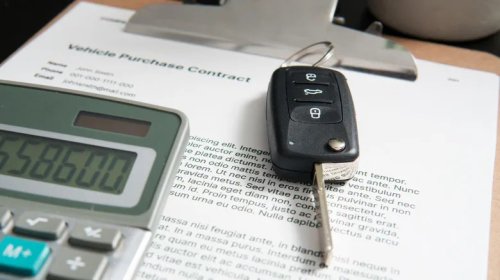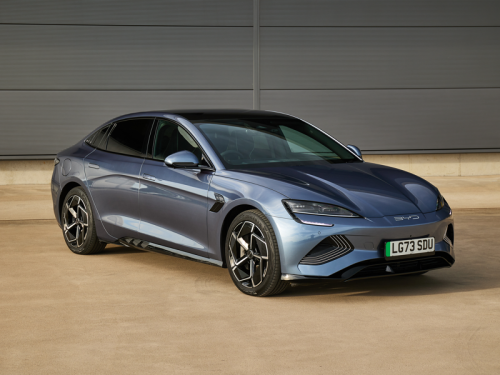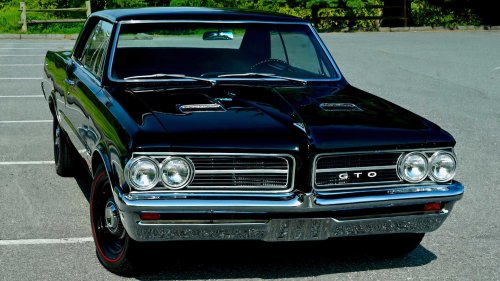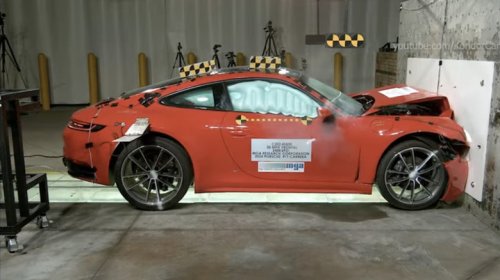



















Some readers may recall Dinah Shore singing, “See the USA in your Chevrolet.” It was the 1950s and Americans were discovering the allure of the open road. Back then, families would all pile into the car and go for a ride on Sunday afternoon. Picnics on red and white checked blankets were spread out by the side of the road. Deviled eggs and tuna fish sandwiches from wicker baskets were de rigueur, as was a large metal cooler with your favorite soft drinks on ice — red for Coca-Cola, blue for Pepsi. You could drive a brand new automobile off the lot for under $2000, although an AM radio was extra and push buttons had yet to be invented. If new cars were cheap then, used cars were even cheaper. I bought a used 1973 Honda Civic during the first OPEC gas crisis for $1500 and drove it for three years before selling it for $900. In the 90s, I bought a used Saturn SC2 coupe for $1200, scored 4 used tires with plenty of tread on them for $50 on Craigslist, and took the car to a track day event at Watkins Glen. After flogging it around the race track for two days, I drove it for a year and sold it for $2000. Inflation being what it is, that $2000 of yesteryear is now $20,000, so you would think car dealers would have lots stuffed with $20,000 automobiles, but you would be wrong. In fact, there are only four models selling at that price in America today. The average price of a new car in the US now is right around $50,000. Before anyone fills your head with some Grade A baloney about how electric cars are driving up the price of new cars, there are lots of EVs available for less than that, even before all the haggling begins. Double The Rate Of Inflation So what happened? Why do new cars today costs double what they should if they just kept up with inflation? Therein hangs a tale, as Shakespeare might say. If you listen to Faux News, you may think it is all because of those dirty government bureaucrat bastards mandating more stringent fuel economy and exhaust emissions standards. While there is some truth to those allegations — my Cadillac Eldorado got 8 mpg — the truth is that cars today are loaded with accessories that cars back then did not have — automatic transmissions, air conditioning, 300 watt sound systems with 23 speakers, sunroofs, heated and cooled power seats — some with a massage feature — power windows and door locks, and dozens of computers. Oh, and one more thing. Cars today are a whole lot better at protecting passengers in a crash thanks to government imposed safety standards, seat belts, and air bags. Here’s a fairly graphic example. Government overreach in action, you might say. The Affordability Issue In an opinion piece for the New York Times on April 13, Clifford Winston, an economist who specializes in transportation and microeconomic policy, addressed the affordability issue, which he claimed affects lower income families the most, as the price of used cars has ballooned. “For anyone on a budget, an aging car is a trap,” he wrote. “Auto repair costs jumped 15 percent in the last year alone, driven by the complexity of modern sensors and labor shortages. An average trip to the mechanic now costs roughly $840, an amount that around 40 percent of Americans likely could not cover with cash they have on hand. “When faced with a costly repair, many are forced to choose between paying to fix their vehicle or making their loan payment. Little wonder then that repossessions — the extreme outcome of the modern automobile affordability crisis — roughly doubled in the last five years and are projected to surpass three million by the end of 2026, echoing the peak of the Great Recession. Losing a car can force you into a state of physical and economic immobility. That is especially true in rural and suburban landscapes where public transit is a ghost.” When researching his story for the Times, Winston found “the overwhelming majority of people I interviewed felt such a profound sense of social shame associated at being carless that they wouldn’t speak on the record. Over and over, they described the missed play dates and doctor’s appointments, the day-to-day stress of planning a commute, and the shame they felt about falling behind their peers. The death of the econobox has eroded the independence that used to define American life, leaving motorists in a state of permanent financial and mechanical dependency.” The Wealth Gap Economics have played a role in rising prices for new cars. Wilson wrote, “Today, there are so many wealthy people who can afford luxury cars that it simply isn’t that profitable for companies to produce cars for the bottom 40 percent of Americans by income. That’s part of the reason manufacturers started rolling out so many higher priced, higher tech vehicles.” “The profits generated by an inexpensive car pale in comparison to what can be earned from a midsize SUV or light truck. Beginning with the release of its 2001 King Ranch, Ford has rolled out a dizzying array of increasingly elaborate and expensive models of its basic truck, the F-150. The top-of-the line Platinum Plus model now boasts massaging front seats and a Bang & Olufsen Unleashed 14 speaker audio system, and often retails for almost $90,000 — compared with $29,000 (adjusted for inflation) for a basic model in 1990. Today, Detroit doesn’t need the average American to buy a car; better to sell affluent households their second SUV.” Can we blame the automakers for wanting to maximize their profits? Not if we are true dyed in the wool capitalists. Businesses need not worry about the underclasses as long as shareholders get their dividends and executives get their fat compensation packages. It’s the American Way, at least as that concept is viewed today. Used EVs To The Rescue I have a neighbor whose faithful Honda CR-V died this week. I asked if a good used EV might be an option, but got a dismissive “no way in hell” in return. And yet, Tom Voelk, an automotive journalist for the New York Times, wrote on April 15, “Even if you ignore the significant fuel savings possible with electrics, EVs still rule. You might enjoy oil changes, transmission fluid swaps and brake jobs, but only if you have a crush on the service adviser. The rest of us hate the hassle and the expense. EVs generally eliminate that maintenance. And smelly hands from the gas pump are hardly Chanel No. 5.” Then he reveals the secret that most CleanTechnica readers already know, but the general public does not. “The best EV experience happens only when charging where you sleep. Home juicing is the killer app — more convenient and cheaper than commercial charging.” Right now, my Tesla Model Y is slurping electrons in the garage while I type. When people ask me how long it takes to charge, I say, “One minute — 30 seconds to plug in and 30 seconds to unplug.” That leaves a lot of people glassy-eyed and of course I must point out that if you can’t charge at home, that advantage disappears. Voelk explained that there are a large number of EVs about to come off lease now and in the months to come. Remember when the Inflation Reduction Act introduced a $7500 federal tax incentive for electric car purchases? In order to qualify, the cars had to meet a number of rules and regulations regarding the source of components and where they were assembled. But many of those requirements did not apply to cars that were leased instead of purchased. As a result, flotillas of leased electric cars appeared on American roads and those leases are now coming to an end. “That lump in the python moving through the system defines Business 101 — high supply means lower pricing. Bought secondhand, mainstream EVs are becoming the gateway to affordable transportation.” In addition, they tend to be more reliable than used gasmobiles, meaning the prospect of expensive repairs is reduced. Also, federal law (more government overreach!!) requires manufacturers to provide an 8-year warranty on the batteries in those cars, so a 3-year-old off-lease EV still has 5 years remaining on its battery warranty. Protectionism For Detroit Wilson adds context to the high cost of cars. He wrote that “decades of protectionism shielded Detroit from the robust global competition that would have forced it to match the quality, fuel efficiency and pricing of its foreign rivals — and had the unintended consequence of forcing millions of Americans to pay well above market prices elsewhere in the world.” Some will point to the so-called 25% “chicken tax” imposed on certain imported light trucks that went into effect in 1964 to punish Europeans for undercutting American chicken farmers. The reason for the tariff has long since disappeared, but the tax still remains. Most of us have forgotten how the Big Three snookered the Obama administration into creating two classes of fuel economy standards — one for passenger cars and another for light trucks. In theory, the light truck provision was to benefit farmers who needed them to get their goods to market, but the automakers used that exception to create a whole new class of vehicles that were never intended to work for a living, The SUV originally was little more than a pickup truck with a passenger car body on top. The companies promised the Obamans they would use the bailouts offered them to build new fuel efficient small cars, but as soon as the ink was dry, they forgot all about those promises and went full tilt boogie into cranking out high end pickups and SUVs. The Cure For High Prices Wilson wrote, “To fix the problem, policymakers must overturn what has been for decades the third rail in American politics. It is time to stop coddling Detroit automakers and accept that ‘ tariff’ is not, as President Trump would say, ‘the most beautiful word in the dictionary’ by opening the American market to cars made in China and elsewhere.” He highlighted the BYD Seal, which is similar to the Tesla Model 3 but costs $20,000 less (in China). “The Seal’s premium model offers substantially more horsepower, and its battery not only lasts longer, it can also be 80 percent charged in just 37 minutes. The Seal isn’t just a budget alternative; it is a more advanced machine.” “We could allow Chinese automakers to enter the U.S. market provided their cars are manufactured in the US, their costs aren’t subsidized by the Chinese government, and Chinese automakers satisfy US government security concerns with regard to digital communications,” Wilson said, and pointed out that Canada is already moving in that direction. BYD is also finding a ready market for its cars in Mexico, which means the US will soon be the hole in the donut when it comes to Chinese cars in North America. “Trump’s claim that we have the greatest economy in history is pure fiction, but the affordability crisis is not, and it will not recede quietly. The real political test for 2028 will be whether any candidate has the courage to stop treating mobility — both the physical freedom of affordable automobile transportation and the economic promise of upward social movement — as a lost cause,” Wilson wrote. “For decades, the econobox — the cheap, unpretentious, boxy workhorse — was more than just a staple of the American middle class; it offered millions a chance at the American dream. Bringing it back by re-embracing free trade could turn the automobile into what it was always meant to be — not a luxury for the few, but an engine of prosperity for the many.” Shutting people out from access to affordable, reliable transportation is bad for the economy and is bad politics as well, Wilson would argue. We are inclined to agree.