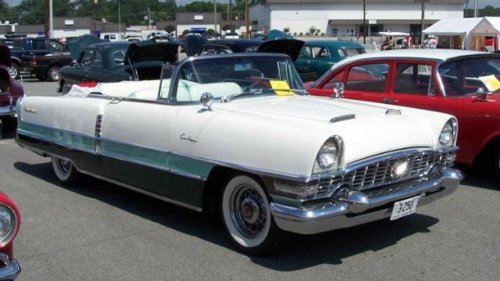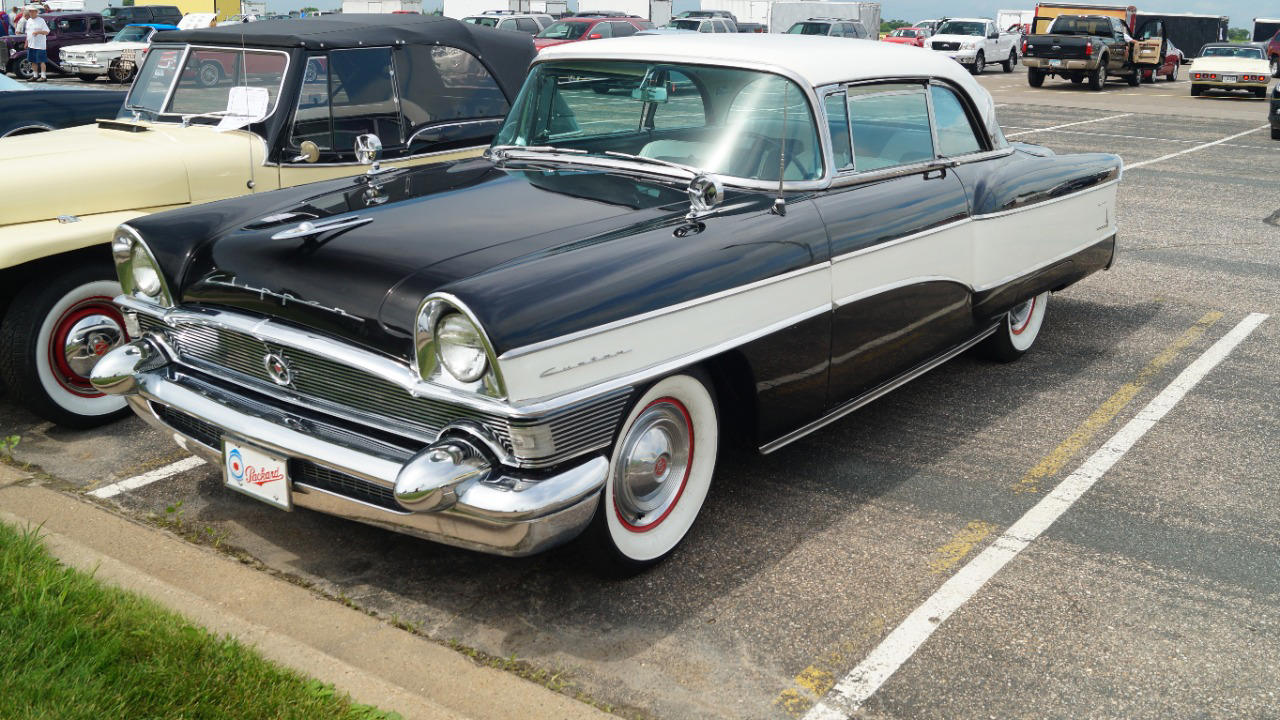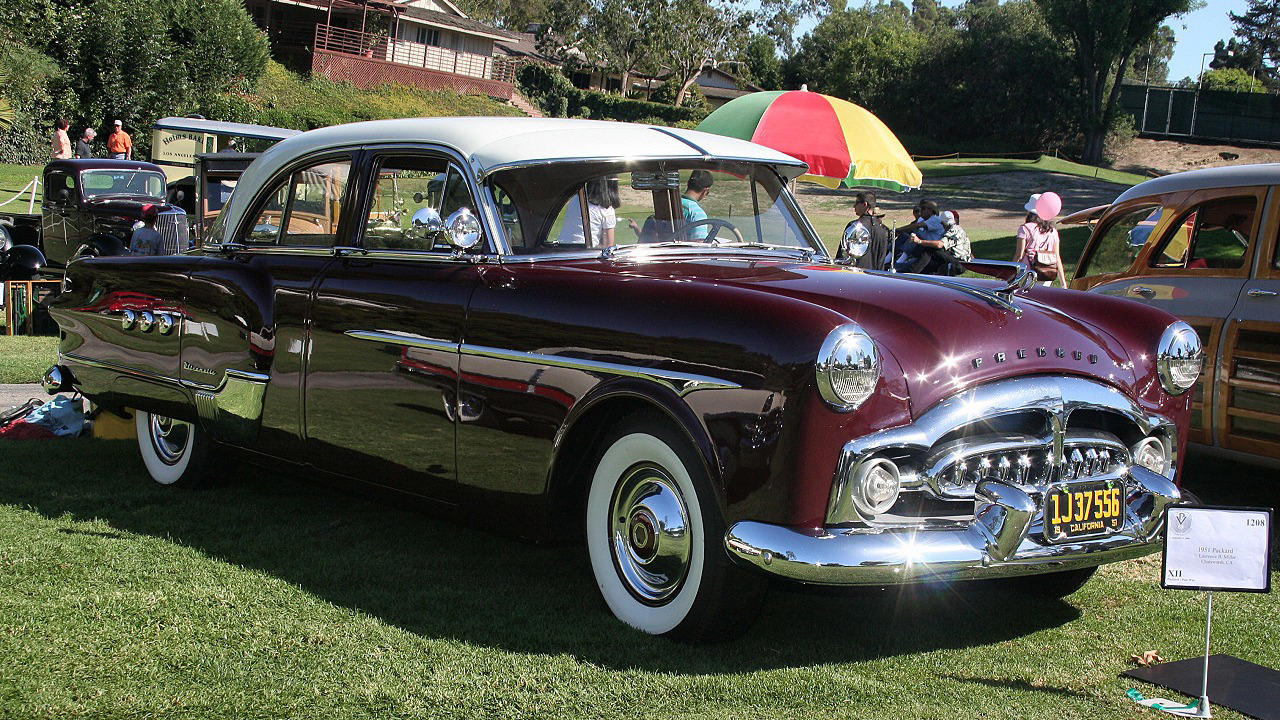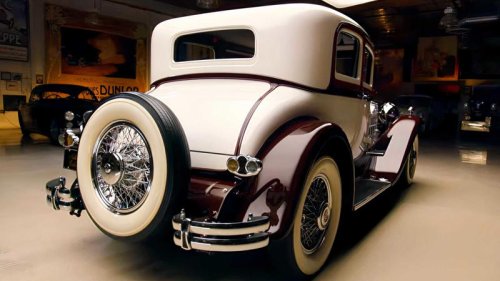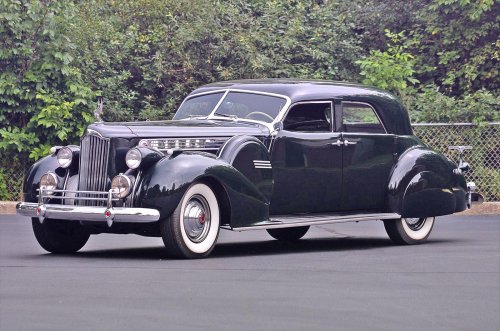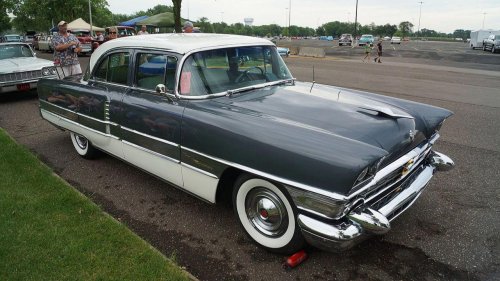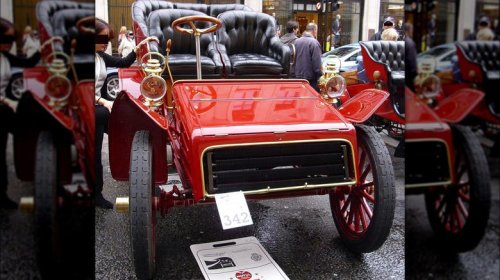
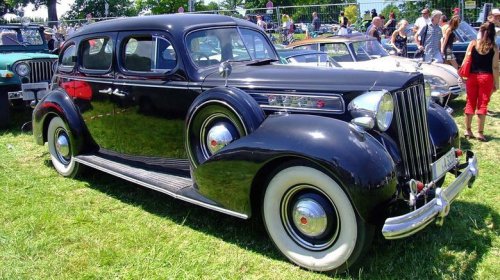
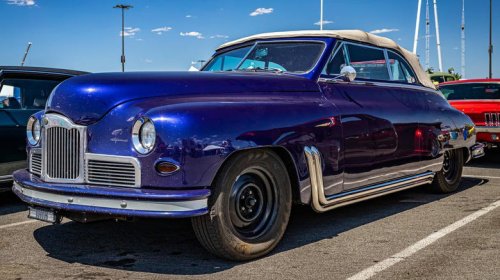
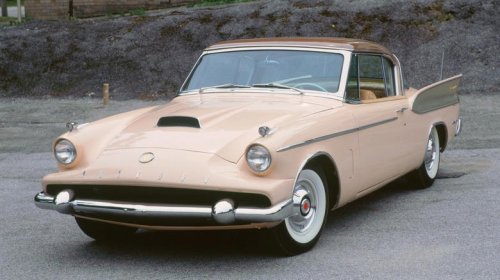
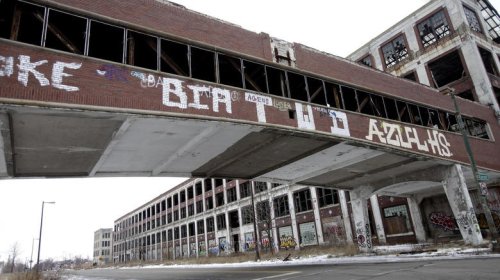

















Packard originsMirroring many company origin stories, the Packard Motor Car Company arose as a result of James Ward Packard's suggestions to the maker of a car he owned, which had required constant repairs, being ignored. Months later, he joined his brother, William Doud Packard, with other backers to found a new company to build a better automobile. The first car was completed by the end of 1899, and by 1900, serial production was underway.The excellent build quality of early Packards impressed customers, quickly increasing demand and fueling rapid growth. An heir to a railroad fortune, Henry B. Joy, bought two cars after seeing them at the 1901 National Auto Show, and also bought shares in the company. By 1902, Packard was building its Model K with a 24-horsepower engine while demand increased — production reached 10 cars per day that year. At the same time, a stock offering was made to raise $250,000 for expansion. H.B. Joy led a group of investors from Detroit in buying $150,000 of stock, effectively taking control of the company.Shortly after losing control of his own company, J.W. Packard tendered his resignation, while his brother went back to running their previous business. While H.B. Joy talked J.W. Packard into returning, his tenure would be short. H.B. Joy bought land in Detroit and built a sprawling modern automotive plant on 66 acres, moving Packard from Ohio. While J.W. Packard remained president, he returned to Warren, Ohio, having no more active role in the company.Packard during the DepressionWith the crash of the stock market in 1929 and the financial fallout following it, things looked bleak everywhere. Initially, Packard's tactic for survival was to build even more expensive and opulent cars to cater to the end of the market that would never struggle with finances, even during a deep depression. This strategy eventually started to show some cracks, as Packard's finances trended toward a precarious position. Although Packard built some of its most alluring and elegant models (that have since become timeless collectibles) in the early '30s, its 1935 One-Twenty model is what saved the company from going under.While the typical price of a Packard started at $2,425, the One-Twenty retail price of $980 made it the first affordable Packard ever. Despite the low price, it remained a Packard, with good quality and attractive styling, but it came in at a price affordable to the affluent who were feeling the squeeze on their finances from the Depression. Packard continued to sell its most luxurious hand-crafted and coachbuilt models, but soon moved far more of these affordable Packards, allowing the company to survive the Depression while all other independent American luxury automakers, including Peerless, Marmon, and Pierce-Arrow, folded. This kept the company alive and well heading into WWII.Post-war PackardBefore WWII, Packards were undoubtedly the epitome of American class and luxury. Though a more affordable model had been introduced, opulent exercises in largesse remained a part of the business. Packard played a huge role in getting the Allies through WWII, but it seems something got lost in trying to pick up where they left off. The Packards coming off the line starting in 1946 were essentially the same cars from 1942 when wartime production began. Only in 1948 would a new Packard arrive, but it was not warmly received. These cars resembled an upside-down bathtub more than an elegant luxury car. Packard started to slip.With everyone else offering automatic transmissions, Packard was behind the pack. Rather than purchase proven units from a larger manufacturer, Packard developed its own, the Ultramatic. While it was successful, it was also a costly development at a time when the company's finances were not stable.The first all-new Packard design came in 1951 with the 250, available as a convertible or the hardtop Mayfair. This was an attractive and modern car that still came up short. The new Ultramatic transmission was only a two-speed and it sat behind Packard's old flathead straight-8 engine, while OHV V8 engines sprang up all around it. Packard sold 100,000 units in 1951, but its numbers fell dramatically over the next couple of years, putting Packard in peril.A fast declinePost-war Packard was behind the curve in developing new car designs: It was late offering an automatic transmission, and it was still using an old straight-8 engine all the way until 1955. Furthermore, the landscape for luxury automakers was rapidly changing and the ultra-luxurious coachbuilt cars of the '30s were no longer in vogue. Mass production techniques had improved, enabling Cadillac, for example, to churn out fine luxury sedans by the thousands. Add to this a disastrous merger, and the outlook for Packard was grim.A new Packard debuted in 1955, now with a new OHV V8 engine. In fact, the 1955 to 1956 Patrician sedan was an elegant large sedan packed with modern features and a plush interior. With up to 290 horsepower, a new torsion bar suspension, and updated styling, this could have been a successful model for Packard. It wasn't. Packard's problems had compounded to the point that after 1956, all Packard models were nothing but rebadged Studebakers.For 1957 and 1958, the Packard name carried on with the Packard Hawk and the Packard Clipper. These were nothing more than a Studebaker Hawk and President. There was also a wagon version of the Clipper based on the Studebaker Broadmoor. These also received the Studebaker V8, although a supercharged version with 275 horsepower was available. Only 7,431 of these cars were sold for both years and in 1959, Packard automobiles ceased production altogether.The historic Packard factoryBack in 1903, Packard received a new home in Detroit in what was then the largest auto manufacturing facility in the world. It continued to house Packard for a half-century through several expansions until it took up 3.5 million square feet on a 40-acre campus. At its peak, 41,000 employees worked at the Packard plant during WWII. With the decline of the Packard brand, employment fell steadily until auto production ended in 1957.The plant was sold in 1958 and leased to 39 companies, although occupying half of the property. The number of tenants grew to 87 by the '90s, but that is when legal troubles plagued the property. Unpaid property taxes, foreclosure, lawsuits, and changing ownership led to a steady decline of the property. Demolition of part of the plant commenced in 2000 but was halted by a court order as part of a dispute between the owner and the city.The owner ended up in prison for selling ecstasy and by the time he got out in 2010, the plant had been taken over by vagrants and vandalism. The fire department stopped responding to the many fires because of warnings of hazardous structural conditions. It had become one of the largest abandoned properties in the world and a glaring example of Detroit's problem with blight. It was an eyesore and a hazard, and it seemed nothing could be done with it. However, the city eventually seized the property and began demolishing the structures in 2022, completing demolition a year later and closing the final chapter on the Packard Motor Car Company.