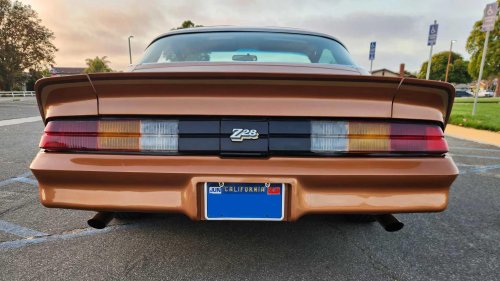
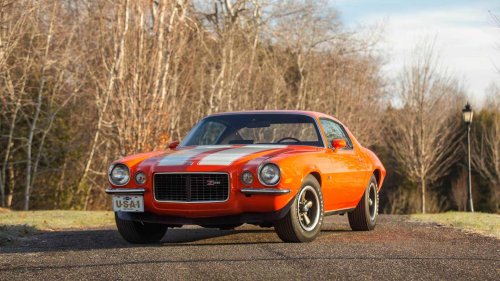
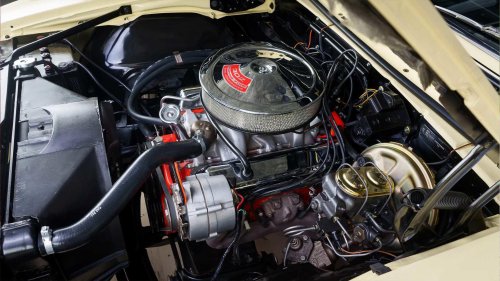
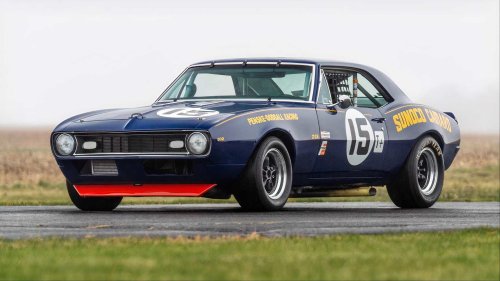
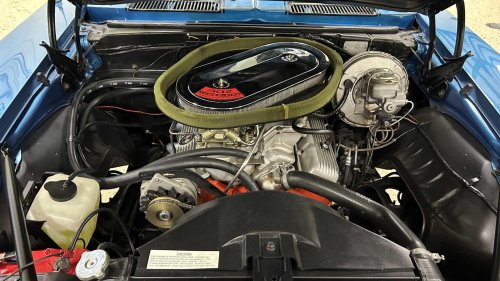
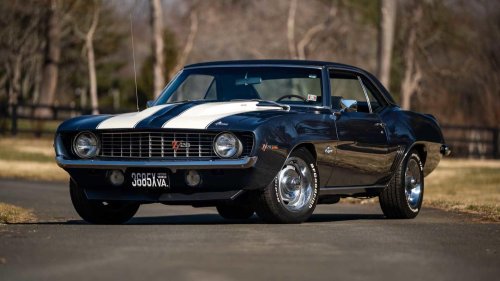
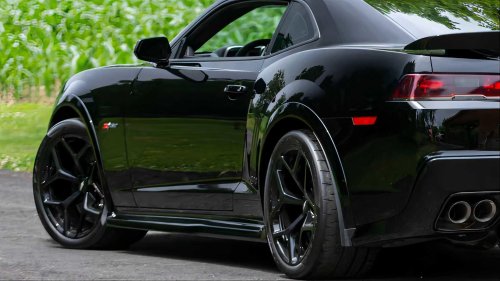
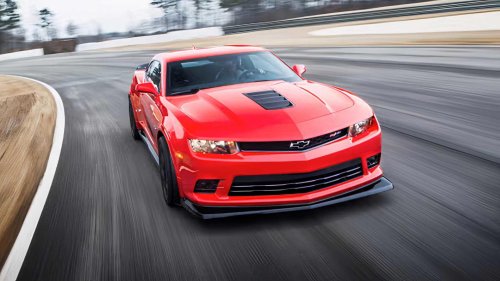
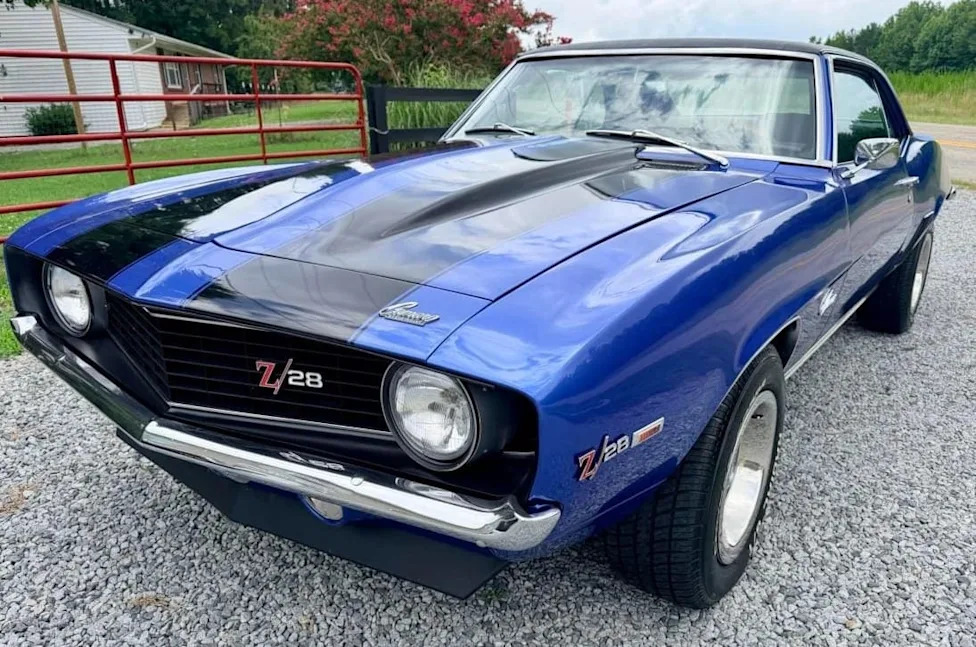
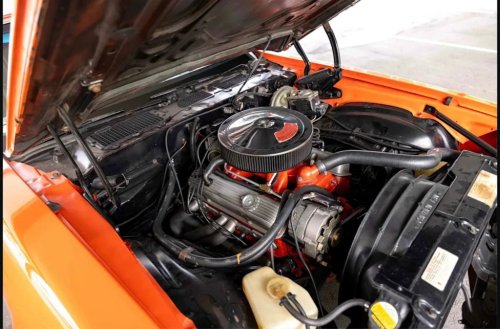
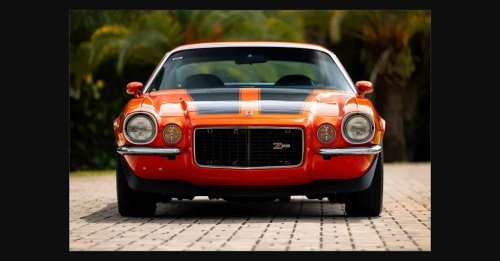
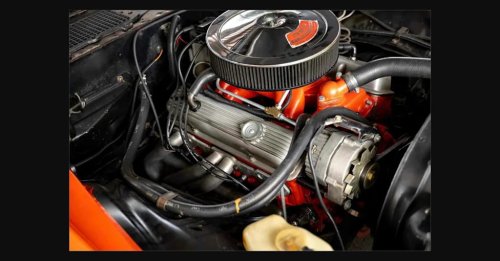
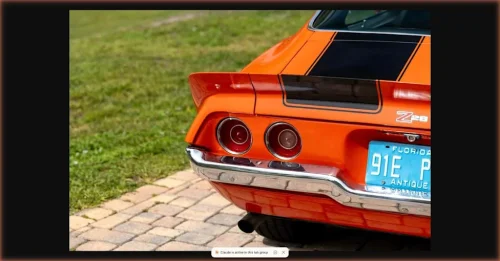
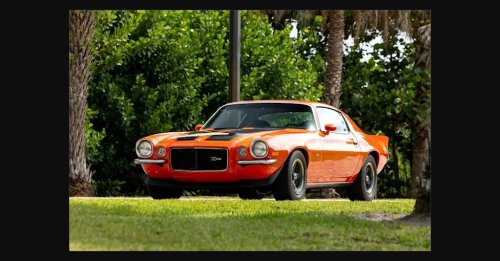
Ask ten Chevrolet fans what Z/28 stands for and you will get ten different answers. Zone 28. Zero to 28. Some technical specification from the engine. Something to do with the Trans-Am series. None of them are right.The actual answer is considerably less dramatic than the badge deserves. And considerably more interesting once you understand the context it came from. A name that defined American performance for decades was never supposed to be a name at all. Why Z/28 Still Confuses Everyone Today Via: Mecum Auctions Even now, decades later, the Z/28 badge still throws people off. It doesn’t sound fast, it doesn’t explain itself, and it definitely doesn’t follow the usual muscle car naming playbook. There’s no “SS” or “GT” clarity here—just two characters and a slash that mean nothing unless you know the story.And that’s kind of the point.Because Z/28 was never meant to sell a lifestyle or look cool on a brochure. It came from a parts catalog, not a marketing brainstorm. What gave it meaning wasn’t the name—it was what the car did on track. That’s why it stuck, and why it still carries weight today.In an era where every badge is carefully engineered to sound aggressive, Z/28 feels almost accidental. And that authenticity is exactly what makes it one of the most respected names in American performance. The Order Code That Accidentally Became a Legend Mecum In August 1966, a Chevrolet engineer named Vince Piggins sent a memo to management with a proposal: build a version of the new Camaro that could compete in the SCCA Trans-American Sedan Championship. The rules required a production car with a back seat, a wheelbase no longer than 116 inches, and an engine displacing no more than 305 cubic inches. Piggins wanted to call his creation the Cheetah. By the time it reached production, that name was gone and a parts catalog number had taken its place.RPO Z28 was simply the Regular Production Option codeRegular Production Option code assigned to the package. RPO Z27 was the Super Sport. Z28 was the next number in the sequence. No design meeting produced it. No focus group approved it. It was a warehouse code that happened to end up on the fenders of one of the most consequential performance cars America has ever built, and it stuck because the car beneath it earned it. The 302 That Made It Legal Bring a Trailer The engine Piggins built to fit the SCCA's displacement limit was itself a piece of creative engineering. The 327 cubic-inch small block was too large. The solution was to take the 327's wider bore and pair it with the shorter stroke of the 283, producing a 302 cubic-inch V8 that sat just under the 305ci limit with a fraction to spare.It was an oversquare, high-revving engine with a 4-inch bore and a 3-inch stroke, designed to live at the top of its rev range in a way that no large-displacement cruiser could match. With no mention in any sales brochure and no badge anywhere on the bodywork, Chevrolet had quietly built 602 1967 model year cars with a purpose-built racing homologation special available from any dealer.The slash in Z/28 appeared on the 1968 cars as the badge became part of the standard trim. It disappeared again in 1972, leaving Z28 without punctuation through 1987. It returned in 1991 for the fourth-generation car, disappeared again when that run ended in 2002, and came back one final time for the 2014 and 2015 fifth-generation Z/28. Each time the slash reappeared, it signaled the same thing, this is the serious one. What Z/28 Actually Means on a Car You're Buying Mecum What the Z/28 badge delivered across its production history was never consistent in terms of output. But it was always consistent in terms of intent. The first-generation 302 was officially rated at 290 hp. It produced closer to 360 hp. The Trans-Am wins in 1968 and 1969, driven by Roger Penske's team with Mark Donohue behind the wheel, confirmed what the spec sheet was too cautious to admit. By 1969, the Z/28's peak first-generation year with 20,302 units sold, the car had become a mainstream performance icon.The 1970s and 1980s were rough. Emissions regulations stripped the Z28 of most of what made it worth buying, and by 1982 the 5.0-liter under the hood was producing 145 hp. Chevrolet kept the badge alive as an appearance package through most of this period, which did the name's performance credentials no favors and gave rise to the generation of Z28 owners who bought the look without the substance. The fourth-generation cars improved significantly toward the end of their run, but it was not until 2014 that the Z/28 fully reclaimed what it had been in 1967. Why the Numbers Were Never Honest Bring A Trailer The 290 hp rating on the original 302 was a deliberate decision made for two reasons. First, the insurance industry in the late 1960s was imposing severe premium increases on high-output cars, and GM's policy was to keep advertised output below one horsepower per ten pounds of curb weight to protect buyers from those surcharges. Second, and more politically, the Corvette was supposed to be GM's performance flagship. A Camaro that admitted to making more than 300 hp was a corporate conversation nobody wanted to have.The same logic applied to the 1970 Z/28 and its solid-lifter 350, officially rated at 360 hp when the real figure was considerably higher. Independent testing of period Z/28s consistently found outputs well above their factory ratings, and the Trans-Am race results made the case for anyone paying attention. A car making 290 hp does not win seven of the last seven races in the 1969 Trans-Am season. The lap times said what the window sticker would not. The Best Z/28 Ever Built MecumThe 1969 is the collector's answer and it is not a close call. The body refresh that year produced the most aggressive first-generation Camaro styling. The Z/28 package was at its most developed, production reached its first-generation peak at 20,302 units, and the car was at the height of its Trans-Am rivalry with the Boss 302 Mustang. Those two cars are so closely matched on paper that the table above barely separates them, which was precisely the point.Ford built the Boss 302 in direct response to the Z/28. It did not exist before the Z/28 made it necessary. Both cars produced 290 hp on the official sheet and considerably more in practice. Both had solid lifters, four-speed manuals, and a racetrack as their primary design brief. On the street, the Z/28 was the sharper tool. On the Trans-Am circuit in 1969, so was Donohue.MecumThe 2014 Z/28 Camaro is the driver's answer, and with only 1,801 units built across 2014 and 2015, it is the rarest Z/28 of any generation. The LS7 V8 is the same naturally aspirated 7.0-liter that powered the Corvette Z06, producing 505 hp at a screaming 7,100 rpm with titanium connecting rods and a free-revving character that no turbocharged engine replicates.Chevrolet stripped the Z/28 of air conditioning and audio as standard equipment to save weight, fitted Multimatic DSSV dampers from motorsport applications, and installed carbon-ceramic Brembo brakes that were, at the time, available on nothing else at this price point. The 2014 Z/28 was not a sports car with a track day package bolted on. It was a race car with number plates. Why Z/28 Cars Carry a Premium and Always Will ChevroletA numbers-matching 1969 Z/28 commands significantly more than an equivalent SS 396 in the same condition. The reason is provenance. The SS was a factory muscle car. The Z/28 was a homologation special that happened to be sold to the public, built for one specific purpose; to beat the Mustang on a race circuit. That distinction carries weight in the collector market in a way that option-box performance does not.Numbers matching matters acutely on a Z/28 because the correct drivetrain components are what you are paying for. The DZ302 engine code on the block, the correct carburetor, the correct transmission, the correct rear axle ratio. Each of these is documented and each affects value. Clone cars built from standard Camaros are common and convincing. A full inspection by a specialist familiar with the Z/28 line is not optional at current prices.The sixth-generation Camaro never received a Z/28, and Chevrolet discontinued the Camaro entirely after 2024. That absence does not appear to have cooled demand for the cars that wore the badge. The 2014 car, less than a decade removed from production, has already produced a $104,500 auction result. A badge that started as a warehouse code has become one of the most defensible investments in American muscle. Vince Piggins wanted to call it the Cheetah. The market, it turns out, is grateful he did not get the chance. Other Chevy Badges That Actually Meant Something Z/28 might be the most accidental name in Chevrolet history, but not all of Chevy’s badges were this random. Some actually meant something—and in a few cases, they were just as important.Take SS (Super Sport). This was Chevy’s original performance flex, introduced in the early 1960s to signal more power, better suspension, and a step up from the standard car. Unlike Z/28, this one was very much intentional—it was built to sound fast and sell cars.Then there’s RS (Rally Sport), which wasn’t about raw performance at all. It focused more on appearance and trim—hidden headlights, unique lighting, and styling tweaks that made the car look sharper without necessarily making it faster.And of course, there’s COPO (Central Office Production Order), which is where things get really interesting. COPO cars were never meant for regular buyers—they were special-order machines, often built to bypass factory restrictions and sneak bigger engines into cars that technically weren’t supposed to have them. That’s how some of the wildest Camaros ever made came to exist.Compared to those, Z/28 sits in a weird middle ground. It wasn’t designed to market performance like SS, wasn’t just visual like RS, and wasn’t a backdoor loophole like COPO. It started as a code—but ended up becoming something far bigger.Sources: Classic.com, Mecum, Chevrolet.