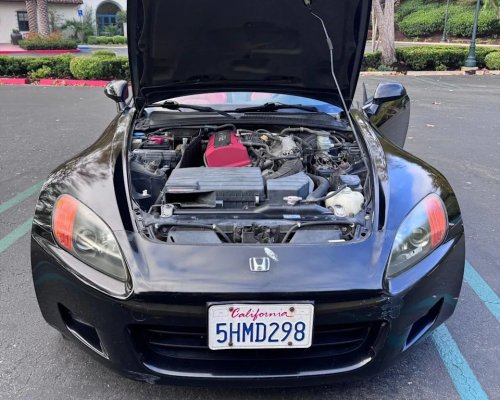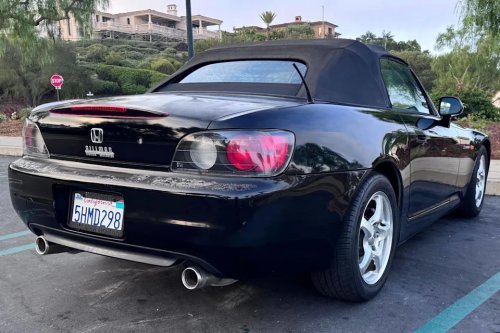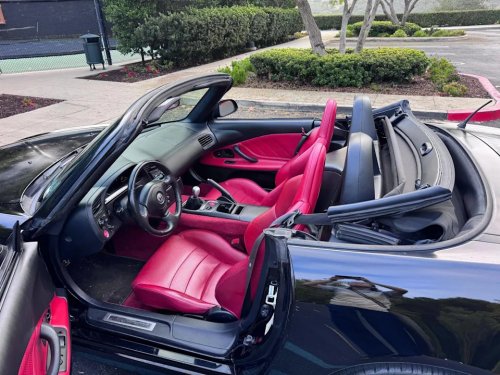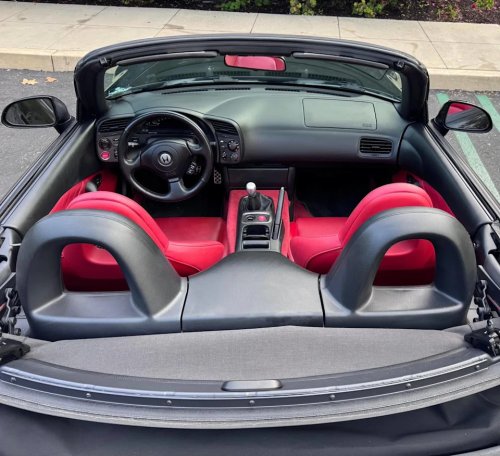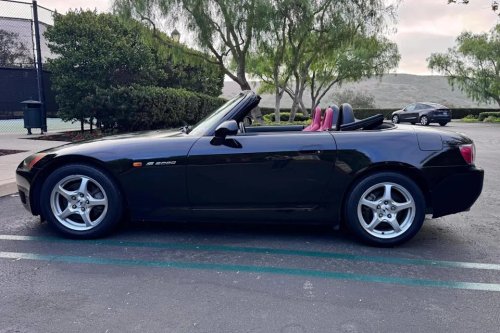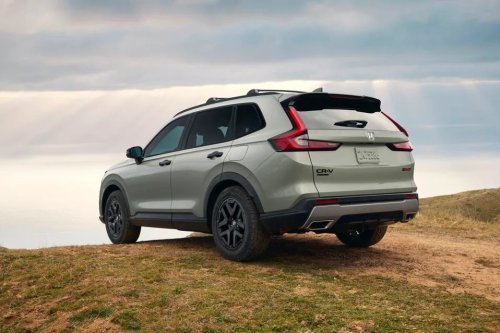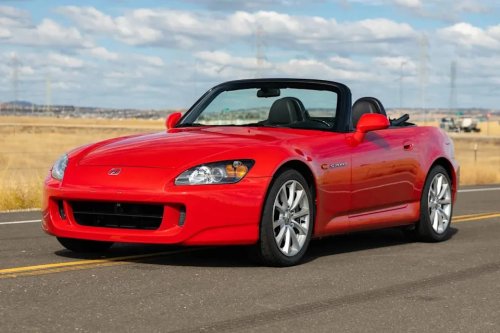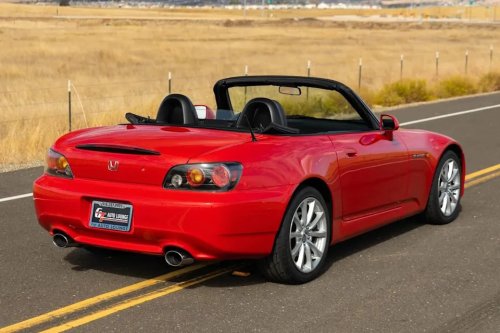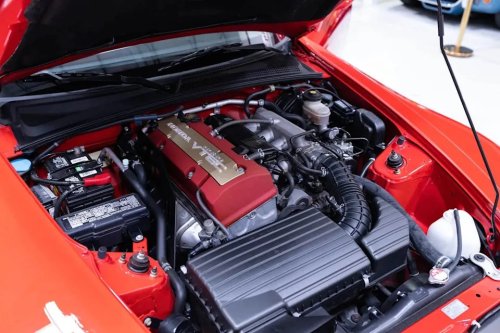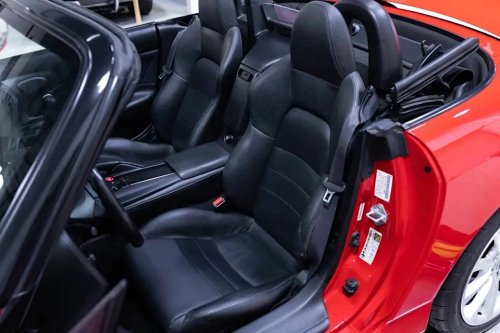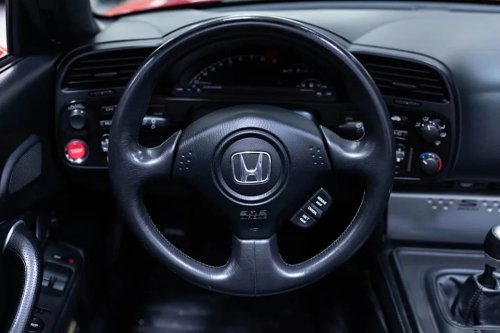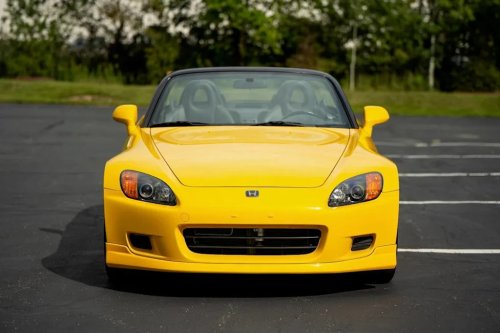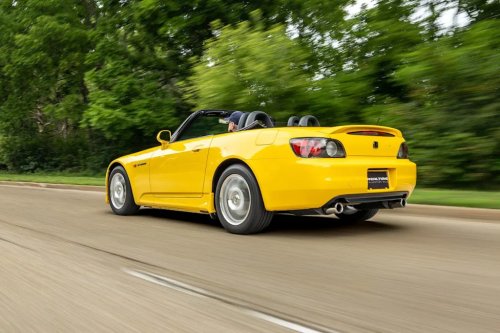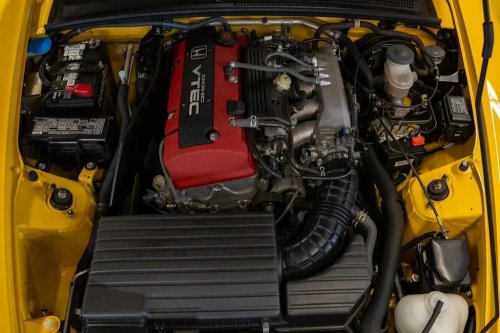

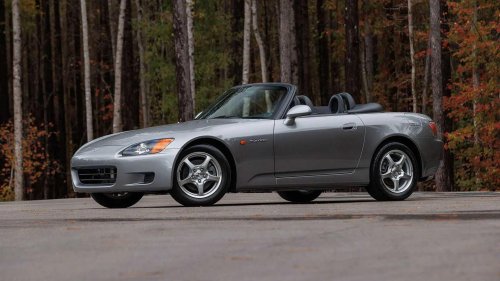





















If you've ever had a ride in a Honda, you've probably heard it before – that sudden change in engine tone accompanied by an aggressive surge of power toward the top end of the rpm range. VTEC just kicked in, yo! But, VTEC is more than just a buzzword or a meme – it's Honda's unique engine wizardry that gives their small four-pots a split personality, transforming them from economy cars at low rpm to high-revving performance cars at the top end.Variable valve timing (VVT) has been around for quite some time, with brands like Fiat and Alfa Romeo playing around with the technology since the early '80s. They technically worked, too, but they were far from reliable. Still, it was Honda that truly perfected the recipe with VTEC, using it to build some of the coolest low-displacement engines in the industry.Honda's VTEC engines made their way into everything from tiny commuters to all-out sports cars and even Honda's first daily supercar. VTEC engines still power Honda's new cars decades later, and over the years, they have earned the brand a loyal fanbase of enthusiasts and gearheads around the globe. Here's what VTEC really means and why it's so cool almost 40 years later. This Is What VTEC Actually Means Bring a Trailer VTEC Engine Facts First used in the 1989 Honda Integra (JDM) VTEC engines combine fuel economy at low rpm with high power at high rpm The technology allows Honda's engines to produce up to 120 hp per liter of displacement in the S2000 – a world record for a naturally aspirated production car. "Variable Valve Timing & Lift Electronic Control System" At least, that's what the initials mean. It's a not-so-clever name for a very clever piece of Honda engineering wizardry that helps their engines combine great full economy at low RPM with serious power at high RPM while still using small engines. In fact, Honda's VTEC engines are so practical that most of them don't even need turbochargers to provide great performance. That's because VTEC can increase the amount of air the cylinders get (thus increasing power) by switching between two camshaft lobe profiles depending on the RPM. This gives Honda's small, high-revving engines a split personality. Honda Did The Impossible Honda Civic Type R VTEC engineThe project to develop what we now know as VTEC started with one simple directive from Honda's management:"Find a new technology to lead the next generation of Honda engines."More precisely, Honda's goal was to produce a naturally aspirated engine that would deliver 100 horsepower per liter of displacement – something that, until then, was considered almost impossible. This meant increasing the redline to at least 8,000 and, in turn, strengthening the engine components and lowering their mass to offset the higher inertial mass and loads – without compromising on reliability or build quality. Honda also had to make other changes, such as increasing the intake valve diameter and using new cast steel camshafts, among many other tweaks to the engines.Honda's four-cam engines in the '80s made decent power at high rpm, but they were underpowered at low rpm and, therefore not great for daily drives. All of Honda's efforts to boost power at both ends of the RPM range in their small engines fell short. For example, reducing the valve's interior angle would improve low-end torque but ended up breaking the timing belts as soon as RPM increased.Honda knew the only way to get what they wanted was with a clever system that could switch the operation of cams and rocker arms on the fly, giving the engine a sort of a double personality. The VTEC Was Born How did they do it? Well, each cylinder has a set of cam followers with two (or sometimes three) different cam profiles (lobe heights) and rocker arms that can lock together. The taller cam lobes are responsible for VTEC power and are aligned with an inactive rocker arm. Once active, they provide more lift and longer lift duration (timing), thus adding more air (and longer) into the engine at high rpm.But how does the VTEC engine know when to engage the higher-profile cams?Honda found a clever solution to this: At high RPM, engine oil pressure rises, and at a certain RPM threshold, it pushes a set of pins that lock all the rocker arms in a set together. The one that was previously inactive is now lifted by the highest-profile cam, and since all the rocker arms are locked together, that means all intake valves (and exhaust valves, depending on whether it's a DOHC or SOHC engine) open more and allow more air in to create more power. As soon as the RPM drops, oil pressure does too, and the locking pins return to their original positions, leaving the rocker arms associated with the high-profile cam unaffected and only the lower-profile cams lift the valves.The first of these next-generation high-performance engines was to make its way into the JDM market 1989 Honda Integra. The rest, as they say, is history. Cars With VTEC 2000 Honda S2000 - 1Despite being unique in the car world, VTEC is extremely common in Honda's own models and has made its way into a myriad of different Hondas over the years, from everyday commuters to high-performance sports cars. It even features in Honda's most powerful supercar ever – the hybridized second-generation NSX pushing 600 hp to all four wheels.There may be no replacement for displacement, but for Honda, there's no replacement for VTEC: Accord (F22, H22, K24, J30, J35 generations) Civic Type R (every generation) 1st-gen and 2nd-gen NSX Civic Si (every generation) 4th and 5th-gen Prelude S2000 Jazz Not All VTECs Are Created Equal While most VTEC engines use dual overhead cams (DOHC), some of them also use variable valve timing and lift (VTEC) on just one cam (SOHC) – in most cases on the intake side. Also, in the '90s, VTEC was activated by oil pressure at specific RPMs. Newer versions like i-VTEC can be modulated electronically for more seamless transitions. Types Of VTEC Engines SOHC VTECDOHC VTEC i-VTEC3-Stage VTEC: adds a "normal" cam profile in the middle for a balance of performance and economy Do Other Car Brands Have VTEC? via TheSmokingTire (YT) While many brands have developed their own variable valve timing technologies over the years, VTEC remains utterly unique to Honda. In fact, most modern VVTs can adjust cam timing to let more air into the cylinders, but many can't actually switch cam lobes amid operation like Honda's VTEC can.Interestingly, brands like Nissan and Toyota developed their own versions of VTEC called Neo VVL and VVTL-i, respectively, which look different to Honda's system but are nearly identical in the way they operate. They, too, use hydraulic pins to switch between rocker arms and cam lobe profiles. And, with most of these variable valve timing and lift systems, the end result is the same high-rpm surge in performance.However, Honda's extremely high-revving engines, their components and designs, and how well they work with VTEC are still unique and loved. Other Variable Valve Timing Systems Similar To VTEC Today, VTEC is slightly outdated since modern VVT systems offer continuously variable lift instead of aggressively switching between two modes, but this gives Honda's VTEC its fun factor and character. VTEC Pros: Proven reliability Economic at low RPM High power output per liter of displacement Great low-end torque with mild cams being in use VTEC Cons: Peak power and torque are ridiculously high in the RPM Outdated compared to continuously variable lift technologies The Role Of VTEC In Tuner Culture Photo: Justin Kaehler "VTEC just kicked in, yo!" is a phrase every car nerd from the 2000s remembers. The technology was so widespread that it's now one of the biggest car memes. The main reason why VTEC became famous wasn't simply being able to push out a few dozen more horsepower than other naturally aspirated four-pots. Instead, it's the unique "kick" it gives after about 5,000 RPM.The 5000-6000 RPM range is where most other cars would start losing power or nearing their redline, but with VTEC, it's where the engine truly wakes up and starts pumping significantly more power to the wheels. Also characterized by a unique high-revving sound and sudden high-rpm pull, VTEC has earned Honda millions of loyal fans. And while the usage of the phrase "VTEC just kicked in" was inspired by how sudden and dramatic VTEC power delivery feels, today, the meme mostly makes fun of Honda owners that overexaggerate the acceleration VTEC provides in their otherwise not-so-fast cars.Joke or not, VTEC is very real, and VTEC engines such as the B and K-Series VTEC inline-fours are still among tuner favorites. They are overbuilt, rev-happy, and offer near-bulletproof reliability. Owners can upgrade them, tune them, and punish them for years without any consequences. Turbocharging a VTEC engine is practically a rite of passage for any Honda owner who wants to call themselves a gearhead. The First VTEC Car In America Is Dirt Cheap 1992 Integra GS-R front left 1992 Honda (Acura) Integra GS-R Specs While the first VTEC engine – the B16A – technically debuted in the 1989 Integra XSi, this car was only ever sold in Japan. In the US, however, the first VTEC-powered Integra was the 1992 Integra GS-R with the B17A1 1.7-liter four-cylinder engine under the hood. It's a sprightly, naturally aspirated two-door sports car with an impressive 8,000-rpm redline built for the driver.A total output of 160 hp means the car pushes close to 100 hp per liter, and that power reaches the front wheels via a 5-speed manual transmission. The best part? This venerable classic now costs just about $14,000 on average for a good-condition model (Classic.com), with many clean examples going under the hammer for just $10,000. For VTEC lovers who want a piece of automotive history, that's a bargain.