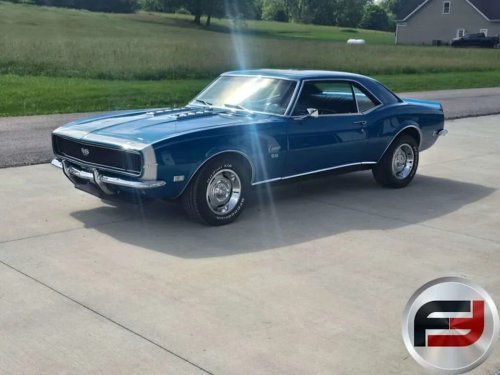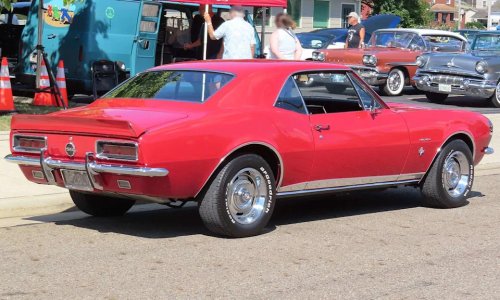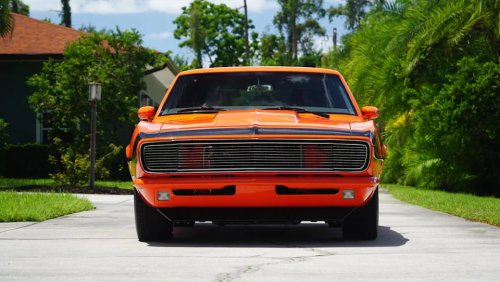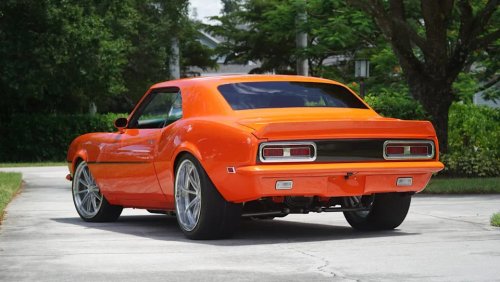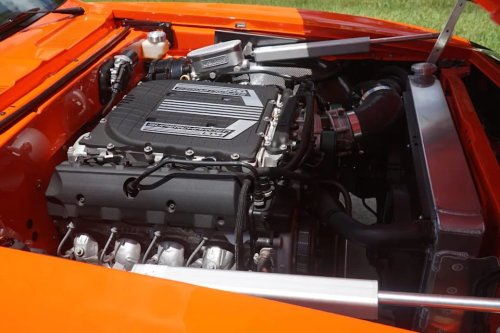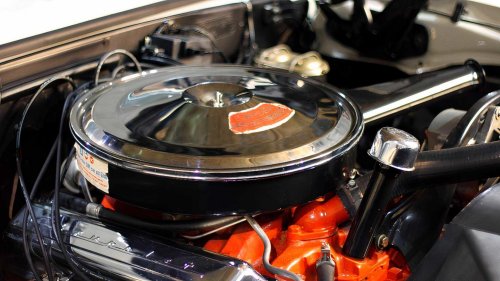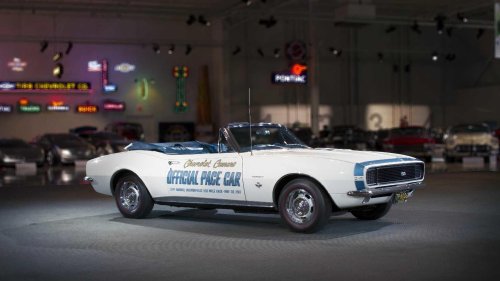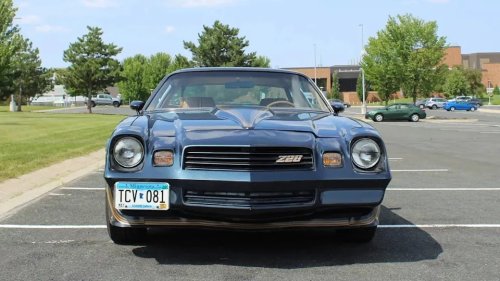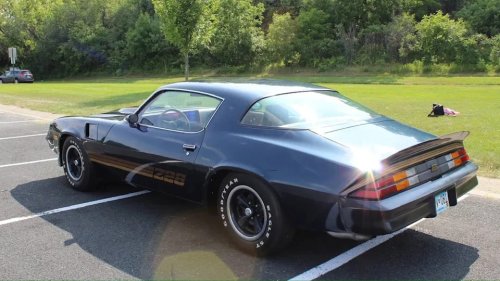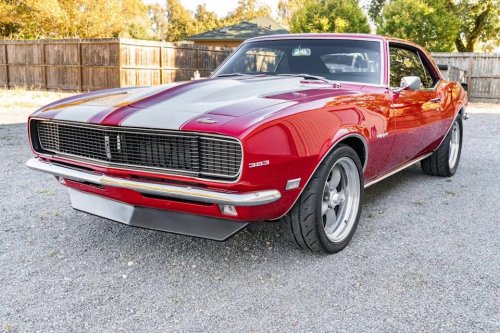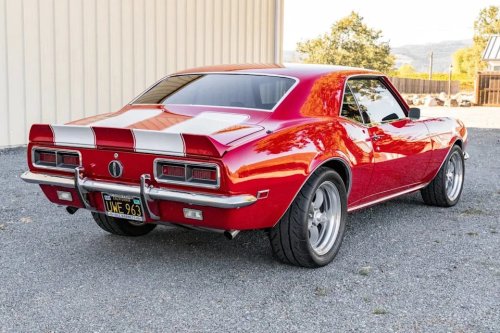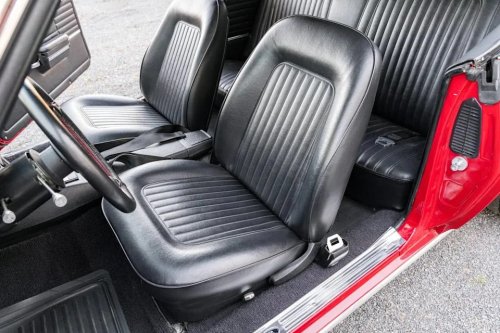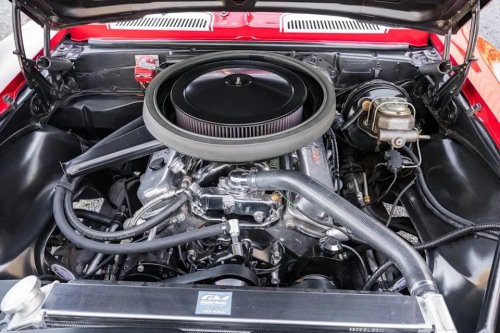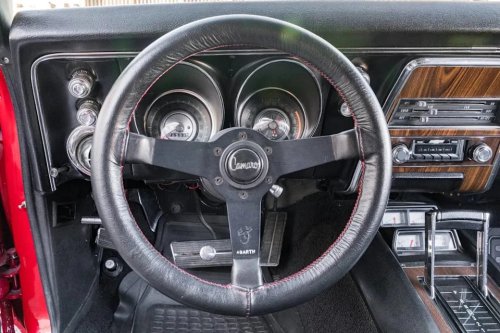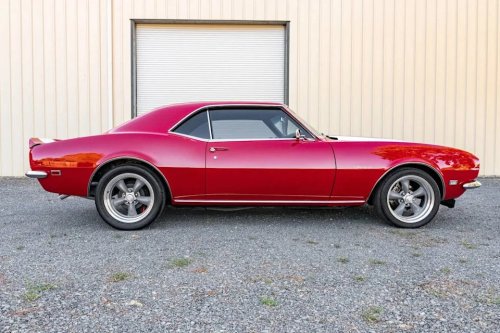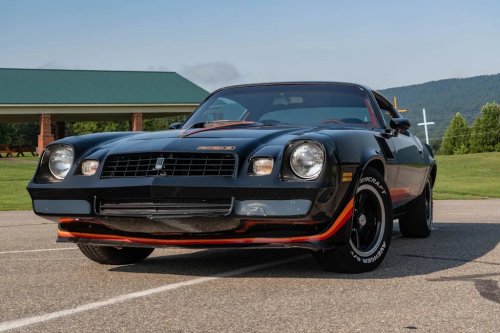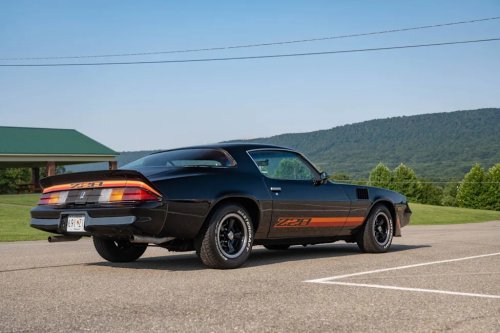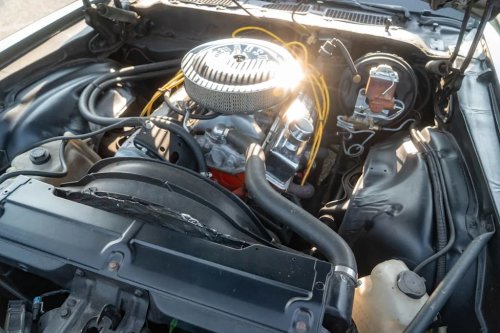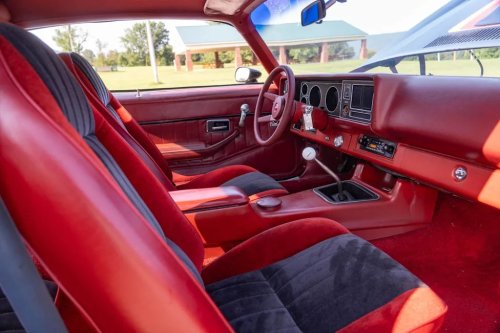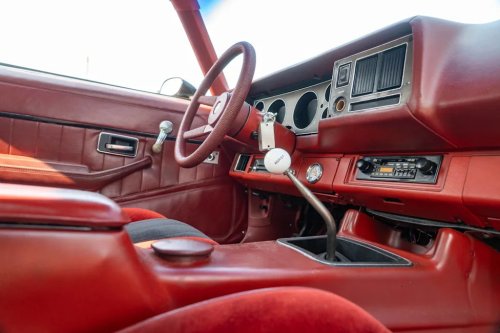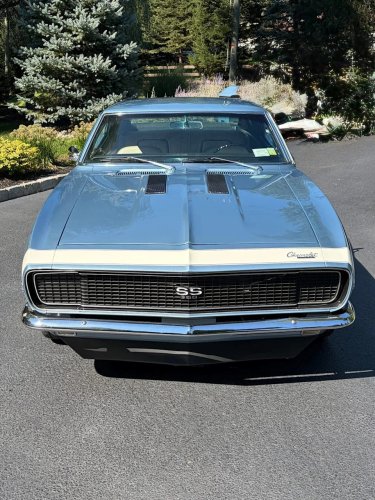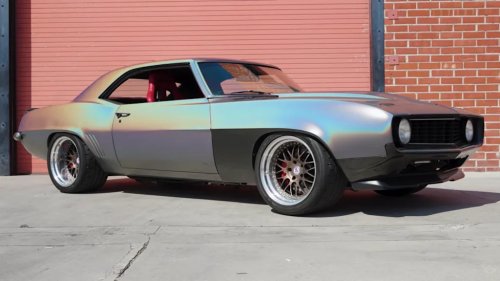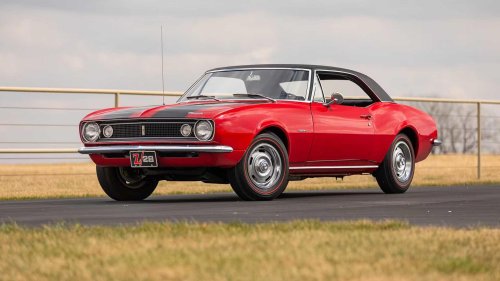
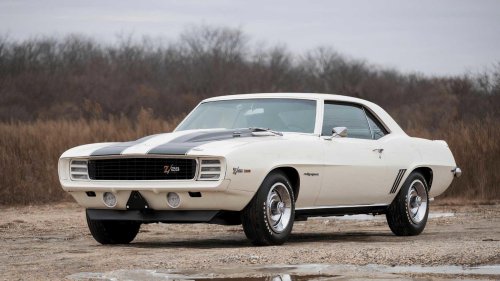
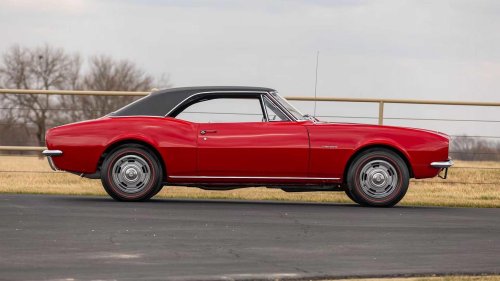
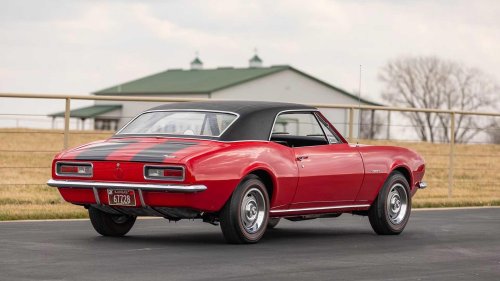



















The 1960s was a hotbed for American muscle cars. The category had seen a meteoric rise in public perception, particularly following the launch of the legendary 1964 Pontiac GTO. The idea of having a coupe that could be sent down a quarter-mile to wipe the smile off its rival's face and then still be used to cruise down to the store was a popular combination.They came in all shapes and sizes, from the smaller Chevy Camaro and Ford Mustang pony cars to behemoths with huge big-blocks like the Chevy Chevelle and Ford Galaxie. The main metrics to judge a muscle car tended to be how much power or torque it had, or how quickly it could cover the quarter mile. 1967 Chevrolet Camaro Z/28 Could Reach An Ear-Drum Bursting 7,000 RPM Mecum Auctions1967 Chevrolet Camaro Z/28 SpecsHaving been caught with their pants down by the emphatic launch of the Ford Mustang in 1964, Chevrolet was keen to make a splash when its reply finally arrived. Named the Camaro, it featured the exact same wheelbase as its chief rival as well as a range of powerful small-block powerplants.It was still a couple of years late when it finally dropped in late 1966, with the first cars given the 1967 model year. Wanting to quickly establish the Camaro nameplate, Chevy decided to enter the SCCA Trans Am series with the car in 1967 to try and get one over its rivals. The championship's over two-liter class was home to American manufacturers looking to push their pony cars, with chief rival Ford already present with the Mustang.Mecum Auctions Chrysler brands Plymouth and Dodge also took part, while the long-gone Mercury marque joined alongside Chevrolet for 1967. The series had an engine displacement limit of 305 ci, so Chevy developed a special 302 ci small block V8 for use in the series. Trans Am also mandated that 1,000 road-going versions of the racer had to be built, so Chevrolet added a Z/28 option package for 1967 models.Featuring the 302 ci V8, which was able to rev freely to 7,000 rpm as per Hemmings, the Camaro would ultimately become the highest-revving muscle car built during the 1960s. Alongside its high peak rpm limit, the 302 sent 290 hp and 290 lb-ft of torque to the rear wheels.As it turned out, Chevrolet only managed to shift 602 road-going Z/28s according to Hemmings, though it was able to find a way out of any sanctions. Chevy's 302 V8 Wasn't A Bespoke Engine Bonhams Rather than start completely from scratch, Chevrolet instead elected to combine its 327 block with a forged 283 crankshaft. This union resulted in the required 302 ci displacement, with Chevrolet then throwing a range of premium parts from its larger units to achieve its desired performance levels.It had domed pistons and a set of heads lifted from the 327 engine, which helped ensure Chevrolet could run the powerplant at a compression ratio of 11.0:1. A rabid four-barrel Holley carburetor was utilized to feed the thirsty V8, the component placed on top of a lightweight dual-plane aluminum intake manifold. An air cleaner was also present to ensure the unit got the fresh air it needed.Mecum Auctions A heavy-duty solid-lifter Duntov camshaft was also borrowed from the Corvette sports car, culminating in an engine ready to slay the competition on the road and track. Hemmings reports that the 290 hp rating for the Z/28 comes at 5,800 rpm, with figures of around 350 hp possible when fully revved out. A lower factory rating was done to make the car more insurable.The Z/28 package was only available with a four-speed manual transmission, though a range of different ratio collections were selectable. The standard was available for $184, while a close-ratio version cost $310 over and above the cost of the Z/28 package.A limited-slip differential was also on the menu as an option, a handy addition for those looking to maximize traction on corner exit or from a standing start. Or just to save on having to buy new tires every three days, take your pick. Z/28 Package Was More Than Just A Commanding Engine Mecum Auctions Alongside the engine-related components, the Camaro also got a range of enhancements to help boost its performance in the bends. A heavy-duty suspension package, which included stiffened springs and shocks, came in the deal, as did quick-ratio steering.Power front disc brakes also had to be purchased alongside the Z/28 package for a premium of $100. This is in addition to the base Z/28 cost of $400 and the minimum $184 needed for the four-speed gearbox, which adds up to $684. This translates to just under $6,500 in today's money, while a base Camaro cost $2,694, or just over $25,000 today.This outlay also included special Z/28 rally stripes along the hood and rear deck, while Z/28 decals were applied on the front fenders. It may have been a fairly expensive package, but it was an effective one that made the new Camaro the highest-revving muscle car to ever emerge from the decade. Camaro ZL-1 Comes A Close Second In Redline Mecum Auctions1969 Chevrolet Camaro ZL-1 SpecsFor any gearheads who were looking for a high-revving muscle car in the 1960s, they seemingly couldn't go far wrong with a Camaro. A slightly later version of the model claims the runner-up result in this metric, though on this occasion a big-block V8 variant gets the trophy. The valuable all-aluminum 427 ci ZL-1 V8 was used in the advanced Can-Am racing series.It was special as while it made a commanding 430 hp at 6,700 rpm, the big block only weighed about the same as a normal cast iron small block unit. Chevrolet dealer Fred Gibb felt offering Camaros with the unique engine choice would be a sound business decision, so he ordered 50 of the cars through the brand's COPO service.Unfortunately, at a price of over $7,200, around $61,000 in 2024, the ZL-1 didn't find many owners. Gibb ended up selling his examples off to other dealers as he struggled to shift them, with just 69 units ever being built in 1969, as per Hemmings. The mighty engine was combined with an M21 four-speed manual transmission, as well as power front disc brakes.Like the Z/28, the ZL-1 also got a four-barrel carb and aluminum intake manifold. It also got the limited slip diff as part of the deal, though for over $60,000, it really should have done. The heavy-duty suspension package, which also included stiff anti-roll bars, ensured the Camaro ZL-1 was a true weapon.Given the rarity of the ZL-1, Hagerty values the model at a cool $635,000 for just a simple good-condition example. A concours-level car can be expected to fetch $850,000, not far off eight times more than an equivalent Z/28. For drivers looking purely for a high-revving muscle car from the 1960s, the Z/28 represents a significantly cheaper and more effective tool for the job.