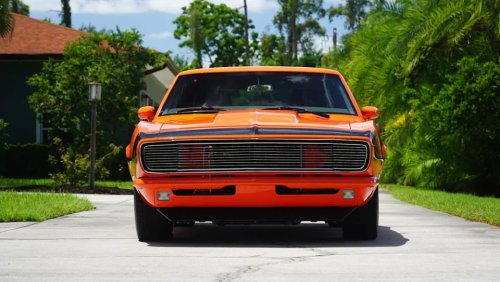
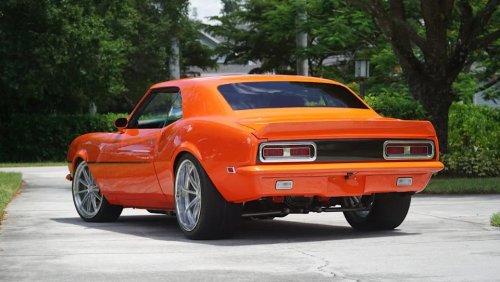
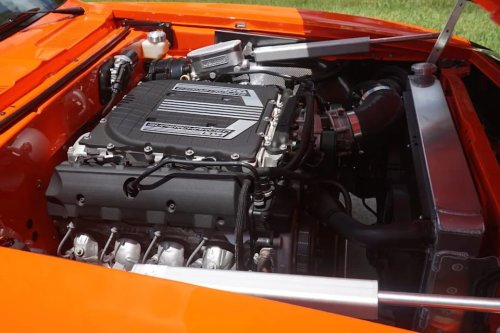
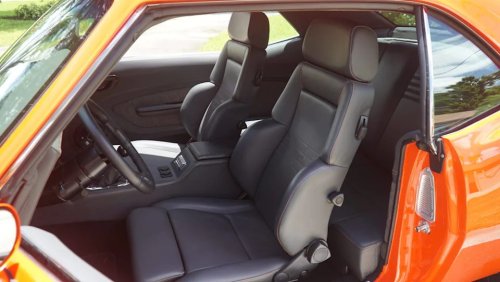
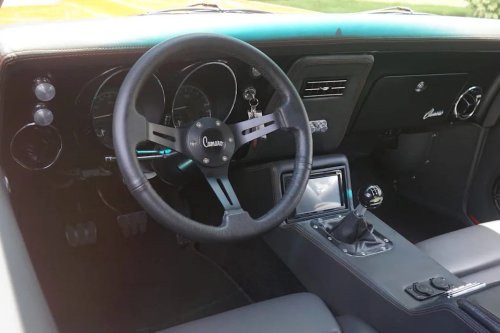
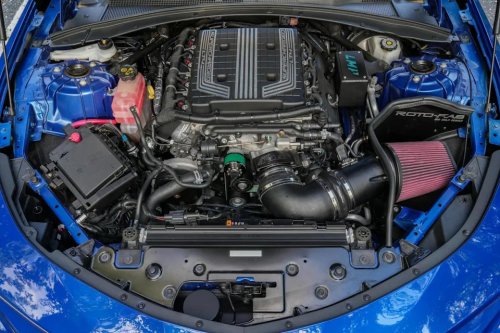
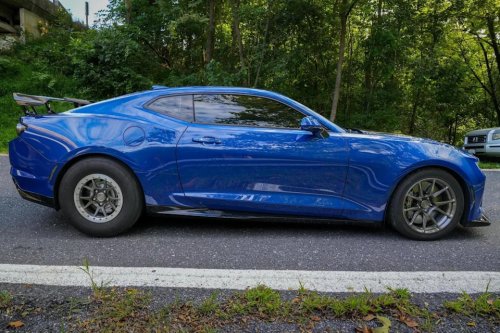
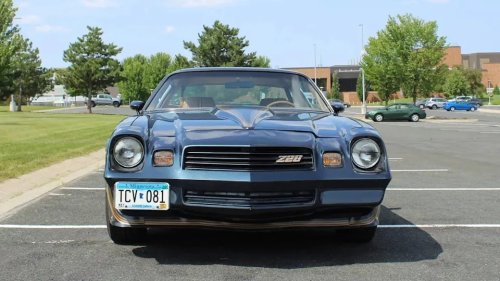
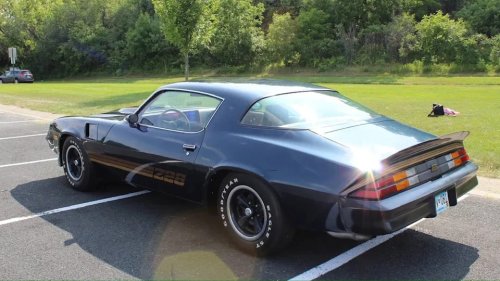
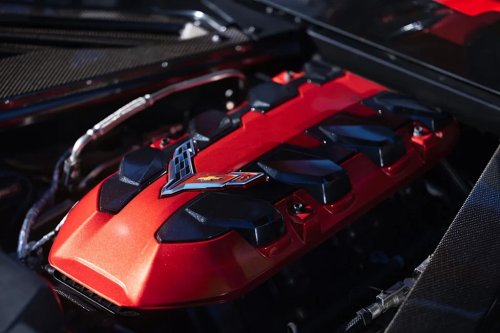
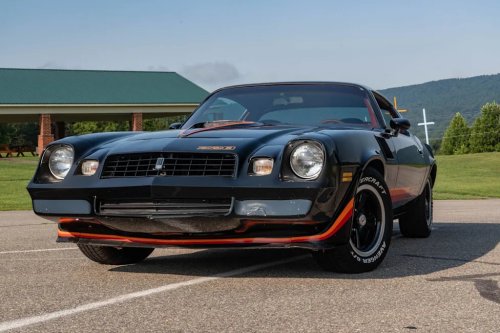
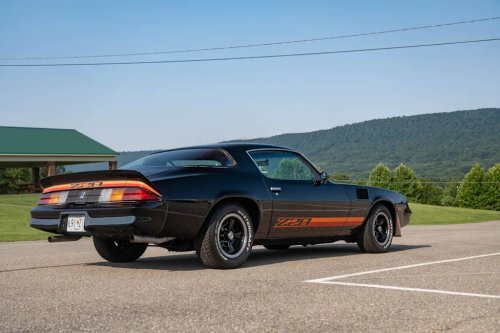
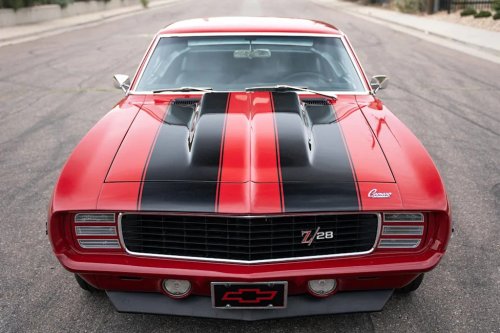
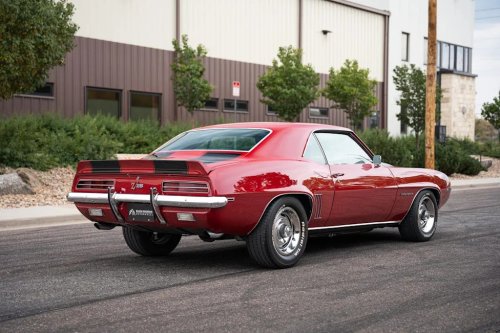
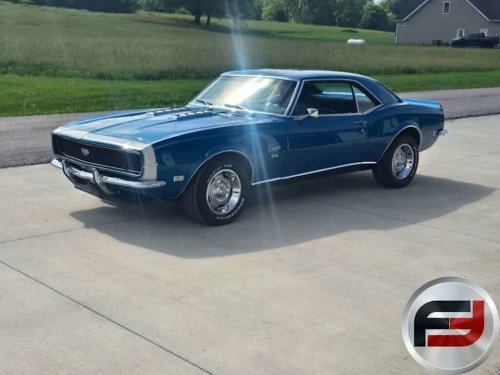
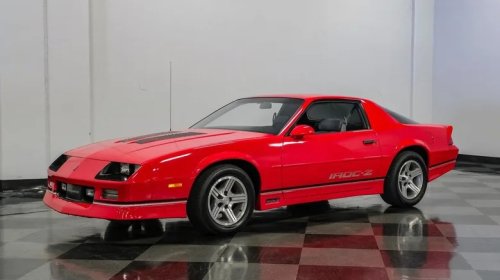
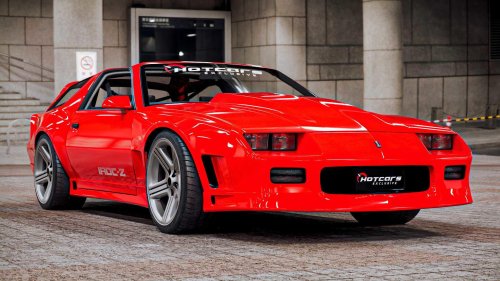
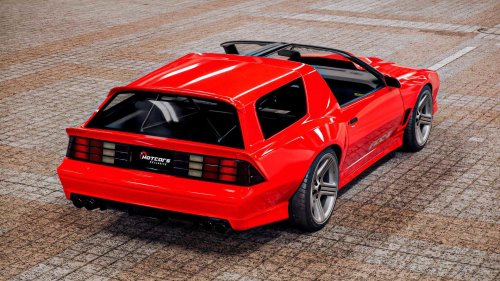
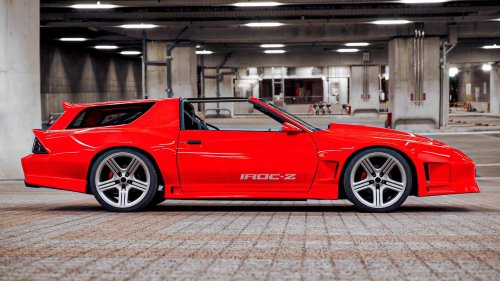
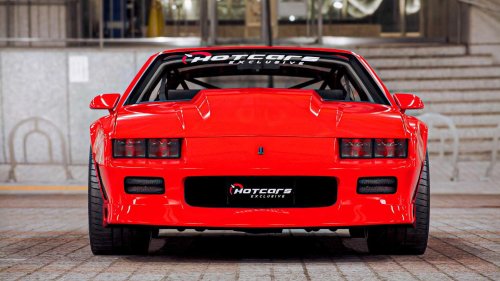
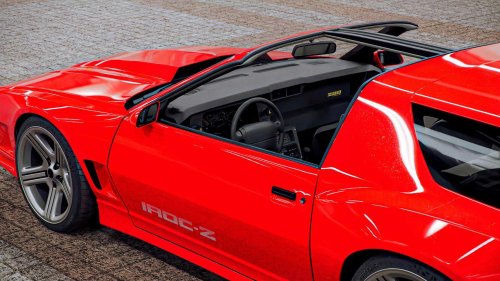
The ChevroletCamaro IROC-Z already had the kind of name that sounded better shouted across a parking lot than at a concours lawn. Born from the International Race of Champions link and sold from 1985 to 1990, it took the third-gen Camaro formula and sharpened it with lower ride height, 16-inch wheels, fat Goodyear rubber, Bilstein rear shocks, quicker steering, a reinforced front structure, and the kind of door graphics that made one presume that subtletly was passe. Our 2026 version keeps that spirit, then asks a beautifully unreasonable question: what if the IROC-Z returned as a widebody, V8-powered shooting brake with enough muscle to make modern supercars suddenly remember they have appointments elsewhere? This IROC-Z Shooting Brake Looks Like A Gym Membership With T-Tops HotCarsThe render nails the original third-gen Camaro stance before twisting it into something far stranger and cooler. The long hood stays, the sharky nose stays, and the square headlamps, low front bumper, side vents, IROC-Z door graphics, and chopped glasshouse all feel familiar enough to make a mullet emotionally available. Then the rear half arrives and changes everything.Instead of the standard Chevrolet Camaro hatchback profile, this version grows a shooting-brake roofline with chunky rear quarters, a squared-off cargo area, slim side glass, and a rear spoiler that looks like it was designed during a very productive argument. If you think about it, it’s got echoes of an IMSA fever dream, a touch of Radwood fever spike, and it's even a track-day wagon for people who think practicality should involve four exhaust tips and a roll cage.The the third-gen Camaro already had that long, low, wedge-shaped drama baked in. Stretching the roof over the rear haunches gives it more visual weight without turning it into a silly wagon cosplay. It still sits low, looks angry, and has the kind of rear overhang that makes you imagine a very loud cold start echoing through an underground garage. An 800-HP V8 Would Give This IROC The Bite It Deserves HotCarsA modern IROC-Z shooting brake can’t show up with a polite engine. The original 1985 IROC-Z’s 5.0-liter LB9 V8 made 215 hp and 275 lb-ft of torque with tuned-port fuel injection, which was serious stuff for the mid-'80s. It also helped give the IROC-Z a claimed top speed near 140 mph, back when that number still sounded slightly illegal. A 2026 Necessity HotCarsFor 2026, this build deserves a 6.2-liter supercharged V8 making around 850 hp and 780 lb-ft of torque. Think dry-sump lubrication, forged internals, a big front heat exchanger, and a soundtrack that starts conversations with local law enforcement before the driver even leaves second gear. Keep the electric motors away, please. This thing should do its heavy lifting with boost, displacement, and a faint whiff of poor judgment.A 6-speed manual would be the romantic choice, but an 8-speed dual-clutch automatic would make it properly vicious. With rear-wheel drive, launch control, 345-section rear tires, and enough aero to keep the back end from writing checks the front end can’t cash, this IROC-Z could run 0-60 mph in about 2.7 seconds and push past 200 mph. We're convinced this is a necessity in 2026, so don't fight us. The Camaro Revival That Would Actually Make Sense HotCarsCall us delusional, but this render works because it taps into something Chevy has flirted with before but never fully committed to. The original car was quick in a straight line, but it was also about handling upgrades, suspension tuning, and creating a Camaro that felt closer to a road-course machine.The same applies here. Instead of chasing nostalgia with a safe retro reboot, this build leans into what made the IROC-Z special in the first place. It feels like a car built with a purpose, even if that purpose involves a lot of tire smoke and questionable decision-making. In Its Own Strange Niche HotCarsAlso keep in mind that performance cars today are either ultra-polished or completely stripped down, with very little in between. A low-volume, high-horsepower shooting brake like this would sit in its own strange niche, offering something that feels analog in attitude but pretty modern everywhere else. It wouldn’t be practical in the traditional sense, but it would be usable enough to make us want to drive it hard and often.If you do a quick search, clean examples of the original IROC-Z have been climbing in value, with average prices sitting around $27,000 and standout cars reaching close to $88,000. So clearly, people haven’t forgotten what the badge stands for. Bring it back with 850 hp, a widebody, and a shape no one expects, and suddenly the IROC-Z conversation starts all over again. Who wouldn't want that?



















 +1 others