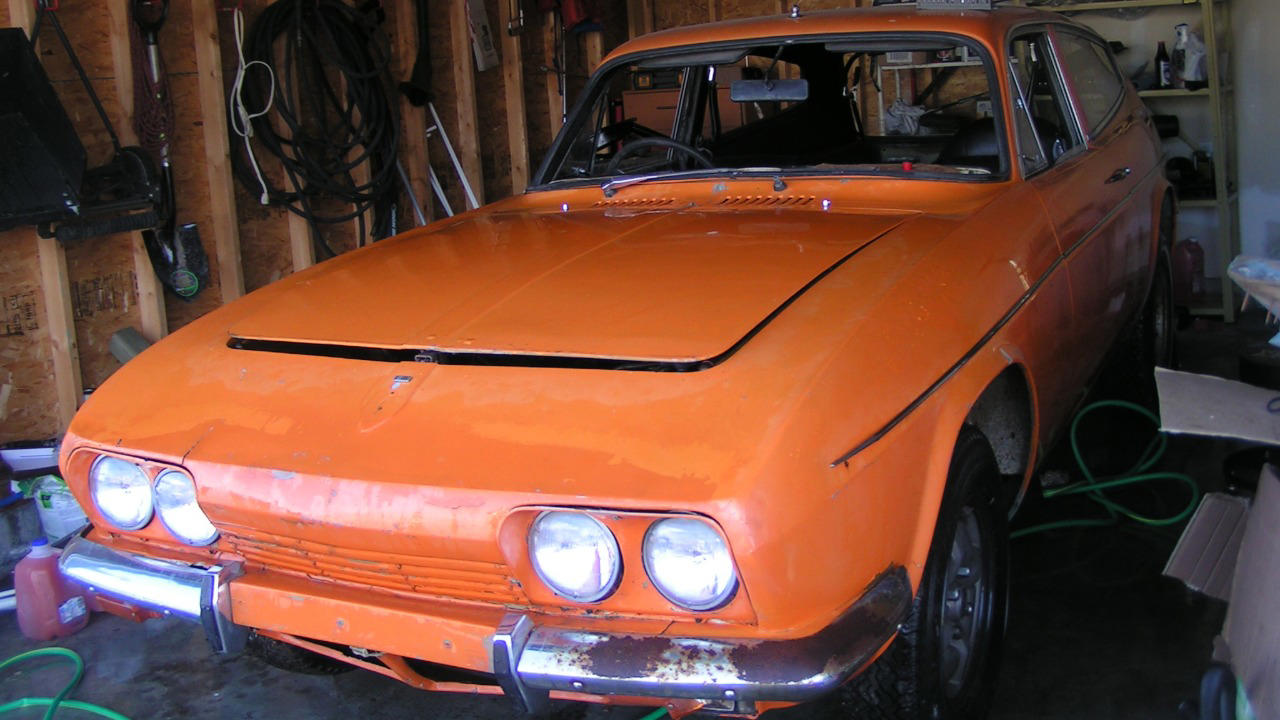
The 1969 Reliant Scimitar doesn’t fit expectations and that’s exactly why it stands outThe 1969 Reliant Scimitar GTE arrived in an era obsessed with sleek coupés and chrome, yet it chose to be something stranger: a low, glassfibre shooting brake with a family-friendly tail and a cockpit full of instruments. It did not behave like a traditional British sports car, did not look like an estate, and did not quite match what buyers thought a two-door should be. That refusal to fit neatly into a box is exactly what now makes it one of the most intriguing classics of its period. Seen from today’s vantage point, the Scimitar GTE feels almost predictive. It blended sports car performance, long-distance comfort and genuine load space in a way that would later be echoed by fast estates and crossovers. In 1969, however, it simply looked like an outlier built by a company better known for tiny three-wheelers. The sports estate that ignored the rulebook To understand why the 1969 car feels so unconventional, it helps to start with its basic concept. The Reliant Scimitar GTE was developed from the earlier Scimitar GT, using much the same platform with a steel box section chassis and a separate glassfibre body that kept weight low while resisting rust. The engineering team stretched that GT idea into a more practical shape, using the same underpinnings but exploiting the space under the hood and behind the front seats more intelligently, as detailed in period descriptions of Reliant Scimitar GTE. When the GTE was released in 1968 it stood out as one of the first full production two door coupés with an estate style rear, effectively a sports estate before the term had currency. Contemporary accounts describe The Reliant Scimitar GTE as a car that combined this unusual body with performance strong enough to make it the most successful four wheeled Reliant of all time, a claim repeated in coverage of Reliant Scimitar GTE. The styling did not chase the long bonnet, short deck proportions of a typical coupé. Instead, the car sat relatively upright at the rear, with a large glass hatch and a roofline that carried straight back from the windscreen. That silhouette owed much to Ogle Design’s GTS estate concept, on which the production Scimitar GTE was based when it appeared at the London Motor Show as the SE5, according to histories that trace the car to Ogle Design’s GTS estate car. In an era when image mattered as much as speed, that decision to prioritise a long roof and big tailgate over a pretty fastback profile looked risky. Yet the shape brought real advantages. The rear seats could fold completely flat, and The GTE interior was virtually identical to the GT model but with individual fitted rear seats that created a flexible load bay, a layout described in detail in factory style histories of The GTE interior. The result was a car that could carry serious luggage or even bulky kit, yet still look at home in the company car park. Under the skin: Ford power and glassfibre pragmatism If the shape was unconventional, the mechanical recipe was reassuringly straightforward. At the heart of the 1969 Reliant Scimitar GTE sat a 3.0 litre Ford Essex V6, shared with contemporary Ford models and praised for its torque and relative simplicity. Owners and enthusiasts frequently highlight that the GTE was powered by this robust engine, a point repeated in enthusiast summaries that describe one of the car’s famous features as its use of a 3.0 litre V6, as in a social media post that calls the Reliant Scimitar GTE distinctive for this combination. In SE5 form, the Essex V6 gave the car a claimed top speed of over 120 m, a figure that placed it firmly in sports car territory for its day and came from the same family of Ford Essex engines already proven in the earlier SE4a and SE4b Scimitar models. That performance claim is recorded in technical summaries of the SE5 with Ford. Enthusiasts often compare the GTE with more obvious coupés of the same era. One video review invites viewers to picture a stylish 2 plus 2 coupé of the 1960s and 1970s with head turning looks and a Ford S6 V6 under the bonnet, then pivots to the Scimitar as the thinking person’s alternative to a Capri, using the Ford powered comparison to underline how the Reliant shared mechanical DNA but packaged it differently. Inside the cockpit: dials, practicality and quiet innovation Climb into a 1969 GTE and the first impression still surprises. Owners recall being struck by the sheer number of instruments, with one describing how, on first purchase, sitting in the car and seeing all the dials felt like being in an aircraft cockpit. That reaction is captured in an interview where the owner says that when they first got into the car they were amazed at all the dials and that it was like an aircraft to them, a memory preserved on film in a piece focused on 1969 The Reliant. The dashboard layout reflected a car pitched at drivers who cared about more than basic motoring. Multiple gauges, toggle switches and a driver focused binnacle gave the cabin a technical feel that matched the car’s long distance intent. The rear seats, as noted, were not an afterthought. They were individually sculpted, could be folded flat, and turned the car into a genuine load carrier when required. Contemporary brochures and later histories emphasise that the GTE interior was virtually identical to the GT but with those individual fitted rear seats that folded completely, a detail that set it apart from many so called 2 plus 2 coupés that barely accommodated children. Reliant also experimented with small but telling features. Some versions of the Scimitar GTE introduced a rear wiper on the large hatch, a feature that period sources describe as another Reliant first. Combined with the expansive glass area, this made the car easier to live with in poor weather and hinted at the company’s willingness to treat practicality as part of the sporting brief. From oddball to cult favourite At launch, the Scimitar GTE had to fight against perceptions shaped by Reliant’s cheaper models. Many buyers associated the badge with three wheeled economy cars rather than serious performance machinery. Commentators who later bought early GTEs often admit that they were drawn by the chance to own something really unusual and that this excitement sometimes led to hasty purchases without thorough inspections, as one owner recounts when blaming their eagerness to own something unusual for buying a Scimitar they had only given the briefest look over, a story preserved in a reflective piece on the Scimitar. Yet the car gradually built a loyal following. By 1970, GTE was the only Scimitar model on offer, with the original coupé discontinued. Commentaries on the model’s evolution explain that the shooting brake offered more space, a more modern design and additional rollover protection, and that this combination resonated with buyers who wanted a single car for work, family and leisure, as described in retrospectives that call the GTE a trailblazing. The design’s influence reached beyond Reliant. Later sports estates and shooting brakes, from the Lancia Beta HPE to various German fast wagons, owe a conceptual debt to the idea that a car could be both stylish and genuinely practical. Features pieces on Tom Karen’s work highlight The Scimitar GTE as elegant and innovative, attracting admiring glances when unveiled and prefiguring later attempts to blend coupé flair with estate utility, as seen in assessments of Tom Karen’s landmark. Cultural associations also helped. The car became linked with high profile owners, including Princess Anne, whose enthusiasm for the model is often cited in modern video reviews. Presenters such as Steph from iDrive Classic have introduced new audiences to the car by describing it as Princess Anne’s favourite and showing how it functions as a super cool 1970s sports car that still feels usable today, a point made in a video where Steph from Classic on modern roads. Contemporary owners echo these themes. On enthusiast review sites, a 1969 Reliant Scimitar GTE 3.0 Litre from UK and Ireland is described in summary as a very beautiful car, with the reviewer offering advice to fellow Scimitar owners and underlining that the blend of looks and practicality remains appealing decades later, as captured in a review filed under Home > Reliant. Why the 1969 GTE feels so modern now Viewed against the broader context of 1968 and 1969, the Scimitar GTE looks less like an eccentric and more like an early response to changing lifestyles. Commentators who revisit the period point out that the late 1960s brought new consumer habits, from the arrival of the Big Mac to the spread of bean bag chairs and other symbols of casual comfort. One retrospective sets the scene by saying that in 1968 people were about to tuck into their very first Big Mac and that bean bag chairs had just been launched, before introducing the Scimitar as part of that shift toward more relaxed yet aspirational living, as recounted in a video that frames the Reliant Scimitar alongside. In that light, the GTE’s refusal to conform makes sense. It treated practicality as a selling point, not an embarrassment, yet wrapped it in a shape that still turned heads. It used proven Ford Essex power and simple rear wheel drive rather than exotic engineering, but combined those with a glassfibre body that resisted rust and kept weight in check. It offered a cockpit full of dials and a driving position that encouraged long distance use, yet it could also haul furniture or sports equipment with ease. Modern commentators sometimes label it the thinking person’s alternative to more obvious classics. That phrase captures the way the Scimitar GTE asks its driver to value function and character over badge prestige. It lacks the instant recognition of a Capri or an E type, but it rewards those who look closer with a depth of design and a clarity of purpose that feels surprisingly contemporary. More from Fast Lane Only Unboxing the WWII Jeep in a Crate 15 rare Chevys collectors are quietly buying 10 underrated V8s still worth hunting down Police notice this before you even roll window down The post The 1969 Reliant Scimitar doesn’t fit expectations and that’s exactly why it stands out appeared first on FAST LANE ONLY.



















 +15 others