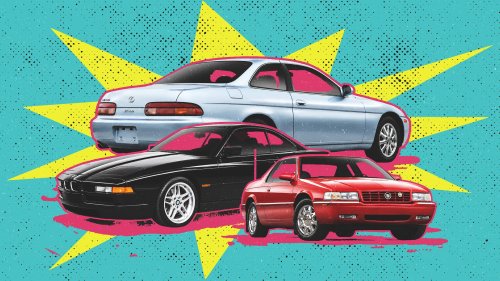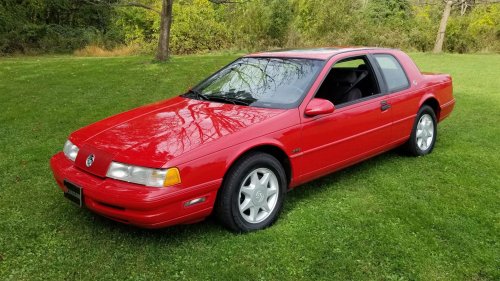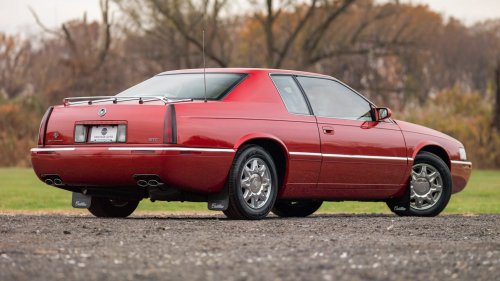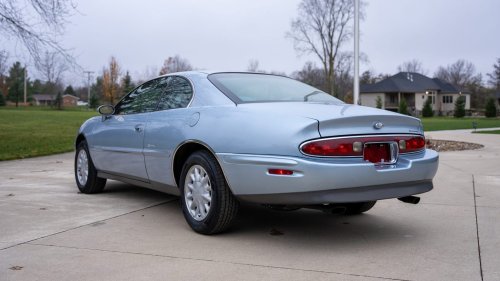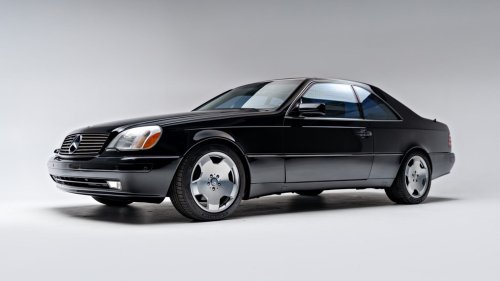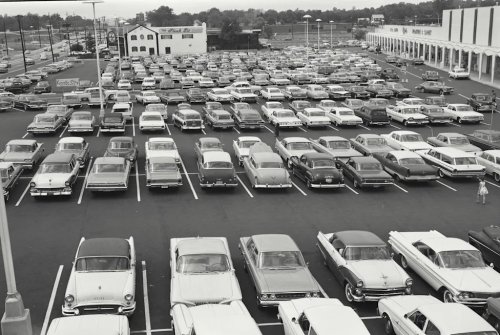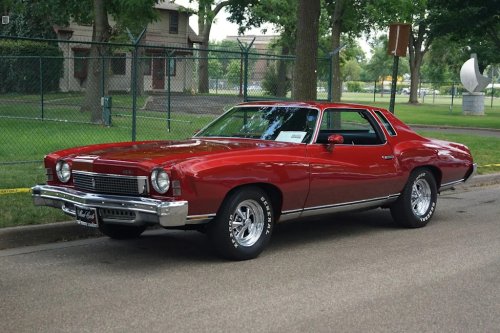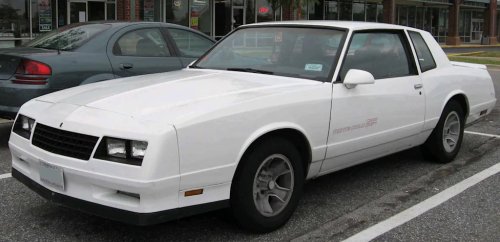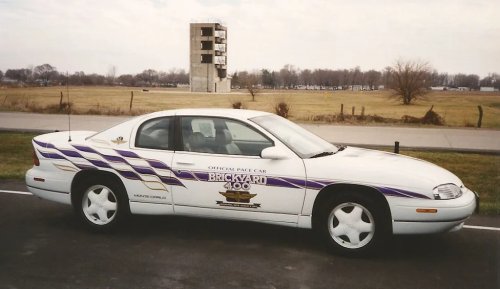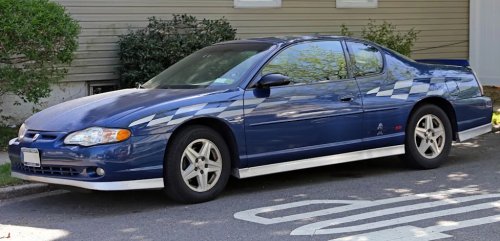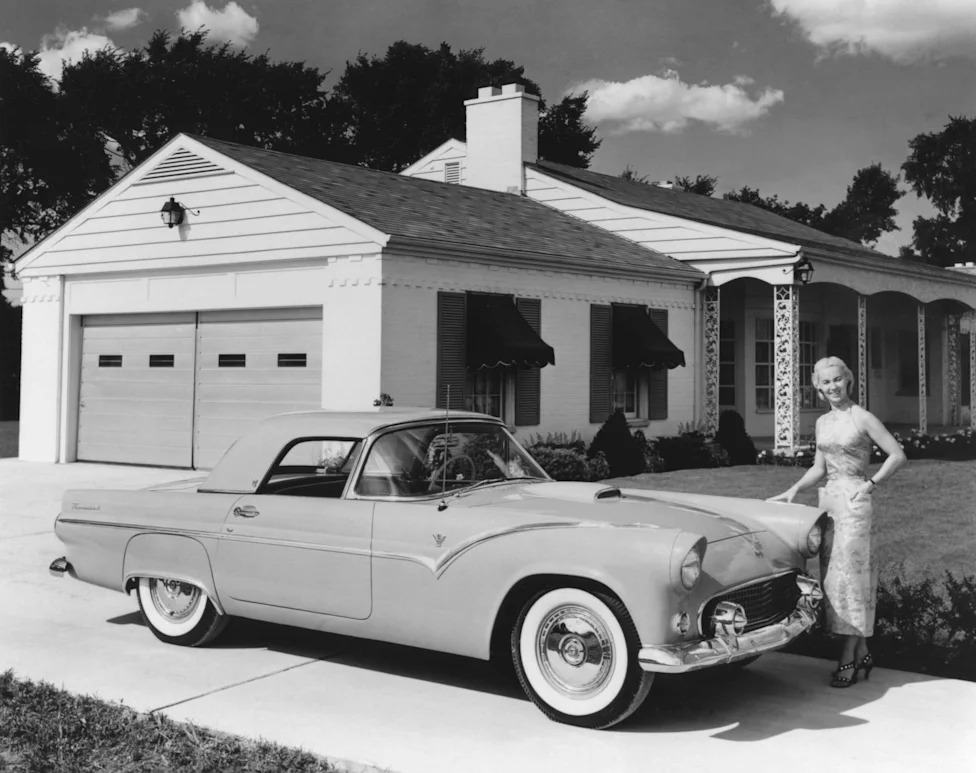
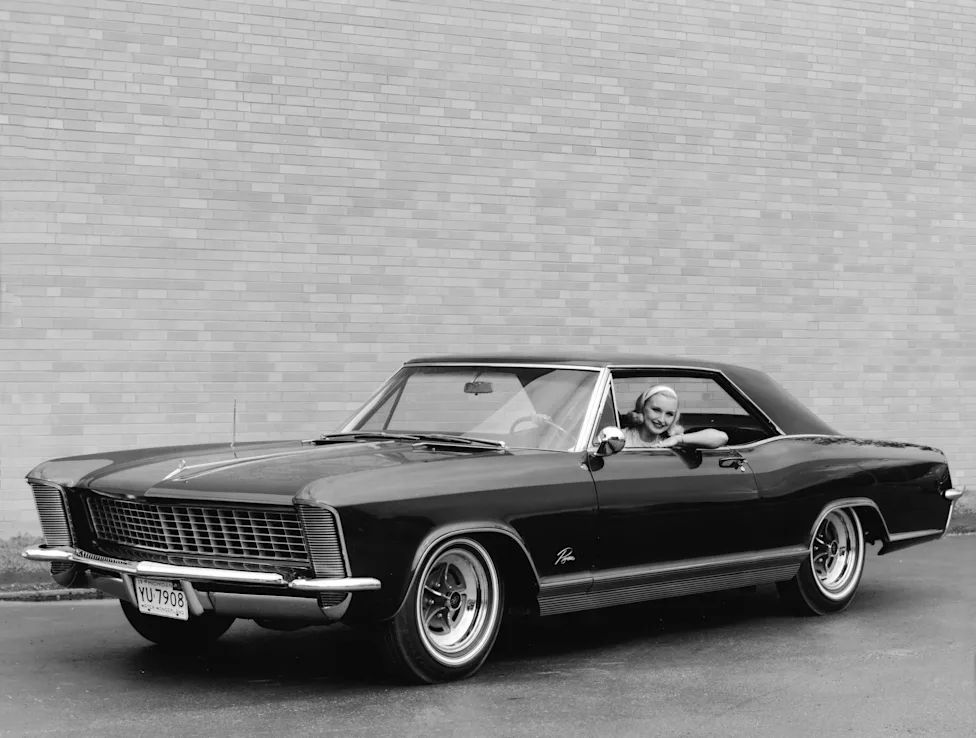



















Autoblog and Yahoo may earn commission from links in this article.They want the Young AmericanIf there is a visual definition of what a prototypical "American car" could look like, many people, whether they're into cars or not, would picture something like this. They'd imagine a two-door coupe the length of a boat driven by someone with a kind of old-school swagger that doesn't exist anymore. The seats inside resemble leather couches, and the whole thing rides on suspension so soft, potholes feel like waves.Outside, it evokes a kind of unique styling language that just doesn't exist anymore. It rocks a vinyl landau roof, opera windows the size of a dinner plate, and a hood ornament standing at attention like it's guarding something important. Nobody needed this car. They didn't need something with a huge back, or a ride that floaty, or that much chrome pointed at the sky. But, for about two glorious decades, Detroit built an entire industry around giving America exactly that, by the hundreds of thousands, every single year.AdvertisementAdvertisementThis kind of car is known as the personal luxury car, and it's a segment of automobile that doesn't really exist anymore. Nobody quite planned its existence on purpose, and that says more about mid-century American taste than almost any other class of vehicle Detroit ever built.Getty ImagesView the 2 images of this gallery on the original articleVaguely EuropeanThe spiritual origin of the personal luxury car segment traces back to the two-door specialty cars from the 1950s. These two-door hardtops and drop-tops, including the Buick Roadmaster Skylark, Cadillac Eldorado, and the Chrysler 300 were expressions of high-performance and excess. At the same time, Ford and General Motors were developing their own homegrown competitors to the kind of small European sports cars that were gaining popularity among a niche segment of American buyers.. After World War II, returning GIs were arriving back in the United States with MGs, Jaguars, Triumphs and Austin-Healeys after serving overseas in the years after the war, which prompted Detroit's automakers to respond in a uniquely American way. In an effort to fill this newfound niche market segment from a much cheaper price-point, General Motors released the Chevrolet Corvette in 1953; a two-door, two-passenger roadster made up of a unique fiberglass body and off-the-shelf components from other Chevrolet models. To compete, Ford released the Thunderbird in 1955. In contrast to the 'Vette, Ford described its two-seat creation as "a personal car of distinction," featuring 'European-inspired' styling, a standard removable fiberglass top and a throaty 292-cubic-inch OHV Y-block V8. But while the T-Bird enjoyed significantly better sales success over the Corvette at the time. Ford research found that the model had a persistent complaint from potential buyers: it had no back seat for families. Then-Ford President Robert McNamara, who ran Ford as lean and mean as possible, made adjustments so that it could sell in significant numbers.AdvertisementAdvertisementFor 1958, Ford gave the Thunderbird what its customer base demanded: size. In an effort to entirely rebuild the whole car around comfort and style instead of sportiness, the Blue Oval ditched the 2-seater roadster idea and stretched the T-Bird's wheelbase and gave it four seats. It worked. By the end of its generational run between 1958 to 1961, Ford sold 198,191 T-Birds; which was nearly four times the number it sold between 1955 and 1957. Getty ImagesView the 3 images of this gallery on the original articleThe Formula for Something BiggerOnce the Thunderbird proved that the formula for the "personal luxury car" worked, American automakers came to cash in on their own creations. In 1962, South Bend's Studebaker released the Avanti; a unique, fiberglass-bodied, V8-powered 4-seater that became a cult classic after its official production ended in December 1963. The same year, General Motors came into the picture with the Buick Riviera, which triggered a tidal wave of competitors. In 1965, American Motors came up with its own personal luxury car, called the Rambler (later, AMC) Marlin, a roomier alternative to the smaller, sportier V8-powered fastback pony cars of the day. The next year, Chrysler would use the same formula in the Dodge Charger, while Ford bit back at the segment with the Mustang-based Mercury Cougar in 1967. AdvertisementAdvertisementWith the Chevrolet Corvette positioned as its top dog for performance, personal luxury cars became the two-door flagships of General Motors' various brands around this time, which became a showcase for cutting-edge, new technology. After the release of the Buick Riviera, GM followed with the Oldsmobile Toronado in 1966, which featured a then-revolutionary front-wheel-drive platform. After its use in the Buick, Cadillac adapted the Toronado's front-drive platform for the Eldorado in 1967; a layout that it kept until the model's discontinuation in 2002.Massive to Malaise By the dawn of the 1970s, automakers made their personal luxury coupes as viable, comfortable alternatives to muscle cars. These were the days of the Chrysler Cordoba, the Ford Gran Torino Elite and the Lincoln Continental Mark series, which featured as much opulence as displacement under the hood. Alongside powerful V8s under the hood, personal luxury cars features acres of chrome, opera windows, vinyl landau roofs, rich velour and leather interiors and distinctive hood ornaments. This was peak Detroit indulgence, sold to a middle class that wanted a taste of luxury status without a luxury-sized price tag.However, what choked the segment's viability was a series of events that began with the 1973 oil embargo. These were heavy, thirsty cars built with zero regard for fuel economy, and cars that routinely got single-digit miles to the gallon were not something that consumers wanted if they were to escape the gas line. In response, Detroit put its big coupes through a crash diet. In 1977, Ford's Thunderbird and Mercury Cougar were downsized; made 10 inches shorter and 900 pounds lighter, as it adopted a smaller platform. From 1978 to 1979, GM radically downsized its models across its range; the 1978 Buick Regal, Chevrolet Monte Carlo, Oldsmobile Cutlass Supreme, and the Pontiac Grand Prix were not only made 900 pounds lighter, but their bodies became as small as compact cars of the period. The '79 Eldorado measured 20 inches shorter than the previous model. Though they were successful the first few years out, the segment never fully recovered. In the 1980s, prospective buyers, especially younger ones, were swayed toward European and Japanese imports like BMW, Mercedes and later Acura and Lexus. Throughout the '90s, the old names fell. The last Olds Toronado was sold in 1992 and the original Ford Thunderbird departed in 1997. The Lincoln Mark series left in 1998, while the Buick Riviera left in 1999 and the Cadillac Eldorado left in 2002. The last one standing was the Chevrolet Monte Carlo, which departed in 2007 as a coupe version of the Impala sedan and the brand's representative in NASCAR.Why It May Not Come BackPart of the charm of the personal luxury car was also exactly what killed it. It was never really about performance, efficiency, or even objective engineering merit, it was about presenting a specific kind of aspirational identity. In this world, comfort was status, size meant luxury and chrome was a sign of distinction. However, that trick only worked until a new set of buyers decided that they want something else to say about themselves; which often meant a pricier, more discerning badge or brand.AdvertisementAdvertisementThe personal luxury car is a genuinely American invention. It was born from one company overcorrecting a sports car into a land yacht, and it's never really been replicated since. Not because nobody's tried, but because the specific cultural moment that made a landau roof feel aspirational instead of absurd only happened once. Today, SUVs make up the bulk of sales for mainstream brands like Ford and Chevrolet, as well as luxury brands like Cadillac, Lincoln and even BMW and Lexus. The meaning of "personal luxury" may be interpreted as a size thing in the big '26, but in today's hyper-connected automotive world, it may be something bigger than a stylish SUV for the ultra-discerning. This story was originally published by Autoblog on Jul 16, 2026, where it first appeared in the Features section. Add Autoblog as a Preferred Source by clicking here.