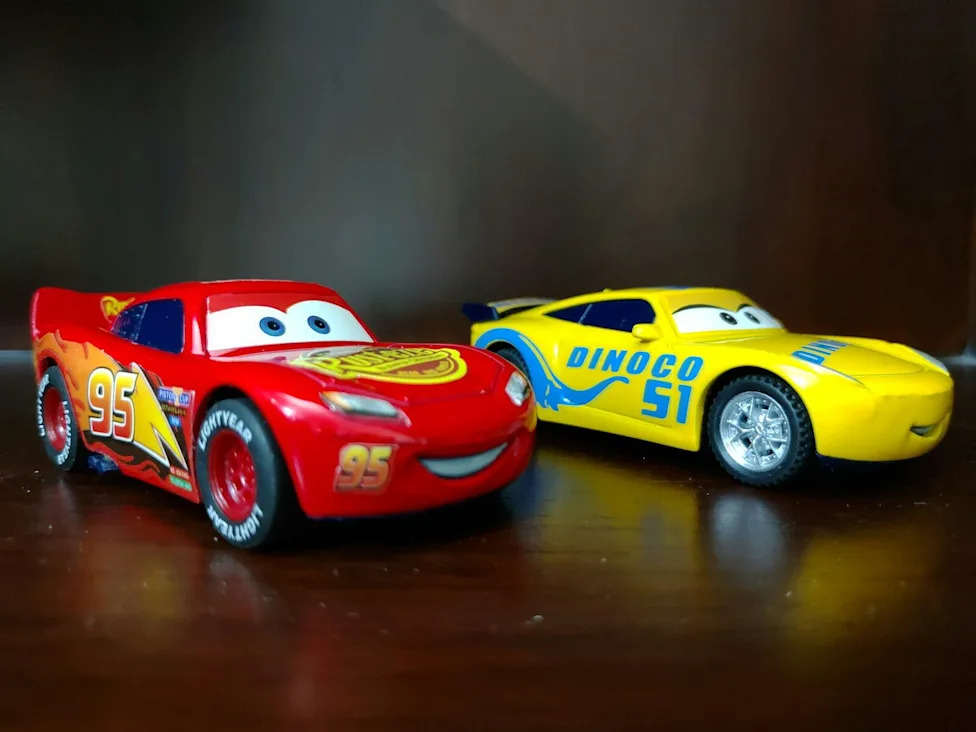



















What the 'Cars' 20th Anniversary Re-Release Gets Right About Real Automotive HistoryDisney has put Pixar's Cars back into theaters, starting September 4, timed to land on the eve of the fan-invented Lightning McQueen Day on 9/5 — a date that exists because the number on the hood is 95. It is a marketing move of admirable simplicity, and it's worth noting up front that Disney isn't selling a remaster. The listing says the film screens in its original format, so anyone showing up expecting a fresh 4K regrade of Radiator Springs at golden hour is going to get exactly what came out of theaters in 2006.That's fine. Cars was never the Pixar film critics fell over themselves for, and it doesn't matter, because it became the one that funded everything else through a merchandise pipeline that has outlived several actual automakers. Twenty years of die-cast is the real anniversary here.But if you're a car person, the interesting part of this movie was never the plot. It's how much genuine automotive history Pixar loaded into a kids' film and then never explained.Doc Hudson was a real car, and a genuinely radical oneThe gruff small-town doctor voiced by Paul Newman is a 1951 Hudson Hornet, and picking that car was not a random reach into the 1950s parts bin. Hudson was a small independent competing against Detroit's Big Three, and it beat them with engineering rather than displacement.Related ArticlesInside the 427 Cobra From The Gumball Rally Now Crossing the BlockWhy 3-5 Year Old Used EVs Are Britain's Fastest-Selling CarsAdvertisementAdvertisementThe trick was the "step-down" body Hudson introduced in 1948. Instead of setting the floor pan on top of the frame rails, Hudson recessed it inside them, so occupants sat down within the structure rather than perched above it. The result was a car with an unusually low center of gravity at a time when American sedans handled like top-heavy furniture. Combine that with a 308-cubic-inch flathead straight-six and you had something that could carry corner speed while V8 rivals were still fighting their own body roll.It worked embarrassingly well. Per the vehicle's entry in the national register maintained by the Hagerty Drivers Foundation, the Fabulous Hudson Hornets took 81 NASCAR wins and multiple championships between 1951 and 1955 — with a side-valve six, against overhead-valve V8s, from a company that would be absorbed into American Motors before the decade was half over.So the movie's whole premise about Doc — a dominant racer discarded and forgotten — isn't a screenwriter's invention. Hudson genuinely won everything and then genuinely vanished.Practical note if the anniversary tempts you into the classifieds: step-down construction is unitized. There is no separate frame quietly holding things together while the sills rot. Corrosion in the rockers, floors, or the area around the rear wheel arches on one of these is a structural problem, not a cosmetic one, and it will wreck a valuation faster than a tired engine. Have the underside on a lift before you talk price, and get an agreed-value policy written against a real appraisal rather than a guidebook number — these are thin-market cars where a total-loss settlement based on "average retail" won't come close to replacing a good one. The flathead six itself is over-built and unfussy. The sheet metal is the risk.Paul Newman wasn't stunt castingCasting a movie star as an old race car is the obvious move. Casting this one was better than obvious.AdvertisementAdvertisementNewman came to racing through the 1969 film Winning and then took it seriously enough that in June 1979, at 54 years old, he shared a Dick Barbour Racing Porsche 935 with Rolf Stommelen and Barbour himself at the 24 Hours of Le Mans and finished second overall, winning the IMSA class in the process. It was his only Le Mans start.Which means the voice telling Lightning McQueen that he's just a rookie who doesn't understand what racing costs belonged to a man who had actually done a night stint at La Sarthe in the rain. Pixar didn't advertise that. It just quietly made the performance land differently for anyone who knew.The franchise moves real metal, tooIf you want proof that this cartoon has weight in the actual car market, look at what happened when Porsche and Pixar built a one-off 911 based on Sally Carrera. At Monterey in August 2022, the 911 Sally Special sold at RM Sotheby's for $3.6 million — a record at the time for a new Porsche at auction, with every dollar going to Girls Inc. and USA for UNHCR.Related ArticlesA Fake Baby-in-the-Car 911 Call Just Turned a Philly Cadillac Theft Into Two ArrestsThis 1959 Land Rover Pickup Once Belonged to Daniel Craig and Rachel Weisz, and Their Goodbye Note Gets the Model Name WrongAdvertisementAdvertisementYes, it was a charity sale, and charity results always carry a premium. But the bidding still tells you something real: a modern 911 with a movie tie-in cleared numbers that serious vintage machinery struggles to reach. Nostalgia is now a legitimate line item in the collector market, and Cars has an unusually strong claim on the wallets of a generation that is currently entering peak earning years.The Route 66 connection is the part nobody mentionsThe re-release also lands in a year when Route 66 turns 100. The highway was established November 11, 1926, running roughly 2,400 miles from Chicago to Santa Monica, and its slow death by Interstate bypass is not backstory — it is the plot. Radiator Springs is a town that got cut off when a faster road went around it, which is an accurate description of what happened to hundreds of real communities after the Interstate system arrived.That's the thing worth remembering as the popcorn buckets and the F1 tie-ins and the safety-car wraps roll out. Underneath the merchandising is a film that got the history right: a bypassed highway, a forgotten independent automaker, and an actor who could actually drive. Twenty years later, that's still a better foundation than most car movies manage.