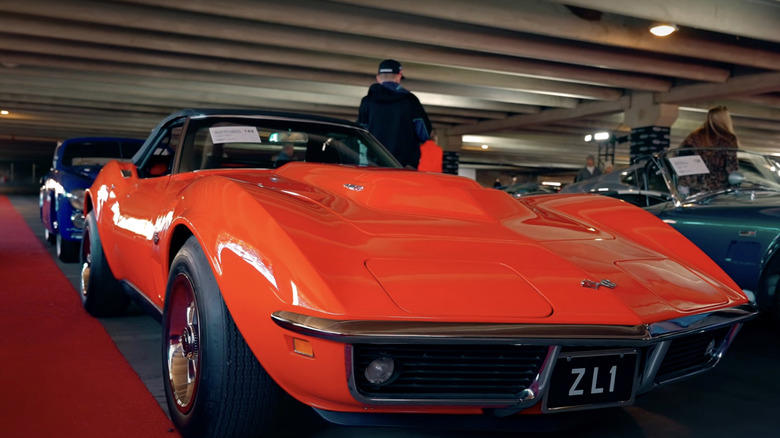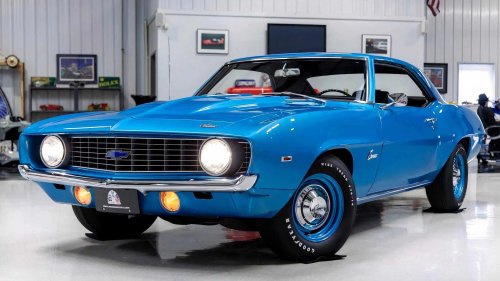
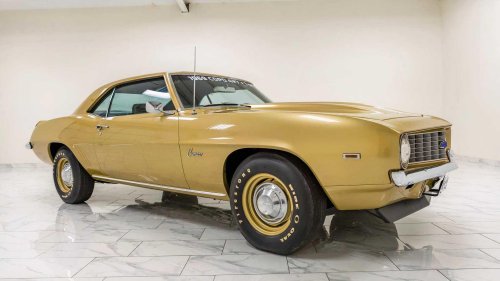
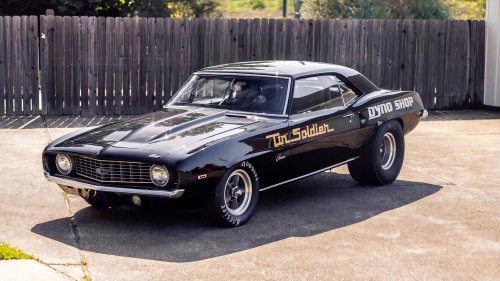
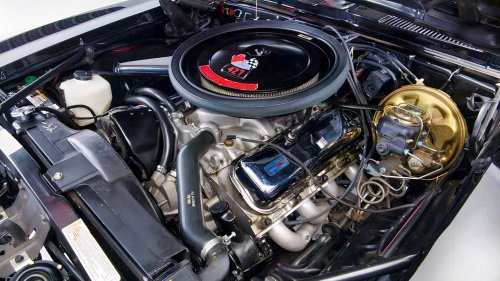
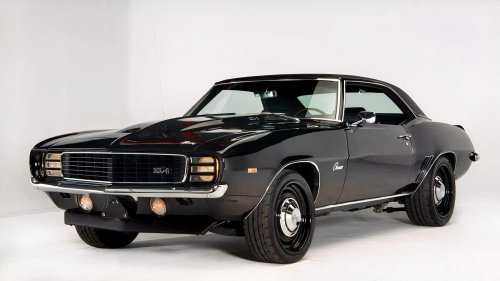
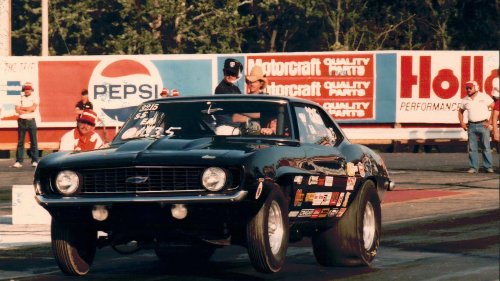
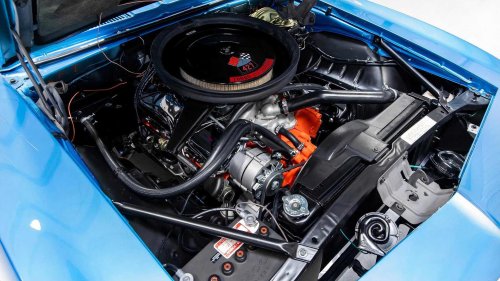
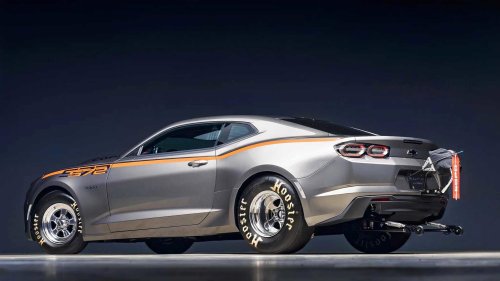
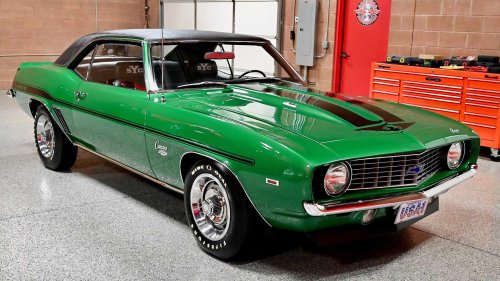
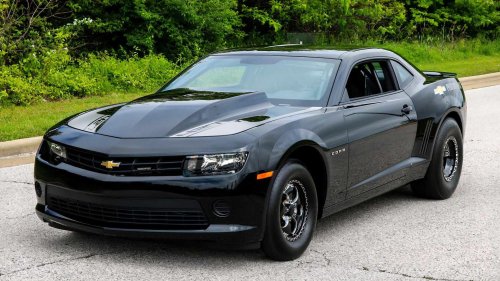



















The late 1960s was a great time to be a car enthusiast in Detroit. This was the great muscle car era and almost every major manufacturer had a fast car. If you were into pony cars, then the Chevrolet Camaro was one of the best cars at the time if you didn't want the obvious Ford Mustang. But every car enthusiast wanted to go a little bit faster and while Chevrolet gave them faster cars, it was never enough to just be fast on the streets, you also had to be fast on the drag strip.Now, being fast on the drag strip isn't a simple matter of just adding more power to a car, a lot has to be changed in order to be able to achieve this feat and every little upgrade counts. Chevy never offered off-the shelf performance upgrades that could make it fast on the drag strip, but a few customers, with the help of dealers, knew of a certain loophole they could use to get the best GM parts on their vehicle to build some of the fastest Camaros in the world. The Origin Of COPO Bring A TrailerToday, most manufacturers have performance divisions but at the time, COPO was not one. In fact, it was a mundane administrative system used to order and customize fleet vehicles. Customers never used these, only businesses and government agencies, like the police department, used these to create batch orders for their massive fleet vehicles. But a few people found out you could use this system to order any parts you wanted for your car as long as GM offered. For Context, GM factory (RPO) options had limits on what could be put in a car, like you couldn't have an engine that was larger than 400 cubic-inches (6.6 liters), but with the COPO program, you could.Knowing this could be done, certain dealers used this loophole to bypass the factory limits. They customized and ordered a fleet of Camaros that had the most powerful engines GM had at the time with almost no fancy options from the factory. These cars were ordered with the purpose of being race cars, so there were no comfort features, only options meant to make them go fast. Why These Are The Rarest Chevys via Bring A Trailer In today's world, a supercar with a 500-unit production is considered rare, but in the 60s, manufacturers weren't really set on producing limited cars. In fact, they wanted to produce as much as possible to make more money. During its three-year production, Chevy made over 243,000 Camaros. The rarest of these factory cars were the Z/28s, but they still made over 20,000 cars. But could you guess how many COPO Camaros were made? There are no contract numbers, but it is estimated to be around 1,015 to 1,084 cars.It seems a fair number of people wanted these cars, so interested racers and dealers came up with a suitable package and ordered these cars through the COPO program. These COPO cars are the "Holy Grail" for collectors today and the reason is simple, they weren't supposed to exist or sold to the public. Unlike today's cars, where manufacturers put special packages and limit them to certain cars, the COPO Camaros was only made possible because racers wanted this package and knew where to get it. Some Cars Were Built Specifically For Drag Racing Bring A Trailer Street racing is something that has always been popular and even today, it is still alive with some of the fastest cars on the road. The recipe was the same back then, the title for the fastest cars were usually fought on the street, but if you really wanted to prove your worth, you went to the track which was a more serious game. Chevrolet kind of knew people were using the COPO system to build "Stock" class racers, but this was the only way to get cars that were already fast enough to beat Ford and Chrysler.Unlike circuit racing, drag racing was a very easy way to measure a car's potential and performance against other cars. The regular guy who could afford a high performance Camaro could come see these race cars beat the competition and that would give them the push to go buy that SS or Z/28 sitting on the showroom floor. But unlike the ars that sat in the showroom, the COPO cars were built to dominate the NHRA. The ZL-1 427 Was A Racing Engine That Broke The Rules Bring A TrailerThe main ingredient for a muscle is a big V8 under the hood and the Camaro had about eight different options to choose from. But if you wanted the most powerful engine, you went for the one with the biggest displacement. The original big block engine for the COPO cars was the L72 427, this was an option known as the COPO 9561 which was a cast iron engine that made 425 horsepower and 460 pound-feet of torque. This huge 427 cubic-inch (7.0-liter) V8 was the original engine fitted to COPO cars. The most famous were the Yenko cars that used these engines and about 201 of them were made, and they were some of the fastest cars on the road. But there was an even nastier engine that was available through the COPO program.There was an option known as the COPO 9560 which turned the original big block L72 into an all-aluminum engine designed just for drag racing known as the ZL-1. While most of its design was kept the same, the all-aluminum material made this engine way lighter than the cast version. In racing, where weight saving is everything, this was a great place to get rid of unnecessary weight as it shaved off about 100 lbs from the front of the vehicle. The ZL-1 was officially rated at 430 horsepower, but people believe this to be understating the power, as some engines made as much as 500 horsepower. It was the most exotic, expensive, and most powerful engine Chevrolet had ever stuffed into a production car. But this was also conceived by a customer who wanted a dedicated racing engine. A Chevrolet Dealer’s Influence: The Fred Gibb Story Bring A Trailer Don Yenko might have been the most famous tuner at the time to utilize the COPO program, but another dealer helped take this platform to the next level. Fred Gibb was a Chevrolet dealer and a drag racing fanatic who wanted this car to stay competitive. The ZL-1 engine was conceived by legendary drag racer and mechanic, Dick Harrell. These engines were ordered through Fred Gibb's dealership in Illinois.However, building these cars came at a hefty cost. As previously mentioned, these were the most expensive Chevy engines at the time. The ZL-1 engine option alone cost $4,160 (around $36,000 today), more than the price of a standard Camaro. Fred Gibb had to order 50 cars, which was the NHRA minimum requirement. When the cars arrived at his dealership with a total sticker price of over $7,200 ($64,000 today), Gibb struggled to sell them. Eventually, 37 of the 50 were returned to Chevrolet and redistributed, leading to the total production of just 69 units. This makes the ZL-1 powered COPO cars very rare and highly collectible. The COPO Hall of Fame: 9560, 9561, and 9562 Bring a TrailerNot many COPO cars were made and with only 1000+ cars made at the time, which may be much less now, since some might have crashed.COPO 9560: The legendary ZL-1 Camaro. Only 69 were ever produced. COPO 9561: The "High-Performance" Camaro, featuring the iron-block L72 427 engine. Roughly 1,000 were made, with many going to Yenko Chevrolet. COPO 9562: The COPO Chevelle. Around 323 of these "sleeper" Chevelles were built with the 427 engine, making them arguably some of the most underrated muscle cars in history. The Rarest COPO Camaro Ever Bring A Trailer While the ZL-1 is the fastest and most powerful Camaro of its time, the title of "Rarest COPO" actually goes to a one-off 1968 COPO Z/28 Convertible. It was a "one-of-one" car built specifically for Chevrolet General Manager Pete Estes. At the time, the Z/28 package was only available as a coupe. To convince Estes that a street-legal Z/28 was a good idea, performance manager Vince Piggins used the COPO system to build a convertible version for Estes to drive as a personal car. It remains the only factory-built 1968 Z/28 convertible in existence. COPO Cars Still Exist With The 5th and 6th Gen Camaros Bring A TrailerAfter the first gen, the COPO Camaros did not exist until the return of the fifth gen Camaro in 2012. It was no longer a loophole to get race cars anymore but was now under Chevrolet's Performance division, and they remain purpose-built NHRA drag cars. The COPO name still represents the absolute peak of Chevrolet performance with limited production of 69 cars per year. In the 60s, the biggest and baddest engine was the 427 cubic inch V8, today it's much bigger.Even with modern tech and forced induction used to push out max power, Chevy has still stuck to its big displacement engines with road cars like the 6.2-liter V8 engines. However, the most powerful COPO Camaro ever is powered by a 632 cubic-inch (10.4-liter) V8 engine that makes a staggering 1,004 horsepower and 870 pound feet of torque. This is a monstrous engine that is also available as a crate engine but is meant for competition use only, and the price? $33,000, which is similar to the old ZL-1 engine. Genuine COPO Cars Are Now Worth a Fortune via Bring A Trailer In the classic car world, a very rare, original vehicle tends to bring the most value and the COPO Camaro is one of those rare classics. While a standard 1969 Camaro SS might sell for $60,000 to $90,000, a genuine, documented COPO 9561 can easily double that. The modern COPO cars (5th and 6th generation) also hold their value remarkably well. Because they are limited to just 69 units per year, a tribute to the original 1969 production run and they are instant collectibles. However, since they are not street-legal, their market is limited to serious racers and high-end collectors. Recent Sales of the Most Expensive COPO Cars Bring A Trailer The prices for these cars have reached astronomical heights at auctions like Barrett-Jackson and Mecum:1969 ZL-1 (COPO 9560): A highly original, documented example sold for over $1,000,000. 1969 L72 (COPO 9561): Clean examples typically range between $170,000 and $250,000, with exceptional cars climbing higher. Modern COPO (2023 632 Big Block): These modern racers, despite being track-only, have sold for as much as $198,000 at recent auctions. Sources: Bring A Trailer, Classic.com, Chevrolet.