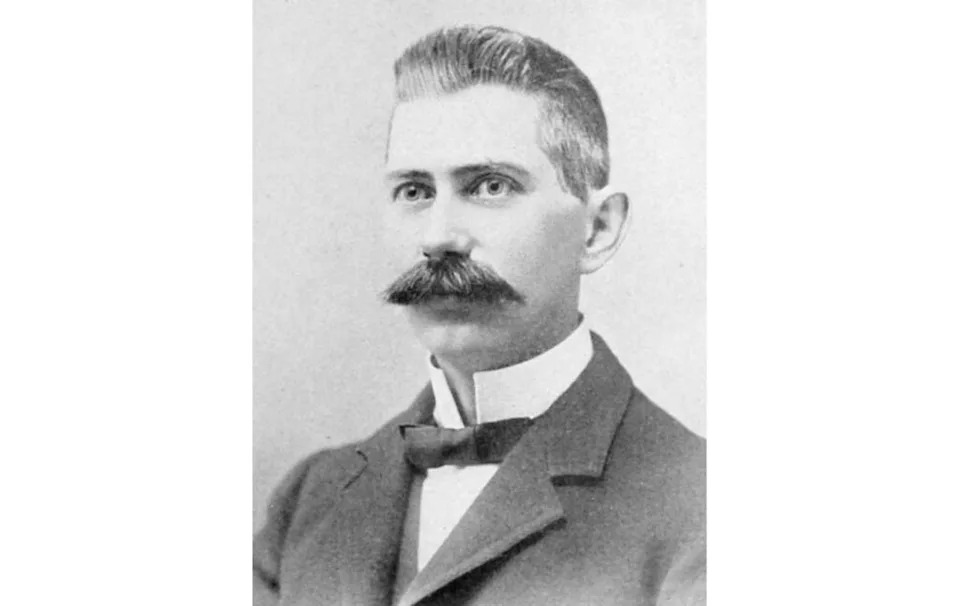
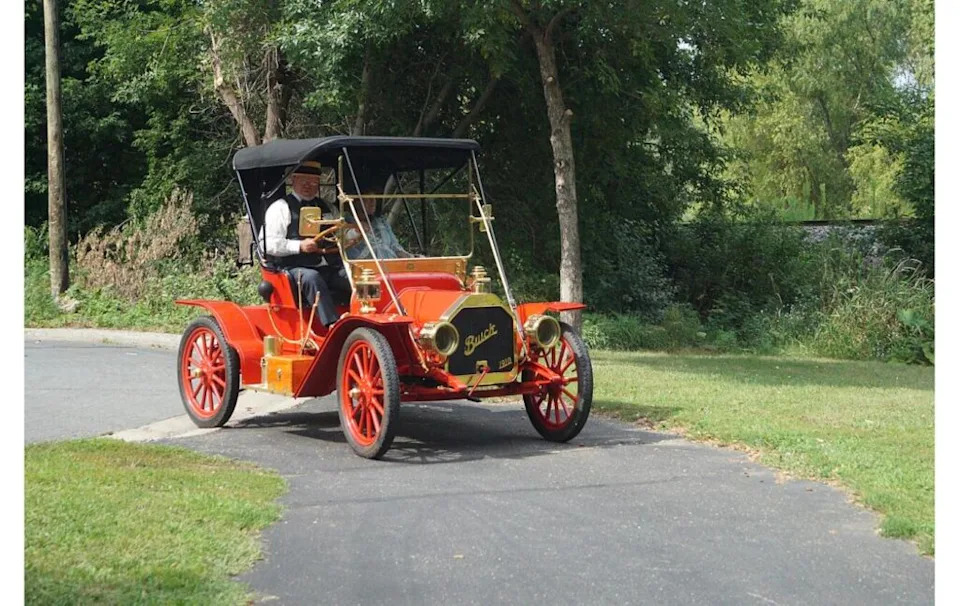
Today in Automotive History: September 17, 1854 — The Birth of the Man Who Gave GM Its First EngineThe Auto WireEL PuckettThu, September 17, 2026 at 1:09 PM UTCAdd us on GoogleOn September 17, 1854, in the Scottish coastal town of Arbroath, a butcher's assistant and a carpenter welcomed a son named David Dunbar Buick. He would never get rich off the company that carries his name, and he would die nearly broke. But the engine design he helped bring to market didn't just launch a car brand — it became the blueprint every gasoline engine on the road still borrows from, and the company built around it became the foundation of General Motors.From Bathtubs to Combustion EnginesDavid Dunbar Buick, the Scottish-born inventor and founder of Buick Motor Company, born September 17, 1854.Buick's family moved to Detroit when he was two, and by 21 he was working for a plumbing supply manufacturer. When the company hit financial trouble in 1882, Buick and a partner bought it outright. He turned out to have a real gift for invention: he developed a method for fusing vitreous enamel to cast iron, a process that made affordable white bathtubs possible and is still used in enamel-coating cast iron fixtures today.By the 1890s, though, Buick had gotten distracted by a newer obsession — the internal combustion engine. He sank so much of his plumbing profits into engine experiments that his partnership dissolved in 1899. That same restlessness led him, alongside engineer Walter Marr, to develop what Buick called the "valve-in-head" engine: a design that placed the intake and exhaust valves directly in the cylinder head rather than off to the side, as nearly every other engine of the era did. Eugene Richard patented the design in 1902, and Buick's fledgling company was awarded U.S. Patent No. 771,095 in 1904.A Better Engine, a Company That Almost Didn't SurviveThe side-valve ("flathead") engines common at the time were cheaper to build, but they choked off airflow and wasted energy. Buick's valve-in-head layout let air and fuel move more directly into and out of the cylinder, producing more power from the same displacement. It's the same basic principle every overhead valve and overhead cam engine on the road today still relies on — modern OHC engines are, mechanically speaking, a refinement of what Buick's team patented in 1902.AdvertisementAdvertisementThe engine was ahead of its time, but the company almost wasn't around to capitalize on it. Buick burned through two failed ventures before financier Benjamin Briscoe loaned him $5,000 to incorporate Buick Motor Company in 1903. Control passed to Flint Wagon Works later that year, and in 1904 a wagon and carriage magnate named William C. Durant was brought in to run it. Durant turned out to be one of the great salesmen in American industrial history, and under him Buick's production exploded from 37 cars in 1904 to 8,820 by 1908 — briefly making Buick the best-selling car brand in the country.The Company That Became General MotorsThat explosive growth gave Durant the capital and credibility to do something far bigger: in 1908, he used Buick as the foundation to incorporate General Motors. Without Buick's valve-in-head engine driving sales, there's a real argument GM never gets off the ground at all, at least not on the timeline it did.Buick himself didn't stick around to see it. He accepted a severance package and left the company he founded in 1906, selling his remaining share back to Durant for $100,000. Every venture he tried afterward, an oil scheme, a Florida land deal, a carburetor company, a doomed automaker called Lorraine Motors, failed. By 1928 he was teaching at a Detroit trade school and couldn't afford a phone. He died of colon cancer on March 5, 1929, and wasn't inducted into the Automotive Hall of Fame until 1974, 45 years after his death.Why It Still MattersA restored 1910 Buick Model 14 Roadster, still running on the valve-in-head design Buick patented in 1902. Photo: Greg Gjerdingen, CC BY 2.0.It's easy to treat this as a 120-year-old footnote, but the through-line to today's showrooms is direct. Buick is still a core GM brand, and its current U.S. lineup of Envista, Encore GX, Envision, and Enclave crossovers traces its name straight back to a Scottish immigrant's engine patent. The brand's fortunes are still tied to the same forces that shaped it in 1908: manufacturing decisions, capital bets, and how well a company reads what buyers actually want. That's playing out right now as GM pours another $550 million into gas-powered vehicle production even while chasing EV volume, and as the industry broadly absorbs tens of billions in losses after overestimating how fast buyers would go electric, a bet GM itself is making again with Buick's planned shift to an all-electric lineup by 2030.AdvertisementAdvertisementBuick's modern models haven't escaped the growing pains of that transition either. GM has posted record quarterly EV sales even as profitability lags, and current Buick owners are dealing with their own version of the reliability questions that shaped the brand from day one: the Envision is currently named in a proposed class-action lawsuit over alleged brake defects shared with Chevrolet and GMC siblings. A century apart, the questions haven't changed much: does the engineering hold up, and does the automaker stand behind it when it doesn't.Buick never got to enjoy what his invention built. But every time an engine fires with its valves up top instead of down in the block, it's running on an idea a broke Scottish plumber chased because he couldn't leave it alone.What automotive innovation from over a century ago do you think still shapes the cars we drive today?Join our Newsletter, follow our Instagram page, and connect with us on Facebook.



















 +9 others