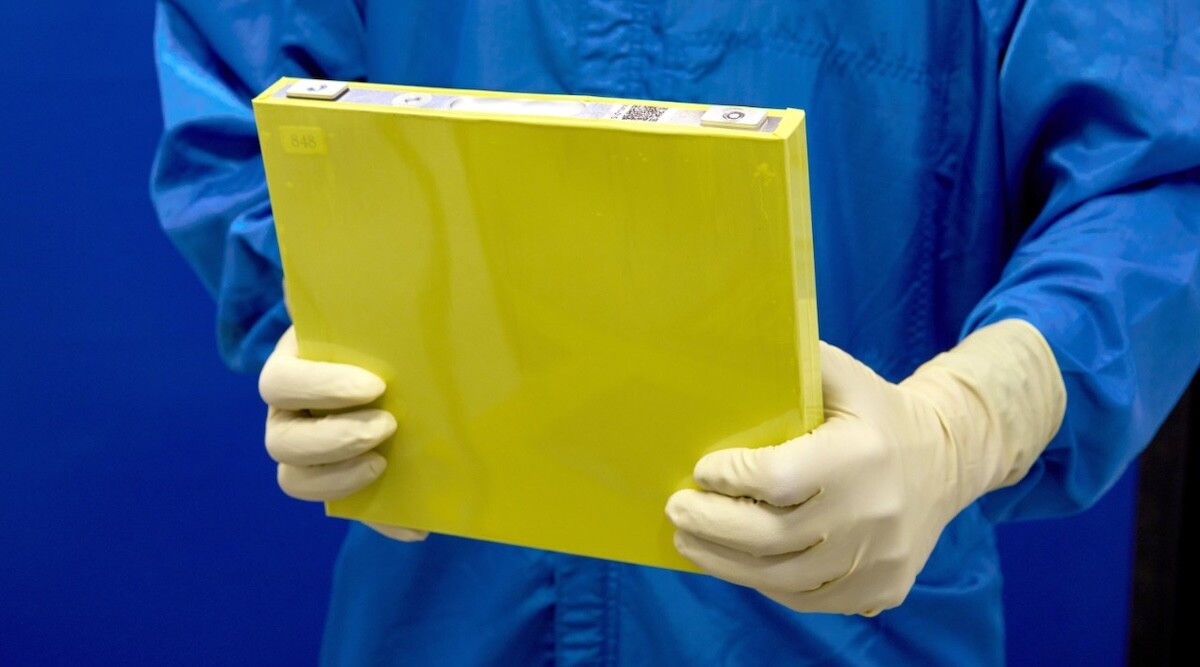
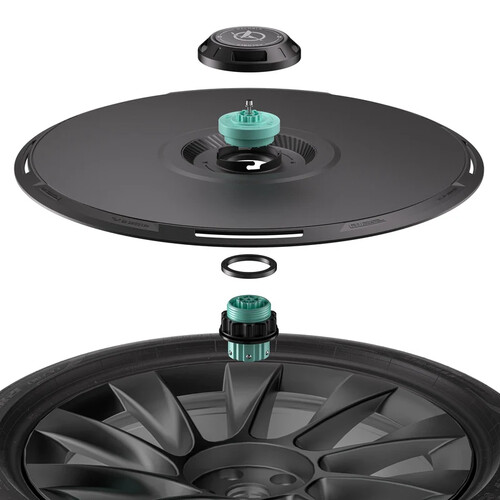
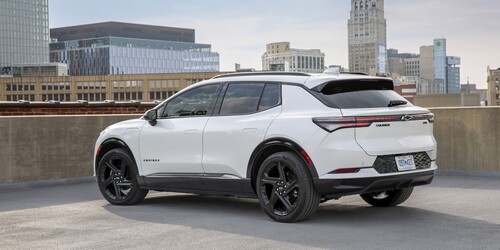
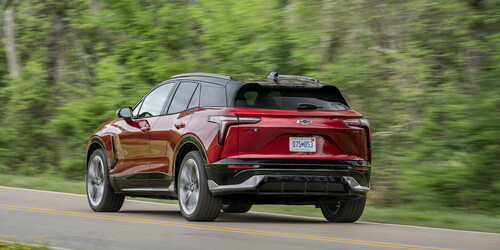
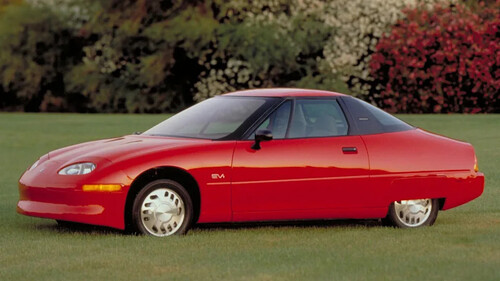
Back in March of 2025, when everyone anticipated that US President Donald Trump would kill the EV revolution in its cradle, General Motors decided that the time was ripe to introduce the idea of next-generation LMR (lithium manganese-rich) EV batteries to the car-buying public. What were they thinking? The writing was already on the wall. EV sales in the US nosedived after Trump’s allies in Congress eliminated the $7,500 federal EV tax credit, and recovery will be a long, hard, slog. And yet, GM was thinking that the vehicle electrification movement will recover after all, eventually… GM Has An LMR Trick Up Its Sleeve GM is among the US automakers to pull back on their EV lineups last year, the federal EV tax credit died a premature death. However, the company still kept its LMR batteries simmering on the back burner through Ultium Cells, a joint venture between itself and the leading firm LG Energy Solution. Now all that hard work is about to pay off. On September 29, GM announced that the Ultium battery facility in Spring Hill, Tennessee will be upgraded to produce battery cells based on the new LMR formula, with the automaker naturally calling dibs on the output for its forthcoming EVs. In terms of reviving interest in EVs among the car-buying public, the announcement is significant. While GM pulled back on its EV plans last year, the automaker pivoted into stationary energy storage systems featuring the low-cost LFP (lithium-iron-phosphate) formula, which can also be applied to EV batteries. The new focus on LMR is a concrete sign that GM foresees the EV market recovering, and recovering in a way that accommodates other low-cost formulas in addition to LFP. “By producing multiple chemistries, including high-nickel, lithium iron phosphate (LFP), and now LMR, in both pouch and prismatic form factors, Ultium Cells demonstrates its ability to adapt quickly as battery technologies evolve to meet a broad range of applications, from electric vehicles to energy storage,” GM explains, noting that its LFP and LMR investments will add up to a combined total of $2 billion by 2030, which is just around the corner. The Long Road To LMR EV Batteries If you’re wondering why the familiar NMC (nickel-manganese-cobalt) battery formula will remain on the company’s roster, that’s a a good question. GM’s VP of battery and sustainability, Kurt Kelty, indicates that the company’s high-nickel batteries continue to address markets where long range is a priority. LMR batteries come into the picture when affordability is the primary goal. GM expects the new formula to deliver improved performance at a lower cost than other EV batteries that slot into the more affordability category. GM, of course, is not the only automaker to eyeball the LMR formula. Manganese is Earth-abundant and less costly than other battery materials. Ford, for example, is among the other stakeholders spending loads of time and lots of R&D dollars getting the material to behave in an EV battery. Short lifespan and voltage decay have been among the notable shortcomings tackled during the initial R&D stages. Competition aside, GM is determined to win the race. After spending a good ten years working out the kinks in partnership with LG, in May of 2025 GM finally let word slip that an LMR battery was in the works, pitching the new formula as “a leap forward that will offer consumers EVs with an attractive combination of long range and low cost.” “GM aims to become the first automaker to deploy LMR batteries in EVs,” the automaker emphasized in a press release dated May 13, 2025. “Ultium Cells, a GM and LG Energy Solution joint venture, plans to start commercial production of LMR prismatic cells in the United States by 2028, with pre-production expected to begin at an LG Energy Solution facility by late 2027,” the company added. The initial pitch was for LMR to stake out turf in the area of the company’s electric truck and full-sized SUV lineup. so it will be interesting to see where the new formula lands. GM To White House: Hello…? Anybody Home…? Regardless of the Trump administration’s crusade against EVs, the new LMR formula has been an eye-catcher. In July of 2025, the Institute of Energy Efficiency at the University of California-Santa Barbara noted that the new battery was GM’s clap-back at China in the race to develop more affordable EV batteries. “Lithium iron phosphate (LFP) batteries were a made-in-America innovation, but China ended up cornering the market on what became the world’s leading solution in low-cost EV batteries,” UC-Santa Barbara observed. “Now, following a decade of development, General Motors has announced a battery breakthrough that might help American manufacturers reclaim some high ground: LMR, or lithium manganese-rich batteries,” the school enthused. That praise was not a one-off. In October, GM’s new battery won the Battery Innovation of the Year award at the 15th annual Battery Show North America. Around the same time, Fast Company also tapped the battery for its “Next Big Things in Tech 2025 list.” With this week’s announcement, GM further hinted at a red-hot competition with China for a share of the global EV market, emphasizing that its LMR batteries provide for an energy density 33% greater than the LFP formula, at a comparable cost. “Beyond flexing manufacturing might, bringing this new battery cell to market first is a milestone moment for keeping America competitive globally in EV and battery technology leadership,” GM emphasized again for good measure. That’s…interesting! Just last week GM President and CEO Mary Barra was among the corporate America representatives at the White House state dinner held in honor of Chinese President Xi Jingping. Evidently Barra aims for GM to grab a slice of the global EV pie, with or without a little support from White House policy makers. And Then There’s Tesla… The big question is whether or not US industry leader Tesla will turn its attention to the LMR formula. If you know the answer, drop a note in the discussion thread. For the here and now, though, affordability is not front and center in the iconic automaker’s plans as it preps for the official launch of the $200,000 Tesla Roadster EV on October 1. That’s $250,000 if you want to qualify for Founder status, but who’s counting? Photo: Regardless of the sharp U-turn in federal energy policy, General Motors is on track to manufacture EV batteries based on an LMR formula that delivers improved performance at a lower cost (LMR battery cropped, courtesy of GM).