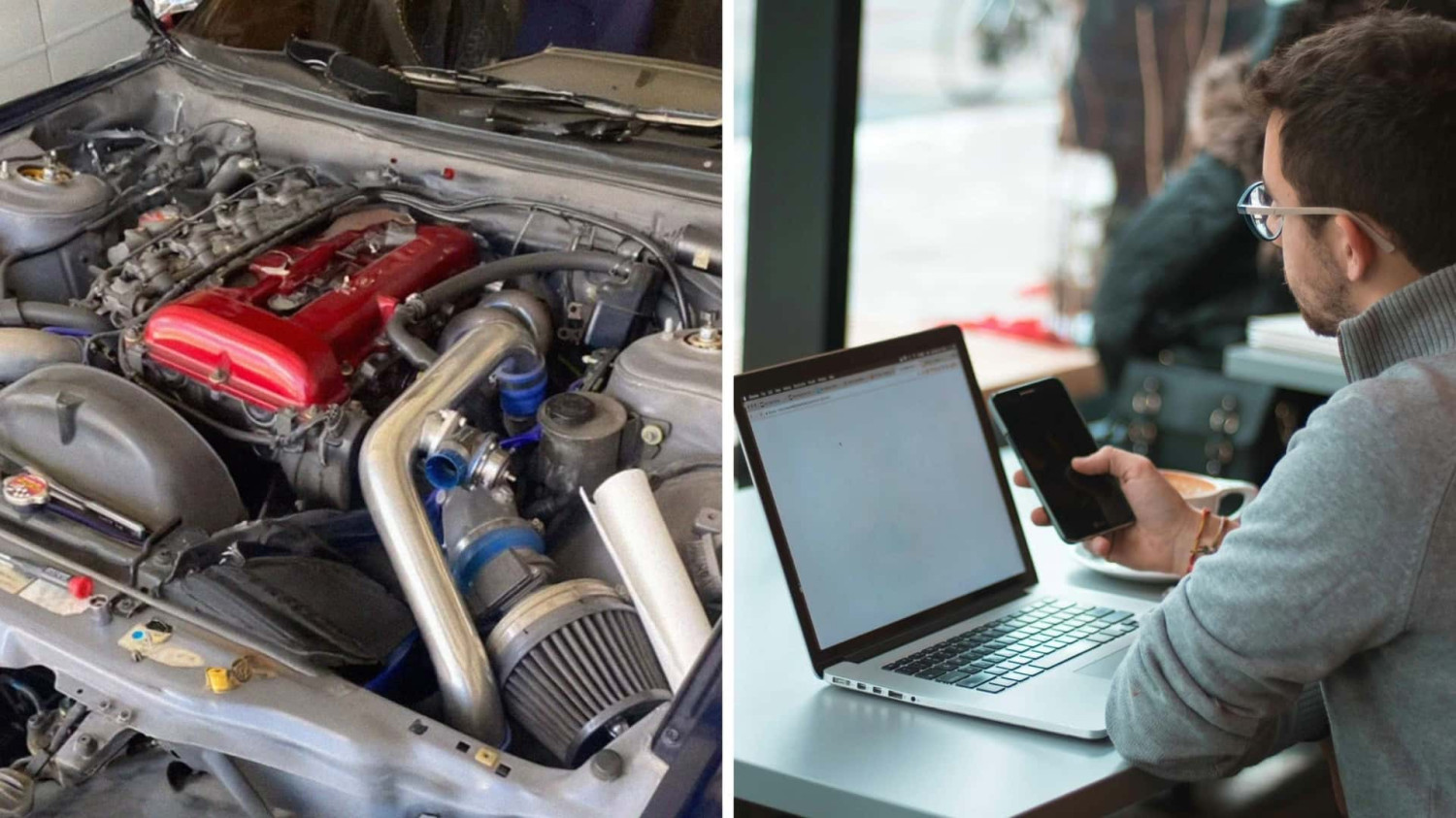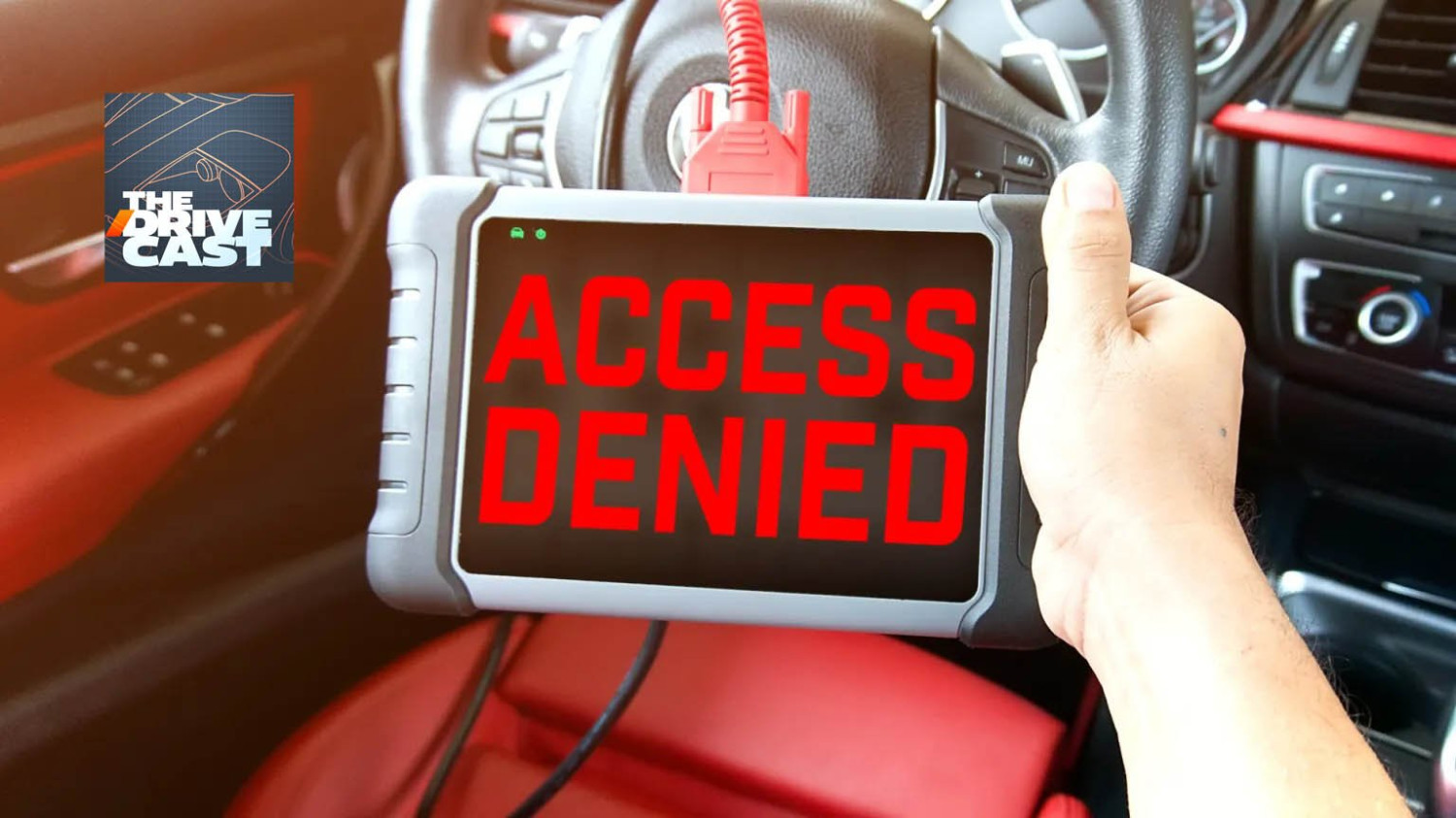



















Esara/Adobe Stock, edited by the author In the era of connected cars and software-defined vehicles automakers are going to great lengths, both in the name of profits and security, depending who you ask, to lock powertrains, paywall extra power, and frankly, it’s all made things harder for the aftermarket. Not to mention in other industries like agriculture, where farmers’ inability to repair their own tractors is its own hot button issue. On the latest episode of The Drivecast, Arin Ahnell, the CEO of Autotuner USA sat down exclusively with The Drive for a candid discussion about the future of software tuning, how it plays with the right-to-repair movement, and what happens to the modification culture that’s a huge part of the automotive enthusiast community as complex powertrains, sophisticated electrical architectures, and EVs take over our roadways. As cars have gotten more complicated, connected, and software driven than ever, chip tuning is a growing industry, but it’s also full of shady characters and random online sellers promising big power gains if you yank out your car’s brain and send it to them to modify. AutoTuner is trying to show you can run a legitimate business in this space, primarily by only offering the tools and services to jailbreak ECUs, not the actual tuning code itself. But that crosses straight into the existing battle over the right to repair, because Automakers really don’t want you messing with your car’s ECU. And even if you want to go the old fashioned route by bolting on parts, often you still need to get into the ECU for everything to work correctly. But what kind of risk are you facing by unlocking your car’s brain? What kind of risk is AutoTuner facing by providing the tools to do so? How does it all actually work? And what about those tractors? In this era nothing’s as easy as it seems. First time? The Drivecast is The Drive‘s weekly podcast that takes you behind-the-scenes on the largest controversies, stories, and characters shaping the automotive industry along with the way our roads look today. Powered by The Drive‘s inside access, original reporting, exclusives, and insights, The Drivecast aims to make everyone an insider. Listen to The Drivecast via Spotify, Apple Podcasts, or Amazon Music. Love it? Like it? Want to help? Leave a five-star review on your platform of choice to help get The Drivecast in front of more people. Have a suggestion, tip, request, or feedback? Drop us a line at feedback@thedrive.com. I promise, we read every single email. Full Transcript Kyle: All right, we’ve got Arin Ahnell here and Joel, of course, as always. Before we get into it, Joel, quick question: Have you ever actually tuned a car or messed with its code in any way? Joel: I have not, although I did own a car—and we’ll get into this in a second—that Arin’s old company could have messed with a little. I’ve always done bolt-ons, right? Cold air intakes, upgraded brake systems, stuff like that, usually around towing performance in my case. So I haven’t actually done the coding and tuning of that, but yeah. Kyle: Likewise, ECU tuning is a bridge I’ve yet to cross. It’s honestly a little intimidating, and I guess that’s what Autotuner is here to solve, to sort of unlock the mysteries of how all this stuff works. You think about tuning your car’s ECU and everything that could go wrong with the brain of the car, it’s a lot to get your head around. Especially you, Joel, with your constant talk of wanting a Rivian, or your wife wanting an EV for your next car. Good luck with that. So much could go wrong with a modern EV. Joel: Well, maybe, but thank goodness we have a guy like Arin here to talk about it. And by the way, Arin, I led into this a little: You have a background that is interesting to me because I grew up in the house of Quattro, and you were at APR for 17-plus years. We had a slew of Audis in this family. My wife and I at one point had a 2001 A6—it was a C5 4.2 widebody. Tuning’s limited because it was a naturally aspirated engine, but that whole brand was right up APR’s wheelhouse. That was bread and butter. Arin: Yeah, I’m probably just like you. I was a Volkswagen and Audi nerd. I knew every single chassis code, everything to know about those, and working for that company was an absolute dream. You got to see everything, all the cars that you never thought you’d ever be able to drive were right there in the shop. Joel: Like B5s, right? I used to have mechanic friends that all had B5 S4s, and I was like, “Why don’t I have one of those?” They were like, “Do you know why we work here? Because that’s the only way we can afford to fix these things.” And I’m like, “Touché, I don’t work here, so maybe it’s better off I don’t have one of those.” But jumping into it, broad strokes: What does the state of chip tuning look like in 2026? It is a very advanced era now. Arin: The thing that I saw, especially at the last company I worked for, is everything is getting way harder. The first thing that you even want to do is being able to read and write to the ECU, and that used to be something that a lot of companies could do in-house. You could get a reverse engineer, they could write some tools to be able to do it, and we started finding out that it would take years to get into a certain car. You can imagine how that might come off to ownership when you’ve got a $100,000 car sitting on your lot and they’re like, “When’s the product going to come out for this?” and you’re like, “I don’t know,” because you can’t figure out how to get into that ECU. So the basics of this is that it’s just getting harder, and that’s why companies like Autotuner exist, to make it easy for tuning shops. Joel: And that was actually literally my next question, because I was at the launch of the now-about-to-be-outgoing, but current lineup of GM vehicles that started with this new electrical architecture backbone. It was the C8 Corvette, the GM trucks, the SUVs, the Cadillac CT4 and CT5. The biggest thing was, “These are uncrackable. These are uncodable. You cannot touch these.” That C8 thing was a saga. But people did crack them. They got into them. Arin: Absolutely. Anything that has a chip on it is hackable one way or another, and it’s usually a matter of time before someone finds a way in. The most I’ve ever seen on some of these platforms that people actually wanted to tune, there are some where you will crack the ECU, you’ll get in, and now you’re able to read and write to it, and the manufacturer will figure out what you did and they’ll patch the ECU so that goes away. But it’s just a matter of time before you find another method and get back in. I don’t think there’s anything yet that has been proven to be uncrackable. Kyle: When I was looking at your website earlier this week and seeing how many automakers you guys have expanded to, having started from German cars specifically, it’s crazy to think how much work goes into cracking all of these ECUs. So many different security protocols, so many different programming techniques. How does it actually work when you are looking at a new ECU and trying to figure out how to get into it? How much time does it actually take to figure out how to unlock it at scale? Arin: It really depends, because a lot of these ECUs can be similar, so maybe they have the same microprocessor within it. That family of ECU, either by Bosch or Continental or another manufacturer, might share something similar between all of them. So some of the methods that you’ve used in the past to get into it might work on the new one. Sometimes it’s really just a process of testing. You have to test the different things that you know and see if it works or not. Sometimes it’s quick, sometimes it’s easy, sometimes it takes years. Joel: And that’s interesting, because we talked about the GM thing being locked down. Ford’s taken almost a different approach. We did a whole right-to-repair podcast, and we’ve done some other stuff with EZ Lynk. But Ford, you can get a tune from Ford—really, they’re white-labeling a Summit tuner, because they partnered with Summit. But it’s through Ford Performance, it’s through the dealership, and they’ll remap. They’ve really leaned in on the 2.3 turbos that are in the Mustang, Ranger, and Broncos. But you get a warranty. It literally unlocks power, and it increases fuel economy—which is hilarious to me, that they’re going to charge you more to get more power and fuel economy. Is that competition with automakers getting into the game? Ford’s like one of the few, but… Arin: I know of a couple situations similar to that in other industries, and a lot of these manufacturers realize, especially the marketing people: If they have a really capable engine, they want to have some sort of tuning for it, because it helps to sell the car. I don’t know if it’s necessarily competition for most tuners, because usually those are maybe not as powerful as another tune out there, and they’re usually really expensive compared to other tunes if they’re including a warranty. So it’s kind of like the product that maybe the guy that normally wouldn’t do tuning would choose. Kyle: Speaking of warranties, I know on principle ECU tuning does not necessarily void someone’s warranty, but it can open the door for a warranty denial, especially depending on what they end up doing with that or what they end up installing once they use your tool to unlock it or use your mail-in service. How do you guys think about that in terms of what the end user is going to end up doing with it? It’s obviously not your problem necessarily, but do you ever have people coming back and saying, “Hey, I unlocked my ECU with you guys and suddenly I’m getting denied warranty, and it was a very simple tune that I installed. What do I do?” How do you manage that relationship? Arin: There’s two parts to this, because when people hear, “Oh, it’ll void my warranty,” I think they’re thinking about the whole car warranty. If you put this on and now your blinkers stop working, they can’t void that. Now, if your engine blows up, if you do something crazy like that, sure. If you’ve been messing with everything, if you turn the thing up like crazy, that’s their right to do, and I think it’s usually right in your owner’s manual. So that part of the warranty, yeah, sure, that could be void. On our end, since we don’t actually write the tunes, what we do is we sell the device to other tuning shops and let them write the tunes. So it usually doesn’t come back to us at all. It’s almost like we’re private-labeling the tuning devices to other tuners, essentially. Kyle: On the OEM front for a second, I’m curious how your relationship, if there is an actual relationship, works with these guys. You’re essentially providing a platform for people to modify their cars beyond what the automakers intended. At the same time, aftermarket is a huge reason why people buy cars in the first place, and a lot of companies do support or encourage that to some level. Do you ever talk directly with OEMs, or are they just kind of like, “We appreciate what you do, but we’re not going to help you at all”? Arin: It really depends. I certainly saw this at the last company I worked for, where for years we had worked with Volkswagen on show cars and different projects, and the marketing people understood the value of tuning. They understood that certain customers were buying those cars, like a Golf R, because they want to modify it, they want to make it their own. So certain people in those companies like it. Maybe you could talk to a German engineer and he could be like, “You know, I made this and it’s perfect, how can you mess with my tune?” So those guys might not like it as much, but the marketing people and the sales people that realize what tuning can do for their brand, I think they do. I think one of the things is that since some of these cars do detect if tuning’s there, then they’ve kind of lost some of the liability for engines if there’s an engine problem at all, because it’s modified and now they don’t have to warranty it. So it’s not really a losing game for them. Joel: I couldn’t decide: Was that a Porsche, a BMW, an Audi, or a Volkswagen accent? Arin: That’s the best I could do for Germany. Joel: A combination of all of them. Arin: Exactly. Joel: Because I’m pretty sure I’ve been to a Porsche dinner before where they told me, “This is perfect,” and they looked to me, and I was like, “Nothing’s perfect, boys.” And they just looked at me like, “How dare you?” I’m like, “Keep the wine flowing, because this is ridiculous.” So I got a question about modern cars. Modern cars have so many sensors. Jim Farley made this offhand comment—someone asked him about right-to-repair and he’s like, “Oh, wow, a modern Bronco’s really complicated, I couldn’t imagine touching a Bronco, that’s unsafe.” A Bronco’s kind of a rudimentary vehicle; doors come off here, guys. That was an interesting choice. Just to Farley’s point, defending him for a second, the modern car has so many electronic sensors, from emissions to airflow to just everything, and one line of code from the wrong tune, you get one bug, and the car might not even start. How does that work now versus like the ’90s? Has this made it even harder, or because it’s all mapped out on a screen, it’s less guessing and checking? Arin: It’s kind of hard to mess up a tune unless you’re messing it up intentionally or you just don’t know what you’re doing. Usually what happens is, say you try to turn up boost pressure way high. There’s usually other limiters that will come into place and save things. So it’s like there’s layer upon layer upon layer of protections, and unless you’re turning them all off, and you even know how to turn them all off, it’s kind of hard to get too crazy with it. You know, there are some tuners that are pushing platforms extremely hard, and yeah, they start turning things off and they will have problems, but most people out there, I don’t feel like it’s a big thing or you’d hear about more cars failing and then people would stop using those tuners. Joel: I remember Emelia, she does all these different builds, YouTuber. Before the C8 was cracked, she was like, “Screw it, I’m going to turbo this car.” And she slapped turbos on it. I remember the startup video where she went to push the start button and she’s like, “I wonder if it’s going to start,” because there’s so many sensors and she’s messing with the airflow. The shock and delight when the car just fired to life, she pushed the button, and of course you hear these turbos spooling, but then all these sensors went on and they had these lights, because everything was off-put. But it worked, it just wasn’t happy about it. And that wasn’t even a tune, that was just bolt-ons. Arin: Just putting them on. That would dramatically change the volumetric efficiency of the engine, and most of these ECUs are load-based. If that is way off, all of the calculations that the ECU uses to try to figure out what it should do would just be completely wrong. So yeah, it might be able to start and die down after cold start, but driving it, I don’t think that that would probably work very well. At least not long-term. Kyle: I would imagine so. How do you know, when you’re validating a new protocol, how do you know when the ECU is fully unlocked? It’s not like there’s a screen that comes up that’s like, “ECU unlocked!” as you get into it. How do you know it’s ready to go for consumers? Arin: It depends on what you’re trying to do, either read the ECU or write it. So if you’re trying to read the ECU, finally the method that you’re doing is letting it pull all the code off of the ECU. It’ll pull all the different maps or different information that’s on there, essentially. If that dumped, it’s like, okay, well, it worked. As far as writing it back to the ECU, you usually start with a couple bytes, you change them, you run a checksum on it, you flash it to the ECU. Does the car start? Does it boot up correctly? Then yep, we’re all good at that point. Because otherwise, if you try to change a file and then flash it with a standard flashing routine from the factory over the OBD port, if those files aren’t signed a certain way, the ECU won’t accept the file at all. It just won’t work. So it either works or it doesn’t. Joel: How do you actually get around the unique security protocols used by different manufacturers? How do you even tackle this? Arin: Certain things I can’t say, obviously, but it depends, because we have three main ways to flash an ECU. You can flash it with that OBD port, which is what inside your car connects to it. Another way is you have to take the ECU out and touch the little pins where the engine harness would connect to it. And then the last way is opening up the case, and there is usually a boot pin. So you’re restarting the ECU and booting it up into a different mode, and it lets you read and write to it. It depends on the ECU you’re using and the method you’re using. There are different ways, either it’s already there from the factory, some sort of service mode, or you’re literally trying to figure out how to skip some sort of check and turn that off so it doesn’t check if the file is real or not from the factory, and you can put whatever you want on it. The last thing is sometimes you’re trying to capture a password at a certain time. You can put pins on the circuit board and the password will cross something and you grab it. Joel: You said a word in there that flagged in my head: “check,” like a system check. Do you feel that today automakers are actively making it harder in an arms race for you guys, or do you think they’re not actively trying to do it, it’s just an inherent byproduct of the increased complexity? Arin: I think it’s a little bit of both. I think that there’s some legitimate concerns where someone could just, say it’s connected by Wi-Fi to the internet, you want to make sure that someone can’t spoof that network and upload a file to your ECU and damage the car or make it not start. So I think there’s always some legitimate concerns to wanting to lock it down. I think there’s also some proprietary things that they might not want their competitors to see. We heard about all that stuff with Dieselgate and things like that; it’s not an open book for a reason sometimes, if that makes sense. Kyle: Oh, it does. Autotuner, the company itself, started out with German cars specifically. And now, it’s a huge range of manufacturers. What, if any, is the difference between trying to unlock an ECU from a German car, a Japanese car, or an American car? Are there region-specific techniques or structures in place that they try to prevent this from happening? Arin: A lot of them share the same ECU. A Bosch ECU, like the new Bosch MG1 ECU, there’s probably a couple hundred different versions of it, but it’s used in American cars from the ZR1 all the way to a Japanese car, a Korean car. Each of the manufacturers get to sprinkle in a little bit of their own flavor into that, but once you have a method that works on a lot of them, then you’re able to cover a very broad sweep of these. We have a couple solutions that work on a BMW and it also works on a tractor, because it’s the same—not the same ECU, but it’s all using this Bosch MG1 ECU. So once you get good at it, you kind of have methods for all these new ones and you just have to get them in and test them. Joel: So many businesses today depend on subscriptions. Netflix. My Disney+ subscription for my kids that was $80 last year, I just got a renewal for $189. It’s the world we live in now, though, right? Is it just an accepted fact these days? How have you made this work without them? You guys aren’t a subscription model, so I’m curious how you’ve avoided that. Arin: The founder of the company was really frustrated with the state of the tuning industry and all the subscriptions. You buy a tool, a scan tool, and you have to pay a subscription for that. So that was one of the founding principles: “We’re not going to do that. We’re just not going to sell a subscription.” So a massive chunk of what we’re doing here is just selling this device to new tuners and new shops, and finding ways that it can be used in not just a narrow market of say BMWs. We cover everything out there, anything that has an engine in it, even like a train sometimes can have a Cummins engine in it that you can tune. So people are finding use cases everywhere, and we get calls and messages from people that are in completely different situations all the time. So the market’s pretty wide and the world’s pretty large. Joel: On the subscription note, I have a question about your Autotuner One app, which launched in June, and you guys are already on 2.0. For those that don’t know, it’s an at-home flasher and a phone app in one sentence, right? But for those that listen to The Drivecast, back on episode 16 we had this whole thing about the DOJ and the OBD2 diesel tuner app EZ Lynk. What data does Autotuner’s One app actually store? Because it’s really neat, but how does it work in today’s data security privacy timeline? Arin: Basically, the customers connect it to their car and they read the file off of the car—it’s sometimes just like the calibration area of the ECU. They send that to their tuner, and then the tuner sends them back a tuned file. We don’t see any of that stuff that’s going on. Joel: The tuner’s not you, to be clear. Arin: Yeah, we’re not the tuner. We don’t do any tuning at all. So we’re just selling the devices to tuners that need a solution to be able to tune a car. We get to stay away from anything that people are doing. We have tuners that use our devices and then go to CARB and will get certified and make sure that they’ve jumped through all the right hoops to make sure that their tune is completely legal wherever they sell it. Joel: So I’m assuming you watched the whole fallout with the EZ Lynk thing, and it made you uneasy, and that’s why this is set up that way? Arin: I saw all the fallout when I was at the previous company. We had to get emissions dynos and do all these things. So yeah, if you’re getting into tuning, if you’re just doing the dirty stuff, you’re probably going to get caught. Just be smart here. Kyle: At the previous company you’re referring to, you worked for APR for a number of years, obviously big VW Group tuner. Arin: Great company. We merged with Holley and were part of Dinan, too, so a lot of different tuning brands were under the same umbrella eventually. Joel: A lot of iconic names you just listed. Arin: At one point it was like 80 companies that were under the Holley umbrella. It was a lot. I wasn’t really into the American car, carburetor-type stuff, so I stayed completely in the German car scene. That was where I knew all the lingo, let’s put it that way. Kyle: We’ve referenced the EZ Lynk situation a few times. EZ Lynk is a tuning platform for diesel trucks in America, and earlier this year they were targeted by the Department of Justice for making it possible to provide illegal tunes that would defeat the emissions devices or emissions systems in diesel trucks. From a general standpoint, speaking at a high level, there’s not that much difference between what they were doing in terms of “here’s a platform that unlocks your vehicle to do what you want with it,” and that is also true of Autotuner. How do you guys actually look at that situation and think, “Okay, we’re going to avoid that,” running afoul of California emissions laws, for example? Arin: I think there’s actually a big difference. Some of these device manufacturers, they’ll sell you the device, but then they also sell you a suite and they tell you what you can turn off and what you can’t turn off. If I’m not mistaken, I think some of them literally had checkboxes to turn off your catalyst, something like that. We don’t even do that. We don’t even give the file-editing software. Ours is literally just a device to load the file to the vehicle. You have to use your own editor for it, which you can use any editor out there that takes a raw binary, essentially. There’s nothing locked down. So we’re fairly divorced from anything like that, because we’re not showing people how to change the file, we’re not showing them what they can change, we’re not telling them “click this box and your DPF is deleted.” We completely don’t do any of that stuff. Kyle: Another difference is that you don’t really market your products to regular buyers. The Autotuner tool is specifically said to be for professional tuners to use in service of their customers. The Autotuner 1 is a private-label deal where other companies can put their own logo on the actual OBD2 plug. And so it seems like the only true consumer service that you guys provide, at least in terms of how it’s labeled, is the mail-in unlock service where people can mail in their ECUs and you guys unlock and send it back. Arin: Exactly, that’s the only thing that’s really like—I mean, unless you got some guy that’s got a bunch of Ferraris and he has the money, they’re not buying the tool. It’s going to shops. But the unlocks, yeah, any customer, especially in the United States. A lot of people like to do it themselves, so they pull the ECU, they ship it in to us, we unlock it, send it back to them. Unlocking literally just makes it so now the shop can read and write to that ECU. So we don’t change anything else, you don’t even change any of the calibrations, so it’s completely the same emissions as the car was before. Kyle: So Autotuner USA, that you are the CEO of, that’s a recent stand-up. Primarily was a European company, and now it was just earlier this year that you guys have opened this new headquarters in the U.S.. What drove that decision? Because on the one hand, I would assume that it makes the mail-in service easier, because you get two-day shipping pretty quickly instead of sending it to Europe. What were the other reasons behind expanding with an official U.S. presence? Arin: Part of it, I was at that other company for 18 years and I wanted a change, and I had been talking to these guys for a while. I just loved what they were doing. I was so narrowly focused in Volkswagen and Audi, and they were everywhere in the industry, kind of like everybody’s friends, so they could be a part of every build out there. I was like, “This would be really cool if I could open up a branch here and start really getting this product more into the United States.” I’d contacted the owner. In fact, just by chance, I was standing in line at SEMA and I wanted to talk to him, and who’s right behind me but the owner of the company! It was really cool. So we got to talk for a while, made a little bit of a relationship there, and then I called him one day and I pitched this idea, and I think he had the exact same idea. It was kind of like the exact same timing, so it all came together about this time last year. We just said, “All right, let’s do it.” So started the process of finding a building here, renovating a building, building up a team, getting the whole company off the ground, and then we started selling basically in February of this year. It’s been way more interesting than I expected it to be; the volume is just way higher. I love it. It’s cool to finally be the guy that’s helping all these other companies succeed, and being just a small part of what they do. Joel: The pivot: APR is a B2C company. It can be a B2B company, you can sell to shops and they can do the tune, but you also do B2C, whereas a distinct difference—and we’ve really covered this very well in this episode—you’re not a B2C company really, you’re a B2B company. You’re enabling these other shops, these tuners, or whatever. What is that difference like for someone who spent 18, 17 years building APR and being a B2C? Arin: It’s wild, because my method at the previous company was very direct consumer-oriented. I was on every single forum that you can ever imagine. On my Facebook, I don’t see anything but cars that I don’t even care about half the time because I’m in so many different groups. I would always get the message out directly to customers, and when I was starting this, I’m like, “Man, it’s not really the same, because we’re trying to get to shops.” But I still get to do that. I still get to talk directly to customers and let them know that this is a possibility, because there’s a lot of shops that just don’t know that they can tune certain cars. So by telling them, “Hey, we have the solution for it,” a lot of people are doing that marketing for me by going back to their shop and saying, “Hey, Autotuner has that solution, why don’t you guys call them, and now we can start tuning the latest BMWs and I don’t have to send off my ECU?” In the beginning it was a little interesting, and now I’m getting to talk to customers with the unlocks and share the story and let them kind of pull back the veil and let them know how the tuning industry really works. Kyle: Yeah, that’s an interesting point, because the idea of mailing in your ECU to a company you may not have even heard of before, but you’ve just saw out there or saw someone talking about, you’re like, “Hey, I want to unlock my ECU.” That takes a lot of trust. With Autotuner being primarily a B2B company until the unlocks started to become a bigger business, how have you tried to get that awareness out there to regular people that, “Hey, if you want to tune your car, first step is unlocking the ECU, and we can do that for you”? How do you build that trust? Arin: Honestly, I just had to show my face. I had to let people know that I’m a real human being and talk directly with my own name, not talking to everybody as Autotuner USA. I had to let them know that I’m a real person, real family, I’ve been in the industry for 18 years, and we’re here to do this right. I think what happened is that word of mouth kind of took off. People were saying, “Okay, these guys are right here in Auburn, Alabama. I sent in my ECU, it took 48 hours door-to-door, they’re the legit thing.” We had phone numbers, we had pictures, we kind of have everything out there, so people know that we’re not some guy in Eastern Europe that you don’t know if it’s going to get there or not. If something goes wrong, we cover it, let’s put it that way. Kyle: I was actually looking at a forum post before we started recording of some random guy who sent in his ECU, and he was thrilled because not only did it come back very quickly and it was as promised, but he had put an AirTag in the package just to make sure that it wasn’t going to Eastern Europe, as you said, and you guys even sent back the AirTag in the new box, and he was thrilled with that. Arin: Yeah, we tell them, “Hey, just tape it to the case and then that way it won’t get lost.” People send in some weird stuff. Kyle: Like what? Joel: What’s the weirdest? Come on now. Arin: Okay, so my favorite was oven mitts. The guy wrapped the ECU in oven mitts because he didn’t have bubble wrap or anything like that. Another guy sent in sweatpants that had hair all over them, and then he was upset because we threw them away, and we had to go grab them, clean them off, and send them back to him. Kyle: Oh, my God! Joel: Why did he send sweatpants that he was angry didn’t come back? Arin: You know, I don’t know. I think that they didn’t have any packaging material. You just go to a UPS station and they have everything you need, and you can ship it right from there. Joel: I do want to touch on this—this is close to me, as Kyle definitely alluded to earlier. One of my old coworkers, John Voelcker, this will warm his heart: I was known as Mr. Hellcat for a very long time. I was one of the first journalists to have a loan on one, I drove them constantly. I think Jonny Lieberman from Motor Trend with his long-term Hellcat was the only journalist that probably drove more Hellcats than me. For the longest time, that’s what I was all about. And EVs, they didn’t have the range, we didn’t have the charging infrastructure. But now we live in a different era. We have EVs that have 300, 400, almost 500 miles of range. The charging network is being built out. I’ve driven a Lucid Air Sapphire. I couldn’t breathe, right? I’ve driven Rivian Quads. As an enthusiast, I know most enthusiasts basically scoff at all this stuff as soulless, heartless, cold, whatever, and a lot of them are transportation. An Ioniq 5 looks really cool, but it’s not exciting unless you get the N, right? A Rivian R1 Quad or a Lucid Air Sapphire, these are actually special cars, even a Taycan, right? These are special cars, and they’re not loud in that way, but they have different dynamics that provide feeling and soul and emotion. I’m curious about tuning EVs as we go into the future versus gas-powered cars, because they are different, right? Arin: We actually have a lot of EV ECUs that we can tune right now. We just launched one the other day for the new Volvos and Polestars that are all EVs. But we had tuning protocols for the Taycan and the E-Tron, I think we released them last December. People are like, “What could you possibly do to this?” Well, a lot of times the manufacturers are using literally the same engine or the same motor across multiple different vehicles and they just kind of neuter the power. So you can turn it back up to what it would be for the higher-output model, or on some of them you can go even further. It really just depends on what the battery management looks like, thermal loads, and all that kind of stuff, but you can tune them just as much as you can tune some of the other wild cars out there. It’s interesting, you posted that article just yesterday about the Rivian getting too powerful and having that kit… Joel: About Teen Mode and Valet Mode coming. As a parent who’s interested in a Quad, and I have a daughter who’s 12 and a son who’s 10, eventually if we had a Quad and I let them actually touch it, it’s a lot of power, right? You could kill someone or yourself. That’s too much for a kid. But on the other hand, because you’re right, a Taycan, a base one and an S might use the same motors, but a Turbo would use more coils or cooling or whatever. Does it make it more difficult? Specifically automakers that are vertically integrated: GM is using off-the-shelf motors, they’re not doing in-house motors today, neither is Ford. But Rivian, Tesla, Lucid, these companies are doing in-house motors, right? So even if the R2 is using the same motor across the base and the performance models, and they’re just tuned differently, those are proprietary motors. Does that make it more difficult for you? Arin: The motor not necessarily. I think the thing that’s difficult is, a traditional person like Ford, if they do it, they’re going to go to Continental or Bosch and say, “Hey, we need an engine or a motor management system,” and that’s just the same as tuning a regular car and cracking and getting into it. Some of these other manufacturers like Tesla kind of have this monolithic system that runs the whole car, those are definitely more challenging, because if you were to change something on it, just like your iPhone, if you were to jailbreak it, they could force an update or you want to get that update and it could wipe it out. So I’m not aware of many people tuning those types of systems, but there’s fewer manufacturers that really do that other than some of these new car manufacturers. The older guys, I don’t think that they’re really going to that system because they’re not really built that way. Joel: As those guys move on to their next-gen platforms—we have that $30,000 EV coming from Ford with their next-gen electrical architecture—is there concern about vertical integration? Because Farley’s been pretty clear that a cost advantage of someone like Rivian, Tesla, or the Chinese is that vertical integration stack. Arin: It really depends on what they do, because they’ll talk a big game on that and then you’ll find out that it’s literally still just some off-the-shelf parts. So it’s yet to be seen. And the thing is, if that’s the way all of them do go, I’m sure that we’ll pivot and find a solution, because you’ll kind of be forced to do it. At one point everyone’s like, “Hey, you can’t even tune an EV, why would you even go down that route?” And now we have people doing it all the time. Kyle: Speaking of Rivian, as they are moving to make their own in-house chips and not rely—we talk about chip tuning, like the chip, that’s where it all happens. The ECU is the larger part, but how are in-house chips changing the tuning game or possibly going to change the tuning game once that part becomes bespoke to different manufacturers? Arin: It might make it a little more difficult because it’s now not used across like a wide range of vehicles, so there’s more specific models that you have to try to hack or find an exploit to get into it. So that could be a problem, but it also might still be on a lot of these a common chip manufacturer. So they might not all be like Apple where they’re making like, “Oh, here’s my Apple Silicon and now, you know…” They might still go to someone like Infineon, STMicroelectronics, and have them make the central core microprocessor while they build around that system. I could be completely wrong on that, but… Kyle: So there would still be some kind of standard that they’re building off of, that standard is what you guys would be able to target. Arin: Some sort of shared architecture, essentially. Kyle: We talked about the agricultural sector earlier. That is a really interesting part of your business because it kind of sounded like it was a happy accident that you guys now are in this space, because it just so happens that these ECUs are used across passenger vehicles and larger things. Arin: Yeah, the Bosch EDC lineup, which was like an older generation of ECU, it’s across so many different agricultural and construction off-road type of vehicles, so it’s just kind of like a natural step to be able to go in that direction. It’s not necessarily starting from the ground up to get into it. Agricultural stuff is actually a big market, especially up in Canada. There’s a lot of these people out there that are realizing, “Hey, I need to buy a new tractor, I need a little bit more torque,” and instead of plopping down—I don’t even know what a tractor costs, they’re unbelievably expensive… Joel: A lot. Kyle: A lot. Arin: Yeah, a lot! Some of these guys are like, “Oh, I still got this thing, I want to get another like five years of life out of it, but I need more torque.” They’ll go to a chip tuner that’ll be able to help them with that to get some more torque out of it, or just quite simply to repair it. Some of these trucks and tractors and everything, they get old and the factory parts maybe aren’t very readily available. They can chase down paying exorbitant amounts of money, or they can just tune it with like an aftermarket part and make the tractor run and keep working so they’re not out of business. Kyle: We’re obviously an automotive site, but some of the most read articles we’ve done in the last couple of years have actually been about the John Deere right-to-repair fight, and that gets people heated. The idea, even if you are not a farmer, the idea that you’re going to spend a couple hundred grand on a tractor and it’s software-locked to the point that you can’t really do anything to it without John Deere’s proprietary access really gets people going. Arin: We were laughing about this the other day, because we had someone that was tuning like an early 2000s Hyundai, and we’re like, “What could the person possibly be doing on that thing to get more power out of it?” And then we mentioned it to a friend that was in the automotive industry and he goes, “Oh, well you know on those, the camshaft adjusters fail all the time, and to replace it, it costs more than the car. So a capable tuner can retune that so it’s just at the zero set point, and now they don’t have to replace the camshaft adjusters, the car actually runs and works, and this customer’s back on the road and he spent a couple hundred dollars instead of $4,000 for parts and labor.” Kyle: Can you see what people are using the Autotuner tool on? Arin: No, a help desk ticket came in, someone asked a question about it. Kyle: Gotcha, gotcha. People want more power, people want cars to go faster, sound better, whatever, there’s lots of reasons to ECU tune. But especially as new cars get more expensive, as a lot of automotive enthusiasm specifically gets more focused towards the aftermarket and used cars, and new cars themselves are just less accessible in general—talking about price, not software-wise—it does seem like some of the growth that you guys are looking at in the next 5 to 10 years will come from people wanting to tune their early 2000s Hyundai to prevent an imminent failure or to address a manufacturer weak point. Is that how you guys are seeing it, too? Arin: Yeah, so it’s always really sexy when we release a new protocol for like a Ferrari and it’s a brand new vehicle, but if you were to be on our website and go through the blog or anything, you’ll see that we’re releasing stuff—we released something today in Europe that’s been around since like 1995. So we’re constantly doing this battle of work on brand new stuff that’s really exciting, but also make sure that the tool can focus on some of these older cars that need to work in the repair category. We’re basically just trying to make a system here where you can have like one device that covers everything that walks into your shop. It’s a challenge to get everything done, but yeah, we’re not just going to focus on only the brand new stuff, and maybe that’s not as exciting, but for the guy that needs it, it’s a blessing. Kyle: Is there a make or model that you guys haven’t cracked yet that you’re really working towards or you have on the dartboard of, “We’re going for that next”? Arin: Yeah, one of the big ones that I think every listener, they’re going to want: the new B58 engine from BMW. It switched from the Bosch MG1 ECU to the Vitesco ECU, which used to be Continental. It’s got a new processor in it, all new generation, everybody’s trying to figure it out. I think we’ll probably be one of the first to figure it out, so I’ve got a lot of confidence in the team. Kyle: You heard it first here on The Drivecast! That’s coming next. Joel: That might be the wrap. That might be the way to end it, guys. Kyle: I think so. And you know, that’s a great engine out of the box, period, so be very, very excited to see what people can do with it once it’s fully unlocked. Joel: Arin, thank you for coming on The Drivecast. We will absolutely have you back. Arin: Thank you for having me. This was actually really fun.