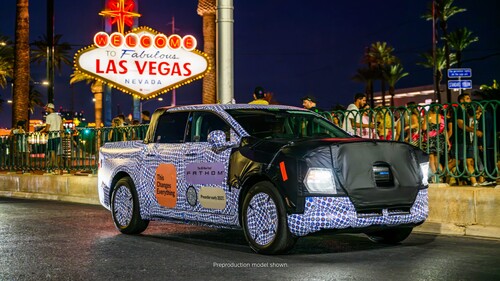
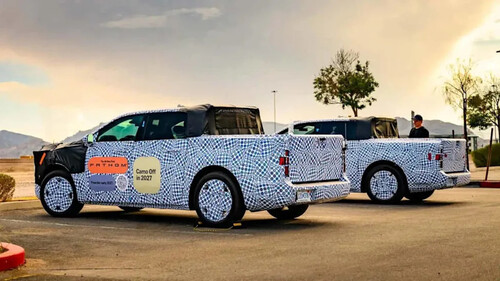
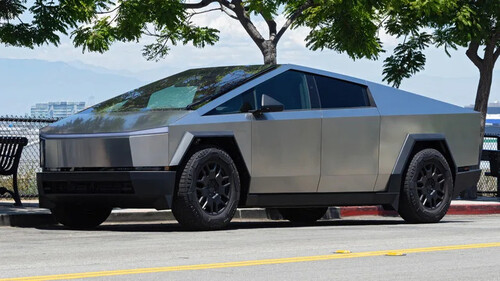
The US sure looks silly now that an ill-advised shift in federal policy tanked the market for electric vehicles, just in time for the price of gasoline and diesel to blow through the roof. Catching up to the global electrification journey is going to be a tough row to hoe. However, the high cost of fuel is supporting a fresh wave of interest in EVs, with electric trucks being a particular area of focus. After all, while individual drivers may have options (mass transit, carpools, bikes, etc.), work vehicles have to keep on working. The US Sure Looks Silly Now The damage to EV sales in the US became clearly evident within weeks of September 30 last year, which was the drop-dead date for the $7,500 federal tax credit. In short, they fell off a cliff. For people who care about such things, the EV sales crash also upended the nation’s reputation as an epicenter of global automotive innovation. The US was already ceding EV ground to China before the tax credit ended, and the sharp U-turn in US energy policy didn’t help. On the occasion of the one-year anniversary of end of the federal EV tax credit, CleanTechnica took a look at the lightning pace of EV sales in other markets and invited readers to assess the situation, asking, “Is the US going to end DEAD Last in vehicle electrification?” Among the responses was a somewhat mixed take from “Scott:” “The real damage, IMO, will not be a lag by the US consumer to embrace EVs because I am convinced that will happen eventually. The damage done will be in the area of production. US car manufacturers will suffer and potentialy perish…” “Torpedo” rendered a somewhat less measured response (breaks added for readability): “the US Administration is Not preparing for an OIL SHORTAGE. Right now there should be No Tariffs on EV. THERE SHOULD BE AN ELECTRIC TRUCK INCENTIVE OF 11000…” Here Come The Electric Trucks Though differing in tone, the two comments represent a general consensus. Demand for EVs is all but certain to recover in the US, but those EVs won’t necessarily be made in the US. That may be so. However, some automakers are working towards a domestic production recovery. General Motors, for example, is moving forward with plans to produce new LMR (lithium-manganese rich) battery cells in the US, with an eye on securing a domestic supply of low cost, high performing batteries for its future EVs. Ford is also contributing its soup-to-nuts “Universal EV” platform to the effort. Ford has been diligently updating the public on its forthcoming Fathom mid-sized electric pickup truck, which will be the first EV to showcase the company’s new “Universal EV” cost-cutting assembly process. And of course, then there’s Tesla. Regardless of the reputational baggage carted around by Tesla CEO Elon Musk, Tesla is still the largest single manufacturer of EVs in the US. With the official launch of the Tesla Semi, the company aims to dominate the Class 8 electric truck field, too. After years of delay, on September 26 Tesla finally held an opening ceremony to mark the start of volume production at the new Semi factory in Sparks, Nevada, with output reportedly anticipated at 50,000 trucks per year. Whether or not Tesla achieves that mark remains to be seen, but the company is off to a good start with a history-making order of 2,500 electric trucks through the transportation industry collective ZET SCALE. Known as the Alliance for short, the collective offers a suite of EV-related services. Topping the list, the Alliance aggregates demand for electric trucks among its members, such as Microsoft and PepsiCo, aiming to take advantage of volume discounts and infrastructure access. “Rather than asking individual companies to navigate the transition alone, ZET SCALE aligns the entire value chain — unlocking better vehicle pricing, innovative financing, coordinated charging infrastructure, and freight demand that helps make zero-emission trucking commercially viable,” the Alliance explains. The Alliance pre-qualifies truck makers, saving its members the time and expense of doing their own research with each purchase. “After evaluating price, range, charging capability, and production capacity, the Alliance selected Tesla as its primary original equipment manufacturer (OEM) for the initial 2,500 trucks,” notes the organization Catalyst Mobility (formerly CalStart), which is the lead partner in the Alliance. 2,000 More Electric Trucks For The USA The Alliance is particularly excited by the fact that the single 2,500 truck order will practically double the number of Class 8 electric trucks already on the road. The new order also puts the Alliance well on the way to achieving its initial goal of 10,000 electric trucks. That’s all well and good, except for the 4 million other Class 8 trucks on the road chewing their way through gallon after gallon of diesel fuel. Four million is a widely cited estimate of the number of Class 8 trucks in the US. If you have another figure, drop a note in the discussion thread. That’s just Class 8 trucks. Then there’s the millions of lighter-duty trucks and vans sucking up diesel. Tesla has yet to turn its attention down the truck class scale with the exception of the much-maligned Cybertruck, but other automakers have, and that brings us to FedEx. On September 30, the California startup Harbinger Motors announced that FedEx has ordered 2,000 of its 100% electric trucks, making it one of the largest single orders for medium- or heavy-duty electric trucks ever recorded. One could say that the order even overtops the Alliance’s 2,500 truck contract, which applies to the consortium’s members and not just one company. It won’t be long before the rubber hits the road. Harbinger expects all 2,000 trucks to make their way into FedEx’s North American pickup and delivery fleet before the sun sets on 2027. The company has already been gearing up to make that happen (see more Harbinger electric truck background here). Acording to Harbinger, FedEx does not plan to squeeze the new EVs into its existing fleet. The plan is to retire the fossil fueled counterparts on a one-to-on basis. Harbinger has yet to release full details on the trucks, but in a press statement the company indicated that it covers Class 5 and 6 medium-duty vehicles. The new electric trucks are expected to achieve a working life of 20 years, similar to that of conventional Class 5 and 6 trucks, but with one key difference. Harbinger estimates the total 20-year fuel savings of the FedEx order at more than $800 million. Made In The USA Rounding out the picture for the working vehicle electrification picture in the US is Detroit-based Workhorse Group, which just announced a new order for 200 W56 electric step-vans from the California-based EV provider Gateway Fleets. Like Harbinger, Workhorse is laser-focused on EV markets neglected by Tesla including box trucks and refrigerated trucks, among others. “All W56 models are produced at Workhorse’s commercial-scale manufacturing facility in Union City, Indiana, which is capable of producing up to 5,000+ vehicles per year on a standard operating shift,” Workhorse notes. There’s plenty more where that came from. As fuel prices continue to spiral upwards, keep an eye on other startups as well as Mack Truck, Peterbilt (part of the PACCAR family), and other legacy truck makers for signs of an EV manufacturing revival in the US. Photo: FedEx has just ordered 2,000 electric trucks from the California startup Harbinger, in yet another indication that the US vehicle electrification movement is still alive and kicking (courtesy of Harbinger).