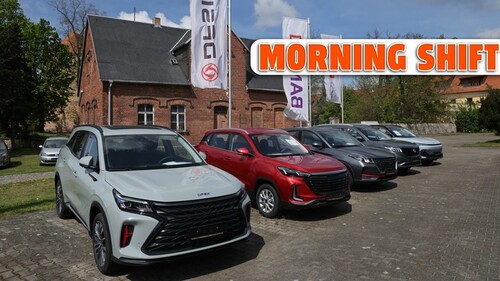
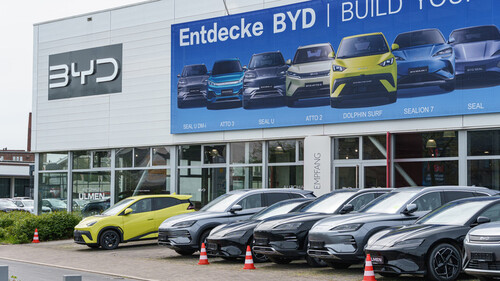
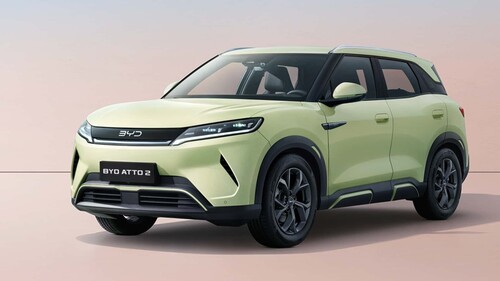
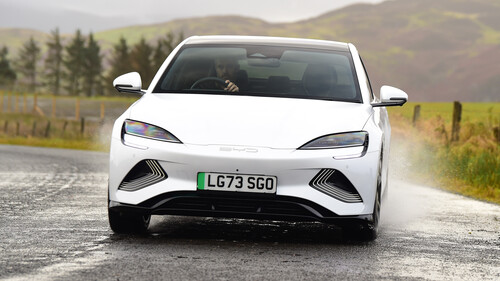
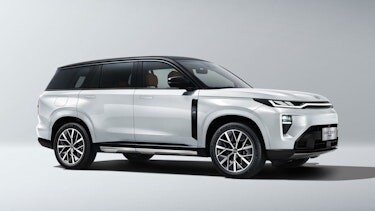
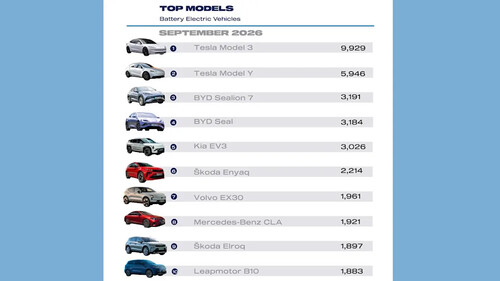
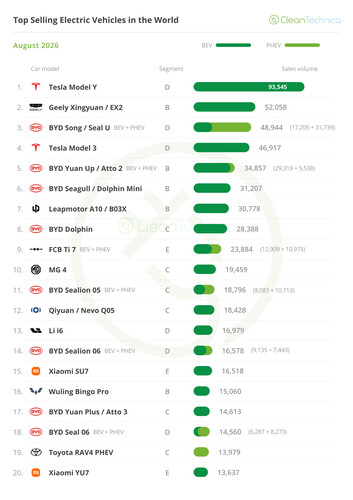
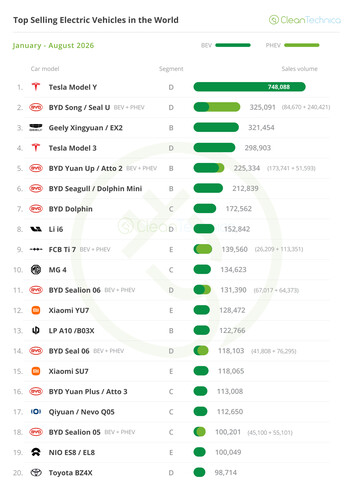
Mainstream car brands from Europe, Japan and Korea are struggling to sell enough EVs to hit the UK Government’s tough targets but newcomer brands from China currently have it far easier thanks to flaws in the ZEV Mandate scheme. Proposed changes to rectify this could see major players like Jaecoo and Chery in hot water, and the industry-wide scramble to avoid fines may even bring better deals for consumers. Analysis from transport research firm, New AutoMotive, suggests that major automotive names such as Volkswagen Group and Stellantis are struggling to keep up with the targets set under the UK Government’s ZEV Mandate. The current rules necessitate a third of all the cars a manufacturer sells being fully-electric. Reducing engine emissions and borrowing ‘credits’ from future years or rival manufacturers that are compliant are other ways to avoid fines of £12,000 for every non-compliant car sold over the threshold. Chinese manufacturers have enjoyed huge success in the first half of 2026, accounting for 15 per cent of total UK car sales, according to the Society of Motor Manufacturers and Traders (SMMT). The Chinese-made Jaecoo 7 is the third-best-selling car so far this year, while the BYD Seal electric saloon made its way into the top 10 electric cars. New AutoMotive also says the likes of BYD, SAIC (the owner of MG), Chery (the owner of Jaecoo and Omoda), Geely (the owner of Lotus and Polestar) and XPeng are all complying with the ZEV Mandate rules. PositionBest-selling cars (all fuel types)QuantityBest-selling EVsQuantity1Ford Puma29,642Tesla Model Y15,3412Kia Sportage25,828Tesla Model 312,3363Jaecoo 723,840Skoda Enyaq8,5294Nissan Qashqai23,102Vauxhall Frontera Electric8,2675Vauxhall Corsa18,470Ford Puma Gen-E8,2566Volkswagen Golf17,552Renault 57,5767MG HS16,721Audi Q4 e-tron6,9738MINI Cooper16,295Skoda Elroq6,9029Volvo XC4016,031BYD Seal6,76810Tesla Model Y15,341Volkswagen ID.36,178 However, the research firm’s CEO, Ben Nelmes, says that this compliance could actually be down to an unfair advantage in the ZEV rules enjoyed by newer brands. While legacy manufacturers can earn credits by selling vehicles with lower emissions than their own average prior to 2021, manufacturers that have arrived since that point must instead meet a target based on industry-wide emissions in the year before they entered the market. “It’s a design of the scheme that has meant that some of the new entrants have very low estimated real ZEV targets. In my view, that was a bit of a mistake in the design of the regulations, and I really hope the Government fix[es] it in the course of the forthcoming consultation.” In fact, Nelmes estimates that a change in the regulations could see major Chinese brands such as Chery needing to buy or borrow credits to comply. “EVs don’t feature particularly heavily in their sales,” he pointed out. “The current requirements are too lax and it needs to be fixed. My guess would be that the likes of Chery would see their credit balance turn red pretty quickly.” In the meantime, two brands currently in the ‘red’ are Volkswagen Group and Stellantis – the group behind Vauxhall, Peugeot and others – who are navigating large credit deficits of 5,367.3 and 9,416.3 respectively. Taking into account aforementioned credits issued due to emissions reductions, the two automotive giants need to ensure around 26 per cent and 30 per cent of their sales respectively are full-EV. However, despite the introduction of the Government’s £3,750 Electric Car Grant as well as heavy dealer discounts, VW and Stellantis have only managed to achieve EVs as a 23 per cent proportion of overall sales. Nelmes told Auto Express that “The two companies have quite a different story going on. VW finished with a significant surplus of credits last year, which are bankable. So what we’re seeing is that they don’t necessarily need to make their numbers go green for this year.” “Stellantis is a bit of a different story,” Nelmes continued. "They're behind target and they were behind last year as well. They’re doing a decent job of selling EVs [and] hybrids… but both of those things are just not enough to bring them to the target”. While VW and Stellantis are certainly the standout problem cases, almost every other European, Japanese and Korean automotive conglomerate is also struggling to shift enough EVs to satisfy the UK Government. In fact, the only European brand to do so is Renault which, thanks in part to the success of the Renault 5, is estimated to already be over 2,000 credits clear of the threshold so far this year. Regardless of whether or not individual manufacturers perform well, it’s believed that EV buyers will inevitably be the beneficiaries. “If a carmaker misses its ZEV mandate targets – whether intentionally or unintentionally – it means their competitors face an incentive to sell more electric cars to make up for their shortfall,” said Nelmes. The “agnostic” design of the mandate means manufacturers that won’t comply will need to either borrow credits from past/future years or purchase them from other brands to comply. Those selling the credits to non-compliant competitors will then be compelled to sell more EVs in order to have the necessary credits to trade, with the value of said credits potentially outweighing the financial implications of offering discounts to sell more cars. “It means consumers who have been loyal to a particular brand may start to look elsewhere,” Nelmes explained: “...and with today's range of electric models available, they might well find what they're looking for with a new brand.” Of course, this comes at a huge cost to the manufacturers – the SMMT says the industry spent £5 billion on discounts in the name of ZEV compliance in 2025. With this in mind, the SMMT’s chief executive, Mike Hawes, is also calling for change to the rules. He highlighted how; “record [sales] levels are still not enough to meet mandated targets. Manufacturers are investing billions developing and bringing the vehicles to market – and spending billions more to sell them, yet the market is still not moving fast enough. Reforming the mandate now is essential not just to keep the transition on track but to protect the UK’s competitiveness, attract investment and safeguard jobs.” At the other end of the spectrum, CEO of Electric Vehicles UK, Tanya Sinclair, said that “[The] Government just needs to align itself with the British motorist’s direction of travel – not certain carmakers’ lack of ambition – towards an electric future.” In June the Government confirmed it will hold a consultation on reforming the ZEV Mandate to more realistically match demand. EVs accounted for 30 per cent of all new cars sold last month and roughly a quarter of registrations in 2026 so far; last year, EV market share stood at 21.6 per cent at the end of H1. In total, over 1.1 million new cars were registered in the first six months of 2026, with market share of petrol and diesel cars reducing in volume and the slack taken up by hybrids and EVs.