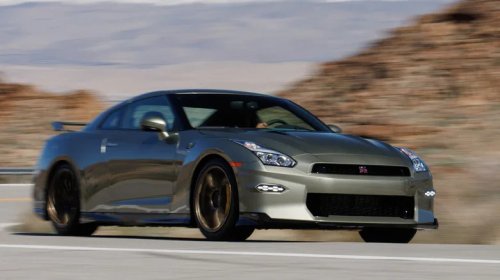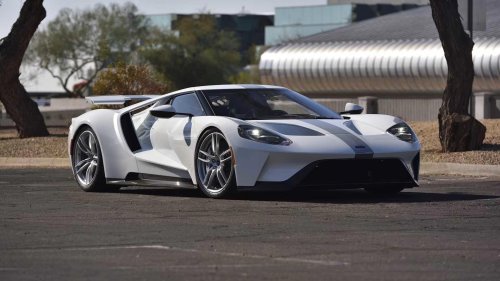
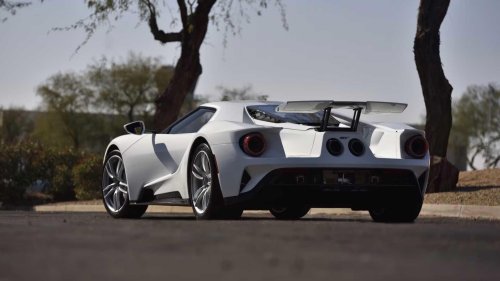
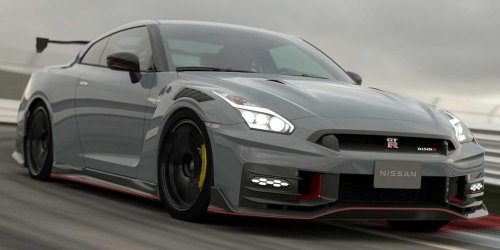
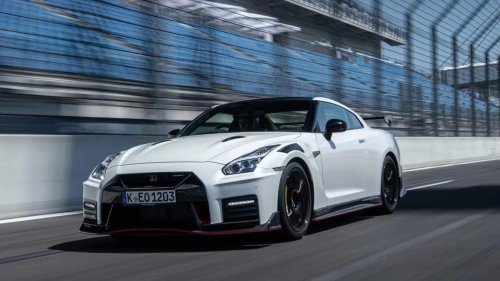
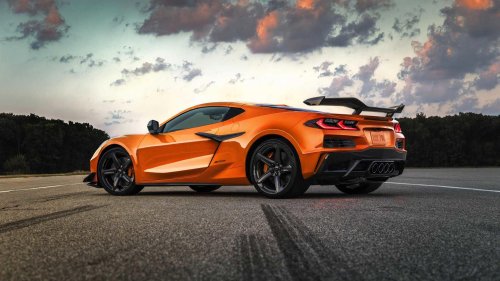
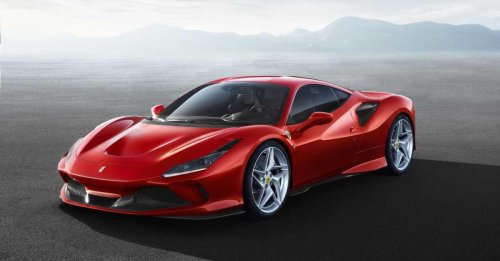




















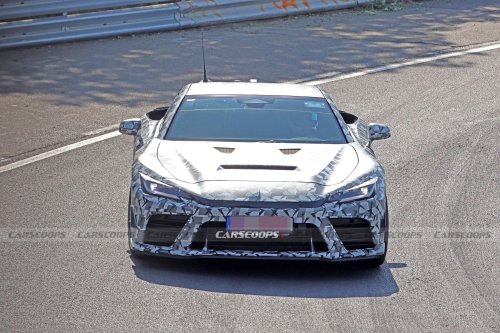


For decades, the V8 has been the go-to engine for serious performance. Whether in muscle cars, luxury sedans, or supercars, it has built its reputation on power, sound, and status. The V8 is a symbol of brute force in automotive culture, especially in the American market. The V6, on the other hand, has often lived in its shadow, being praised for efficiency and packaging. But over the course of history, they rarely outperformed a V8.Today, things have changed in favor of the V6. Advances in turbocharging, metallurgy, and electronic controls have helped modern V6 engines close the performance gap. Among the many V6-powered supercars of today, the Ferrari F80 sprints to 60 mph in 2.17 seconds and has a top speed of 217 mph, making it the fastest V6 hybrid hypercar. However, two stand out for doing the unthinkable, by outperforming several of them in terms of acceleration and top speed with absolutely no electrical assistance.One of these cars is the fastest accelerating V6-powered car in the world, while the other is the fastest V6-powered car in terms of top speed, and neither of them uses any hybrid assistance. Just using raw, unadulterated horsepower to leave the V8 in its dust. The 217 MPH Ford GT Is The Fastest V6 Car In The World Mecum Auctions Ford GT engine specs Performance Specs 0-60 mph - 3.0 seconds Top Speed - 217 mph 1/4-Mile 10.8 at 134 mph The Ford GT holds the title of the fastest non-hybrid V6-powered car in the world, with a top speed of 217 mph. That matches the F80, but also puts it ahead of many V8-powered supercars, proving that six cylinders, without any hybrid assistance, can still deliver serious performance.At the heart of the GT is a 3.5-liter twin-turbocharged EcoBoost V6 engine. It produces 660 hp at 6,250 rpm and 550 lb-ft of torque at 5,900 rpm. Ford originally developed the V6 for its IMSA Daytona Prototype race program, and the engine delivers power across the rev range. The mid-mounted engine sends all that output to the rear wheels through a 7-speed dual-clutch automatic transmission, enabling lightning-quick gear changes. Unlike most V6-powered fast cars of today, the Ford GT achieves its accolades without any electrification assistance, which is a notable achievement.Mecum Auctions The GT’s lightweight carbon fiber monocoque chassis helps keep curb weight down to around 3,050 pounds. This gives the car a power-to-weight ratio of just over 4.6 pounds per horsepower, which plays a key role in both its acceleration and top speed. It can sprint from 0 to 60 mph in just 3 seconds and run the quarter mile in 10.8 seconds.Aerodynamics plays a huge role in the GT’s performance. The GT features an active rear wing, adjustable ride height, which, in track or V-max mode, drops the ride-height aggressively by 2 inches. The underbody has been flattened to improve airflow management and help keep the car stable at high speeds. These systems adjust on the fly depending on drive mode and speed, ensuring maximum downforce when needed and reduced drag on straightaways.With race-bred engineering, lightweight materials, and advanced aerodynamics, the Ford GT proves that V6 performance can compete with—and even surpass—traditional V8 setups. It’s not just a supercar with a smaller engine. It’s a purpose-built machine designed to push the limits of what a V6 can do. The Nissan GT-R Nismo Is The Quickest V6 Car To 60 MPH NissanNissan GT-R Nismo Engine Specs Performance Specs 0-60 mph - 2.5 seconds Top Speed - 205 mph Sprinting from 0 to 60 mph in a mere 2.5 seconds, the Nissan GT-R Nismo is outright the quickest non-hybrid V6-powered car in the world. Renowned for its neck-snapping launch control, the GT-R Nismo's time is faster than many V8-powered supercars even today.Under the hood, the GT-R Nismo features a hand-built 3.8-liter twin-turbocharged V6 engine. Known as the VR38DETT, it delivers 600 hp at 6,800 rpm and 481 lb-ft of torque between 3,600 and 5,600 rpm. Each engine comes from Nissan’s Yokohama plant, assembled by a single Takumi master technician. The precision and durability of this V6 make it an engineering marvel, balancing raw output with long-term performance reliability.Nissan Power routes through a 6-speed dual-clutch automatic transmission and one of the world's most advanced ATTESA E-TS all-wheel-drive systems. Together, they help the GT-R Nismo put down power with minimal wheel slip, especially off the line. The consistency and durability of the GT-R's launch are the most impressive feat of engineering.The Nissan GT-R earned the nickname “Godzilla” in the 1990s thanks to its dominance in motorsports and street racing scenes. Over the years, it became a pop culture icon, appearing in everything from racing video games to Hollywood films. While the current R35 generation first launched in 2007, Nissan continually refined it over time, with the latest 2024 Nismo version representing the pinnacle of the range.After more than 15 years in production, Nissan has finally discontinued the GT-R in most global markets. The 2024 GT-R Nismo serves as the final chapter of this legendary model. With its unmatched acceleration and iconic status, the GT-R Nismo leaves behind a legacy few cars can match. It stands as proof that innovation, not just cylinder count, defines true performance. V8-Powered Cars Slower Than The GT-R Nismo And Ford GT Chevrolet V8-Powered Cars With Slower Top Speed Than Ford GT McLaren 540C - 199 mph Mercedes-AMG GT R - 198 mph Chevrolet Corvette C8 Z06 - 195 mph The 217 mph Ford GT beats several high-performance V8 rivals. The McLaren 540C tops out at 199 mph, while the Mercedes-AMG GT R reaches 198 mph. Even the track-focused Chevrolet Corvette C8 Z06 maxes out at 195 mph. With fewer cylinders, the GT’s lightweight carbon fiber body, active aerodynamics, and race-bred 3.5-liter twin-turbo V6 give it a significant top-speed edge. V8-Powered Cars With Slower 0–60 mph Than Nissan GT-R NISMO via ferrari Ferrari F8 Tributo - 2.9 seconds Aston Martin Vantage F1 Edition - 3.5 seconds Lexus RC F Track Edition - 3.9 seconds The Nissan GT-R Nismo's 0 to 60 mph time of 2.5 seconds makes it quicker than several V8 supercars. For example, the Ferrari F8 Tributo does the sprint in 2.9 seconds, the Aston Martin Vantage F1 Edition in 3.5 seconds, and the Lexus RC F Track Edition in 3.9 seconds. With its 600-hp twin-turbo V6 and advanced all-wheel-drive system, the GT-R Nismo puts down power with extreme efficiency, leaving many revered V8-powered supercars in its dust.