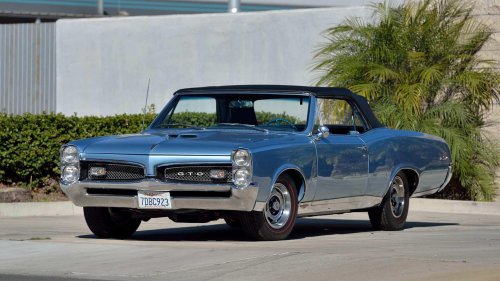
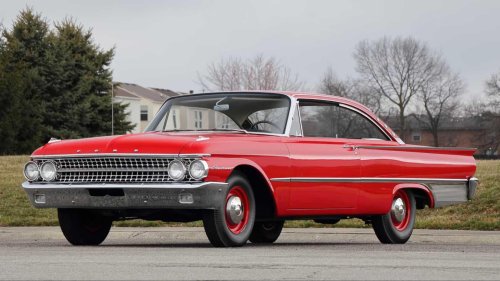
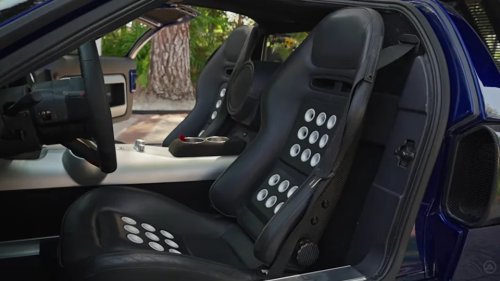
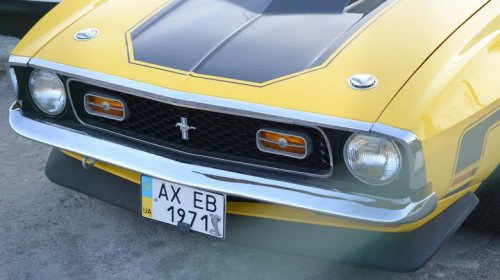
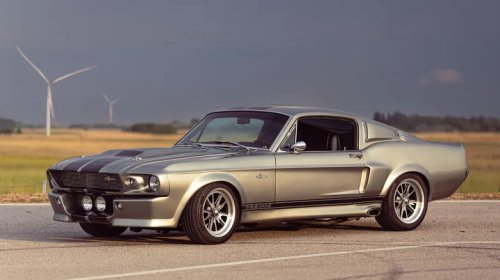
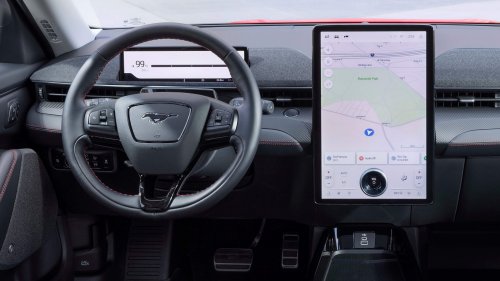
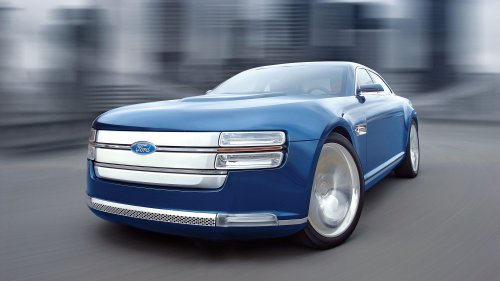
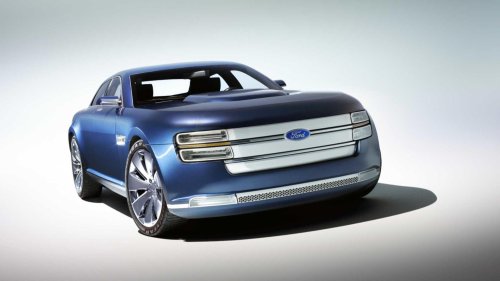
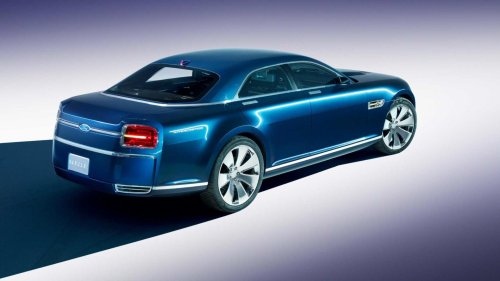
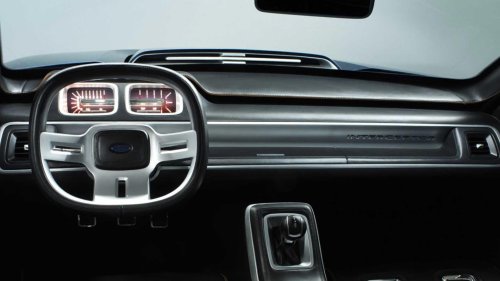
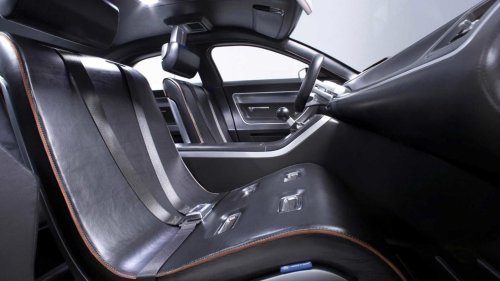
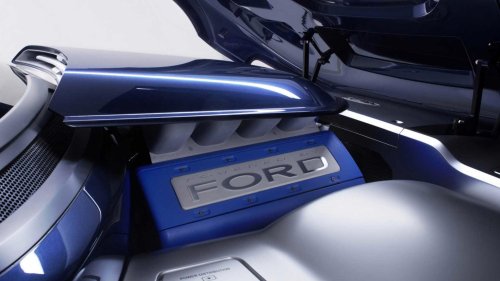
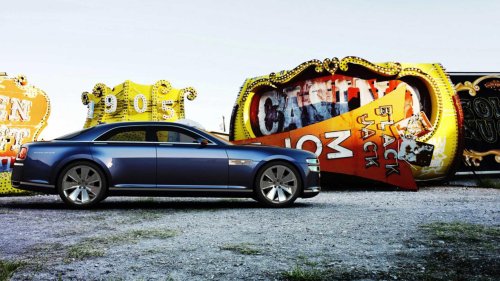
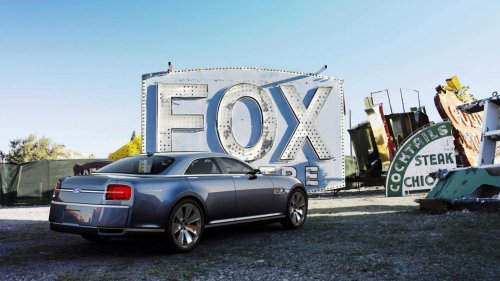
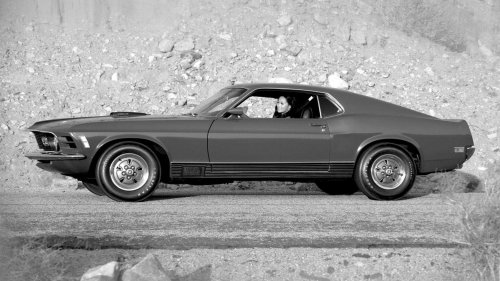
Ford has a long history of producing unique concept cars. From V8-powered utes to six-wheeled cars, there is no type of vehicle too unusual to feature in the Blue Oval’s concept catalog. Some Ford concept cars – such as the one we’re going to focus on in this article – draw inspiration from the brand’s history: the Interceptor Concept is a homage to the golden age of muscle cars, and the model that symbolizes the era, the Mustang.The Interceptor (not to be confused with the British muscle car of the same name) was revealed in 2007, but never resulted in a production model, instead staying at the concept stage as a curious, retro-inspired design exercise. Let’s take a closer look at this one-of-a-kind concept car. Meet The Ford Interceptor Concept FordThe Ford Interceptor concept car was first unveiled in 2007 at the North American International Auto Show in Detroit, although Ford had already introduced the car to the world at the end of 2006 through a press release.The Interceptor was the brainchild of designers Peter Horbury and Andreas Nilsson; around the time it was introduced, Horbury was at the helm of Ford’s new “Red, White and Bold” design strategy, which added more traditionally American stylistic elements to models such as the Fusion, Focus, and Taurus. The Interceptor can be seen as kind of parallel to these models, with its design being so directly inspired by Ford’s own history and the quintessential American vehicle, the muscle car.Ford The Ford Interceptor was meant to embody the principle of “Built Ford Tough”: a long-standing marketing slogan used by the company to emphasize its vehicle’s qualities of reliability, strength, and capability to handle all their owners’ driving needs. The combination of high performance and sportiness with style is the key characteristic that connects the Interceptor with the iconic Ford models of the 1960s. Design And Interior FordThe Interceptor’s design is perhaps best described as “retro-futuristic”, taking classic styling elements of Ford’s mid-century muscle cars and adapting them into a car that’s distinctly modern. Although by the start of the new millennium, sleek, aerodynamic cars had become the norm on American roads and beyond, the Interceptor adopts a more vintage-inspired approach, with a stockier silhouette that echoes back to the golden age of the muscle car. Although the Mustang is the most crucial and well-known model that comes to mind, other Fords from that era, such as the Galaxie, also served as inspiration for the Interceptor.Ford The Interceptor had a solid rear axle and was based on a modified, slightly longer version of the Ford D2C platform first introduced in 2004 and used on the fifth, sixth, and seventh generations of the Mustang. The concept car’s headlights were rectangular with rounded corners, yet another element that combined the harsher lines of vintage cars with a modern design language. The Interceptor was also fitted with a powered clamshell hood.In the Interceptor’s interior, we find similar contradictions to the ones that make up its interior design: while, for a 2007 car, it is infused with a highly futuristic, high-tech character, it also includes several elements that take cues from much older models. The rectangular dials, for example, wouldn’t look out of place in a car from the 1960s. Leather and metal abound as the predominant materials used in the Interceptor’s interior, with very little plastic in sight.Ford The theme of rectangular lines is carried over throughout the cabin: not just in the dials, but in other elements such as the steering wheel and the headrests. The tech itself, however, leans more towards the futuristic than the retro: both front and rear passengers have a four-point harness, with inflatable seatbelts in the rear seats. This unique design was meant to represent a potential new type of seatbelt, which did not catch on in mainstream car design.The rest of the cabin was equally high-tech, with headrests deploying from the roof rather than being attached to the seat; the headrests were also adjustable in four directions. The dashboard included stowable panels for the climate and audio controls. Performance And Safety FordThe Interceptor was powered by a 5.8-liter “Cammer” V8 engine, developed by Ford Racing (the company’s high performance division, which later became known as Ford Performance). The engine was paired with a six-speed manual gearbox. It also had another interesting capability: it could run on E85 (85% ethanol) fuel, as well as regular gas. E85 is sometimes used to achieve increased performance and reduced emissions.Ford The Interceptor’s character also incorporated an additional element which had not been a major part of vintage muscle cars’ design: safety. Unlike models like the early Mustang, which had been purely focused on performance and fun, the Interceptor was created to be capable of transporting a family as well. Designer Peter Horbury said of the car:"Our target customer for this powerful masculine sedan was a man with a family [...] He's essentially a good guy, but a bit mischievous. He loves power and performance. But ultimately, he's responsible. When he has his family on board, he values new safety technology as well as a powerful engine that runs on E85 ethanol."– Peter Horbury, Ford Interceptor designer Interceptor Inspiration: The Mustang And The Muscle Car World Ford Heritage Vault The Interceptor concept may have been highly futuristic, but it also incorporated a strong retro-inspired element in its design. Despite its space-age interior, it also took several cues from Ford’s history, more specifically the golden age of the muscle car: the late 50s and 60s, a period sometimes known as the “Jet Age” thanks to its unbridled optimism regarding the progress of science and engineering.One of the very first models to fall under the muscle car category was not a Ford, but an Oldsmobile: the “Rocket 88”, which got its name from its thundering V8 engine. Later on, iconic models such as the Pontiac GTO, the Dodge Charger, and the Mustang itself began to arrive on the market, ushering in an era of accessible, fun motoring which would last just over a decade.Although performance, power and speed (traditionally achieved through a big V8) were all important elements of the character that made a car a “muscle car”, visual design was also crucial. In order to be recognizable as a muscle car, a car had to have an aggressive appearance: strong, sharp lines, combining a sleek profile and a squared-off look.In the golden age of muscle cars, aerodynamics did not play as large a part in design as they do today; things like emissions and eco-friendliness were not yet part of the equation. Thanks to the lower gas prices of the time (pre-1970s fuel crisis), the emphasis was all on raw power and style, rather than efficiency. The result was a unique era of automotive design, never to be repeated. The first generation of the Mustang embodied the muscle car age and became its undisputed symbol. Its legacy was carried forward through automotive history, with the Interceptor being just one of its many spiritual successors.Sources: Ford



















 +47 others