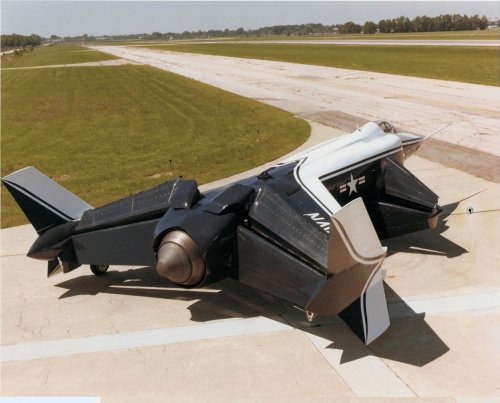
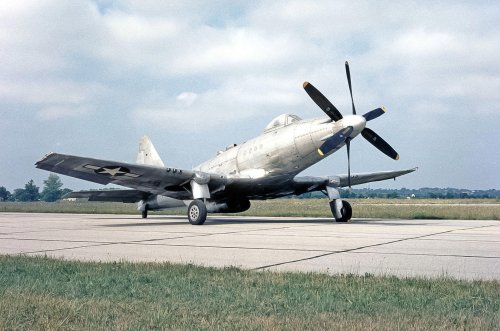
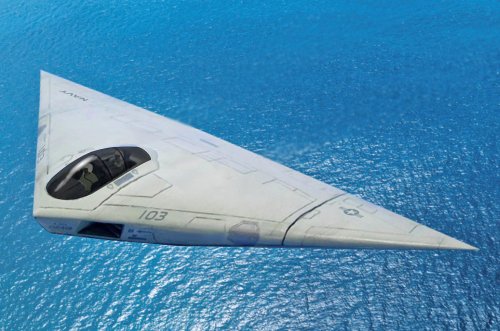
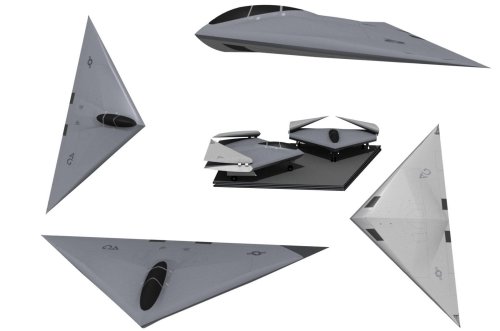
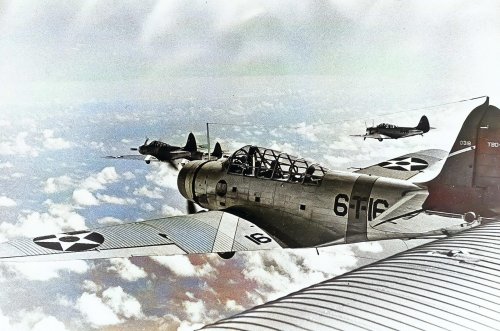
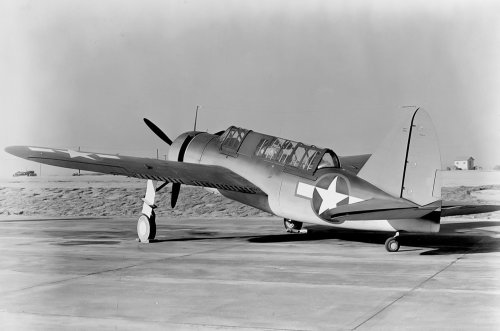
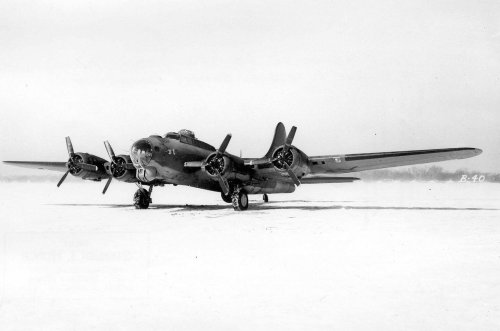
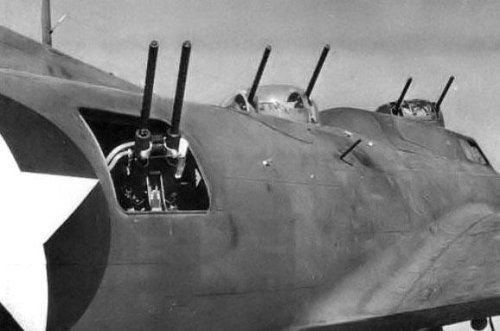
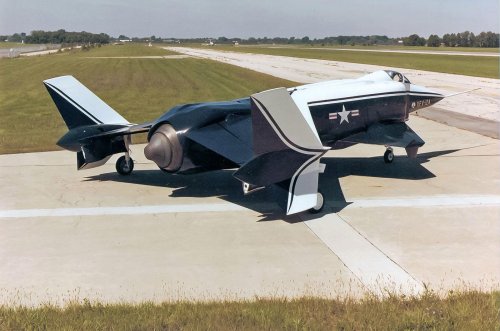
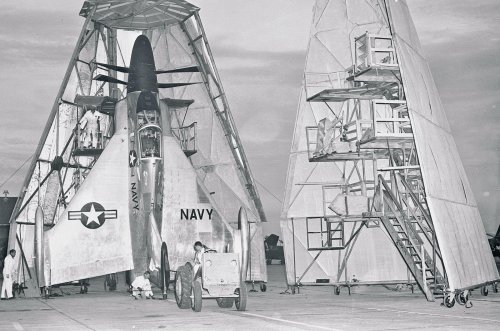
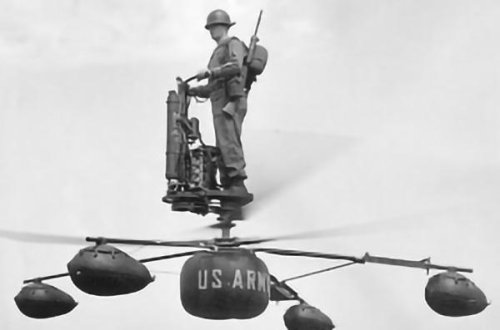
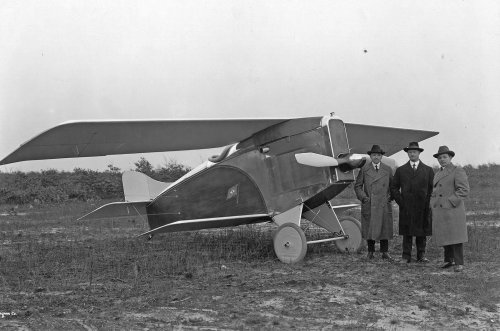



















Ranging from flawed or misguided, through to the dangerously bananas, the stories of America’s worst aircraft are fascinating.They offer illuminating insights into the many pitfalls of aero engineering and the danger of believing hype. Many were also eye-wateringly expensive. Adjusted for today’s dollars, at least three of the projects on this list likely cost over a billion dollars, and a couple exceed three billion. The mean average cost of this parade of cursed aircraft is a less-than-piffling $790 million. Let’s meet the 10 Worst American Aircraft:10: Fisher P-75 EagleLong before its illustrious namesake, the F-15, achieved lasting fame, another Eagle, the General Motors P-75, was trumpeted as a triumph of American innovation. Launched amid extravagant publicity, the P-75 designation deliberately skipped earlier numbers, widely believed to reference the celebrated French 75mm field gun of the first word war.The aircraft’s supposed ingenuity rested largely on reusing existing parts. The outer wing panels were taken directly from the Curtiss P-40 Warhawk. The main undercarriage assemblies were adopted from the Vought F4U Corsair. The vertical and horizontal tail surfaces were derived from the Douglas SBD Dauntless. This pragmatic approach promised rapid, economical production.At its heart sat the ambitious but troublesome Allison V-3420 engine, intended to deliver formidable performance. Instead, it proved disappointing, with persistent cooling difficulties and power shortfalls. Flight testing revealed poor handling and vicious spin characteristics. Far from revolutionary, the Eagle struggled to justify either its cost or the extravagant claims made on its behalf.Redesigned as a long-range escort fighter, the P-75A emerged just as the North American P-51 Mustang was excelling in that role. Fourteen were built before cancellation. Some historians suggest the programme conveniently shielded General Motors from pressure to undertake B-29 Superfortress production.9: McDonnell Douglas A-12 Avenger IIThe McDonnell Douglas A-12 Avenger II was conceived as a stealthy, carrier-based replacement for the A-6 Intruder, promising cutting-edge technology and survivability. Instead, it became a byword for ambition untethered from reality. From the outset, its requirements were so demanding that success depended on technical leaps that were simply not achievable.Its flying-wing design was intended to deliver radar evasion and long range, yet integrating stealth shaping and materials with carrier suitability proved enormously complex. Weight spiralled out of control, structural challenges mounted, and performance projections deteriorated. As development faltered, the aircraft grew heavier while range, payload, and manoeuvrability steadily declined, rendering it increasingly impractical even on paper.Costs escalated at an alarming rate. Originally projected at around $4.4 billion, estimates ballooned dramatically as delays accumulated. By 1991, it was years behind schedule and billions over budget, with no prototype flying. Confidence within the Department of Defense collapsed as contractors struggled to demonstrate meaningful progress.The cancellation triggered a protracted legal battle lasting over a decade. Contractors were fined hundreds of millions of dollars for mismanagement and contract breaches. No aircraft were completed, no capability delivered, and the A-12 endures as a cautionary example of technological overreach, managerial failure, and procurement hubris, widely regarded as one of the worst aircraft programmes ever attempted.8: Bell YFM-1 AiracudaIn 1937, Bell Aircraft was a newcomer to military aviation. Its first major design, the Bell YFM-1 Airacuda, paired futuristic styling with deeply unconventional engineering. Striking in appearance, it concealed serious flaws, dubious design decisions, and performance wholly unsuited to the demanding combat roles envisioned for it.The Airacuda’s most distinctive feature was its paired engine nacelles, each housing a 37mm (1.46-inch) cannon and gunner. In theory, this provided an excellent field of fire against bomber formations. In practice, the pusher engines overheated persistently, propellers made escape perilous, and firing the cannon filled the nacelles with choking smoke.Although the guns could be operated remotely from the cockpit, the aircraft itself was too slow and drag-laden to intercept modern bombers effectively. Manoeuvrability was uninspiring; against contemporary fighters it would likely have fared disastrously. Any theoretical advantage in firepower was undermined by its inability to bring that firepower to bear credibly.Matters were worsened by a bomb load of just 600 lb (272kg), meagre by late-1930s standards. Its complex electrical system required a dedicated auxiliary engine; if this failed, undercarriage, flaps, and even the main engines were compromised. Despite this, it served briefly from 1938 to 1940, mercifully with minimal loss.7: Douglas TBD DevastatorTouted on its debut as the most advanced naval aircraft in the world, the Devastator was proof that manufacturers’ claims can often be taken with a Pacific-Ocean-sized grain of salt. Its chronic vulnerability has become infamous. It was required to fly straight and level at a stately 115 mph (185 km/h) to deliver its torpedo, a speed that meant it could be easily intercepted by an SE5a of 1917 vintage, which is somewhat unfortunate for an aircraft fighting in the Second World War, facing the 330mph+ Mitsubishi Zero.Furthermore, the poor old TBD had a woeful defensive armament and lacked manoeuvrability. Its problems didn’t stop there, as its main armament, the Mark 13 torpedo, was a dreadful weapon plagued with reliability issues and frequently observed to score a hit but then fail to explode.Most Douglas TBD Devastator losses to enemy fighters occurred at Midway on 4 June 1942. They were shot down primarily by A6M Zeros, flown by experienced Japanese naval pilots. Of 41 Devastators launched, 35 were destroyed, largely by fighters and anti-aircraft fire.Dick Best, who flew a Douglas SBD dive-bomber at the Battle of Midway, remembered the Devastator as a ‘nice-flying aeroplane’, but, like the Fairey Battle, it was committed to combat in a world that had overtaken it. Only 130 were ever built, a small amount for a US aircraft of this vintage, and, coincidentally, only six fewer than the equally dismal Blackburn Roc. A match made in mediocre naval aviation heaven.6: Brewster SB2A BuccaneerBrewster’s design promised a capable scout-bomber, but spiralled into an overweight, over-complicated liability. Every design tweak added mass without adding merit. The aircraft emerged bloated, its performance crippled before it left the drawing board. As we shall see, it achieved a rare ignoble distinction for a combat aircraft created when nations were at their hungriest for aircraft.Pilots reported dismal handling: the Buccaneer wallowed through turns, responded sluggishly to control inputs, and struggled to maintain energy. Survival in combat often depended on agility and climb performance; pilots found aircraft felt dangerously ‘lazy’. It was a bomber that could neither escape nor effectively attack — a terrible combination.Brewster’s factory suffered chronic dysfunction, with poor oversight and inconsistent workmanship. Parts failed tolerances, assemblies arrived misaligned, and aircraft emerged requiring immediate rectification. Many Buccaneers were judged unfit even for basic service, an indictment not only of design but of the company’s collapsing industrial discipline.Air arms that received the type consigned it to training, target-towing, or storage. Crews distrusted it; commanders dismissed it. By war’s end, the Buccaneer had achieved notoriety as a machine so flawed that it never reached combat — a rare and ignominious distinction.5: Boeing YB-40 ‘Gunslinger’Look at this large fighter, yes, you read that correctly. This fighter is, as you have no doubt spotted, a B-17. In 1942, the Eighth Air Force thought they might create an effective escort by slinging a massive number of guns into a bomb-free Flying Fortress.The idea seemed sound, providing bomber formations with dedicated defenders with the range, parts, and flying qualities to easily integrate into existing bomber units. The YB-40 carried up to sixteen .50-calibre M2 Browning machine guns and 11,000 rounds (40-mm cannon were also considered).No aircraft had ever flown with such a formidable defensive gun armament before (it is likely that only one ever surpassed this, the post-war B-36). Unfortunately, this bristling arsenal made the aircraft so draggy and heavy that it couldn’t keep up with the bombers it was supposed to be protecting, rendering it pointless.In a totally irrelevant but oddly satisfying aside, the YB-40 is the only aircraft on this list to feature in an Oscar-winning film; two of them appear in the scrapyard scene at RFC Ontario towards the end of William Wyler’s ‘The Best Years of Our Lives’, which won nine Academy Awards in 1947. Its film career was notably more successful.4: Rockwell XFV-12The LTV XFV-12 was conceived as a supersonic, carrier-capable vertical-takeoff-and-landing fighter. It was intended to provide the planned Sea Control Ship concept (a small, aircraft-carrying escort) with a supersonic V/STOL fighter that could give it credible air capability. The XFV-12’s requirements exceeded the limits of existing propulsion and aerodynamics, dooming it from the outset.But combining vertical take-off and landing (VTOL) capabilities with supersonic performance was extremely challenging. The XFV-12 proved incapable of untethered vertical takeoff and therefore did not progress to free-flight testing. The XFV-12’s inability to achieve VTOL highlighted the fundamental limitations of its thrust-augmented design, underscoring the gulf between concept and reality.It used an unusual thrust-augmented wing system that ducted engine exhaust into vents on the wings and forward canards to generate lift, which produced far less thrust than expected. Weight and complexity added challenges, but the central failure was the system’s inability to generate enough vertical lift.Progress stalled, confidence collapsed, and it was cancelled in 1981 without a single free flight. The XFV-12 endures as one of the worst aircraft conceived, a cautionary tale of unproven technology and ambitious engineering. Official costs were never released. The world would have to wait until the F-35B entered service in 2015 to see an operational supersonic VTOL (more accurately STOVL) aircraft.3: Convair XFY-1 ‘Pogo’/Lockheed XFV-1 ‘Salmon’The US military of the 1950s was awash with fantastical ideas, funded by a defence budget so lavish it allowed almost anything to get built. Among the strangest were the Lockheed XFV-1 ‘Salmon’ and its superior rival, the Convair XFY-1 ‘Pogo’, the last airscrew-powered fighters conceived for the jet age.Both aircraft owed a debt to the Third Reich’s more eccentric designs, loosely influenced by the Focke-Wulf Triebflugel, a vertical‑take-off fighter powered by a mid-mounted ramjet rotor. The appeal was clear: a point-defence interceptor deployable from any suitably large ship. The drawback was less charming: landing required reversing vertically onto the tail.3: Convair XFY-1 ‘Pogo’/ Lockheed XFV-1 ‘Salmon’Both projects were hampered by the temperamental Allison XT-40 turboprop, an engine prone to catastrophic failure. When hovering nose-up hundreds of feet above the deck, a stoppage would be catastrophic. Convair’s Pogo achieved a few precarious vertical landings, whereas Lockheed’s Salmon, heavier and underpowered, never attempted them, and had to rely on a fixed undercarriage reminiscent of a 1920s airliner.Kelly Johnson of Lockheed recounted their training: “We practised landing on clouds, looking over our shoulders, never knowing our descent rate. We told the Navy it was inadvisable. Their reply? One paragraph: ‘We agree.’” A triumph of ambition over practicality, and a testament to 1950s American audacity. The Navy cancelled both programmes in 1955.2: De Lackner HZ-1 AerocycleDark jokes from US soldiers of the era suggested the US Army devised the HZ-1 as an inventive means of thinning its own ranks. Dispensing with luxuries such as a fuselage, seating, or proper controls, it was steered by the ‘pilot’ leaning whichever way he fancied going. The intention was to carry a single soldier over swamps, rivers, minefields and broken ground, while enabling reconnaissance and even casualty evacuation.For anyone tempted to assemble one in the shed, the most complex component was merely a converted Mercury outboard motor, so the answer is probably yes. This powered two 15-foot contra-rotating rotor blades which, in a spirited gesture towards occupational health and safety, were positioned directly beneath the sacrificial offering standing on the platform above.In fairness, during trials soldiers learnt to fly it after roughly twenty minutes’ instruction, then careered about at up to 75mph. With a range of only 15 miles, however, such briskness seems of limited practical value in the field.On the debit side, two apparently non-fatal accidents occurred when the contra-rotating blades clipped each other and stopped. More disconcertingly, NACA could not reproduce the effect in its wind tunnel, suggesting even rocket scientists struggle with helicopters. The Army eventually conceded that the personal helicopter lacked clear utility and cancelled the programme.1: Christmas BulletThe designer of the 1919 Christmas Bullet, Dr William Whitney Christmas, was such a notorious self-promoter whose claims were repeatedly shown to be false that, in some respects, it’s a wonder that he actually went to the trouble of building an aeroplane rather than just telling people he had. Christmas seemed to have persuaded his backers to finance him based on two previous aircraft, for which no evidence ever existed.The Bullet most definitely did, though most of the claims its owner made for it – that it was the world’s first cantilever-wing aeroplane, that it was the first with a plywood monocoque construction, that it was in any way airworthy – proved false. ‘Bullet’ was an apt name for a projectile that invariably harmed anyone it came into contact with.