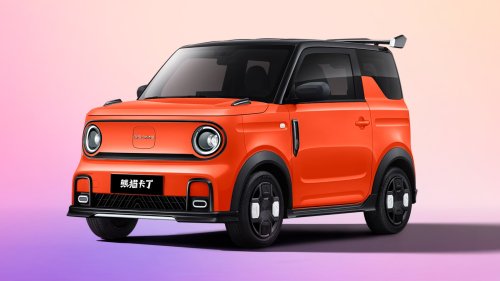
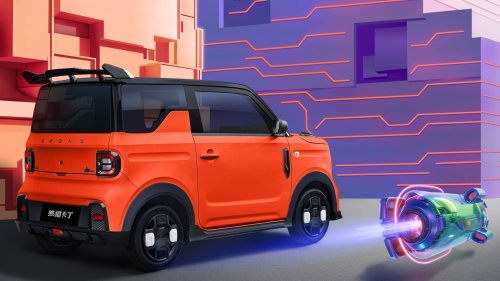
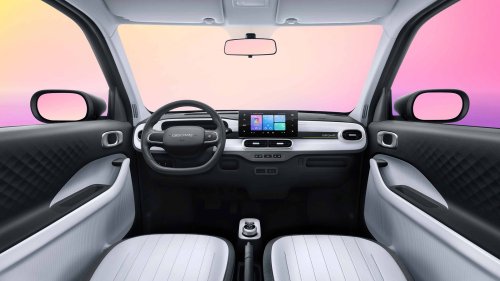
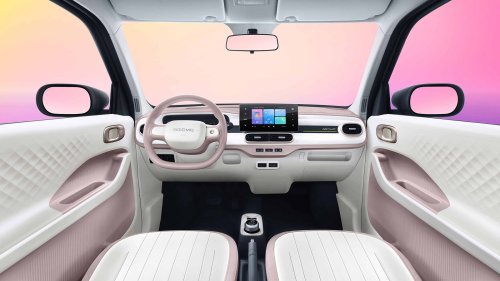
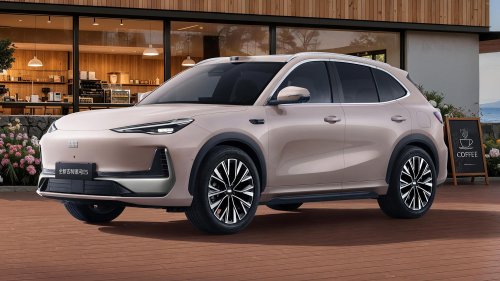
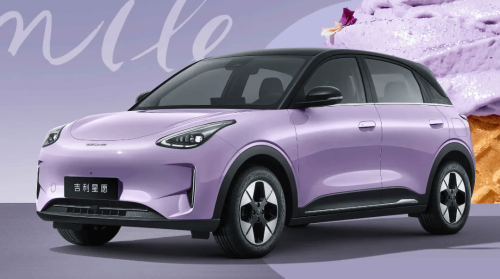
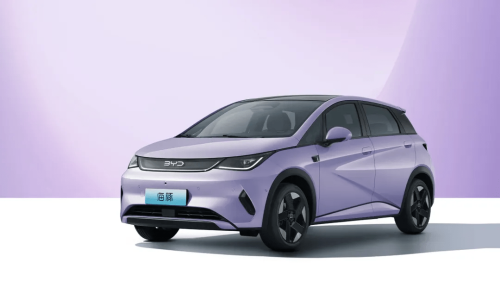
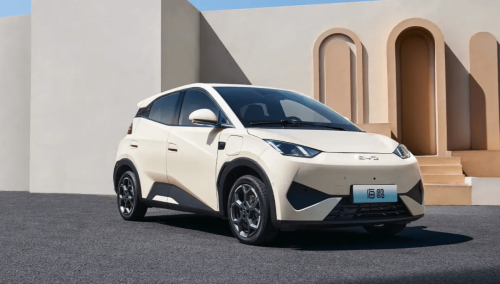
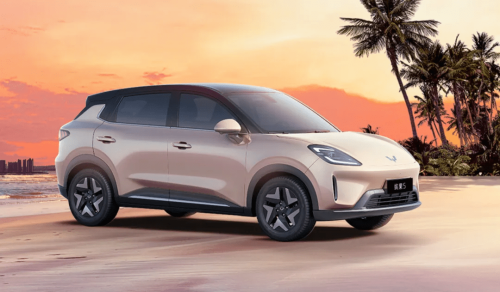
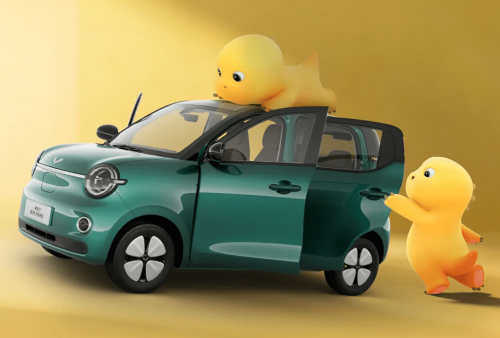
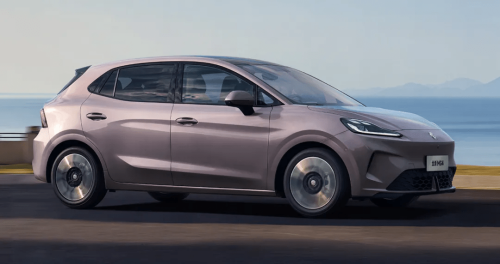
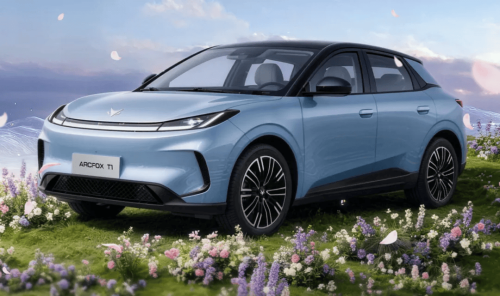
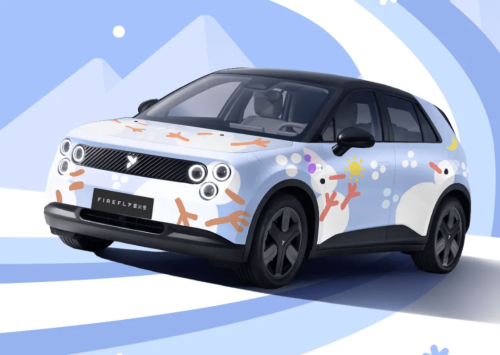
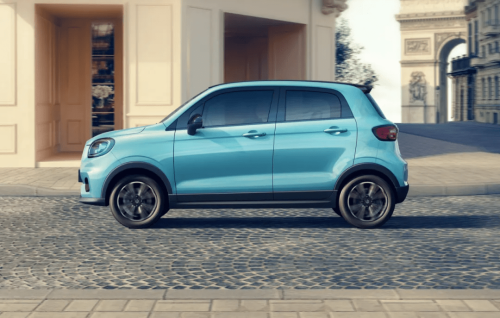
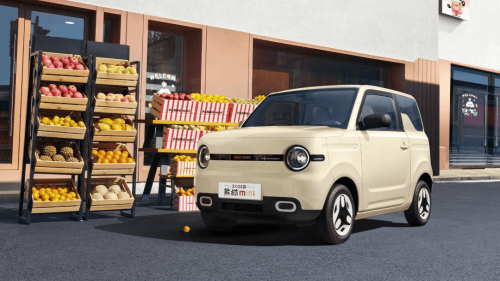
If the new energy SUV market in February was a case of “top-heavy”, the new energy mini car segment took this trend to an extreme in the same month. The top 10 best-selling new energy mini cars in China raked in a combined sales volume of 62,768 units this month. On a single-model basis, Geely Xingyuan claimed the top spot with 27,362 units sold—its sales volume surpassing the total of the 2nd to 6th models combined, continuing its strong market momentum. In contrast, the 10th place on the list is another Geely Galaxy model, the Panda. In pure numerical terms, its sales were 614 units lower than the Aion UT, which ranked 10th in January with 2,200 units sold. Meanwhile, models including the Firefly and ARCFOX T1 held their previous positions on the list. The Leapmotor T03 made a surprise entry to the 9th spot with 1,763 units sold, and only the Wuling Bingo S from the Wuling Bingo family remained in the top 10. Amid these ups and downs, the new energy mini car market witnessed significant shifts in February. Against this backdrop, which models held firm in the top 10, and which ones achieved growth against the tide? Let’s take a closer look. No.1: Geely Xingyuan – 27,362 units Geely Xingyuan sold 27,362 units in February, a month-on-month decline of approximately 5%. Geely Xingyuan On one hand, the month-on-month drop narrowed compared to January’s 19% decline. On the other hand, it was the only model in February’s top 10 new energy mini cars to record a five-digit sales volume, and its sales even exceeded the total of the 2nd to 6th ranked models combined. Currently, Geely Xingyuan offers a series of limited-time purchase incentives, such as a 50,000-yuan interest-free loan for 24 months or a 7-year loan with the first 2 years interest-free, complimentary exterior color options, and a 1,000-yuan customization fund. These perks may have boosted consumer demand during the Spring Festival holiday to some extent. In the broader new energy mini car market, Xingyuan remains one of the few models to offer rear-wheel drive and a rear multi-link suspension system. However, due to the withdrawal of purchase tax subsidies and rising component prices, a quick return to its previous high monthly sales of nearly 50,000 units seems unlikely in the short term. No.2: BYD Dolphin – 6,081 units The BYD Dolphin and Seagull were among the few new energy mini cars to post year-on-month growth in February. The Dolphin sold 6,081 units, marking a 14% month-on-month increase. BYD Dolphin Last year, BYD launched an intelligent driving version of the Dolphin equipped with the “God’s Eye C” system (DiPilot 100) and added features like an on-board refrigerator, bringing high-level assisted driving to the sub-100,000-yuan price range. This year, the Dolphin is set for more upgrades. In addition to the optional lidar revealed in the Ministry of Industry and Information Technology’s January filing, the facelifted Dolphin is also expected to feature the second-generation Blade Battery with flash charging technology. This could make ultra-fast charging and an extended driving range available for under RMB 100,000 ($14,520). Official details about the new Dolphin, however, have yet to be announced. No.3: BYD Seagull – 5,856 units After a staggering 70% month-on-month plunge in January, the BYD Seagull saw a modest recovery in February with 5,856 units sold, a 9% month-on-month rise—a lower growth rate than the Dolphin. BYD Seagull At the end of February, BYD rolled out a 7-year low-interest loan and 0-down payment policy for all its Ocean lineup models. The impact of these long-term installment plans on brand sales may only become evident in March. The Seagull has delivered a standout performance in overseas markets: from February 1 to 25, it sold 4,080 units in Brazil, a record high for the model in the region. In the domestic market, facing fierce competition, BYD needs to strengthen the Seagull’s market position through product upgrades. It is reported that the 2026 BYD Seagull will come with lidar and an extended driving range of 505km, outperforming current A0-class mini cars such as the Geely Xingyuan and BYD Dolphin. Will urban high-level assisted driving, the second-generation Blade Battery and flash charging technology help the Seagull return to its previous sales peak? No.4: Wuling Bingo S – 5,448 units The Wuling Bingo S sold 5,448 units in February, a 10% month-on-month decrease, but it held fast to its 4th place on the list. Wuling Bingo S Notably, the Bingo S is the only model from the Wuling Bingo family to retain its position in the top 10 in February. The standard Wuling Bingo sold 1,513 units in February, ranking 11th just behind the Geely Panda. No official information about a 7-year low-interest loan or other latest incentives has been released yet, leaving the Bingo S lacking purchase perks and policy support to drive sales. On March 13, the Bingo S 525km Flagship version was launched. As its name suggests, its key upgrade is a 525km driving range, nearly matching the 530km version of the MG4. Will an extended driving range be the key to boosting sales for the Wuling Bingo family? No.5: Wuling Hongguang MINIEV – 4,866 units The Wuling Hongguang MINIEV’s sales decline shows no signs of abating. It sold 4,866 units in February, a 31% month-on-month drop, hitting a new all-time low since the model’s launch. Wuling Hongguang MINIEV The fifth-generation Wuling Hongguang MINIEV has recently been teased and pre-orders have opened. The new model features a redesigned exterior, a rare four-door layout in its class, a maximum driving range of 305km, and fast charging support. In terms of interior, the fifth-gen Hongguang MINIEV is upgraded with a column-mounted gear shifter, and comes standard with keyless entry, dual front airbags, a 10.1-inch central control screen, among other features—representing a significant boost in product strength. Once the poster child for new energy mini car sales, the Hongguang MINIEV now faces a crowded domestic market where it is no longer the only option in terms of hardware, pricing and user experience. Against the urgency of a sharp month-on-month sales drop, the fully upgraded fifth-generation model may be the key to a sales rebound for the Hongguang MINIEV. No.6: MG4 – 4,086 units SAIC’s MG4 sold 4,086 units in February, a 59% month-on-month slump, landing in 6th place on February’s top 10 new energy mini cars list. MG4 After its facelift on August 29 last year, the MG4 quickly saw its monthly sales surge to over 11,000 units thanks to selling points like a spacious interior and semi-solid-state batteries, peaking in December before entering a decline. The fading of the new car sales dividend, coupled with the Spring Festival holiday and the withdrawal of purchase tax subsidies, are likely the main drivers of the MG4’s sales drop. Even so, it remains one of the few volume-selling new energy models for the MG brand. According to the official website, the MG4 is available at a limited-time starting price of RMB 65,800 ($9,554) until March 31. However, the impact of this offer on March sales remains to be seen. In the 405th batch of filings from the Ministry of Industry and Information Technology, a new MG SUV model, the MG 4X, was revealed, billed as inheriting the MG4’s “high-performance genes”. Can the MG brand achieve an upward breakthrough in 2026 by entering the mainstream market and expanding its product line? No.7: ARCFOX T1 – 3,075 units The ARCFOX T1 also held its position on the list, but its sales fell 27% month-on-month to 3,075 units in February. ARCFOX T1 The ARCFOX T1 was launched around the same time as the facelifted MG4. The fading of its initial sales dividend, combined with various market headwinds, is likely still weighing on its sales performance. The official launched limited-time incentives for the Spring Festival holiday, such as a 3,000-yuan purchase tax subsidy. However, based on January and February sales data, these limited-time offers have seemingly had a minimal impact. To maintain a competitive edge, brands like Wuling and BYD have started preparing for facelifted or redesigned models. As of now, however, there have been no official announcements or MIIT filings regarding an upgrade or replacement for the ARCFOX T1. No.8: NIO Firefly – 2,645 units The Firefly sold 2,645 units in February, a 3.3% month-on-month decline, but it kept its 8th place on the list. NIO Firefly The official previously followed the industry trend with a 7-year low-interest financing policy, offering an annualized interest rate of just 0.49%. Yet, looking at the model’s sales in the first two months of 2026, this new policy has not delivered a significant boost. Despite this, the Firefly has still achieved an impressive performance. During a Lantern Festival live stream, the official revealed that as a pure electric mini car in the sub-100,000-yuan range, the Firefly has amassed over 40,000 users less than a year after its delivery launch. Targeting the Firefly’s unique product positioning and sales channels, the official stated that more special-edition models will be launched this year (the “Pegasus Rhapsody” edition is already on the market), and NIO integrated stores will be set up in sinking markets with strong sales, showcasing models from NIO, ONVO and Firefly together. With enhanced sales channels and a focus on personalization, can the Firefly deliver even better sales results in the Chinese market in 2026? No.9: Leapmotor T03 – 1,763 units The Leapmotor T03 was a surprise performer on February’s list, selling 1,763 units—a staggering 447.5% month-on-month surge—and claiming the 9th spot. Leapmotor T03 The T03 underwent a facelift in February last year, discontinuing the entry-level 200km range version and focusing on the 310km and 403km range variants. This significantly raised the entry-level driving range, though no major hardware upgrades were made. The sharp month-on-month sales jump is likely driven by favorable financing policies, including a 7-year low-interest loan or a 5-year interest-free loan. According to Leapmotor’s official information, customers who pay a deposit and take delivery by March 31 can avail of these policies with a minimum down payment of just 15%. Facing an increasingly competitive new energy mini car market, the Leapmotor T03’s sales performance over the past six months has been underwhelming, with an average monthly sales volume of less than 10,000 units in 2025 and a drop to just 322 units in January this year. Recently, a new Leapmotor model codenamed “A05” was filed with the MIIT. The 4.2-meter-long car is equipped with lidar and features the brand’s latest design language—could it be the key successor to the T03? No.10: Geely Panda – 1,586 units Rounding out the top 10 is the Geely Galaxy Panda, with 1,586 units sold in February, a 21% month-on-month decrease. Geely Panda The Geely Panda hit a sales peak of 17,301 units in November 2025, before plummeting to 4,373 units in December, and now its sales have fallen to a near two-year low. While the Geely Panda has not adopted the 7-year low-interest loan policy, its March incentives are quite generous according to the official website, including a limited-time cash subsidy of up to RMB 10,000 ($1,452), a RMB 40,000-24-month 0-down payment and interest-free loan, lifetime warranty for the three-electric system, and a complimentary charging gun. Its March sales performance is therefore highly anticipated. However, with the launch of the fifth-generation Wuling Hongguang MINIEV and the upcoming facelift/redesign of the BYD Seagull, the Geely Panda will face mounting competitive pressure—one that may only be alleviated with stronger product strength.



















 +29 others