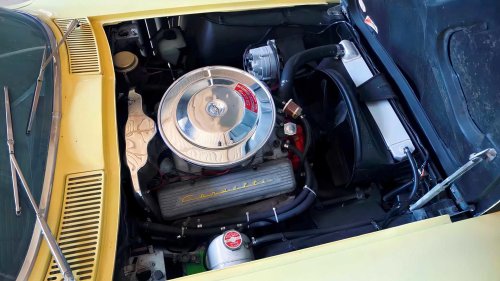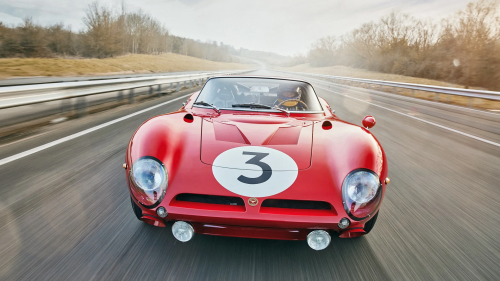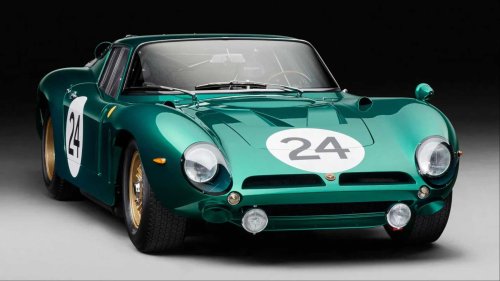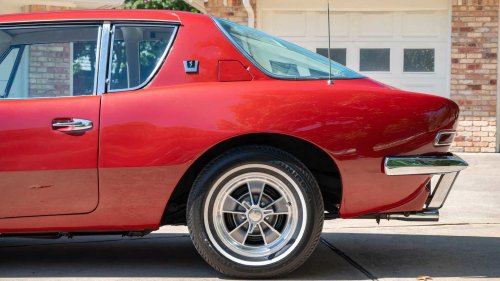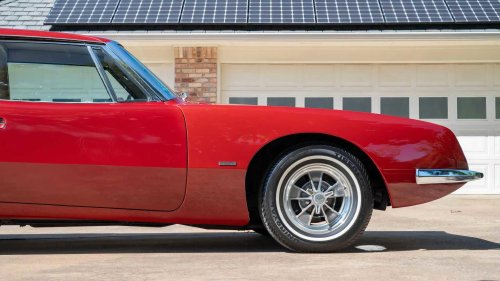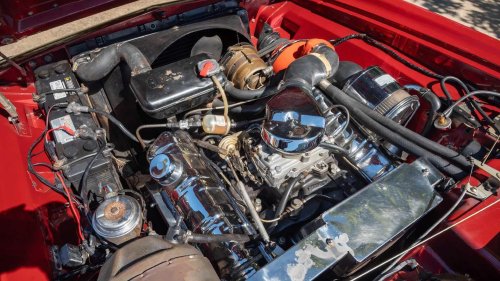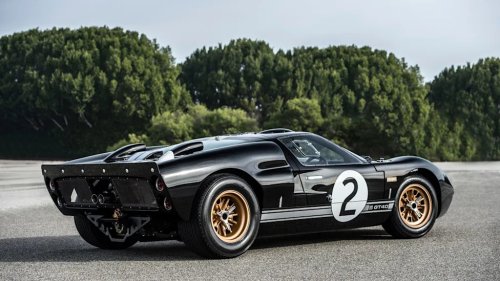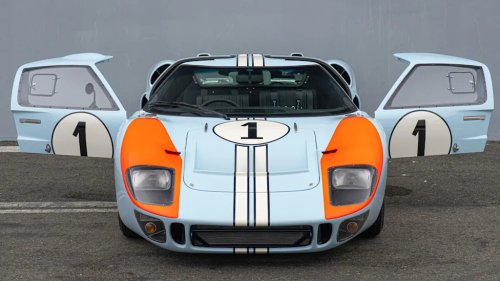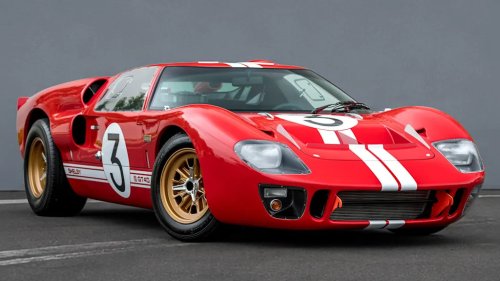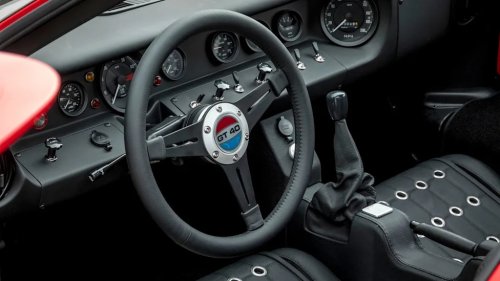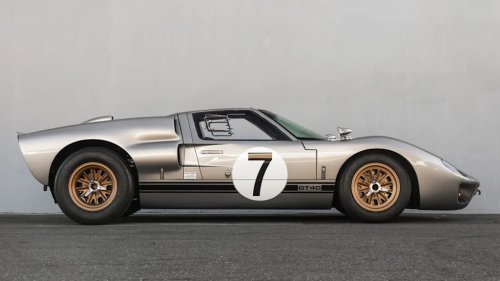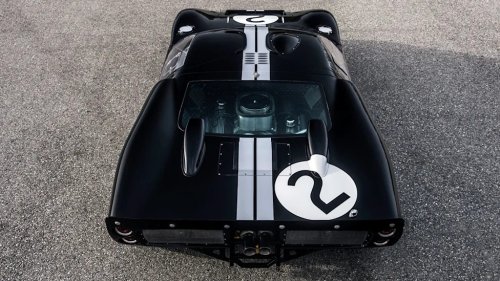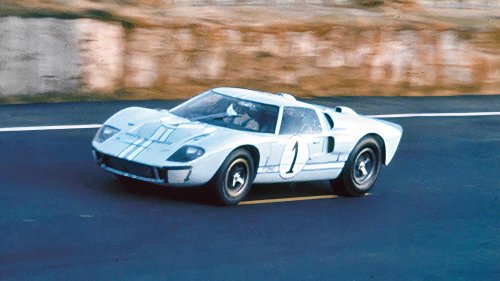
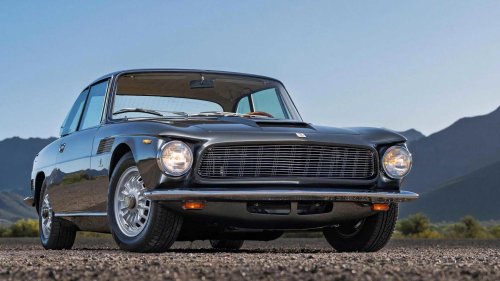
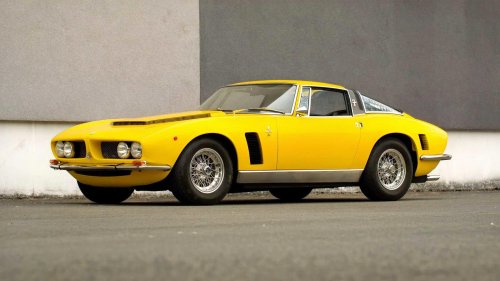
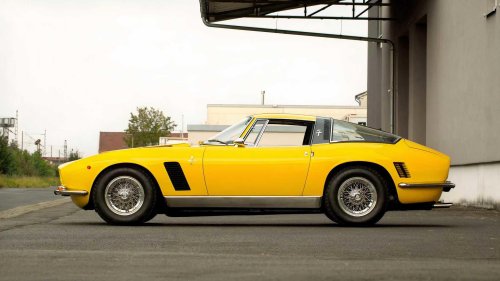
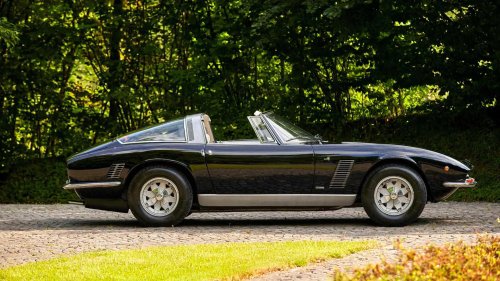
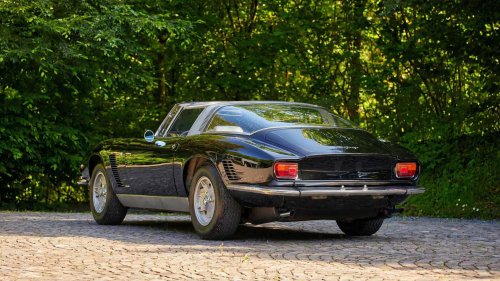
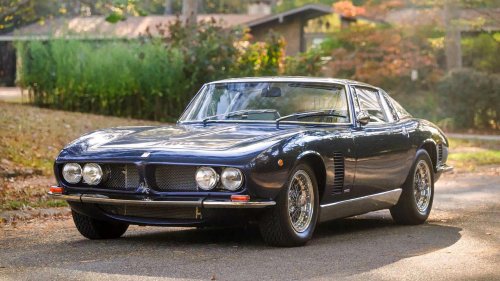




















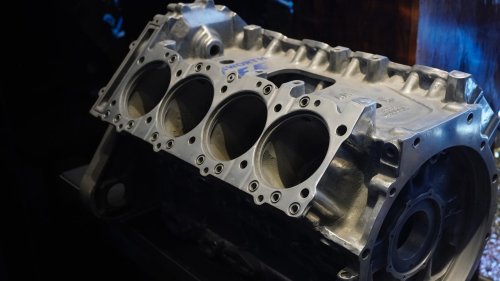
Many of us gearheads love both European style and American muscle. Wouldn't it be great if there was a way we were able to combine them? Well, that's an idea that some European automakers actually had back in the mid-late 20th century. Realizing that the big V8s found in American Muscle Cars could make great power plants in any kind of sporting model, they decided to drop them into stylish Sports Cars.One of those sports cars that came out of that thinking is a rare production model from a little-known Italian company. Its development had input from somebody who had previously worked under Enzo Ferrari, and it could be ordered with one of the most legendary V8s to ever come out of Detroit. The 1960s Were An Era Where American And European Performance Were Able To Compete With Each Other For The First Time FordOriginally, American and European performance cars had been geared for completely different purposes. European sporting models were all about handling, fitting with the traditions of rallying and circuit racing. Their American equivalents were built for straight-line speed and the oval racing of NASCAR. As a result, they were totally different, and couldn't really compete with each other. That was until the 1960s. This is the decade when the legendary Ford GT40 made an appearance, matching and beating the European manufacturers in sports car racing with its blend of American big-block power and European engineering know-how. This was the first time a car from an American automaker could genuinely be a competitive force against a big European manufacturer like Ferrari (the automaker Ford designed the GT40 to squarely beat).That coming together of European and American performance (both on the track in rivalry and through engineering collaborations like the one that created the Ford GT40) absolutely inspired quite a few automakers to try combining it themselves. One of those budding automotive entrepreneurs who gave it a go was an Italian with ambitions to get involved in the most luxurious niches of the car market. This man was Renzo Rivolta, and his company created one of the coolest and most underrated Italian sports cars ever. Renzo Rivolta Was Making A Name For Himself Building Classy European Sports Cars With American Muscle Bring a TrailerRenzo Rivolta didn't get his start making cars. He actually started off making electric heaters and chillers! After World War II was over, though, his focus shifted to making vehicles. He started off making motorcycles, before coming up with the Isetta microcar in the 1950s. Renzo Rivolta didn't have a lot of success himself with the Isetta, but other companies did very well with making license-built copies of his company's design. This included BMW. BMW's version of the Isetta is so associated with the German automaker that a lot of people likely don't know that it was a license-built copy.In the early 1960s, Rivolta decided to move towards proper passenger cars. The result of that was the Iso Rivolta IR 300. This is the car that truly set the stage for what was to come. It's a stylish Italian grand tourer, powered by an American engine. That engine in particular was the legendary 327 cubic inch (5.4-liter) Chevrolet small-block V8. That experience Renzo Rivolta got with putting an American engine into a European-designed car came in handy when he decided he wanted a second model. The Iso Grifo Is An Italian-American Sports Car Nobody Expected Bring a TrailerOut of all the European-American hybrids that have appeared over the years, none are perhaps as cool or stylish as the Iso Grifo. This is a proper Italian sports car, with Giugiaro looks to match (he designed this car while he still worked at Bertone). But, under the skin, it's about as far removed from the typical Italian sports car powertrain as you could get. The initial engine choice for the Iso Grifo was the Chevrolet small-block V8. This came in various states of tune, ranging from 300 to 350 horsepower. It initially only came with a 4-speed manual transmission, which also had American muscle car origins. This was later replaced with a 5-speed manual.The Grifo was highly praised when it hit the streets. Contemporary road tests noted that it had excellent handling, being incredibly stable and planted at high speeds thanks to its chassis setup. It was also given a lot of praise for its interior, which was much more luxurious than what you'd find in typical European sports cars of the day. A Former Ferrari Employee Was Instrumental In Its Engineering Bring a TrailerOne of the reasons why the Iso Grifo turned out to be such a great car is because a former Ferrari employee was instrumental in engineering it. The main engineer on the Grifo project was Giotto Bizzarrini. He had been a key engineer for Enzo Ferrari before leaving to start his own engineering consultancy firm (and later building his own sports cars) under his own name. From there, he provided engineering services to a number of other automakers. This included Renzo Rivolta, who drew on Bizzarrini's experience with making sports cars for Ferrari to build him something that could match one of Enzo's machines. The Series II Got One Of Chevy's Most Legendary Engines Bring a TrailerThe most talked-about version of the Iso Grifo has to be the Series II. As part of the revisions that Iso made to the Grifo to create the Series II, it gave this gorgeous Italian sports car one of the most legendary Chevy engines of all time. That's the 427 cubic inch (7.0-liter) big-block V8. In the Grifo, this engine produced an advertised 435 hp. That gave it much more power than its European rivals. As just one example, the Ferrari 365 GTB/4 Daytona only produces 352 hp and 318 lb-ft of torque from its 4.4-liter V12. To further emphasize how much of a big deal having this engine in the Grifo was, Iso gave 427-engined cars a special designation. They were known as the Grifo 7 Litri.Much like the small-block powered Grifos, the big-block 7 Litri had transmission options that were very American. It initially came with the same 4-speed manual transmission as the small-block Grifo, with the 5-speed coming along later in the same way. It also was available with a 3-speed automatic, like what you'd find in big-block luxury cars in America. The automatic transmission option actually wasn't really a dampener on the Grifo. The Grifo is more of a stylish grand tourer than an out-and-out sports car, and an American-style automatic transmission actually worked well for that.Iso claimed some pretty amazing performance figures for the Grifo 7 Litri. This included a claimed top speed of 186 mph. Unfortunately, it's not really known if the 186 mph top speed was ever put to the test. The small-block version of the Grifo was tested up to 161 mph by Autocar in 1966, making it the fastest car the magazine had ever tested until the Lamborghini Miura came along. That's still very impressive for a 1960s car. But, if the small-block Grifo was well short of the 7 Litri's top speed, it's unlikely that the big-block power would have allowed it to go much faster. It's Become An Incredibly Valuable Collector Car Bring a TrailerWhile the Iso Grifo has snuck under the radar, it's become extremely valuable in collector circles. A lot of that is down to the fact that the Iso Grifo is very rare. Only 350 Series I and 83 Series II cars are known to have been built. That brings the total number of Grifos to 413. With such rarity, it's not surprising that you need a lot of money to burn to be able to buy one of these. Series I Grifos have an average used value of around $354,250. Series II Grifos are commanding even higher values at times, with an average used value of $506,013.While that's a lot of money to spend on a '60s grand tourer, it's still cheaper compared to its better-known rivals. The Ferrari 365 GTB/4 Daytona, for instance, is worth around $635,568 these days. The earlier 275 GTB is even more expensive, with used values that average around $3.5 million. So, even with it being a rare and valuable sports car, the Iso Grifo might still be a bit of a bargain in that way. Why Do Americans Still Not Know About It? Bring a TraierIt seems like the Iso Grifo has the best of both worlds. It combines European flair with American muscle, and can easily keep up with the best European grand tourers of its day. That's before you even mention that it came with some of Chevrolet and Ford's most legendary engines.So, why do American enthusiasts still not really know about it? Some of that is down to the fact that it's so rare. You're more likely to see Ferrari, Lamborghini and Aston Martin grand tourers from that era than you are to see the Iso Grifo. It was also squarely aimed at the European market, without much thought for American customers. When you take that into account, it's not that surprising that the Iso Grifo didn't make waves in America.Sources: Autocar, Classic.com, Ferrari, Iso