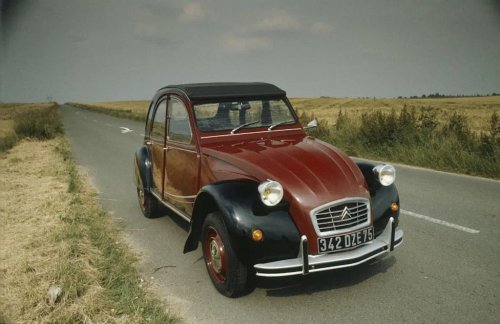
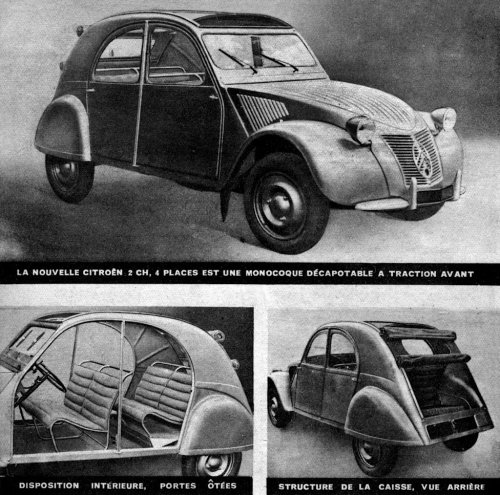
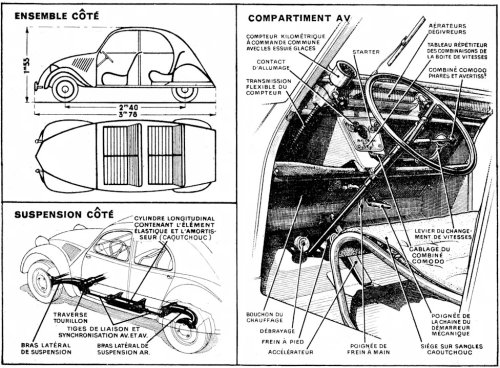
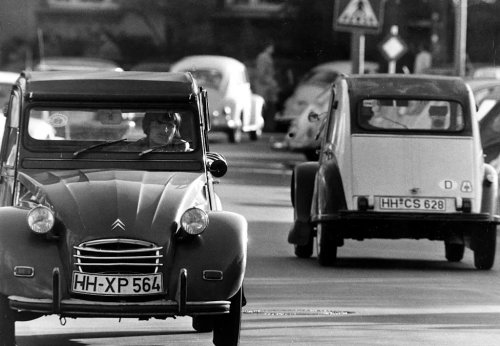
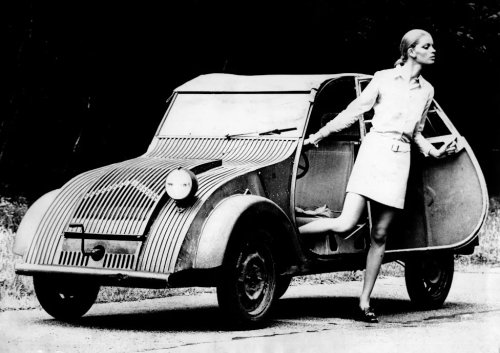
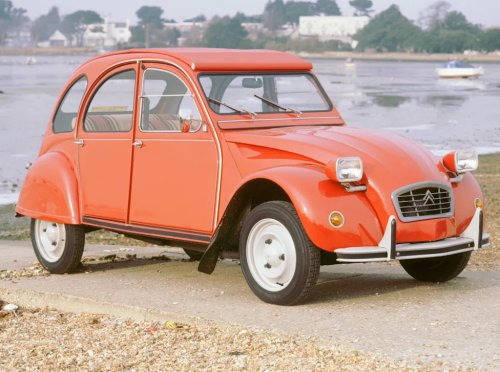
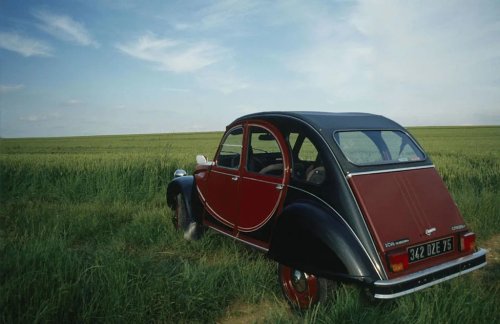
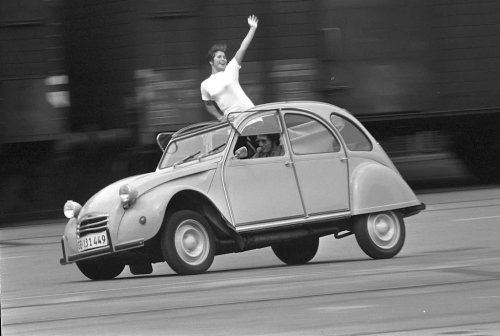



















Autoblog and Yahoo may earn commission from links in this article.As far as iconic cars go, few have a history as long as the Citroën 2CV. A model conceived in 1930s France, the car was designed as a practical, economical, and comfortable family vehicle for low-income earners, including farmers and artisans. While its unusual appearance certainly drew plenty of criticism, its engineering, versatility, and affordability made it a favorite of the average consumer. With more than four decades on the market, the Citroën 2CV may have been designed for rural French farmers, but it found a place among the general populace in no time at all.A decade of research and developmentThe Citroën 2CV's origin story begins in 1936, more than a decade before the first model would roll off the production line. At the time, France was primarily made up of rural farmland, and car ownership was out of the question for most farmers, tradesmen, and other working-class families. Citroën aimed to create a vehicle designed specifically for this sect of the population.Patrice Cartier / Hans Lucas / AFP via Getty ImagesIn order to figure out what the poor demographic looked for in a vehicle, Citroën surveyed more than 10,000 potential customers. Looking back, the demands were to be expected. A vehicle designed for the poor needed to be affordable, easy to maintain, and offer enough space for four people and luggage. Most importantly, it needed to be able to travel over the rough rural roadways. AdvertisementAdvertisementNotably, one of the most memorable requirements was that the vehicle should be able to transport a basket of eggs over a freshly plowed field without breaking them. The project was dubbed TPV, or Toute Petite Voiture, which translates to "very small car." Pierre-Jules Boulanger, vice president and chairman of Citroën, appointed André Lefèbvre to head up the project.Patrice Cartier / Hans Lucas / AFP via Getty ImagesThe engineering team prioritized weight reduction, experimenting with lightweight alloys and unusual materials. By 1937, Citroën had a roadworthy version of the TPV that weighed just 815 lbs. on hand. It was capable of carrying four people and up to 100 lbs. of luggage. While the French manufacturer could have stopped there, they continued to refine the car's driving manners and comfort. A revised model featured a long-travel suspension made up of interconnected components that allowed it to traverse the bumpy rural roads with minimal disruption.By 1939, Citroën had completed 250 pre-production models, and the 2CV was set to be unveiled at the 1939 Paris Motor Show. The outbreak of World War II put those plans on pause, and most of the models were destroyed. Fortunately, four models that had been stored in secret at the Citroën Test Centre survived. 10 years later, in 1949, the 2CV finally went into production.Hans G. Lehmann/ullstein bild via Getty ImagesThinking about selling your car? Get an instant cash offer online now. Click here to get started.A car for the peopleThe 1949 Citroën 2CV rolled out as a major innovation for the industry. It came powered by a 375cc, air cooled, flat-twin engine that produced just nine horsepower and boasted a top speed of roughly 31 mph. The engine itself was simple, lightweight, and economical. The four-speed transmission that sent power to the front wheels was another oddity for such a cheap car. As for styling, the 2CV featured a rounded design, distinctive hood, fabric roof, and sophisticated suspension. While automotive journalists, enthusiasts, and even Citroën dealerships were flabbergasted by the 2CV, consumers in rural France quickly flocked to the car. Just one year after production began, in 1950, the 2CV proved to be a commercial success. Those who wanted one were put on a three-year waiting list just months after it hit the market, with delivery times pushed back to six years soon after.AdvertisementAdvertisementAs a result of the high demand, Citroën was forced to ramp up production. While the French manufacturer built just 876 examples of the 2CV in 1949, that number increased to just under 6,200 units in 1950. By 1951, Citroën was producing 100 cars per week.ullstein bild/ullstein bild via Getty ImagesThe Citroën 2CV didn't change all that much over the years. The distinctive design stuck around, as did its barebones interior. In 1954, the 2CV got upgraded to a 425cc engine that was good for roughly 12 horsepower and a top speed of 50 mph. The 1960s brought a smoother hood that replaced the original folded design. Over time, Citroën had introduced new variants of the 2CV as well, and the car was quickly shifting from a cost-effective rural vehicle to a more modern family car.The 1970s brought major safety enhancements, including revised rear lights, standard seatbelts, and improved seating. Notably, the 2CV's trim range now included 435cc and 602cc engines. As it turns out, the 2CV saw its popularity rise during the 1973 oil crisis, as its small engine, high fuel economy, and lightweight design proved to be particularly attractive to consumers of all ages. By the 1980s, the 2CV's engineering dated back more than 40 years, and the end was drawing near.National Motor Museum/Heritage Images/Getty ImagesShopping for a new car? Click here to get a great deal on your next vehicle. Powered by Carvana, no haggle pricing, 100% online.42 years of productionBy the late 1980s, the 2CV's age was showing as clear as day. The engine struggled to keep pace with modern traffic patterns, and the four-decade-old architecture made it difficult for the car to meet European safety regulations. Production of the Citroën 2CV ultimately came to an end in 1990. The model's 42-year production run culminated in more than 3.8 million examples of the standard saloon sold.Put simply, the world had moved on from the 2CV. Citroën opted not to replace the car with a redesigned model that used the same formula. Rather, the automaker developed newer small cars capable of meeting modern consumer expectations in performance, comfort, and safety, as well as government emissions regulations.AdvertisementAdvertisementThe car of the people, the 2CV kept things simple. Rather than chase performance specifications or upscale luxury, Citroën focused on creating an affordable, practical, and comfortable vehicle without many complexities. As evidenced by the sales numbers, the French automaker clearly succeeded, and one could even argue that, by the end of production, the 2CV had become something of a cultural symbol in France.Blick/RDB/ullstein bild via Getty ImagesFinal thoughtsWhile the Citroën 2CV is gone, it's the furthest thing from forgotten. The iconic model has a cult following to this day, and models in good condition can fetch upwards of $20,000 at auction. Despite the outbreak of World War II setting the French automaker back several years, the 2CV lived to see the light of day, if only by sheer luck that the four surviving prototypes remained hidden throughout the war. Today, the Citroën 2CV stands out as one of the most recognizable cars in automotive history, and rightly so.Disclaimer: Autoblog aims to feature only the best products and services. If you buy something via one of our links, we may earn a commission.This story was originally published by Autoblog on Aug 23, 2026, where it first appeared in the Features section. Add Autoblog as a Preferred Source by clicking here.