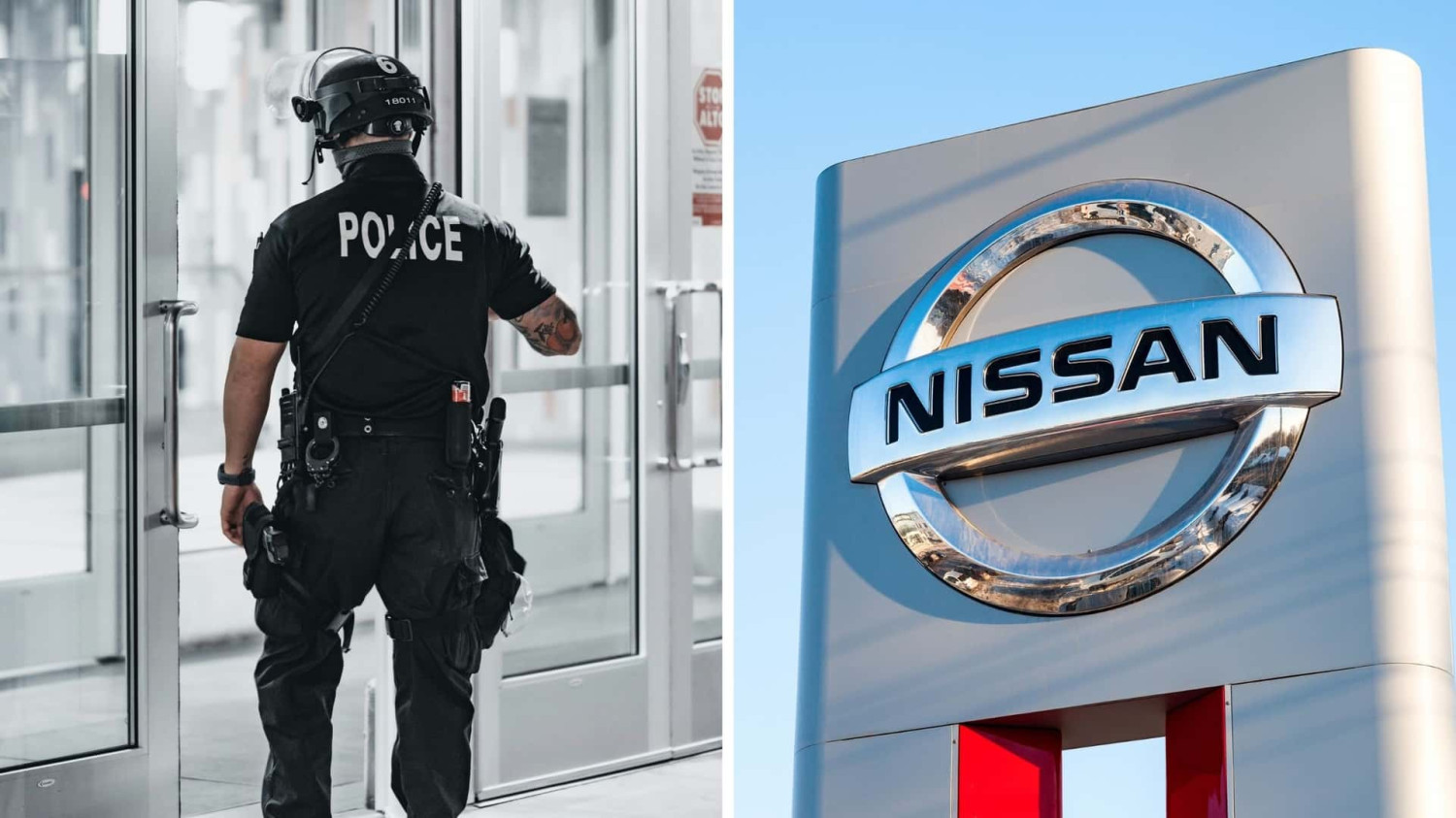



















A Nissan employee's shift took a dramatic turn when police officers arrived at her workplace to confront her about suspicious cash register activity. What started as a routine day ended with an arrest and accusations of using counterfeit bills. Police Confront Employee In a viral video with more than 710,000 views, TikToker Rethinking Path (@rethinkingpath) shares body camera footage showing the Leesburg Police Department officers confronting a Nissan employee about taking money from the dealership's cash register. "So my name is officer Navarro, the Leesburg Police Department, officer Guzinsky. Do you have any idea why we're here?" one officer from the department asks an unnamed woman as they approach her at her workstation. When she says no, the officer continues, "Do you know there's cameras in here?" The officer then reads the employee her Miranda rights and explains why she's being detained. "There's camera footage here of you taking money out of this backpack, putting it into a cash register, and then taking money out of that cash register, and putting it into this bag," the officer says in the video. OWNERSHIP STORIES Viral stories from across the web Our team of experts tracks what owners are saying about car-shopping, repairs, the daily driving experience and more on social media. The employee initially claims she was getting change for a $100 bill, saying her brother had given her money before leaving town. "So you think you can bring your personal money and take it out with Nissan's money?" the officer asks. The employee responds that she asked for permission from coworkers named Angie and Jackie to exchange her bills at the register. The situation escalates when the officer reveals a crucial detail, "Well, the bills are counterfeit, so the bills are not real. Technically, you stole $260 from Nissan. You put fake bills into their cash register." The employee insists the money came from her brother and that she didn't know the bills were fake. The officer pushes back on her explanation about getting change from the cash register. "I think you're old enough to know that doesn't even make sense," the officer says in the video. "This is your place of employment. This isn't your bank." Text overlay on the video reads: "Nissan employee caught red-handed using fake bills to scam thousands." (It purportedly ended up being well under $1,000.) The body camera footage continues as officers process the employee for arrest, explaining she'll be charged with theft and possession of counterfeit bills. Officers count the bills, all singles totaling around $260, and explain that the counterfeit bills were marked with a detection marker. The employee is told she'll be taken to the police department for processing and then to the jail, where she can post bond and potentially be released by mid-afternoon. She asks about calling her mother and retrieving phone numbers, appearing distressed about the situation. The videos do not identify the specific Nissan dealership. News coverage indicates that it may be in Florida. Court records in that jurisdiction show that a woman matching the name listed on those reports was found guilty of petite theft and using counterfeit bills. What Are the Penalties for Using Counterfeit Money? According to Justia, federal law makes it a crime to possess or use counterfeit US currency with intent to defraud. To convict someone, prosecutors have to prove two things: the fake money looked real enough to fool a regular person, and the defendant intended to use it fraudulently. The penalties are brutal. Getting caught with counterfeit bills can land you up to 20 years in federal prison and slap you with fines up to $250,000, Justia reports. Now, here's where it gets tricky. If you genuinely had no idea the bills were fake, that's technically a defense. But prosecutors can prove intent through your actions. Trying to pass multiple fake bills or exchanging large amounts at once may be enough to make your "I didn't know" defense fall apart. What Are Employee Theft Laws? Employee theft covers any form of stealing, embezzling, or misusing your employer's stuff, LegalMatch explains. That includes swiping cash, messing with transactions, or using company property for personal reasons. How much trouble you're in depends on how much you took. Steal less than $1,000 and you're typically looking at petty theft, a misdemeanor with fines and up to a year in jail, LegalMatch reports. Anything over $1,000 bumps you up to grand theft, a felony with way heftier fines and serious prison time. Prosecutors tend to go harder on employee theft than regular theft because of the elements of access and trust. Further, most companies want to make examples out of thieves to scare other employees straight. A Life Potentially Derailed Over $260 People who watched Rethinking Path’s post were overwhelmingly dismayed that someone allegedly put their future and freedom at risk over such a small amount. "She lost her job for $260 wow," one said incredulously. "You going to lose your job for 260$ is insane and go to jail to boot," another wrote. Many took issue with both the alleged scheme and how the woman handled it. "why EVERYONE CALLING THEIR MOM WHEN ARRESTED??? BIG AND GROWN," a person said. “Until he said the bills were counterfeit I was on her side. Girl… you can’t do that and of course Nissan has a scanner to check for fake bills,” a second chimed in. Motor1 reached out to Rethinking Path via TikTok direct message and to the Leesburg Police Department via email for comment. We'll be sure to update this if they respond. We want your opinion! What would you like to see on Motor1.com? Take our 3 minute survey. - The Motor1.com Team