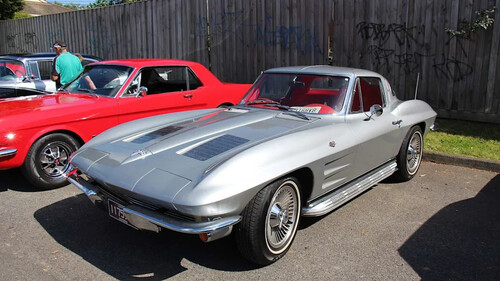
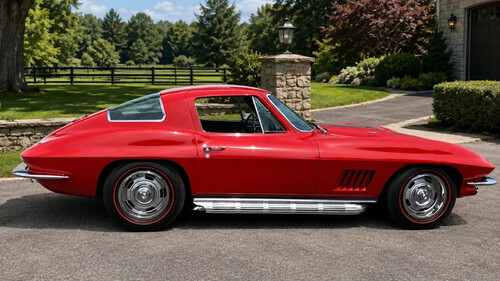
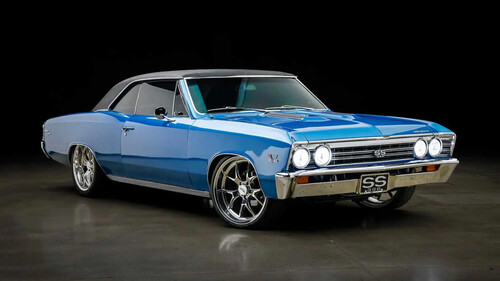
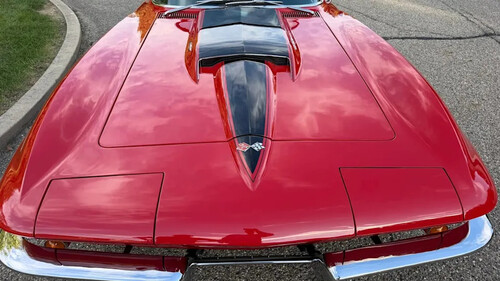
This 1967 Corvette feels nothing like what cars have become todayThe 1967 Corvette arrived at the end of the second generation with a shape that still looks like motion frozen in fiberglass and an attitude that feels almost alien beside the insulated, software-managed cars of 2026. Its steering is heavy, its idle is impatient, and its cabin is closer to a cockpit than a lounge. For many American enthusiasts, that rawness is exactly why this Sting Ray feels like a different species from what cars have become. The last, sharpest cut of the C2 Sting Ray The 1967 Corvette Sting Ray was the final evolution of the second generation, a car refined after years of racing and street feedback into something leaner and more focused. Period Corvette Facts and describe it as the last of the General Year Information for the C2 line, with subtle trim changes and cleaner bodywork that many fans still call the best looking of all Corvette Facts. The Corvette Sting Ray name was already an icon, but this final year sharpened the details rather than reinventing the car. Designer Larry Shinoda had spent the early 1960s shaping the Sting Ray Corvette around ideas pulled directly from competition. His work on the 1963 to 1967 cars is described as translating racing concepts into a production shape, with hidden headlights and a silhouette that screamed speed, according to a profile of the Sting Ray. By 1967, that silhouette had been cleaned of extra trim and vents, leaving a shape that still looks purposeful beside much newer machinery. Power that feels mechanical, not digital Under the hood, the 1967 Corvette could be ordered with a range of V-8s, but the most famous were the big-block engines that defined American performance of the era. One of the headline options was a 427 cubic inch V-8, a figure repeated with reverence in modern coverage of the 427 Stingray. Another detailed look at the car notes that the standout engine choice was the 427, offered in several states of tune for buyers who wanted anything from a stout street car to a near-race package, as highlighted in an overview of the 1967 Corvette Sting. For the most dedicated drivers, Chevrolet offered the L88 version of that big-block. Factory paperwork rated the L88 at 430 HP at 4,600 rpm, a figure recorded in official factory specifications and repeated in later Corvette Facts. That number was widely believed to be conservative, but even taken at face value it meant a level of performance that required serious attention from the person behind the wheel. Not every 1967 Corvette was a big-block monster. Survivors like one 1967 Chevrolet Corvette Stingray presented by Alex from Offantine Classic Cars, which carries the 327 m small-block, show how the car could be configured for more balanced street use, as seen in a walkaround of the Chevrolet Corvette Stingray. Even in this milder form, throttle response is immediate, and the engine’s character is defined by camshaft and carburetor rather than drive modes and software. A driving experience that demands the driver Modern performance cars often deliver speed with minimal drama. The 1967 Corvette does the opposite. Owners and testers describe a car that feels alive, with heavy steering at parking speeds, strong manual brakes that reward firm pressure, and a clutch that insists on deliberate engagement. One account of driving a mid year Corvette convertible notes that the accelerator pedal requires a single push to the floor and release on a cold start, maybe two if the car has sat, and that once warmed, the car shines on roads that are curvy and smooth, as described in a review of a mid year Corvette. On the road, this Corvette is not interested in isolating its driver from the surface. Road texture comes up through the steering wheel and seat, and the car’s short wheelbase keeps it alert over bumps. Enthusiasts who compare it to modern cars often highlight the difference in feel. One reflection on driving a 1967 example notes that the nostalgic feeling one gets from driving such an old car is quite amazing, especially for people used to the comforts of contemporary vehicles, as described in an essay on how Most people are to modern conveniences. The same account points out that the car lacks the layers of insulation and electronic assistance that define present-day machines. There is no stability control to tidy up a clumsy throttle input and no adaptive suspension to smooth over a patch of broken pavement. The result is a machine that feels more like a partner than a product, with every action producing an immediate and sometimes unforgiving reaction. Gearing, traction and the analog limits Beneath the body, the 1967 Corvette’s hardware reflects a different era of engineering priorities. Official specification sheets list regular axles from Toledo Regular with ratios such as 3.36 and 3.70 for 4-speed manuals, while Powerglide Posttraction units used ratios like 3.08 in codes such as Powerglide AL, as detailed in the axle chart. These numbers shaped how the car launched from a stop and how hard it pulled through each gear, long before configurable drive modes and multi-speed automatics took over. Traction is another place where the old car feels very different from modern performance machines. A recent comparison between a 1967 427 and a later LS3-swapped Corvette describes how, even on cold November Indiana pavement, the older car will chirp the tires in third gear, a behavior captured in a video of a Corvette Shootout Round. That tendency to break traction under power is part of the car’s charm for some drivers and a reminder of its limits for others. This analog edge stands in contrast to the controlled aggression of modern Corvette engines such as the LT2 and LT6, which are often compared in discussions that point to a lot of differences between the two engines and the way they shape the character of the Z06, as seen in a breakdown of There are a. The 1967 car lacks that level of refinement, but it also lacks the filters that stand between driver and drivetrain in current models. The emotional pull that modern cars struggle to match Beyond numbers, the 1967 Corvette carries an emotional charge that many owners say modern cars cannot replicate. One enthusiast account describes how the nostalgic feeling one gets from driving such an old car is quite amazing, and that the sensory experience of noise, smell, and vibration is entirely different from driving a modern day car, as shared in a reflection on how there’s nothing more than a classic Corvette. Video reviews echo that sentiment. In one feature, a host describes seeing a particular 1967 car and knowing right away that this was the one, saying they felt that feeling and that this was the car they wanted, in a clip from the channel Center Lane that opens with a greeting of hi folks and welcome to Center Lane, as heard in a Center Lane episode. That kind of instant, emotional connection is a recurring theme in stories about these cars. Among Corvette fans, debates about the best year or generation can become heated. One recent discussion points out that if someone wants to start a heated debate among Corvette fans, they only need to ask which Corvette is the greatest one of all time, and that arguments quickly follow, as explained in a video asking whether a particular model is the Best Corvette Ever?. The 1967 Sting Ray often appears near the top of those lists, not only for its performance but for the way it represents a high point of analog design. Originality, modification and generational change Part of the 1967 Corvette’s identity today comes from the tension between originality and modification. Some owners insist on preserving factory parts, while others embrace upgrades that make the cars easier to live with. One social media discussion captures this divide with the comment that Certainly everybody can like originality as much as they want. But the reality is that the youth of today cannot work on a classic in the same way, a sentiment shared in a group post that concludes that times they are changing fellows, as seen in a thread where Certainly everybody can. Engine technology illustrates that gap. A discussion about classic American muscle cars such as the 67 Corvette notes that Probably at least 4 generations of new engine design have arrived since then, possibly even 6 generations, and that Everything has been upgraded in modern powertrains compared to alternatives from the 1960s, as argued in a detailed answer about classic American muscle. That technological gulf shapes how younger enthusiasts approach cars like the 1967 Corvette, often blending respect for heritage with an interest in restomods and modern reliability. Shops and specialists have grown around that demand. Suspension suppliers catalog parts specifically for the 1967 Chevrolet Corvette, with application guides that trace back to Over Drive Magazine references, such as listings that are Discovered in connection with the Corvette Fact Sheet from Over Drive Magazine for the 1967 model year, as seen in an application page for the Chevrolet-Corvette. Restoration guides even track paint codes like Tuxedo Black, recorded in color databases that were Discovered through the Corvette Fact Sheet from Over Drive Magazine, as shown in an entry for Tuxedo Black. Why it feels so different from the cars of 2026 Set beside a modern supercar or even a current Corvette, the 1967 Sting Ray highlights how far automotive design has moved toward speed with safety and comfort. Contemporary performance cars deliver staggering acceleration with traction control, anti-lock braking, and multiple layers of driver aids. They are quieter, cooler, and easier to drive fast. Yet for many enthusiasts, that progress comes with a tradeoff. The 1967 Corvette demands skill and attention in every situation. It makes no attempt to hide its mechanical workings, from the noise of the big-block 427 to the way the chassis loads up in a corner. That lack of mediation is what makes it feel so removed from the cars of today. Modern Corvettes have become sophisticated, with engines like the LT6 that spin to high rpm and electronics that manage grip at the limit. The 1967 car, by contrast, reflects an era when engineers built performance through displacement and gearing, and when designers like Larry Shinoda shaped bodies that communicated speed without the aid of active aero or digital clusters. Enthusiast communities keep that legacy visible. Social channels linked to Corvette coverage, such as accounts Discovered through VIDEO clips of a Corvette Shootout Round that ask Which car enthusiasts prefer, continue to share images and stories of 427 powered cars on platforms like CorvetteBlogger. Giveaways and auctions feature restored or survivor examples, including campaigns Discovered through the Corvette Fact Sheet from Over Drive Magazine that promote classic C2 models on sites such as Corvette tickets. Each of these efforts treats the 1967 Sting Ray not just as an old car but as a benchmark for what an American sports car can feel like. More from Fast Lane Only Unboxing the WWII Jeep in a Crate 15 rare Chevys collectors are quietly buying 10 underrated V8s still worth hunting down Police notice this before you even roll window down