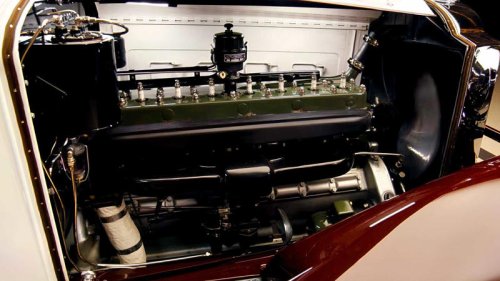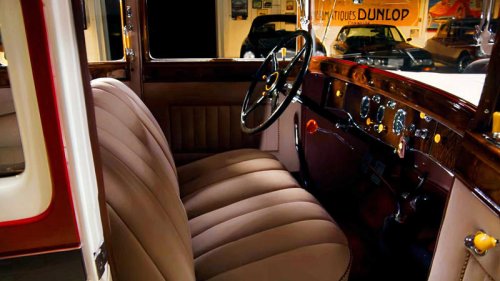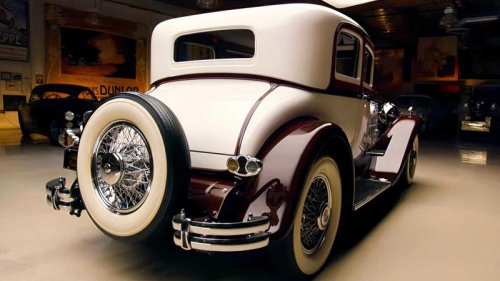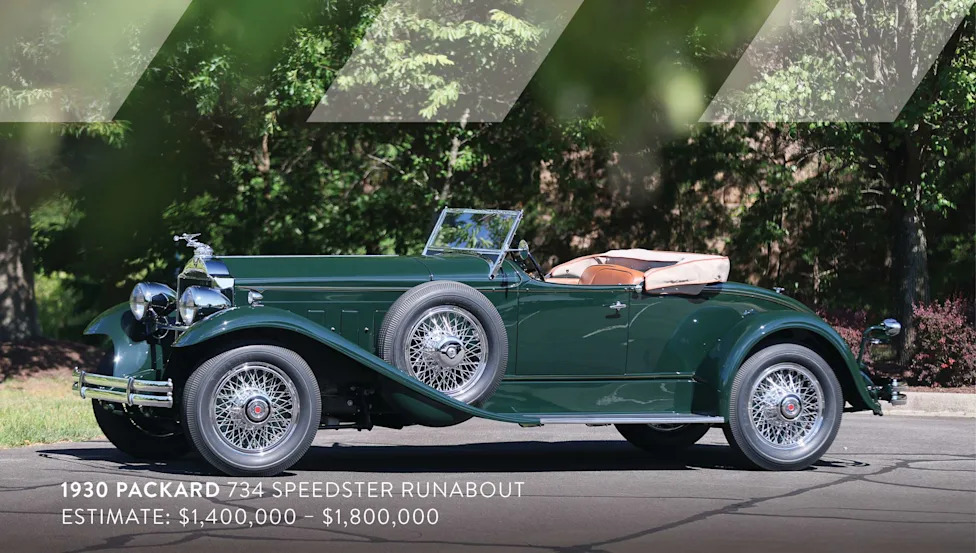



















This 1930 Packard 734 Speedster Isn't Valuable Because It's Rare. It's Valuable Because of Who Owned It.When Gooding Christie's opens its 22nd annual Pebble Beach Auctions on August 14 and 15, the headlines will likely belong to a pair of Alfa Romeos from the Brian Brunkhorst estate, an original supercharged Bentley Blower, and an Indianapolis 500-winning Miller. Tucked into the early American offerings, carrying a comparatively modest estimate of $1.4 million to $1.8 million, is a 1930 Packard 734 Speedster Runabout. It would be easy to read past it. That would be a mistake.The 734 Speedster deserves attention on its own engineering merits, as one of the true performance cars of America's Classic Era. But the more interesting story here isn't what the car is. It's whose hands it has passed through, and what that chain of ownership says about how the modern collector-car hobby actually took shape.A Packard Built to Prove a PointPackard's reputation in 1930 rested on refinement, not speed. The 734 was the exception. Built on a shortened, lightened version of the standard Eight chassis and fitted with a 385-cubic-inch straight-eight tuned for output rather than smoothness, it was good for roughly 145 horsepower and a genuine 100 mph, a speed few American cars of any price could reach that year. It succeeded the 626 Speedster as Packard's answer to the idea that a luxury manufacturer couldn't also build something quick, and it did so with aluminum components and a high-compression cylinder head that owed more to a racing program than a showroom flagship.AdvertisementAdvertisementPackard offered the 734 across eight factory body styles, built in the company's own custom body shops rather than farmed out to an independent coachbuilder. Total production across all styles is generally put at close to 113 cars. Of those, just 39 wore the dramatic boattail Runabout coachwork: a two-passenger, staggered-seating layout with minimal weather protection and a tapered rear deck that made no apologies about what the car was built for. Genuine survivors that still wear their original coachwork are a small fraction of that number today.Rarity Is Not the ArgumentLow production numbers get attention, but they rarely explain a seven-figure estimate by themselves. The prewar market is full of cars built in similarly small numbers that never approach this kind of money. What separates a genuinely important 734 Speedster from a merely rare one is originality: coachwork, chassis, and running gear that can be verified rather than assumed, backed by a documented award history that includes a First in Class win at the Pebble Beach Concours d'Elegance, a result that only comes after a car has already survived scrutiny from class judges who spend their careers looking for exactly the inconsistencies that erode value.The Ownership Chain Is the Provenance StoryAccording to Gooding Christie's, the car was delivered new to McClure Halley, an early and well-regarded automobile connoisseur, before passing through a notable line of subsequent owners: Ralph Stein, Otis Chandler, and Ray Scherr.That list matters more than it might first appear. Ralph Stein was not simply a collector; he was among the earlier American writers to treat old cars as subjects worthy of serious documentation, and a car that passed through his hands typically did so with real attention paid to what made it correct. Otis Chandler, the longtime publisher of the Los Angeles Times, assembled one of the more significant American car collections of the twentieth century, one defined less by trophy chasing than by an insistence on originality and history, later shared with the public through his own automotive museum. A car good enough for Chandler's garage had already survived one of the more discerning filters in American car collecting.AdvertisementAdvertisementNone of this is decoration. In the prewar market, an ownership chain running through recognized historians and serious collectors functions as a form of authentication in its own right, evidence that a car has been examined, questioned, and vetted by people whose own reputations depended on getting it right.What This Says About the Market Right NowThe Packard arrives at auction under a company that looks considerably different than it did two years ago. Following Christie's acquisition of Gooding & Company amid a broader auction industry downturn, this sale represents the merged house's flagship live event of the year. With the country marking its 250th anniversary, senior specialist Rupert Banner said the house is offering cars that reflect "the finest American achievements in racing and design from the prewar era" alongside their European counterparts, deliberately positioning this Packard, an Indy-winning Miller, and a nickel-era Stutz next to continental royalty like the Brunkhorst Alfa Romeos and the Blower Bentley. That pairing is as much a statement about market confidence in American Classic Era cars as it is about anniversary marketing.It isn't the only Packard generating real collector interest this year. A 1940 Packard Super Eight sedan with its own Hollywood backstory resurfaced this spring after 25 years in storage, a reminder that the marque's appeal extends well past its most famous speedsters.It also reflects a wider pattern at Pebble Beach, where seven-figure prewar American cars increasingly share a stage with headline postwar exotics. Last year's Ferrari 250 GT California Spyder Competizione, estimated north of $20 million, drew most of the attention at Pebble Beach 2025, but the steadier story has been the quiet strength of correctly documented American classics that don't need a nine-figure number to matter to serious collectors.What Serious Buyers Should Actually WeighFor collectors evaluating this car or others like it, the checklist is the same one that matters across the prewar market: does the coachwork carry its original Packard body identification, do chassis and engine numbers match factory records, and is the ownership history documented well enough to be checked rather than taken on faith? Because so few genuine boattail Runabouts survive, buyers should be especially careful to confirm coachwork authenticity rather than assume it, a caution that applies to the model generally, independent of any specific car's own documentation.AdvertisementAdvertisementIt's the same lesson borne out this year by a one-of-one 1962 Mercedes-Benz 300 SL Roadster that drew serious attention through RM Sotheby's largely on the strength of its documentation rather than rarity alone. Rarity opens the conversation. Documentation closes the sale.The number this Packard ultimately brings at Pebble Beach will make a headline. It shouldn't be the takeaway. What this car actually demonstrates is that in the prewar market, an ownership chain can do more to establish a car's importance than production figures ever could. Otis Chandler and Ralph Stein did not just own this Packard, they vouched for it, in the way only serious collectors can. That is worth more than a boattail body, and considerably more than an estimate.Join our Newsletter, follow our Instagram page, and follow us on Facebook.