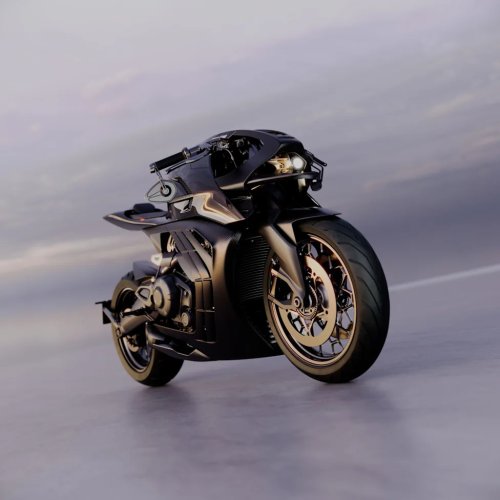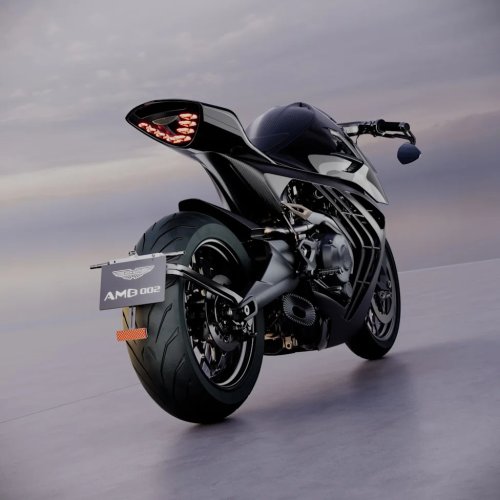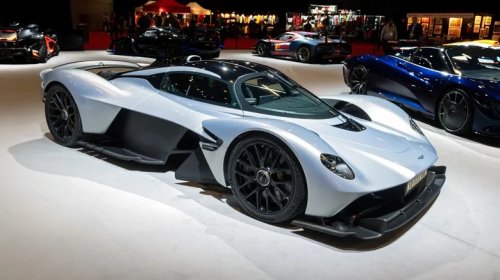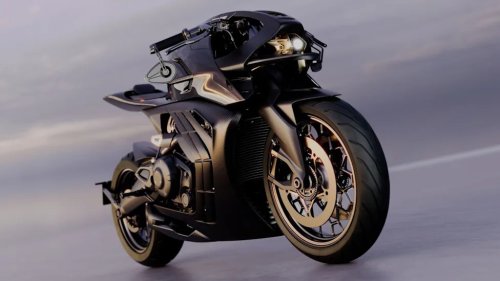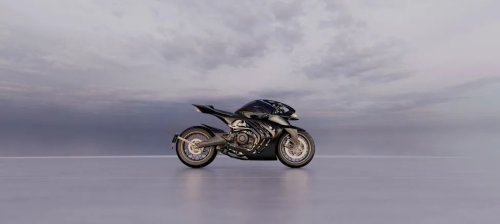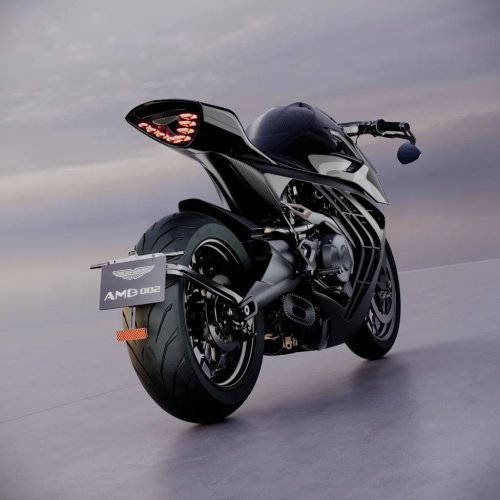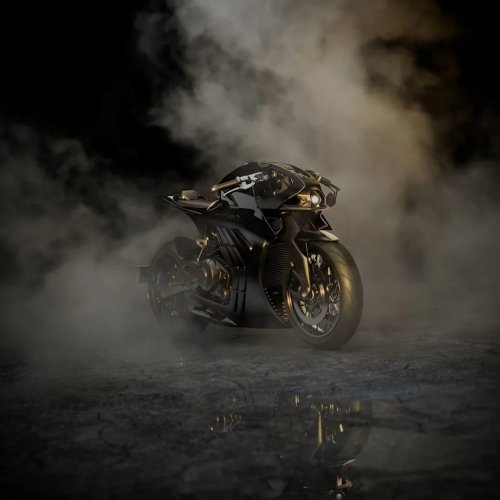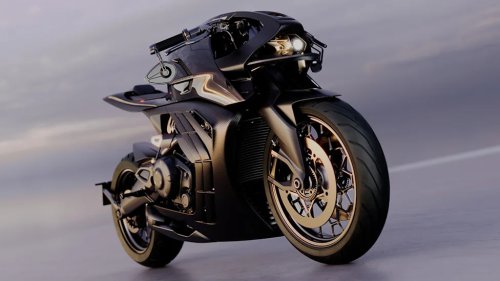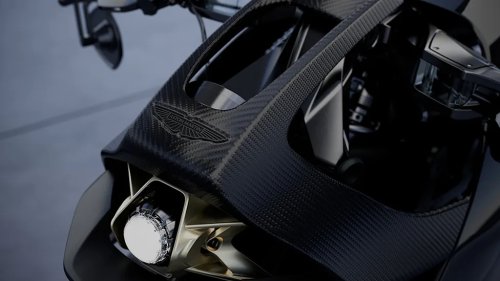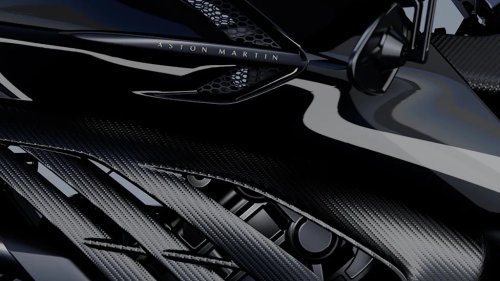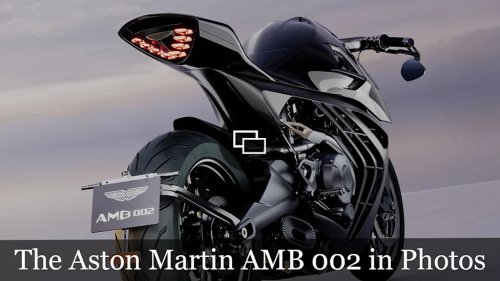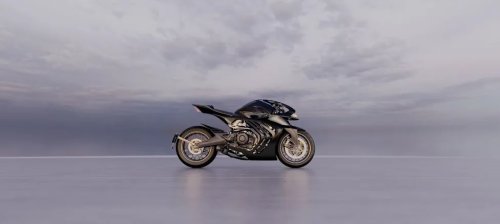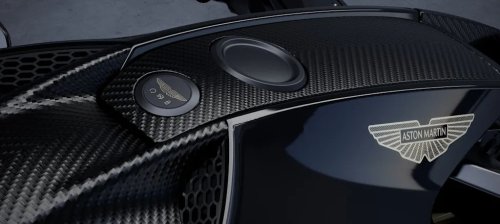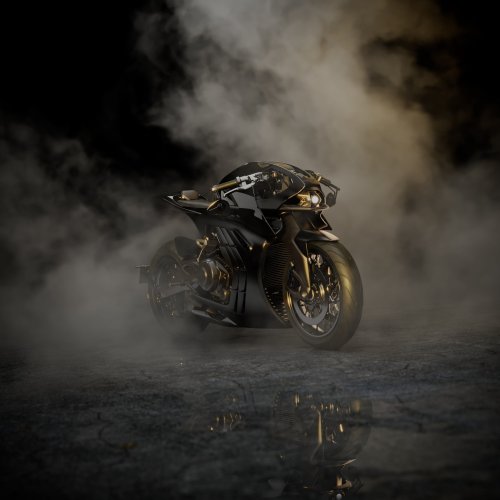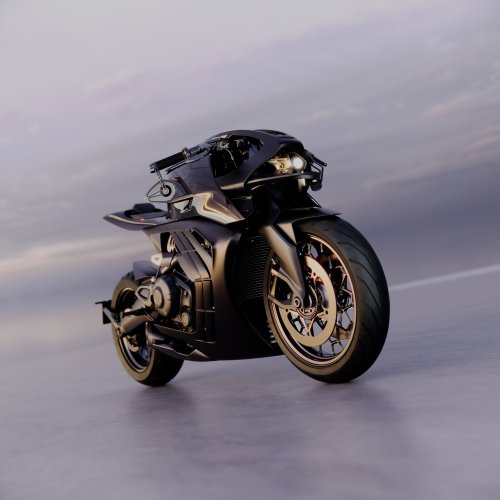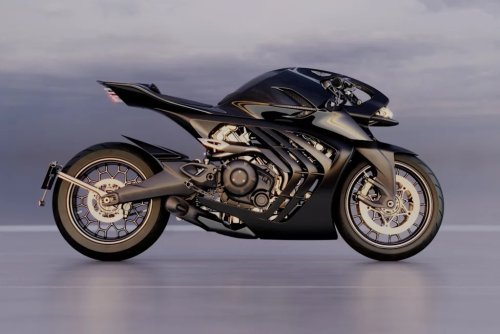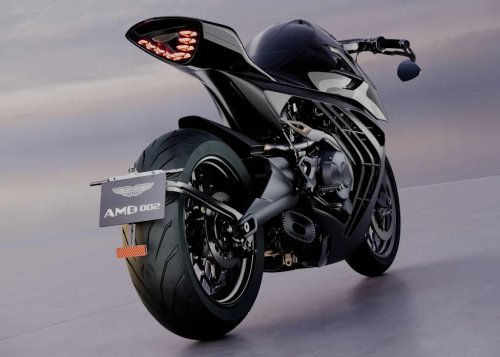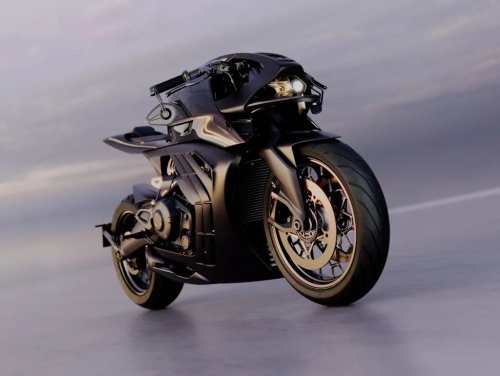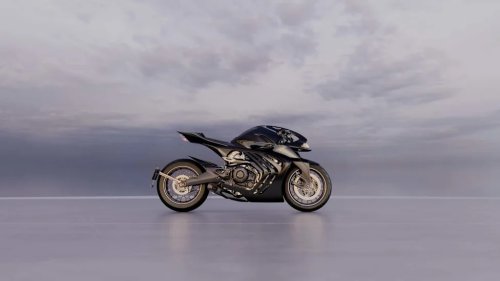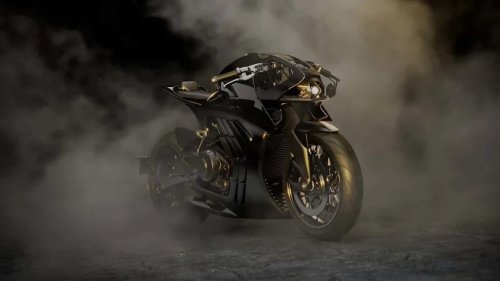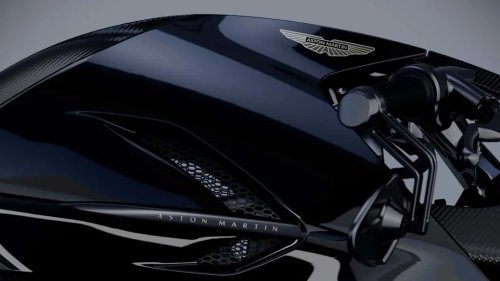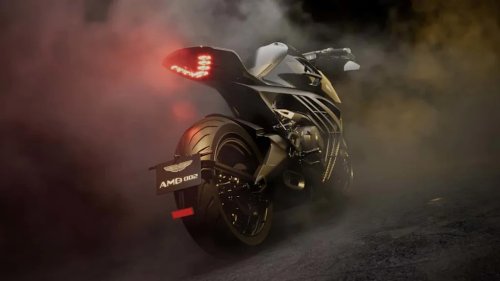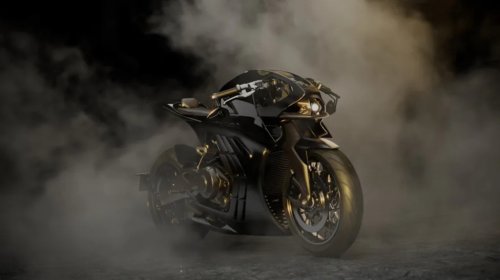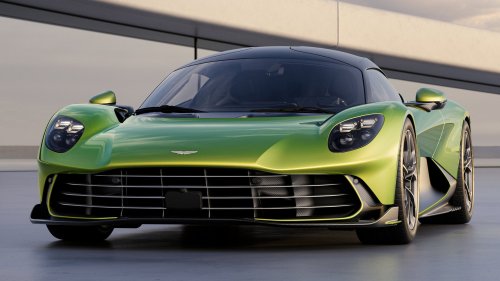
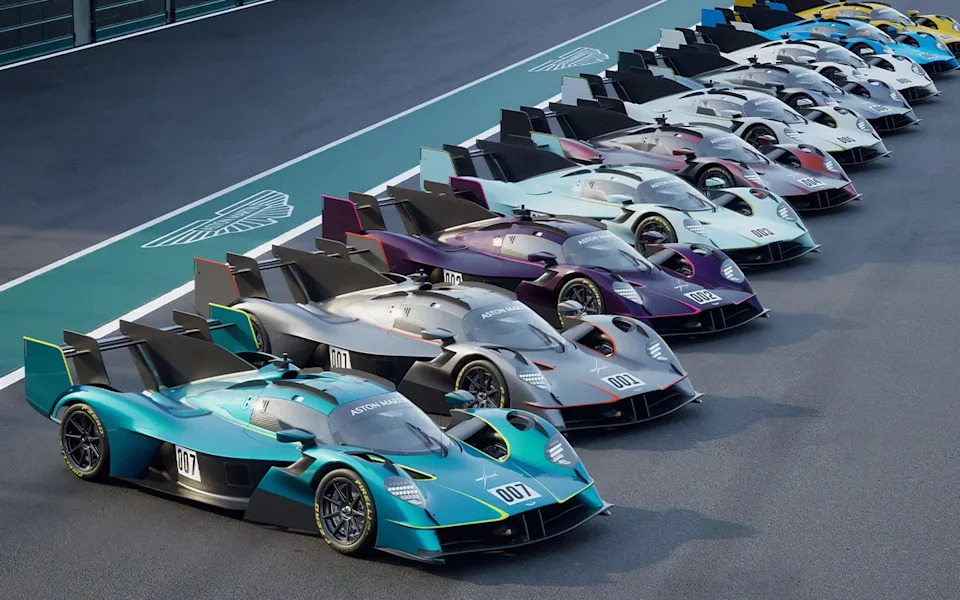
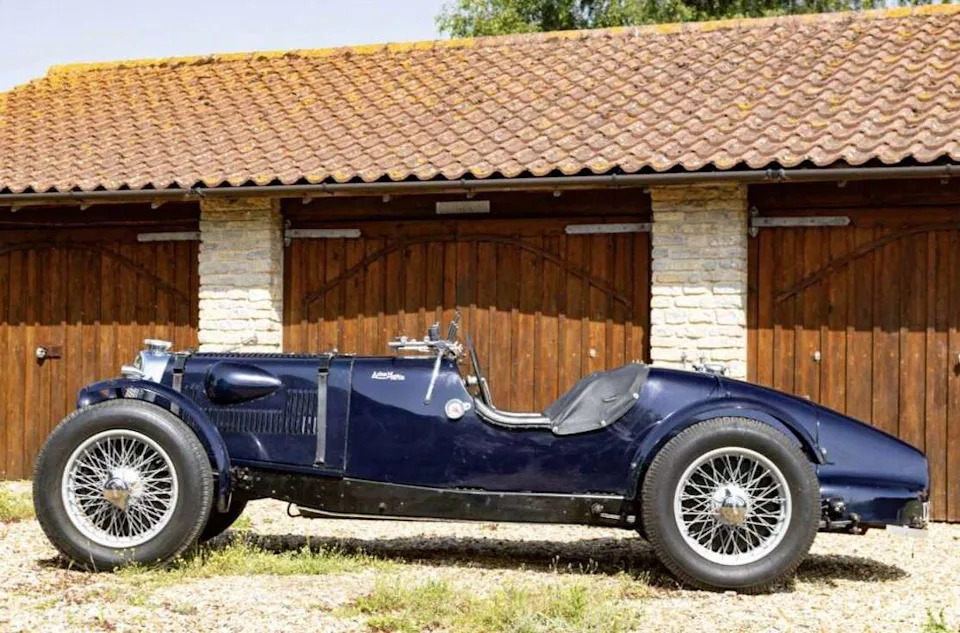

















The Aston Martin AMB 002 Isn't Collectible Because It's Rare. It's Collectible Because You Can Finally Ride ItModern Car CollectorShawn HenryTue, September 22, 2026 at 6:30 PM UTCAdd us on GoogleAston Martin and Brough Superior pulled the covers off the AMB 002 Roadster at Gaydon on September 9, and the specification sheet is doing what specification sheets always do at this end of the market: crowding out the story. A titanium frame milled from solid billet, weighing five kilograms. A 1,083cc V-twin designed, machined and assembled in Toulouse. Double-wishbone front suspension in place of a telescopic fork. Three hundred examples, hand-built, first deliveries in the third quarter of 2027.All of it is true. None of it is the point.The only consequential sentence in the entire announcement is that this motorcycle can be registered and ridden on a public road. Seven years into a partnership that has produced two track-only machines and nothing a customer could legally use, Aston Martin has finally built a motorcycle that is allowed to go somewhere. For anyone thinking about this as a collectible rather than a toy, that single regulatory fact matters more than every gram of titanium in the chassis.AdvertisementAdvertisementThe two bikes that came before it are the evidence.The AMB 001 Already Answered This QuestionThe AMB 001 arrived in 2019 with a supercharged 997cc V-twin and a 100-unit production run at roughly $119,000. The AMB 001 Pro followed in 2022, reworked to around 225 horsepower and built in 88 examples at close to $200,000. Both were extraordinary objects. Neither was road-legal, and neither was eligible for any sanctioned race series.In May of this year, a 2020 AMB 001 crossed Bring a Trailer. Bidding stopped at $101,000 and the motorcycle did not sell — short of its original delivery price six years on, and that is a nominal-dollar comparison that gives the bike the benefit of ignoring inflation entirely. Classic.com carries no meaningful market benchmark for the model, because there have not been enough completed transactions to construct one.That is not a verdict on the engineering. It is a verdict on the premise. A limited-production machine with no registration and no grid to race on has nowhere to accumulate a history. It can only sit. And a collector vehicle that does nothing but sit is not appreciating — it is being warehoused at the owner's expense.AdvertisementAdvertisementAston Martin has encountered the softer version of this on four wheels. The company's track-only halo cars have consistently been easier to announce than to resell, and even the road cars have tested the ceiling: an Aston Martin Valkyrie has already come up short of sticker at auction, and the ten-unit, circuit-only Valkyrie LM exists in the same category problem as the AMB 001 — magnificent, unusable, and dependent on an owner-driver program to give it anything to do. Even at the more conventional end of the range, where the front-engined V12 specials still sell on the strength of what they are rather than how few were made, the badge has never been the whole argument.Use Is a Value Input, Not a ConvenienceAston Martin's track-only halo machines, like the ten-unit Valkyrie LM, face the same structural problem the AMB 001 did: extraordinary hardware with nowhere to build a history.Here is the mechanism serious collectors should hold onto, because it governs the entire two-wheeled market and most of the four-wheeled one.Value in collectible motorcycles compounds through documented use. Ownership chains. Period photographs. Event entries. Rally and concours appearances. Dated service records from known specialists. Frame and engine numbers cross-checked against factory records. Every one of those is generated by a machine being ridden, registered, insured, transported, entered and talked about. A motorcycle that cannot leave a paddock generates none of them.This is why a scruffy, honest, extensively campaigned machine so often outruns a better-finished one with no story attached, and it is why the pre-war motorcycle market rewards originality and continuity of history the way it does. Collector motorcycles are not made valuable in the crate. They are made valuable on the road.AdvertisementAdvertisementThe AMB 002 is the first machine in this program with any capacity to build that record. Whether it does is a separate question — but until now, the answer was foreclosed.The Name on the Tank Is the Hardest PartPre-war provenance is a record, not a badge. Works documentation, matching numbers and continuous ownership history are what separate a blue-chip machine from an expensive one.Brough Superior is not a revived badge of convenience. It is arguably the single most valuable name in motorcycle collecting, and the numbers behind that reputation deserve stating plainly.George Brough built roughly 3,048 motorcycles in Nottingham between 1919 and 1940. The SS100 — the model that made the name — accounts for 383 of them: 281 with JAP engines and 102 with Matchless. Each machine was effectively bespoke, road-tested to a certified speed before delivery, and sold to a clientele that included the only customer any marque ever really needs. T. E. Lawrence owned a succession of Broughs, named them George I through George VII, and died in 1935 of injuries sustained riding an SS100. The "Rolls-Royce of Motorcycles" line began as a magazine road tester's phrase and was formally blessed only after a Rolls-Royce executive walked the factory floor.The market has honored all of it. A 1929 SS100 made £286,000 at Haynes in 2010, then a record for any motorcycle at auction. A 1929 SS100 Alpine Grand Sports made £315,100 at Bonhams in London in 2014. When eight unrestored Broughs emerged from a Cornish barn after half a century and went to Bonhams Stafford in 2016 as the "Broughs of Bodmin Moor," the untouched, unrestored condition was the selling point, not the obstacle.AdvertisementAdvertisementNow set that against the announcement. Brough Superior will build 300 AMB 002s. George Brough built 383 SS100s in sixteen years. The modern company will nearly match, in a single model run, the entire lifetime output of the machine that made the name worth reviving.That comparison is not a criticism. It is a clarification. The value in a pre-war Brough does not live in the badge. It lives in the works record card, the matching numbers, the ownership chain, the period competition results and the sheer attrition of ninety years. A 2027 motorcycle designed and machined in Toulouse, under a marque Thierry Henriette revived in 2013, inherits the name and none of the record. You cannot buy your way into a provenance. You can only start one.Collectors have been asked to price heritage names on faith before, and the results are instructive — the question of what a revived badge is actually worth is the same one now being tested across the market, from restomod specialists to anniversary editions. Scarcity alone has never settled it.The Engineering Deserves Better Than the MarketingStrip away the brand language and there is genuine substance here, some of it with a more authentic lineage than the wings on the tank.AdvertisementAdvertisementThe double-wishbone front end is a Fior design, and that name carries real weight. Claude Fior, a French engineer working out of Nogaro, developed his wishbone front suspension in 1976 on explicitly automotive logic: separate the steering function from the suspension function, eliminate dive under braking, and make chassis geometry adjustable. It raced in endurance from the late 1970s and in Grand Prix through the 1980s and 1990s — Marco Gentile finished level on points with the works Cagiva effort in 1989 on a Fior 500-4. Fior died in 2001 at forty-six. The concept survived him and reached series production most visibly in BMW's Duolever. Brough Superior has been developing its version across the AMB 001 Pro and now the AMB 002, and it is the most technically interesting thing on the motorcycle.The engine numbers are the second tell, and the more revealing one. The AMB 002 makes 130 bhp and 110 Nm from 1,083cc — deliberately tuned, the manufacturer says, for low and mid-range pull rather than peak output. Against the Pro's roughly 225 horsepower, that reads like a retreat. It is not. It is the signature of an engineering team that expects the machine to be used on public roads at real-world speeds, in a 190kg package with 50:50 distribution and a 1,472mm wheelbase. That decision is worth more to a collector than another forty horsepower, because it is the clearest evidence in the whole specification that someone intends these to be ridden.Two details deserve note for anyone modeling long-term ownership. The gearbox is a cassette unit, meaning it can be withdrawn as a block without splitting the crankcases — a serviceability decision that quietly lowers the cost of the next thirty years. And the crankcases themselves are CNC-machined from solid billet, which is superb for stiffness and weight and considerably less forgiving if something inside them ever lets go. Parts supply for a 300-unit, French-built, titanium-framed V-twin is not a hypothetical concern. It is the concern.The American ComplicationThis is where prospective US buyers should slow down, because the marketing and the paperwork are not currently telling the same story.AdvertisementAdvertisementBrough Superior's own dealer guidance states that only non-street-legal collector motorcycles are sold in the United States, and the company has publicly warned that a US-based website and the people associated with it are unauthorized. Neither Aston Martin nor Brough Superior has announced FMVSS certification or EPA compliance for the American market, even as the bike is promoted internationally as built for the road.The regulatory position is not ambiguous. A motor vehicle at least 25 years old may be imported without regard to FMVSS compliance. A non-conforming vehicle younger than that must come in through a Registered Importer, against a bond equal to 150 percent of declared value, with the required modifications completed within 120 days — and EPA emissions compliance is a wholly separate obligation. NHTSA's Show or Display route generally excludes vehicles produced in quantities above 500, so a 300-unit run clears that threshold, but approval still requires a granted petition on grounds of historical or technological significance, and a grant caps use at 2,500 miles per year.Read that sequence again in light of everything above. The first road-legal Aston Martin motorcycle may, in the United States, be the one Americans are legally least able to ride. If the entire collector case for the AMB 002 rests on the fact that it can be used, an import path that permits 2,500 miles a year — assuming a petition is granted at all — hollows out the thesis for the largest pool of buyers on earth.The practical guidance is straightforward. Place deposits directly with the factory in Toulouse or through a dealer the factory confirms in writing. Get homologation status by market in writing before money moves. And treat any US-market assurance that does not come from the manufacturer as worth exactly nothing.What Serious Buyers Should WatchHomologation, first and last. Which markets are certified, on what timeline, and with what documentation. Everything else is secondary.AdvertisementAdvertisementPrice, when it comes. Aston Martin and Brough Superior have not announced one. The AMB 001 launched at €108,000. Whatever the number, judge it against usability rather than against the titanium — the material is the easiest part of this motorcycle to admire and the least relevant to what it will be worth in 2045.Delivery-mileage behavior. Watch whether the first examples surface at auction with delivery mileage inside twenty-four months of handover. That was the AMB 001 pattern, and if it repeats, the program has not changed its nature, only its paperwork. In this specific case, accumulated mileage should read as an asset rather than a liability. That inverts the usual rule, and the inversion is the whole point.Whether 300 actually get built. Announced production caps are intentions, not records. The AMB 001 Pro's 88 units and the AMB 001's 100 are the relevant precedent for how much appetite exists at this level for this badge.The VerdictAston Martin did not make the AMB 002 collectible by capping it at 300 units. It made the AMB 002 eligible to become collectible by making it legal. Those are not remotely the same thing, and the distance between them is where most modern limited editions quietly go to die.AdvertisementAdvertisementThe AMB 001 was rarer — 100 units against 300 — and it could not clear its original delivery price at auction. Rarity did not save it, because rarity has never been the mechanism. Use is the mechanism. History is the mechanism. Rarity only determines how much the history is worth once there is some.This motorcycle now has a chance at one. That is genuinely new, it is genuinely the story, and it has nothing to do with the frame.Join our Newsletter, follow our Instagram page, and follow us on Facebook.