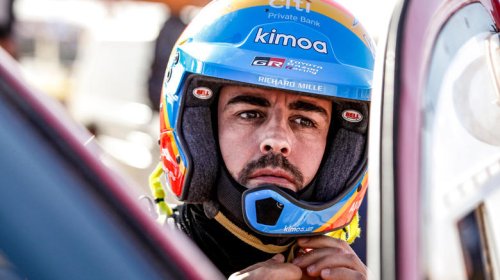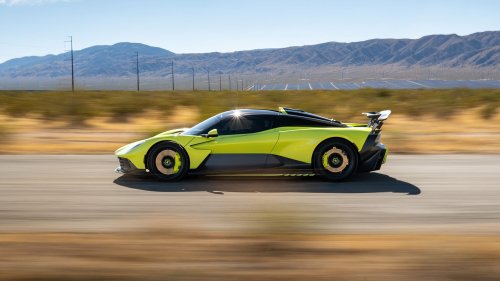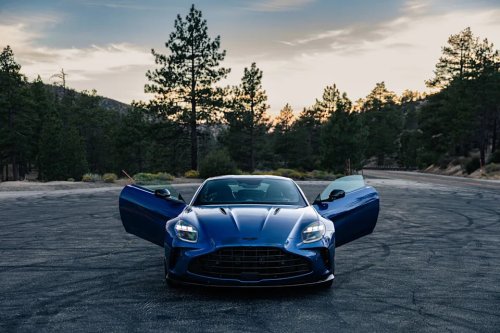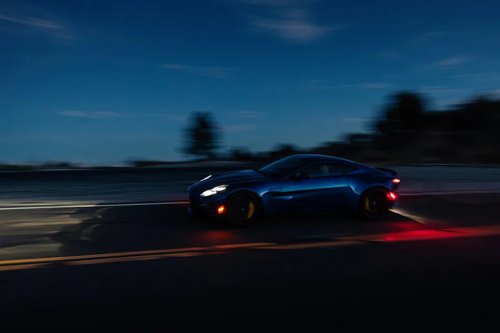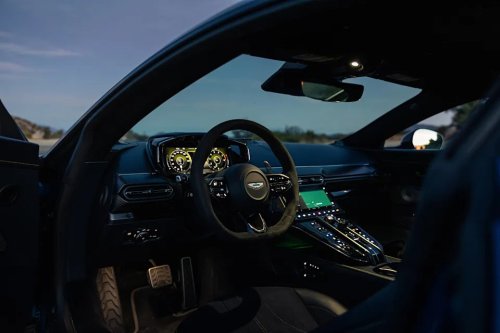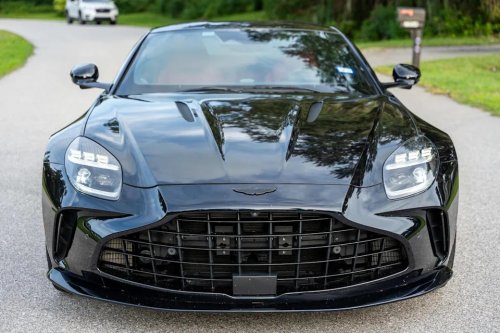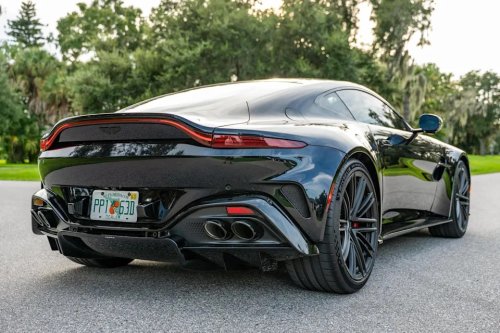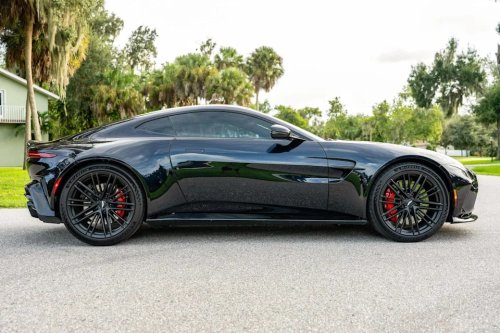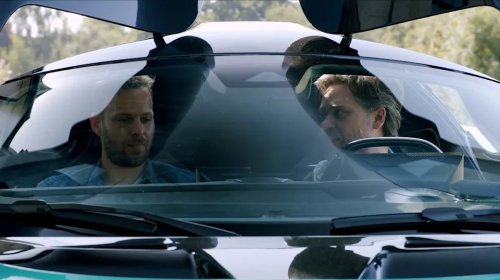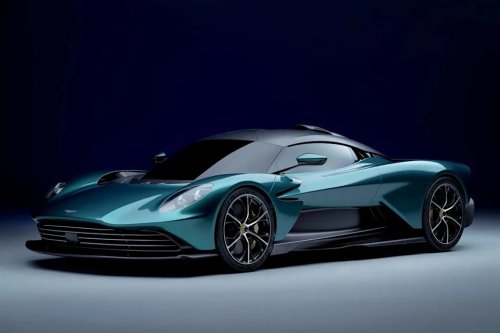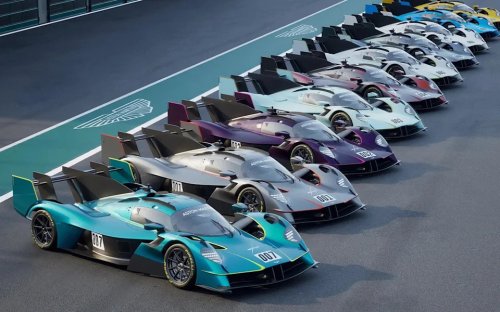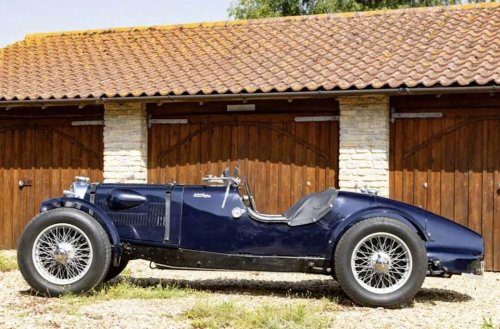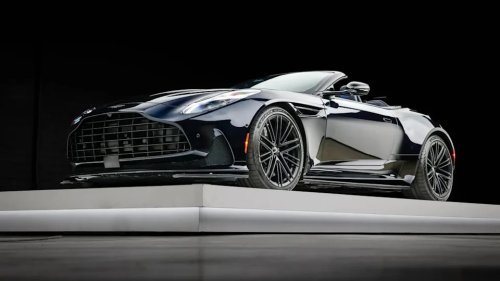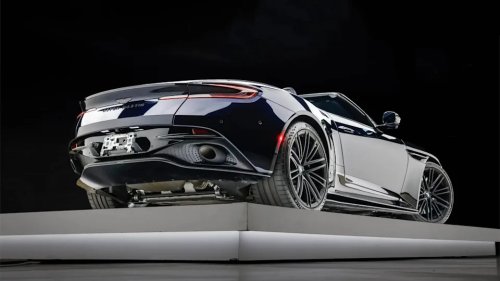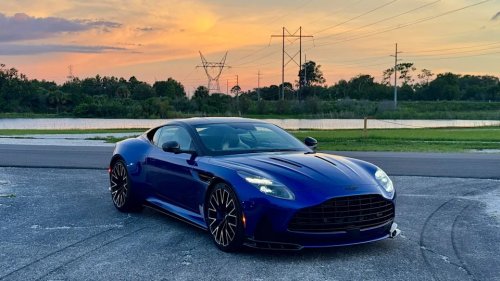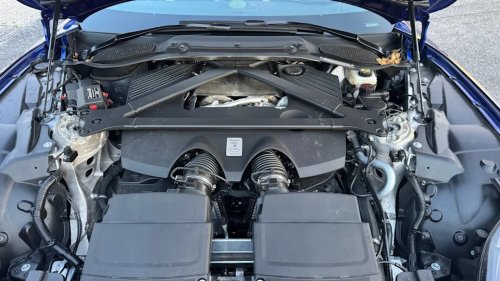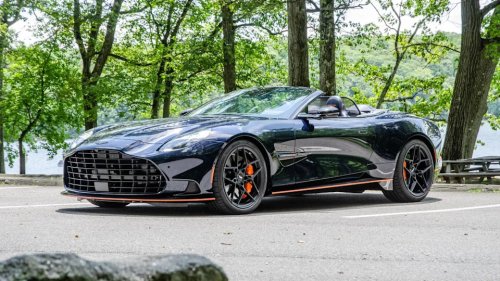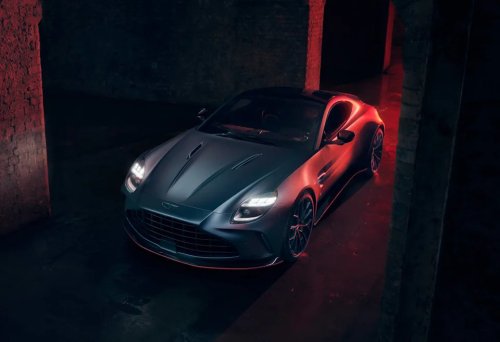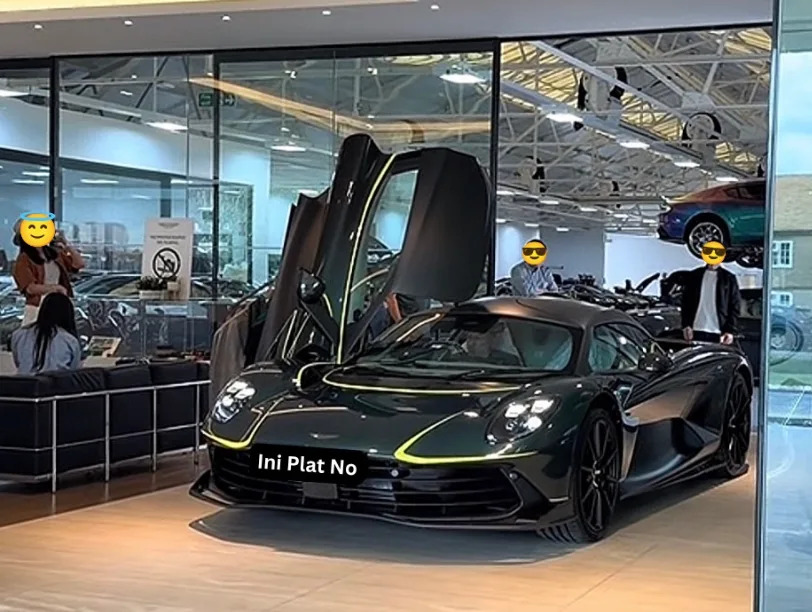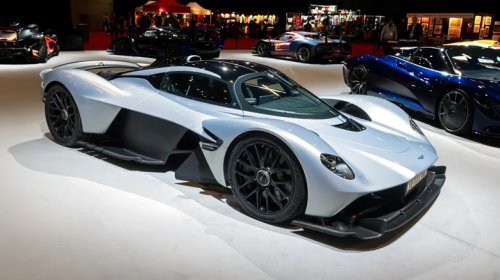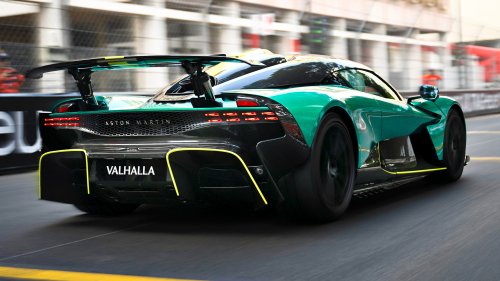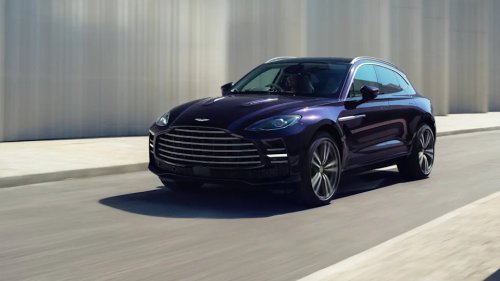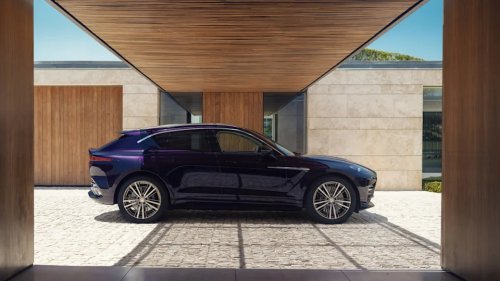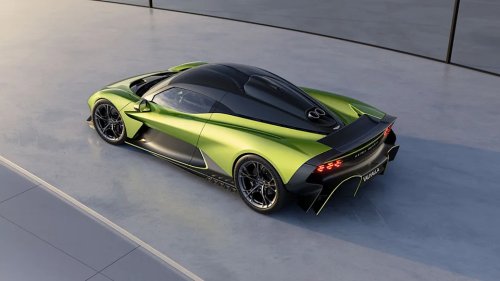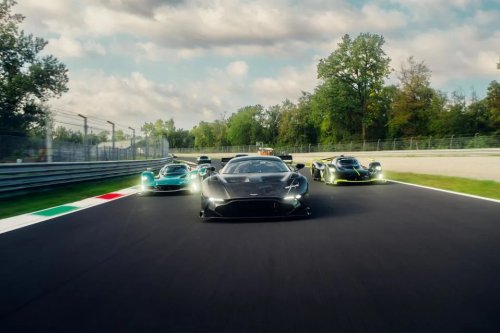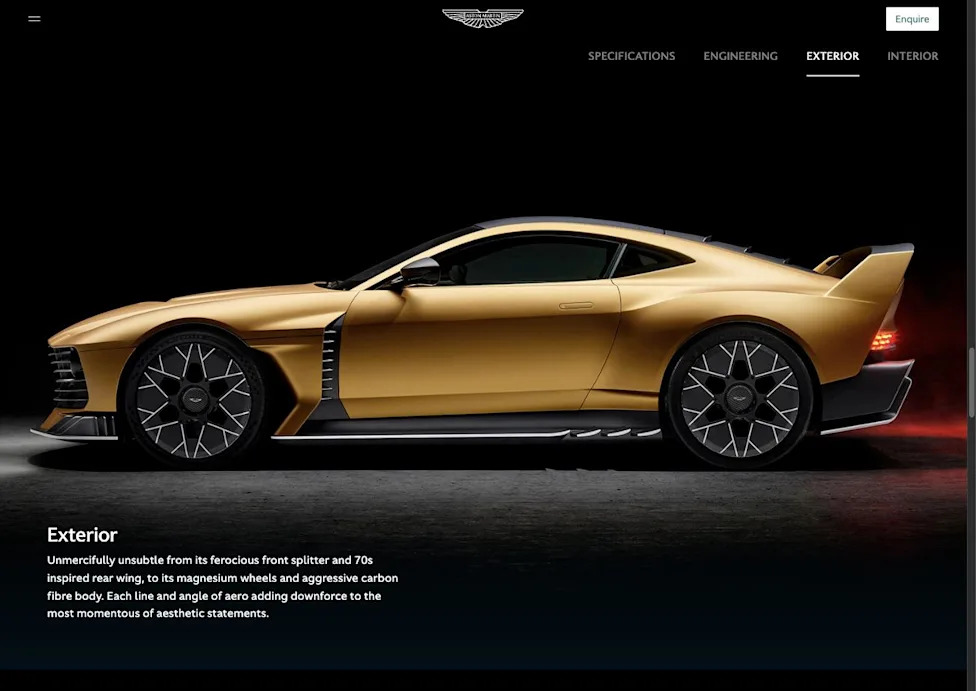
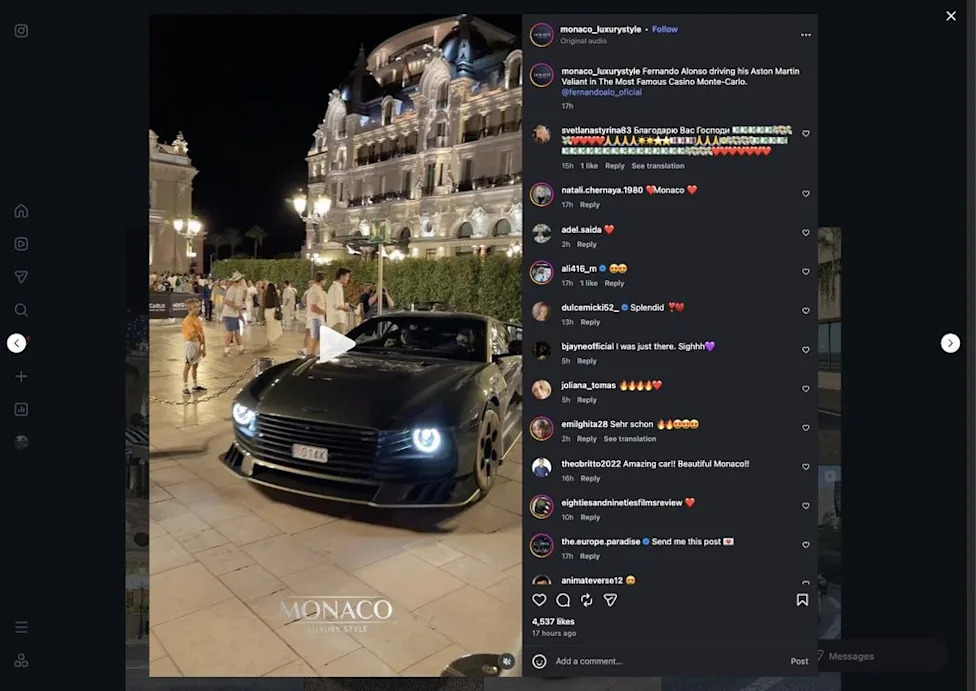



















Fernando Alonso Just Drove His One-of-38 Aston Martin Valiant Through Monaco, and That's Rarer Than the Car ItselfMonaco spotter account @monaco_luxurystyle caught Alonso's Valiant crawling through Casino Square on August 27.It was just past ten at night in Casino Square when the crowd by the valet stand did a double take. A matte anthracite coupe with an oversized front splitter and a rear wing tall enough to cast its own shadow crawled past the Hôtel de Paris, its quad titanium exhaust popping over cobblestones built for horse carriages, not a 745-horsepower V12. Behind the wheel: two-time Formula 1 world champion Fernando Alonso, driving the exact car he asked Aston Martin to build for him.That car is the Valiant, and there's a decent chance you've never heard of it. Aston Martin's in-house bespoke division, Q by Aston Martin, built exactly 38 examples, and every one was allocated before the car was even shown to the public at Goodwood in the summer of 2024. It isn't a trim level or a paint option grafted onto an existing Aston. It's a standalone, track-focused, road-legal machine born from a personal request Alonso made to Aston Martin: take the Valour, the front-engined special built for the brand's 110th anniversary, and strip away everything that wasn't about going faster.Under that carbon-fiber clamshell sits a 5.2-liter twin-turbo V12 tuned to 745PS, or about 735 horsepower, and 753 Nm of torque, sent through a six-speed manual gearbox with the shift linkage deliberately exposed inside the cabin so the driver can watch the rods move with every gear change. Aston leaned on Multimatic, the outfit behind Le Mans and Formula 1 suspension hardware, for adaptive dampers that can switch between 32 damping curves in under six milliseconds. The whole car rides on 21-inch magnesium wheels that cut 14 kilograms of unsprung mass compared with a conventional aluminum wheel, while a magnesium torque tube saves another 8.6 kg, a 3D-printed rear subframe trims 3 kg without giving up stiffness, and a motorsport-spec lithium-ion battery is worth 11.5 kg in savings by itself. Standard carbon-ceramic brakes measuring 410mm up front and 360mm out back do the stopping, and a factory-fitted half-cage with an optional four-point harness makes it obvious which side of the road-car-versus-race-car line this thing was built to sit on.AdvertisementAdvertisementThe styling follows the same brief. The front splitter is oversized on purpose, the rear diffuser was shaped with computational fluid dynamics, and the aero discs bolted to those magnesium wheels are a direct callback to the wheel covers on RHAM/1, the turbocharged Aston Martin V8 that raced at Le Mans in 1980 and picked up the nickname "the Muncher." Whatever that old racer devoured on its way around the Circuit de la Sarthe, Aston built the Valiant to earn a version of that reputation on purpose.None of it is cheap. Aston never published a sticker price, but people with knowledge of the allocations have consistently put the number north of $2.5 million per car before options, and every buyer seems to have wanted plenty of those, since charging a premium for one-off details is the entire business model behind Q by Aston Martin. First deliveries began in the back half of 2024, and Alonso's own build did double duty as the launch car, the one he personally drove up the hill at the Goodwood Festival of Speed that July.This is the part that makes a random night-time sighting worth a second look. A half-caged, splitter-and-wing special limited to 38 units is exactly the kind of car that tends to disappear into a climate-controlled collection the day it's delivered, resurfacing only for a concours lawn or an auction preview. Ed Sheeran's own Aston Martin managed to sit still long enough to become part of a criminal conviction. Alonso doing the opposite, rowing his own gearbox through a pedestrian-packed square at idle and letting a crowd get close enough to photograph the plate, is the unusual outcome here, not the sighting itself.It also fits a pattern. Alonso's Porsche 918 Spyder turned up in the same city earlier this year, and he's already on record taking delivery of an $11.7 million manual Pagani Zonda. Whatever else is true about Alonso's garage, he doesn't appear to be building it for social media or as an investment hedge. He drives the cars, on public roads, in the city where he actually lives, Monaco residency being one of the more practical perks of a two-decade Formula 1 career.AdvertisementAdvertisementThere's a real financial argument against treating a seven-figure special this casually. Carbon-ceramic brakes are happiest heated up and worked hard, not dragged around at valet speed through repeated cold-to-warm cycles that glaze the pads. An underbody splitter this aggressive does not enjoy speed bumps or steep parking ramps, and a magnesium wheel that saves weight this effectively is not a wheel anyone wants meeting a Monaco curb at the wrong angle. Insurers writing policies on 38-unit specials typically do it on an agreed-value basis, since there's no depreciation curve to reference, and low, verifiable mileage is one of the few data points that keeps that number from sliding at the next renewal. Every mile Alonso puts on this car is a mile a future buyer won't get, whenever one of the 38 owners decides to sell.None of that appears to be the point for the man who commissioned it. The entire premise behind the Valiant was building a more extreme version of Alonso's own car specifically to drive, not just to own. Based on what Casino Square saw this week, he's following through.