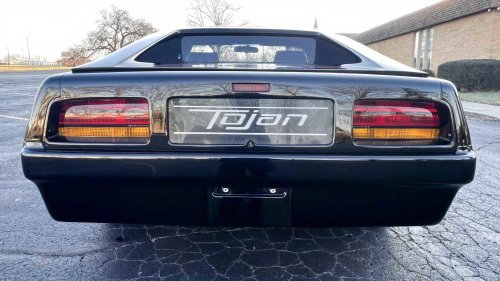
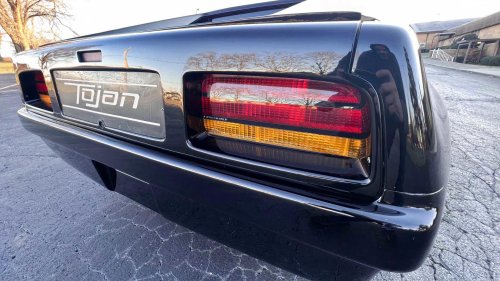
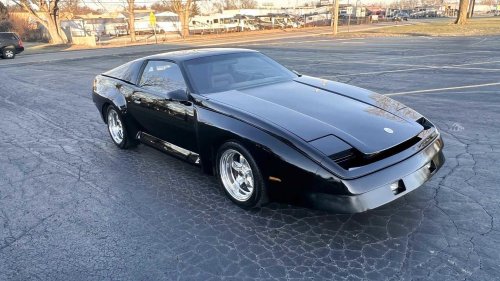
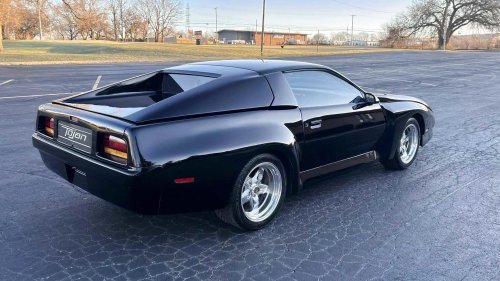
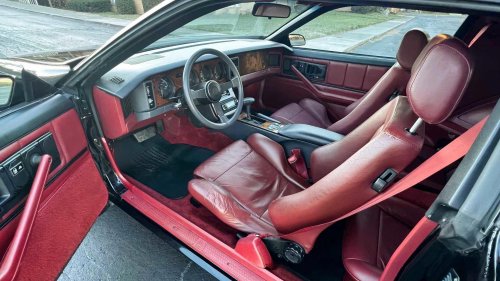
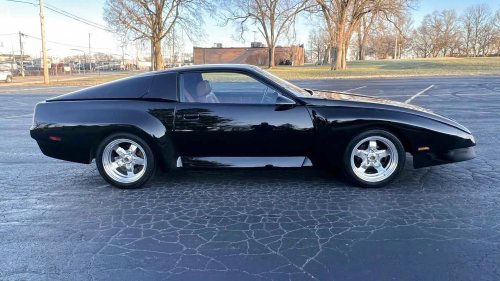
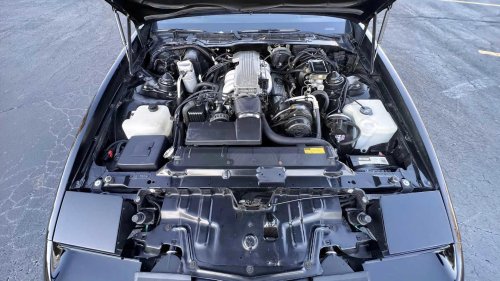
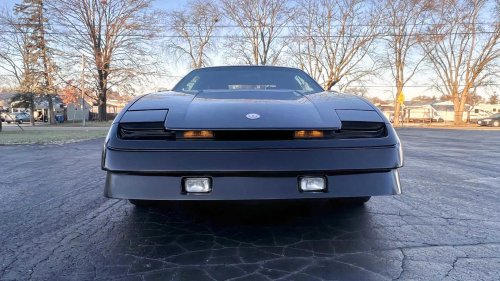
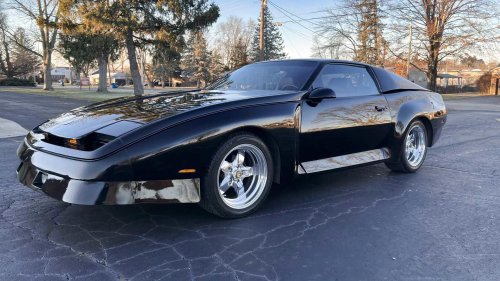
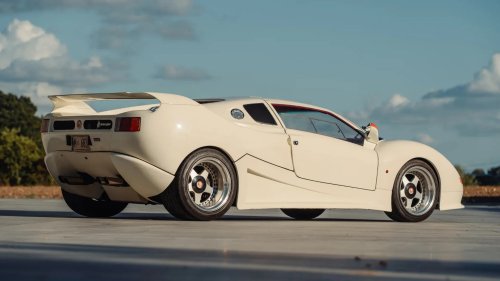
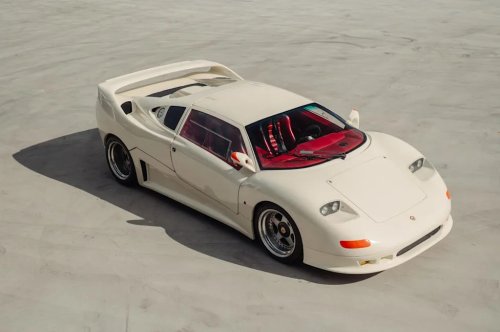
It looked like a third-gen Firebird after a late-night argument with a Countach poster and a turbo catalog. The body sat low, wide, and dramatic in that wonderfully overcommitted 1980s way, like someone at Pontiac decided subtlety was for people who drove front-wheel-drive sedans to accounting conferences. Underneath all that theater, though, sat one of the strangest factory-backed performance stories of the decade.For one brief stretch, this thing aimed straight at Europe’s established exotics and, at least on paper and in legend, got to a milestone first. That’s what makes it such a fascinating footnote now. Far from being some random body-kit fever dream conceived in a mall shop, this had real backing, ambition, and just enough verified madness to make you wonder how this story ever slipped through the cracks. Pontiac Wanted More Than Another Trans Am Bring A TrailerThe Pontiac Tojan came from a moment when General Motors’s Excitement Division needed exactly that: excitement. Early-'80s performance wasn’t exactly a golden age for domestic cars, and they wanted a halo machine that could do more than slap some decals on a Pontiac Trans Am and call it a day. So it turned to Knudsen Automotive, a Nebraska coachbuilder with a habit of doing things the weird way and somehow making that sound reasonable.It should be made clear that Knudsen wasn’t a major manufacturer with giant stamping presses and a corporate campus full of people in matching windbreakers. It was a small operation better known for neoclassical customs, which makes the Tojan’s existence even funnier and better. Pontiac effectively handed this shop a mission to build something more exotic than a regular F-body, and Knudsen answered by going way past “slightly upgraded” and straight into “what if a Trans Am went to art school and came back with attitude?” Supercar Cosplay Bring A TrailerA big part of that attitude came from Harry Bentley Bradley, the designer behind the car’s wedge-shaped silhouette. Bradley had real pedigree, including GM and Hot Wheels work, and it shows. The Tojan looked like an American interpretation of a tuner special trying to cosplay as a supercar, filtered through the era’s obsession with sharp edges, dramatic proportions, and enough visual aggression to scare the valet.Most importantly, the Tojan was offered through selected Pontiac dealers, which gave the whole project a legitimacy most boutique coachbuilt oddballs never get. It was a genuine showroom-adjacent attempt at an American supercar. The Pontiac Tojan Really Was Ahead Of Its Time Bring A TrailerHere’s where the story stops being quirky and starts getting borderline absurd. The first Tojan prototype reportedly used a Gale Banks twin-turbo small-block V8 that made around 800 horsepower on pump fuel, with some accounts noting the setup was capable of even more at full boost. In a period when most performance cars were still trying to recover from the hangover of the '70s, that number landed like a brick through a window.Then came the number that keeps the Tojan alive in enthusiast conversations decades later: 206 mph. According to the accounts tied to the car’s development and later retellings, the prototype was tested to that speed in Nebraska, years before the Ferrari F40 became famous for its own 200-mph barrier-breaking reputation. That claim is part of what makes the Tojan such catnip for car nerds. It sounds made up, right up until you realize Gale Banks had a long history of building frighteningly fast turbocharged machines that made improbable speed claims feel a lot less improbable.That’s the key difference between the Tojan and a lot of forgotten 1980s curiosities. It looked pretty cool, sure, but it had a verified performance narrative attached to it, even if the most dramatic top-speed run remained unofficial. And honestly, unofficial may be the most '80s part of the whole thing. Of course, the supposed first American 200-mph production car got there in a haze of turbo boost, rumor, and a very long straight road instead of a polished press event. The Styling Looked Like Detroit Doing Its Best Italian Accent Bring A TrailerThe Tojan started with third-gen Firebird and Trans Am architecture, but it didn’t stay looking much like one. Knudsen and Bradley reworked it with custom fiberglass body panels, leaving the steel shell and doors as part of a hybrid construction that let the car keep some F-body DNA while wearing an entirely different personality. If you know where to look, you can still spot the original car peeking through. If you don’t, it just looks like some deeply committed alternate-universe supercar.The proportions did a lot of the heavy lifting. Wide fenders, ultra-wide wheels, deep bodywork, and that unmistakably wedge-shaped profile pushed the Tojan into Ferrari 308 and Lamborghini Countach territory, at least in spirit. Add the optional rear wing and the thing stopped whispering its influences and started yelling them across the parking lot. It was excessive, yes, but that was the fun of it, really. A car like this was never meant to arrive quietly. Exotic And Upscale Bring A TrailerInside, the Tojan leaned into period luxury with the confidence of a man wearing mirrored sunglasses indoors. Recaro seats, burled wood trim, air-conditioning, cruise control, and an AM/FM stereo with subwoofer gave it a blend of sports-car aspiration and '80s boulevard-coupe comfort. It suited the car. The Tojan wanted to look exotic, feel upscale, and turn every gas stop into a Q&A session.If you think about it, that’s part of why the styling has aged better than you might expect. It could’ve ended up looking like a mall-body-kit disaster, but the design is too cohesive for that. It’s theatrical and maybe a little Miami Vice fan fiction on wheels, but it hangs together. More importantly, it gave the Tojan the one thing a boutique supercar absolutely needs: presence. Nobody was going to mistake this thing for a stock Firebird unless they were legally required to surrender their car enthusiast card. The Production Version Couldn't Quite Back Up The Legend Bring A TrailerAnd here’s where the dream started losing altitude. The full 800-hp Gale Banks twin-turbo treatment belonged only to the first prototype. Once the Tojan moved from attention-grabbing concept energy toward something customers could actually order, the powertrain story got much more ordinary. Production cars generally used GM 5.0-liter or 5.7-liter small-block V8s, which made a lot more sense for cost and serviceability, but a lot less sense if your goal was humiliating a Ferrari.Forced induction didn’t disappear entirely. Reports note that supercharging and even turbocharging were available in some form, and output could rise to around 400 horsepower with a B&M or Paxton setup, depending on configuration described by different accounts. That was still a healthy number for the era, but it was also only about half the prototype’s headline figure. When your whole mystique begins with “206 mph and 800 horsepower,” “pretty quick with options” feels like a rough follow-up act. Serious Money Bring A TrailerPrice didn’t help, either. One source pegs the starting point at about $22,000, while others note real-world pricing ranging far higher, from roughly $36,000 up to $62,000 depending on specification. The spread itself tells you a lot about what the Tojan became: a highly individualized coachbuilt curiosity whose cost could climb into serious-money territory. That’s a tricky sell when the production version no longer carries the exact same hardware that made the original car legendary. Rarity Helped Turn It Into A Footnote And A Fascination Bring A TrailerThat mismatch between legend and reality helps explain why the Tojan slipped into obscurity, but rarity sealed the deal. It's hard to get a nailed-on number, but total production lands somewhere in the 130-150 range. In other words, very few were built, very few people saw one in the wild, and even fewer understood what they were looking at. That’s how cars end up becoming enthusiast folklore instead of household names.Production stretched through the 1980s and ran to 1991, with coupe and convertible versions offered and many examples configured to individual customer tastes. Near the end, Knudsen even built three black-and-gold Knightmare special editions. That kind of low-volume, coachbuilt, heavily customized production history makes the Tojan hard to define in neat brochure language, but it also makes the car much more compelling today. Directly Aimed At Europe Bring A TrailerThe other reason the Tojan sticks in the mind is that it captures a very specific American instinct. Instead of building a delicate, jewel-like exotic, Pontiac and Knudsen took existing domestic hardware, added dramatic styling, called in a turbo wizard, and aimed at Europe anyway. It’s gloriously optimistic. Slightly unhinged, too, but in a good way. The Tojan didn’t need to be perfect to matter. It just needed to prove that someone on this side of the Atlantic was thinking way bigger than the market expected. All in, though, legends are nice, but near-legends are often a lot more fun to talk about.Sources: SCCA, Hagerty, Hemmings