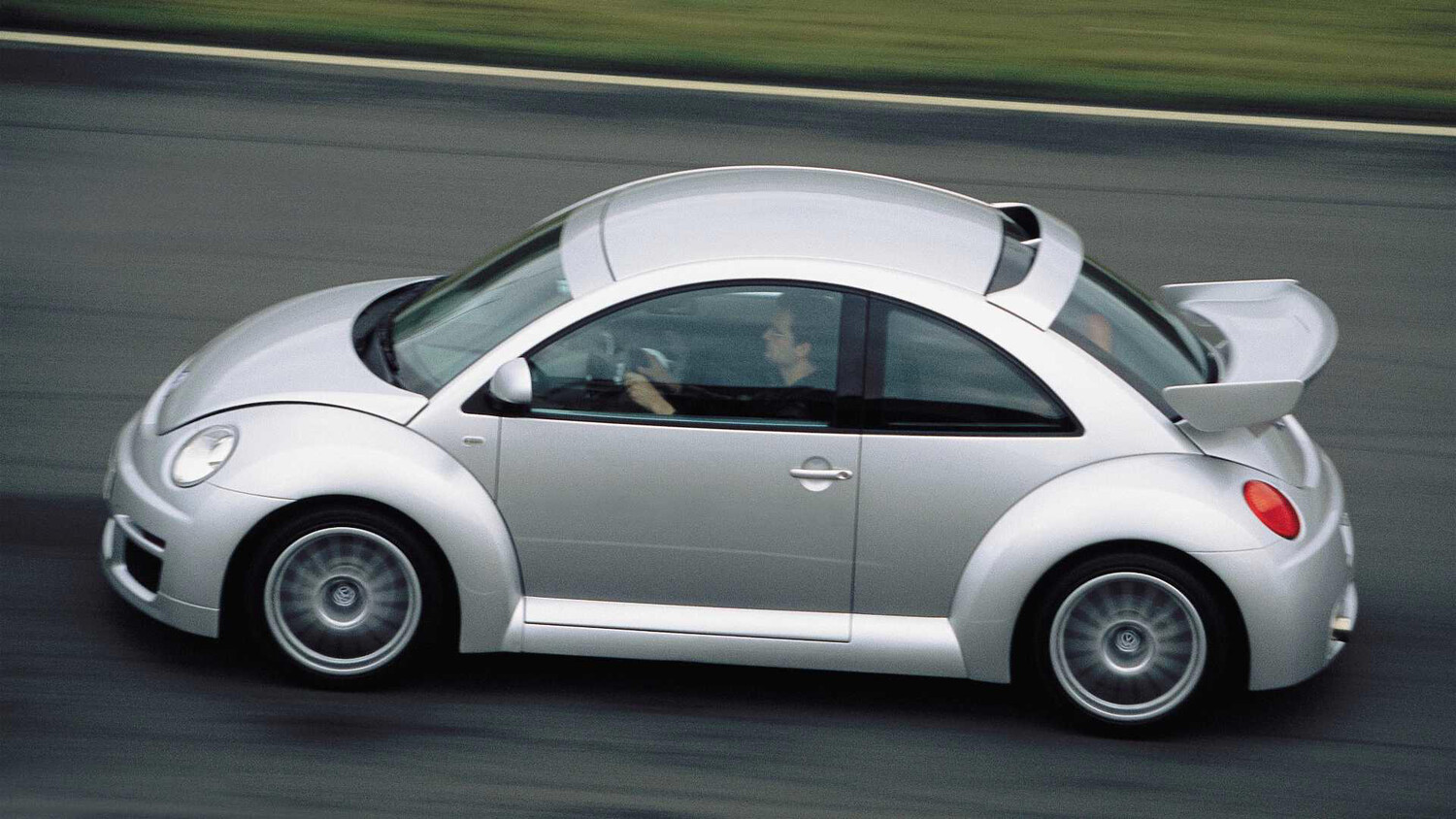
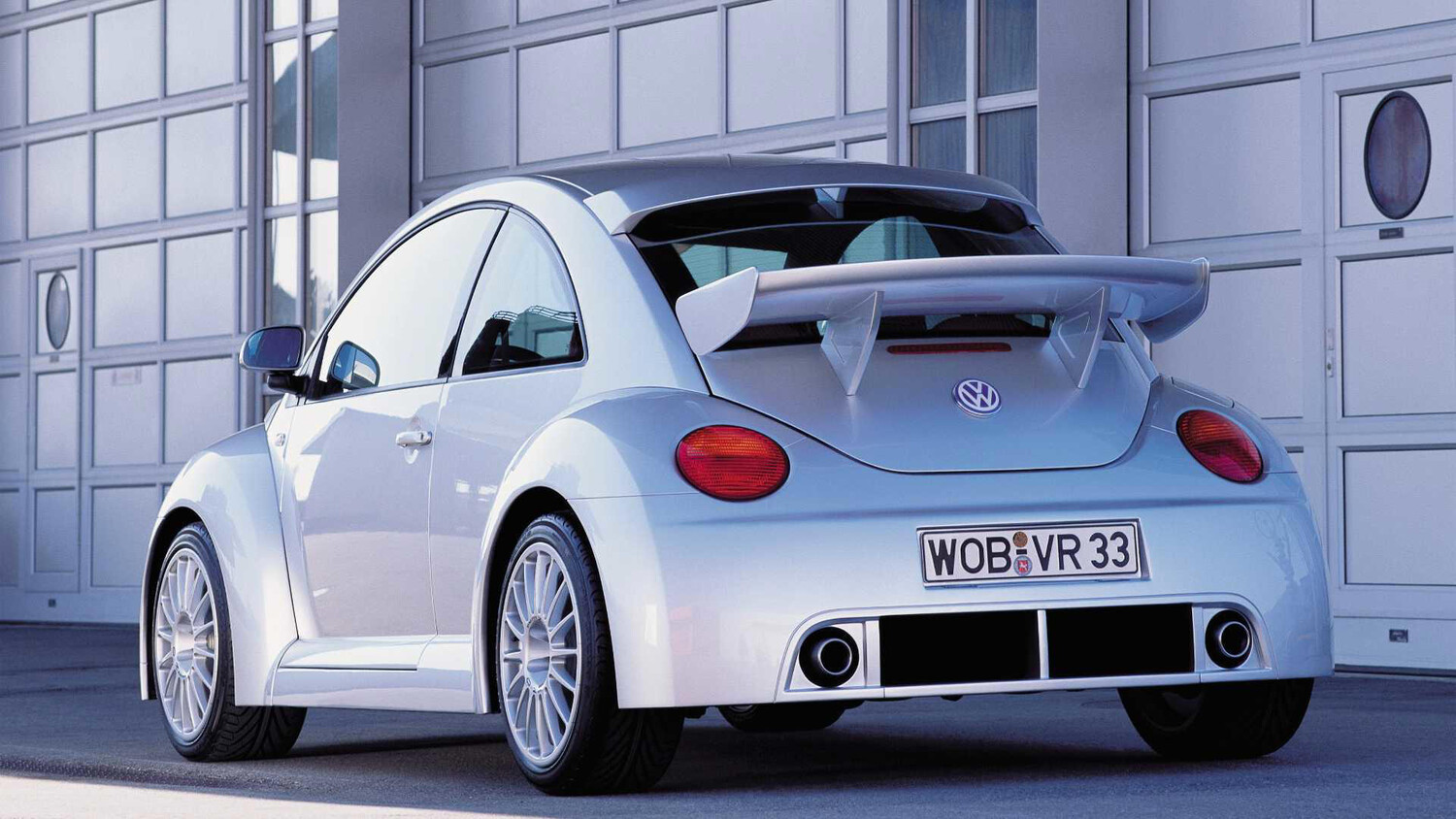
Six-cylinder hot hatches have always been a rare thing, and although Europe and Japan have enjoyed a select few over the years, only one has ever really made a real impact in the US: the Volkswagen Golf R32. Over the two generations it was sold in, it laid the groundwork for many fast Volkswagens and other modern hot hatches to come, as one of the first hot hatches to utilize all-wheel drive and the first road car available with a DSG dual-clutch automatic transmission.But what's a little less well-known – partly because just 250 were ever built and partly because it was never sold in the US or Canada – is that before the first R32 arrived, VW built another VR6-powered, all-wheel drive uber–hatch, one based on the same set of underpinnings but wearing a very different body. That car was the New Beetle RSi, and it's now a highly coveted modern classic emblematic of the VW Group's most ambitious era – and one that, in 2026, finally becomes eligible for US import. The Origins Of The RSi Volkswagen The Volkswagen New Beetle was an immediate success following its 1997 launch. By clothing humble Golf underpinnings in a cute retro body referencing the brand's most famous car of all, VW created a cultural and sales phenomenon that went on to lead a whole wave of other retro car revivals.Despite gaining a turbocharged engine soon after launch, the New Beetle, like the car that inspired it, didn't initially have much performance cred. But that didn't stop Volkswagen from hinting at what was to come. At the Detroit Auto Show in January 1999, it unveiled the New Beetle RSi Concept, a pumped-up, bewinged and wide-arched design study for a fast version of the beloved retro hatch. Very little was unveiled about the concept beyond the fact that it had a twin-turbo V6 hooked up to VW's 4Motion all-wheel drive system.Volkswagen That same year, VW took the New Beetle racing, launching a one-make series called the Beetle Cup. Its specially-prepared cars, based around standard Beetle body shells, were given swollen bodywork very similar to that of the RSi Concept, and received a heart transplant too: Volkswagen's narrow-angle 2.8-liter VR6 engine, producing 201 hp and sending it all to the front wheels.Come the 2000 Geneva Motor Show, VW displayed another Beetle RSi show car, this one looking much more production-ready than the Detroit car. It was clear that a production run was being considered, and sure enough, riding the same wave of technical ambition and financial freedom that led to everything from the Bugatti Veyron to the series of ultra fuel-efficient prototypes that would become the VW XL1, Volkswagen gave the New Beetle RSi the green light. The RSi Arrives VolkswagenArriving in 2001, the roadgoing New Beetle RSi – apparently standing for Racing Sport Injection – took the model to an entirely new level of performance. Like the Detroit concept, it was all-wheel drive and featured a VR6 engine. Unlike the concept, it was naturally aspirated, but its displacement was up to 3.2 liters, allowing it to produce 221 hp and 236 lb-ft. This was the first application of the 3.2-liter VR6, an engine that would quickly go on to see use in the Audi TT, VW Golf R32 and even the Porsche Cayenne.That power was distributed via a close-ratio six-speed manual and the clutch-based Haldex on-demand all-wheel drive system. 0-60 mph was quoted at 6.4 seconds and top speed at 140 mph. The engine breathed through a new Remus twin-tip exhaust system too, ensuring it snarled like a 3.2-liter V6 should.The swollen bodywork from the Beetle Cup car – some 3.4 inches wider than standard – was present and correct, complete with a wild dual rear spoiler arrangement. It helped accommodate 9 x 18 tires as well as a significantly wider track. The big engine, all-wheel drive and extra bodywork all served to make the RSi quite a heavy car, tipping the scale at over 3,300 lbs. Inside, it was treated to a pair of single-piece Recaro front bucket seats, plus a reworked dash featuring extra gauges, and in case there was any doubt that this was no ordinary New Beetle, the plastic vase that was famously fitted to more pedestrian versions of the model was nowhere to be found in the RSi.Volkswagen VW built just 250 New Beetle RSis (plus the Geneva 2000 show car). All were painted Silver Arrow Metallic, except for a sole blue example built for VW Group chairman Ferdinand Piëch, the man largely responsible for the company's unbridled ambition around the turn of the millennium. Sales were limited to mainland Europe, Japan, Mexico (where the car was built alongside regular New Beetles), and a select few other markets. The US, Canada and the UK, despite being three major markets for the New Beetle, all missed out.It all seemed like rather a lot of work for something that was always going to be a very limited-run prospect. Then again, the asking price likely recouped some of the cost of development. When new in 2001, a Beetle RSi would have cost a German buyer DM127,000 – the equivalent of around €104,000, or around $121,000, today. The RSi's Legacy Volkswagen It would be easy to write off the RSi as a novelty, a moment of madness from a company that seemed to have infinite cash to throw at passion projects. But that would be to understate quite how important it was to modern performance cars. A year after launching the Beetle RSi, VW unleashed the original VW Golf R32. This shared the RSi's 3.2-liter V6 and Haldex AWD system, although power was bumped even further to 238 hp.Another Golf R32 followed using the same recipe, before being succeeded in 2009 by the first turbocharged four-cylinder Golf R. Although the original Audi S3 had got there first, it was this lineage of cars that effectively rewrote the hot hatchback rulebook to stipulate that big power and all-wheel drive would be the order of the day, a recipe since copied by Mercedes-AMG, BMW, Ford, Toyota and Subaru.In fact, when the RSi debuted, all-wheel drive performance cars as a whole were unusual to find without either a Japanese badge or an Audi logo. 25 years on, when everything from the Dodge Charger to the BMW M3 features all-wheel drive, and it's arguably more of a novelty to find a performance car without it, it's hard not to see the New Beetle RSi as a car that was looking ahead to the future. It just happened to come wrapped in a shape firmly rooted in the past. What's it worth today? Volkswagen Unsurprisingly for such a rare version of a car that's already a cult classic, the New Beetle RSi isn't cheap these days. Given how few were produced, it's unusual to even find one for sale, but the most recent public sale we can find a record of – a car auctioned in Italy in December 2025 – went for €60,500, or the best part of $70,000.That's a significant cost, especially when very clean examples of the Golf R32, which offers an effectively identical mechanical package and even more performance, can be had for half that figure. However, the RSi is far from a normal early 2000s hot hatch. It's a serious rarity and a car that was remarkably ahead of its time, all topped off with the sheer novelty of sports car-slaying performance and a VR6 snarl wrapped in a cute Beetle body.With the first examples turning 25 and therefore eligible for US import in 2026, it won't be long before the occasional RSi starts to pop up on the American collector market too. Will the opportunity for a whole new audience to get its hands on this hopped-up bug start to drive prices even further? We wouldn't be at all surprised.