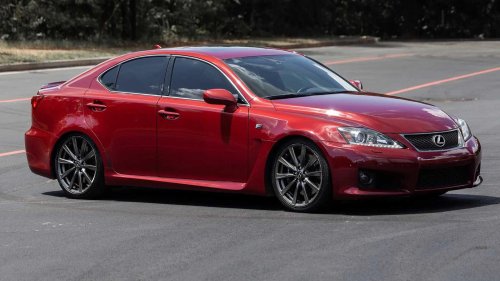
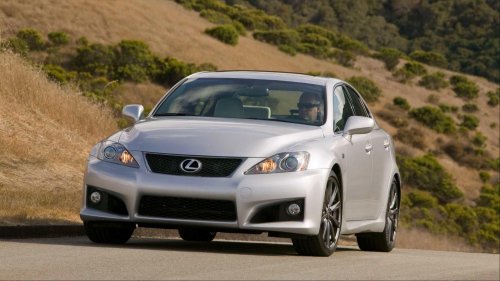
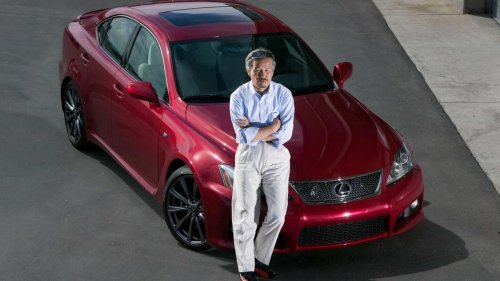
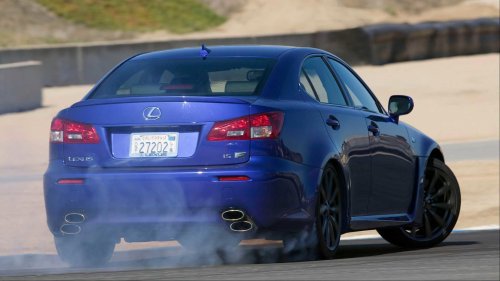
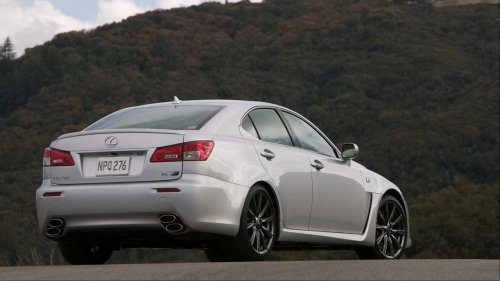
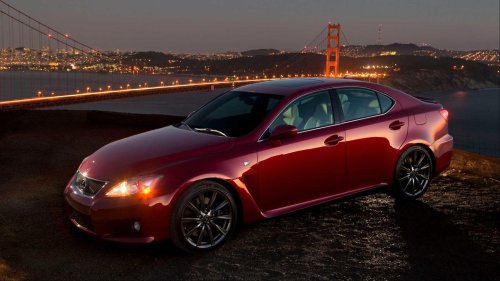
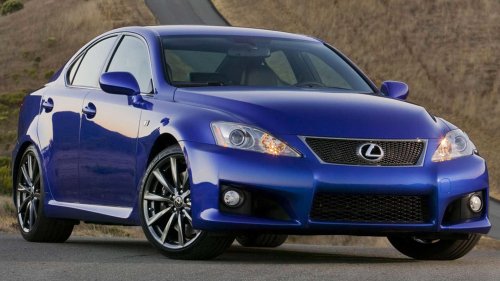
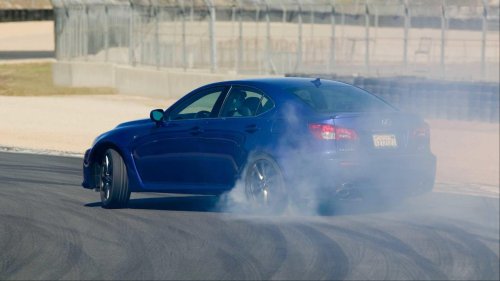
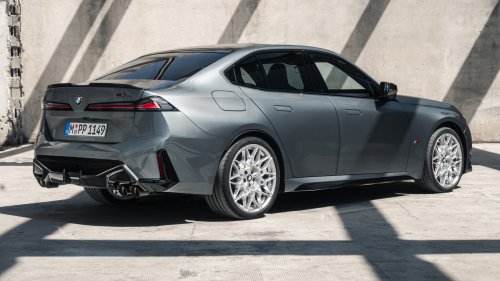
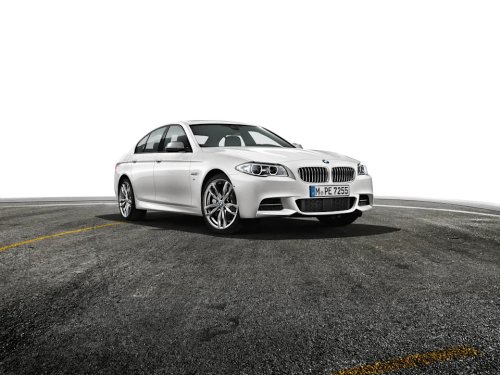
There’s always been a trade-off when it comes to performance sedans. If you want something that feels sharp, balanced, and genuinely fun to drive, you usually end up looking at BMW. If you want something that holds up over time without constant issues, you start looking at Toyota. Getting both in the same car can be complicated, but it doesn't always have to be.Most of the time, the cars that drive the best tend to demand more from you in the long term. And the ones built to last don’t always deliver the same level of engagement behind the wheel. That gap has existed for years, which is why so many buyers feel they have to choose one or the other. But there was one sedan that actually managed to sit right in the middle of that space. It showed up with a proper V8, rear-wheel drive, and real performance intent, but it was engineered with a completely different ownership experience in mind. The Lexus IS F Was Built To Take On The BMW M3 Bring a TrailerBefore you even get into what it is, the intent behind this car is what makes it interesting. This wasn’t a warmed-over luxury sedan or a soft attempt at performance. It was developed to go directly after the E90 BMW M3, which, at the time, defined the segment. That meant proper chassis tuning, real track development, and a focus on how the car actually feels when you push it. Testing at places like Fuji Speedway and the Nürburgring shaped the way this car drives, and it shows in how composed and responsive it feels.Then Lexus revealed what they had been working on: the IS F. It wasn’t subtle about what it was trying to be. A naturally aspirated V8, rear-wheel drive, and a setup that prioritized balance over tricks. And that's exactly what we got.LexusLexus IS F Key SpecsThat puts it right in the same conversation as the M3 it was targeting. And unlike a lot of first attempts, it didn’t feel out of place there.Fun Fact: The IS F’s stacked quad exhaust wasn’t just for looks. The inner tips are actually connected to a valve system that helps control backpressure and sound, which is why the car changes tone so noticeably under load. What's Not To Like About A High-Revving V8 With Toyota Durability? The engine is where the F really earns its reputation. The 2UR-GSE V8, co-developed with Yamaha, delivers the kind of response and sound you expect from a performance sedan, but without the fragility that usually comes with it. It revs cleanly, pulls hard, and doesn’t feel stressed doing it. That’s a big part of why these cars age so well. You’re not constantly dealing with major issues or expensive failures as the miles add up.LexusIt also uses Toyota’s D-4S system, which combines direct and port fuel injection. That helps with long-term reliability, especially compared to engines from the same era that struggled with carbon buildup and other common problems. Owning one feels different. You’re not managing the car. You’re just driving it. And that’s a big reason this one stands out from its German competitors. An 8-Speed That Changed The Driving Experience LexusOne of the more underrated parts of the IS F is the transmission. At a time when many automatics still felt slow or disconnected, Lexus introduced an 8-speed that actually responded the way a performance car should. Shifts are quick, downshifts are matched properly, and the paddles give you real control when you want it. It doesn’t try to imitate a dual-clutch transmission, but it gets surprisingly close in terms of responsiveness.LexusIt also makes the car easier to live with. In normal driving, it’s smooth and predictable. When you push it, it tightens up and becomes more focused. That flexibility is a big part of what makes the IS F work as both a 400-horsepower daily driver and something you can enjoy on the weekend. It's got four doors, a wild V8, and pretty much the best balance of "fun car" and "daily driver" that you can get.Fun Fact: Early IS F models came with a speedometer that went up to 200 mph, even though the car was electronically limited to around 168 mph. Lexus never really explained it, but it added to the whole “overbuilt” feel of the car. It Still Feels Raw In A Way New Cars Don’t LexusDriving an IS F today highlights how much the segment has changed. The steering is hydraulic, so you actually feel what the front tires are doing. The throttle response is immediate, with no delay or artificial buildup. That doesn’t make it difficult to drive; it just makes it more engaging. You can feel how the car reacts, how it loads up in corners, and how it puts power down. That kind of feedback has become less common as newer cars have shifted toward electric systems and more isolation.Lexus The IS F still sits in the space where performance and connection are closely tied. And that’s a big part of why it still feels relevant. It's also one of those cars that makes me marvel at how it ever came to exist. We probably won't get another IS F in my lifetime, and they are slowly disappearing from garages everywhere. Values Are Starting To Reflect What It Is For years, the IS F flew under the radar. It didn’t have the same recognition as its German rivals, and that kept prices relatively reasonable for a long time. That’s starting to change as more buyers realize what this car actually offers. You don’t see these come up for sale often, but when they do, the spread is pretty clear. Mileage and condition matter a lot here, and the best cars are already starting to separate themselves. Recent Market Values Clean examples are getting harder to find, and the well-maintained ones are starting to stand out more in the market. It’s one of the few V8 performance sedans from this era that still makes sense to own long-term. Low-mile cars are already pushing into the $40K range, while higher-mile examples can still be found under $20K. Lexus of Wichita currently has a 2011 with 32,474 miles on it listed for $54,988. It shows the original MSRP was $64,020, which is pretty crazy to see 15 years later.LexusAnd that’s really what this car comes down to. It delivers the kind of driving experience people expect from a BMW, but with a level of consistency that feels much closer to that of a Toyota. That combination is rare, and it’s a big reason why the IS F is really having a moment.Fun Fact: The engine switches from the Atkinson cycle to the Otto cycle under load, which is something you usually see in hybrid-focused efficiency setups. In the IS F, it was used to balance fuel economy and performance in a way that was pretty ahead of its time.You get the sound, the power, and the rear-wheel-drive feel that people chase in a BMW, but you’re not constantly wondering what’s going to break next or how much it’s going to cost you. You just get in and drive it, and it does exactly what you expect every time. That’s a rare combination, especially now. And it’s probably why these are starting to get harder to find. People who own them tend to keep them, and once you spend time with one, it’s easy to understand why.