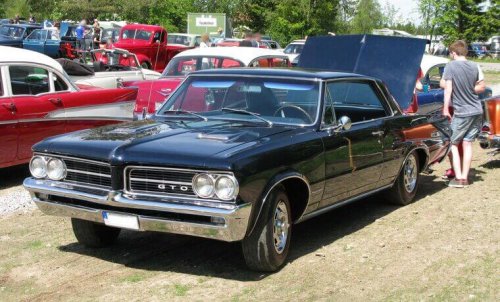
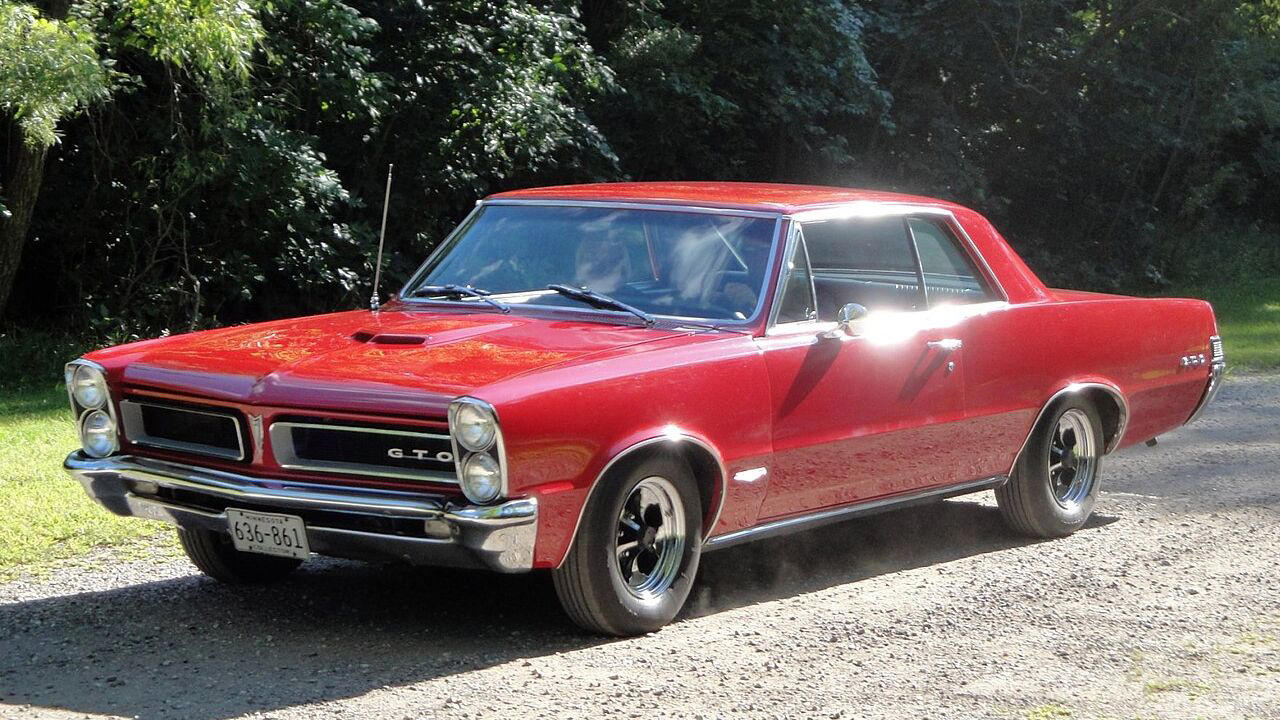
The original GTO wasn’t approved at first and that almost changed everythingThe car that came to define the American muscle era started life as a corporate problem, not a product plan. Inside General Motors, the original GTO was blocked by policy, dismissed by executives and only slipped into production because a small group of engineers and marketers refused to take no for an answer. For a brief window, the project was unofficial, unapproved and almost canceled, and that fragile beginning nearly rewrote performance-car history. Yet the GTO did make it to showrooms and turned Pontiac from a conservative brand into a youth icon. The near miss that preceded it reveals how close Detroit came to missing the muscle car moment entirely. The rules that said the GTO could not exist To understand why the GTO was initially rejected, it helps to look at the company that built it. The Pontiac Motor Company dated back to 1907, when Edward Murphy founded the brand that would later become part of General Motors. By the early 1960s, Pontiac had a reputation for solid, middle-of-the-road cars, not for breaking rules on power and handling, even though enthusiasts inside the division were trying to push performance higher in terms of power and handling, as chronicled in a Brief History of the Pontiac Brand. At the corporate level, General Motors management had its own priorities. According to Geoff, a commentator who has written about internal policy from that era, GM had a strict rule in the early 1960s that no midsize car could have an engine larger than 330 cubic inches. In Geoff’s words, General Motors decreed that no mid sized car could have an engine bigger than that figure, a guardrail meant to keep performance and insurance risk in check and to prevent divisions from competing too aggressively with each other. His description of how they enforced this rule, and how Pontiac later turned the GTO into its own standalone model, appears in a detailed post attributed to Geoff Brown. That 330 cubic inch ceiling was aimed directly at the kind of car the GTO would become. GM wanted big engines kept in full-size models, where higher prices and margins could offset the risks. Intermediate cars were supposed to be sensible transportation, not street terrors. Any proposal to drop a full-size V8 into a midsize chassis ran headfirst into that rule. Pontiac, however, had started to see a different America. Younger buyers were entering the market, drag strips were crowded on weekends and performance bragging rights translated into showroom traffic. The corporate policy did not address what would happen if a midsize car carried a big engine as part of an option package instead of as standard equipment, and that gap became the opening the GTO team needed. John DeLorean and a loophole on wheels At the center of the story was John DeLorean, an ambitious engineer and executive who had joined GM in the late 1950s. A later profile describes how John came to GM in the late 50s early 60s and immediately tried to take the pulse of the society at that point, watching how youth culture, hot rodding and performance were reshaping expectations for cars. That sense of where the market was headed is a recurring theme in accounts of John DeLorean and his time at Pontiac. Inside Pontiac, DeLorean and a small group of engineers wanted to build something that could outrun anything else in its price class. Sources that trace the GTO’s origin describe three engineers in Detroit who were willing to break every rule in order to create a new kind of performance car. Their idea was simple and radical at once: take Pontiac’s intermediate LeMans, a mild-mannered family car, and install the division’s big 389 cubic inch V8 where a smaller engine was supposed to live. Corporate policy, however, said that an intermediate car could not have a powerplant larger than 330 cubic inches. A later account of the 1965 Pontiac GTO explains that John Z. DeLorean’s workaround targeted exactly that corporate ban on engines larger than 330 cubic inches in intermediate sized cars. The key move was to treat the GTO not as a separate model, but as an option package that could be added to a standard LeMans. That way, on paper, the base car still complied with the 330 rule, even if the option sheet told a different story. The description of this workaround, and of how quickly orders followed, appears in a detailed history of the Pontiac GTO John workaround. The GTO name itself was borrowed from European racing, where Gran Turismo Omologato badges signaled a car that had been homologated for competition. One detailed reference notes that The Pontiac GTO was a front engine, rear drive, two door, four passenger automobile marketed by the Pontiac di division, and that the GTO name had been used in European sports car racing before Pontiac applied it to a Detroit-built car. That same reference points out that The Pontiac GTO disregarded GM’s policy on engine size in intermediate cars, which underlines just how far DeLorean’s team was pushing corporate boundaries, as summarized in the entry on the Pontiac GTO. Within Pontiac, the project was initially a skunkworks effort. Engineers built prototypes by hand, dropping the 389 into LeMans test cars and letting select executives feel the result. Marketing people quietly tested the name and the concept with younger buyers. The car was fast, loud and raw compared with the sedans that filled GM showrooms. It was also, on the face of it, not allowed. “No” from upstairs, and how close the GTO came to dying Accounts of the approval process agree on one point: the GTO did not sail through corporate channels. Before the GTO changed the automotive landscape, it first had to overcome internal obstacles to get a green light. A retrospective on the car’s golden anniversary describes how the most significant hurdle was convincing GM’s upper management that a midsize car with a big engine would not damage the company’s carefully balanced product hierarchy. That narrative, which draws on Jim Wangers’ book Glory Days, opens with the phrase Before the GTO changed the automotive landscape and then walks through the resistance inside GM, a story preserved in a detailed Before the GTO account. Senior executives initially rejected the idea outright. The GTO seemed to violate the 330 cubic inch policy, threatened to steal sales from more profitable full-size models and risked attracting the wrong kind of attention from safety advocates and regulators. Some within GM worried that advertising a factory hot rod would invite criticism at a time when the industry already faced questions about horsepower and responsibility. What changed their minds was not a sudden embrace of rebellion, but the way DeLorean’s team framed the project. By positioning the GTO as an option package on the LeMans, they could argue that GM’s written policy did not explicitly forbid a big engine as an extra cost choice. The base LeMans still complied. The GTO package simply allowed customers to order something more potent if they wanted it. A later history of the Pontiac GTO notes that the policy did not address this exact scenario, which gave Pontiac room to maneuver, a point echoed in a background piece that observes that Though there were performance oriented cars before it, the Pontiac GTO is widely considered the first muscle car precisely because it exploited a gap in corporate rules, as explained in a background section on the GTO. Even with that framing, the project nearly stalled. Internal approvals were delayed, production slots were hard to secure and some executives reportedly suggested limiting the car to a tiny run or even canceling it after a short trial. The car’s champions pushed back, arguing that Pontiac needed something bold to stay relevant as younger buyers flocked to performance. One early reference to the GTO’s launch notes that initial sales projections were modest, in part because management did not fully believe in the concept. Yet as soon as dealers saw the car and word spread among enthusiasts, orders surged. A period account of the 1964 GTO on the Pontiac home plant assembly line recalls that within weeks, thousands of orders had been placed, far beyond what the cautious forecasts had suggested. That response effectively ended the internal debate. Once the GTO proved it could sell, canceling it was no longer an option. From quiet option package to “The Goat” The car that slipped through as an option package quickly became a phenomenon. A detailed guide notes that Did You Know the GTO started as a performance option package for the Pontiac LeMans in 1964, not a standalone model, and that GM technical management had to be persuaded that the car would not blow up the corporate rulebook. That same guide explains that The GTO later evolved into its own model, with styling and marketing that turned heads and cemented its identity, as described in a research hub devoted to The GTO. By 1964, the car was on sale and Pontiac was learning just how powerful the formula could be. A later history labels that year The Beginning and describes The Pontiac GTO, nicknamed The Goat, as a bold creation that directly violated GM policy on intermediate engines. That same account emphasizes that the GTO was initially approved as an option, then rapidly grew into a signature product as sales and publicity exploded, as recounted in a narrative that opens with The Beginning of The Goat. Marketing played a major role. Pontiac leaned into youth culture with aggressive advertising, performance imagery and a nickname, The Goat, that sounded more like a street racer than a corporate product. The car’s success also reshaped Pontiac’s own identity. A museum history notes that the same division that had once focused on conservative buyers was now celebrated for building some of the most exciting cars in Detroit, a transformation that would have been hard to imagine before the GTO era, as chronicled by the Volo Museum and related attractions that showcase Pontiac’s performance heritage. Enthusiast accounts often stress how radical this shift felt at the time. In 1964, Pontiac revolutionized the American car scene with the launch of the GTO, widely considered the first true muscle car. A later reflection on that moment notes that Pontiac, by packaging big power in an affordable, midsize body, changed expectations for what a mainstream American car could be and helped set off a wave of imitators across other brands, as summarized in a post that highlights how Pontiac reshaped the American GTO story and sold a million cars in the process, a narrative preserved in a discussion of Pontiac. How a near cancellation changed car culture Looking back, it can be hard to grasp how precarious the GTO’s birth really was. Today, The Pontiac GTO is routinely described as the car that started the muscle car era. Its basic template, a powerful V8 in a relatively light, affordable chassis, has been copied and reinterpreted countless times. Yet every major element of that formula clashed with GM’s early 1960s rules. More from Fast Lane Only Unboxing the WWII Jeep in a Crate 15 rare Chevys collectors are quietly buying 10 underrated V8s still worth hunting down Police notice this before you even roll window down The post The original GTO wasn’t approved at first and that almost changed everything appeared first on FAST LANE ONLY.



















 +70 others