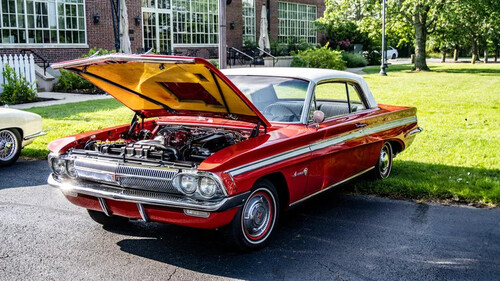
The Nova SS arrived as a budget compact that few enthusiasts took seriously, then quietly started humiliating bigger, flashier muscle cars at stoplights and drag strips. What began as a practical Chevrolet runabout turned into one of the sharpest sleeper performers of its era, a car that looked like basic transportation until the light turned green. The story of how that happened is one of underestimated hardware, clever option sheets, and a shifting view of what a muscle car could be. From basic Chevy II to surprise threat The Chevrolet compact that would become The Chevy Nova started life as the Chevy II, a straightforward economy car aimed at drivers who cared more about price and practicality than quarter mile times. Early versions focused on low cost, simple engineering, and mass appeal, which is why The Chevrolet Nova initially carried an economy car image that made performance fans look elsewhere. That conservative reputation became a powerful asset once Chevrolet began to inject serious power into the package. Over time, The Chevy Nova evolved from that humble Chevy II into a car that enthusiasts now recognize as a compact muscle contender. Community histories describe how the model moved from basic commuter duty into the orbit of serious performance cars, as buyers discovered that a small, light shell could be paired with increasingly aggressive engines. The platform stayed tidy and unassuming, so even as power climbed, the Nova still blended into traffic in a way that big-block Chevelles and bright Camaros never could. By the late 1960s, Chevrolet had realized that the compact segment offered more than fuel savings and easy parking. According to performance-focused retrospectives, the company saw that a stripped, lightweight body with the right drivetrain could offer a cheaper, more focused alternative to heavier intermediates. That shift in thinking set the stage for The Chevy Nova SS to move from a trim package into a genuine performance threat that used its modest origins as camouflage. How the SS badge changed the compact game The Super Sport badge carried weight inside Chevrolet long before it reached the Nova, but on this compact it took on a different character. Instead of dressing up a big cruiser, The Chevy Nova SS turned a small, unpretentious car into something that could run with much more imposing machinery. Community descriptions of The Chevy Nova SS emphasize that it was a compact muscle car with big attitude, a car that used its size and simplicity as a weapon rather than a limitation. In its early years, the Nova SS package leaned on small block power and basic suspension upgrades. It still looked like an everyday sedan or coupe, which is why many buyers and even some dealers treated it as a mild step up from the base model. When new, many considered the Chevy Nova SS a budget choice rather than a headline performance car, a perception that would not survive long once owners started lining up at local drag strips. As the performance decade advanced, Chevrolet began to treat the Nova SS as a car for serious enthusiasts. The company offered stronger small blocks and eventually big block options that transformed the car from a sporty compact into a genuine street weapon. The SS badge on this platform no longer meant just extra trim or mild tuning. It signaled that this unassuming shell could hide the same kind of hardware that powered some of the brand’s most respected muscle cars. The moment the Nova SS stopped being a joke The turning point came when Chevrolet combined the lightweight Nova body with engines that had previously been reserved for larger, more glamorous models. One key milestone arrived when the new, subframed Nova SS for 1968 gained access to Chevy performance parts that had already earned a reputation in the Corvette and Camaro world. Reports on that era highlight that the Nova SS for 1968 was the first to offer Chevy’s 375 horse, 396 as an available option, a combination that instantly changed how street racers sized up the little compact. That 396 cubic inch V8 gave the Nova SS power that no one expected from a car that still looked like basic transportation. In 1970, Chevrolet leaned into this formula even harder, introducing a 396 cubic inch V8 engine option in the Nova that turned the small car into exactly what enthusiasts love to call a sleeper. One community summary labels this shift as a classic case of Big Engine, Small Car, and that simple phrase captures why the Nova SS suddenly demanded respect. With that big block under the hood, the Nova SS no longer had to apologize to anyone. Contemporary road tests and later retrospectives describe it as a car that could shock unsuspecting rivals who mistook it for an economy special. The Chevrolet Nova’s economy car image should have made it the ultimate sleeper, a car that caught unsuspecting street racers by surprise, and the 396 option delivered exactly that outcome. The SS badge had turned from a mild appearance package into a signal that this little Chevy compact might be hiding serious firepower. Lightweight shell, heavyweight punch The mechanical formula behind the Nova SS surprise was simple but effective. The car started as a compact economy model, which meant relatively low curb weight and tidy dimensions. When Chevrolet began installing serious V8 engines, that lightness turned into a real advantage. Community posts describe how The Chevrolet Nova started as a compact economy car in the early 60s but by the late 60s and early 70s, it became a serious muscle contender that could launch hard and cover the quarter mile in highly competitive times. Earlier in the decade, Chevrolet had already tested the idea of pairing a small body with strong power by offering the L79 package. Collectors point out that Concurrent with a styling update in 1966, the L79 performance package good for 350 horsepower and a 15-second quarter mile made Chevrolet’s little Nova SS a surprisingly quick street car. That combination of 350 horsepower and a compact shell previewed what would happen when even larger engines arrived. By 1969, community summaries and enthusiast wikis agree that the Nova had matured into a serious street machine. In that context, The Super Sport designation was no longer just a trim, it marked a car that had the hardware to be a formidable drag strip contender. The 1969 Chevrolet Nova SS in particular is frequently cited as a lightweight, quick, and true street performer, especially when ordered with the big block that enthusiasts now associate with the #1969NovaSS and #BigBlockNova tags in online communities. Why the Nova SS became the ultimate sleeper Part of the Nova SS appeal comes from how thoroughly it hid its capabilities. While competitors like the Ford Mustang the Chevy Cam and other headline muscle cars wore stripes, scoops, and spoilers, the Nova kept a relatively conservative profile. Enthusiast groups describe Chevy Novas as compact powerhouses that evolved into street legends, and they often single out the SS versions as the purest expression of that sleeper character. Fans of Sick Nova builds speak of The Chevy Nova as a straight-up street legend, compact and mean, that could be packing anything from a mild small block to a race-prepped big block. Whether the car carried a modest engine or a full 396, the exterior rarely shouted about it. That quiet confidence helped the Nova SS earn a reputation in street racing circles as a car that could surprise drivers who underestimated it at first glance. Even in enthusiast media that focuses on more famous muscle cars, voices have started to call the Nova one of the most underrated Chevrolet performance models of the 60s. Video essays on American muscle culture point out that when people think about the classic American performance scene, the conversation usually starts with icons like the Ford Mustang the Chevy Cam and other big names, while the Nova SS often sits in the background until someone brings up how many races it quietly won. Underrated years and standout models Among collectors and historians, certain Nova SS years stand out as key examples of the sleeper formula. One community feature describes the 1966 Chevrolet Nova SS as a lightweight muscle car with serious punch, especially when equipped with its available 327 cubic inch V8, crisp body lines, and no-nonsense styling. That car is often held up as a turning point where the Nova stopped being just a compact and started to look like a serious performance platform in its own right. Later models built on that foundation. The 1969 Chevrolet Nova SS combined a refined chassis with the option of big block power, which made it a favorite among drivers who wanted maximum acceleration without the visual drama of a larger muscle car. Enthusiast posts that celebrate the 1969 Nova SS as lightweight, quick, and a true street performer also highlight how its simple design kept costs down, which made it accessible to younger buyers who might have been priced out of more glamorous models. By 1972, the Nova SS had cemented its identity as a compact muscle car with real heritage. Community lists of interesting facts about the 1972 Chevy Nova SS emphasize how The Nova SS, which debuted as a performance oriented version of the Nova, carried forward the idea of a small car with big power. Even as emissions rules and insurance pressures began to squeeze the broader muscle market, the SS badge on the Nova still signaled a driver focused package that traced its roots back to the big block experiments of the late 1960s. How perception finally caught up For a long time, the Nova SS lived in the shadow of more heavily marketed performance models. When new, many considered the Chevy Nova SS a practical choice that happened to be quick, rather than a halo car that defined the muscle era. That perception started to change as period road tests, drag strip results, and owner stories circulated through enthusiast circles and later through online communities. Retrospective coverage now argues that by the late 1960s, Chevrolet had quietly changed the value of the compact segment by proving that a small car could deliver serious muscle. Analysts who look back on that period credit the Nova SS with helping to shift expectations about what a performance car had to look like and how much it needed to cost. Instead of assuming that only big coupes and intermediates could be fast, buyers began to see the appeal of a compact that could run just as hard. Community histories describe how Over time, it evolved into one of the most popular muscle cars of its era, especially with the inclusion of high performance engines that turned the Nova SS into a favorite among budget conscious enthusiasts. The Chevrolet Nova SS is frequently celebrated in enthusiast groups as a SleeperLegend, a car that proved a compact platform could carry the same spirit as larger AmericanMuscle icons while staying relatively discreet. The Nova SS legacy on streets and screens Today, the Nova SS sits in an interesting position within car culture. It is still described by many fans as the most underrated Chevrolet muscle car of the 60s, yet it enjoys a loyal following that treats it as a cult hero. Online communities dedicated to The Chevy Nova SS and Super Sport variants share build photos, drag strip stories, and restoration tips that keep the car’s reputation alive for a new generation. Digital platforms and games have also helped cement that legacy. In enthusiast oriented game databases, entries for the Chevrolet Nova Super Sport 396 explain that by 1969 the Nova had become a serious street machine and that The Super Sport badge marked it as a formidable drag strip contender. Younger fans who first encounter the car in virtual garages often discover that the unassuming Nova can be tuned to outrun more obvious performance choices, mirroring the surprise factor that defined its real world reputation. Merchandise lines and media brands that celebrate Chevrolet performance history continue to spotlight the Nova SS as a key part of the Bowtie story. Collections of racing apparel tied to The Nova SS Make Bowtie Sleeper History narrative show how deeply the sleeper identity is woven into the way enthusiasts talk about the car. Promotional channels connected to that coverage, such as racing merchandise outlets and related media networks, often feature Nova SS imagery alongside more famous Chevys, which subtly reinforces the idea that the compact belongs in the same conversation. Even broader automotive platforms that cover everything from modern supercars to classic muscle have embraced the Nova SS story. Curated feeds associated with Everything To Know About The Iconic Chevy Nova SS share images and clips that trace the car’s journey from humble Chevy II to feared street machine. Social media accounts tied to that coverage, including dedicated Facebook pages, Twitter feeds, and Pinterest boards, circulate photos of pristine restorations and wild restomods that keep the Nova SS in front of enthusiasts who might otherwise focus on more mainstream classics. Within that ecosystem, the Nova SS has finally earned the respect that its performance always justified. What started as a compact economy car that nobody was supposed to take seriously ended up rewriting expectations for how much punch a small, unassuming Chevrolet could carry. The combination of light weight, big power, and understated styling turned the Nova SS into a genuine sleeper legend, and decades later, the surprise it delivered at every stoplight is still the heart of its appeal. More from Fast Lane Only Unboxing the WWII Jeep in a Crate 15 rare Chevys collectors are quietly buying 10 underrated V8s still worth hunting down Police notice this before you even roll window down The post The Nova SS wasn’t supposed to be taken seriously until it started surprising people appeared first on FAST LANE ONLY.