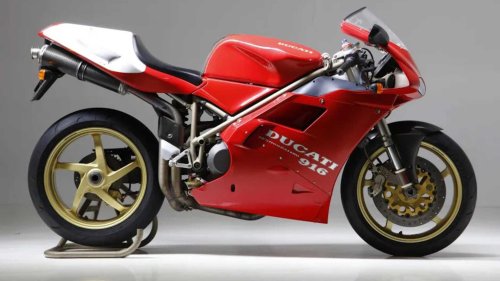
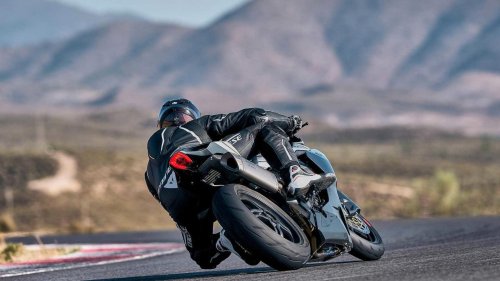
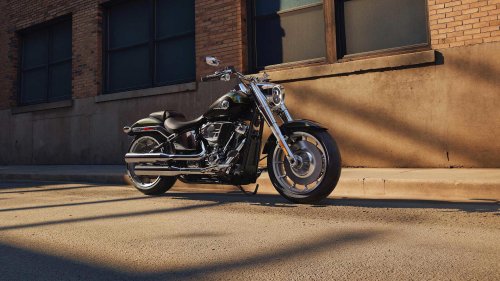
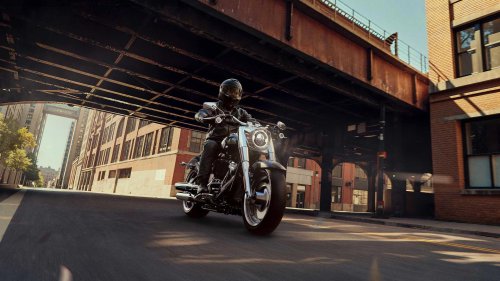
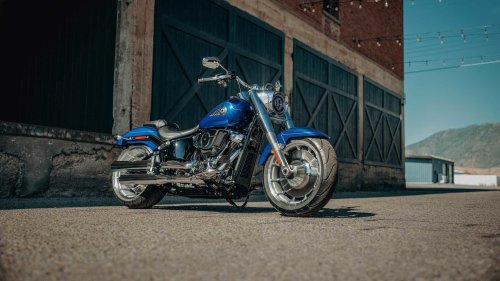
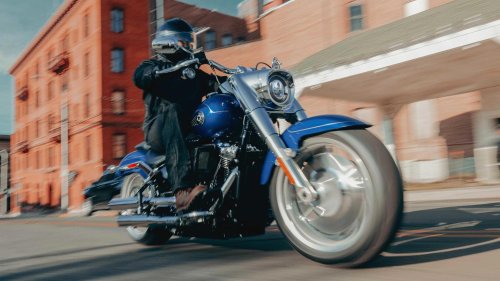
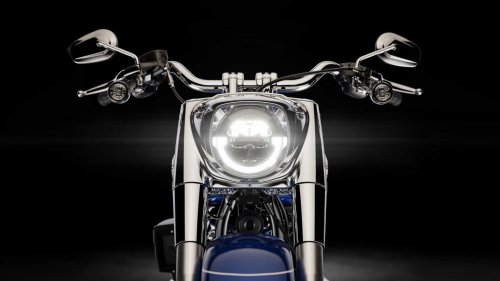
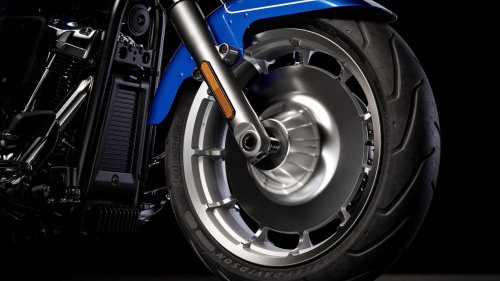
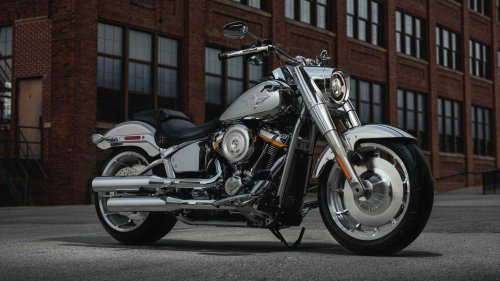
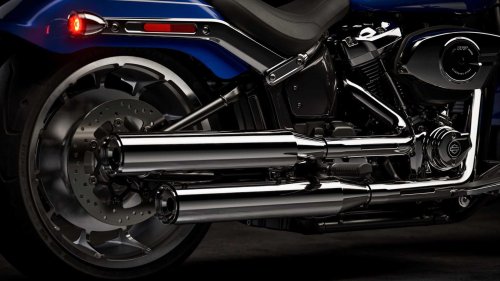
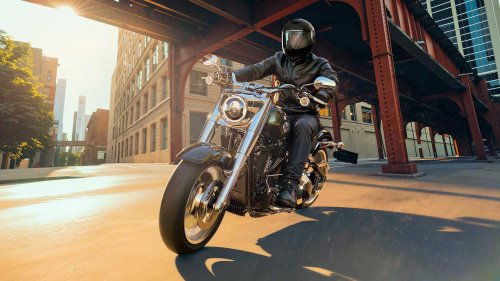
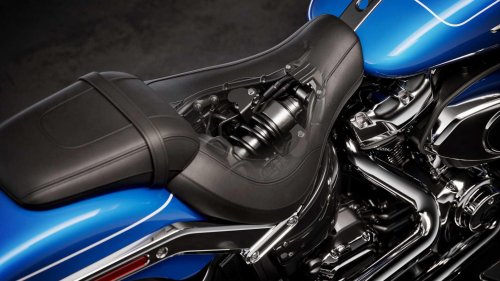
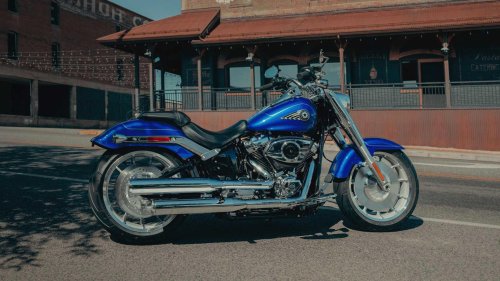















Different riders expect different things from their motorcycles. Some want all-out power, whereas others want comfort. Some of us also demand timeless appeal from them. It isn’t just to impress the crowd at Sturgis; it’s more personal. We want a motorcycle that’s gorgeous and hard not to stare at.Unfortunately, the era of timeless motorcycles is nearly over. Most modern motorcycles are edge, futuristic, or sharp, but rarely are they actually timeless in their design. But there are a few exceptions, one of which stands out from the crowd. This timeless bike carries one of the most legendary silhouettes in automotive history and, in equal parts, belongs to motorcycling and popular culture. A Timeless Motorcycle Design Is Rare These Days KawasakiMotorcycle design has come a long way these days, thanks to technological advancements that allow manufacturers to produce complex components with ease. That has led manufacturers to develop motorcycles whose designs are either optimized for aerodynamic efficiency, futuristic, or simply sticking to current automotive design trends.1996 ducati 955 sp 916 spa studio image for auctionThe thing is, such modern motorcycle designs rarely age well over the years. They will stay trendy for a couple of years, but soon enough, they will be replaced by other, trendier motorcycles that follow. That’s the reason why newer Ducati Panigale generations aren’t held to the same regard as older Ducati sports bikes, like the legendary 916 and 1098. Don’t get me wrong, the Panigale is still sexy, but it isn’t as timeless as its predecessors.MV AgustaBut if you’re looking for a motorcycle that’s timeless in 2026, you’re not entirely out of options. MV Agusta has kept the original F4’s timeless spirit alive in the latest-generation F3 supersport, which still draws heavily from the three-decade-old F4. Then there’s the stunning Superveloce, a neo-retro sports bike that’s unlike anything else on the market. Other timeless motorcycles you can buy today include the Kawasaki Z900 RS, BMW R 12 G/S, or Indian Springfield. But there’s one bike that stands out among these, and it’s the Harley-Davidson Fat Boy. The Harley-Davidson Fat Boy Is Where Beauty Meets Brawn Harley-DavidsonThe Harley-Davidson Fat Boy made its grand debut back in 1990, bringing a bold new look and unbeatable cruiser performance in the segment. As part of Harley’s Softail lineup, it introduced a muscular road presence with its signature Lakester wheels and a massive V-twin engine, eventually taking a place among the most iconic motorcycles to ever come with a Bar and Shield badge.Harley-DavidsonAnd it is as much a part of the motorcycling world as it is of pop culture, thanks to Terminator 2: Judgement Day, which solidified its presence in the collective consciousness of the world. The Fat Boy, thus, became one of the most iconic and recognizable motorcycles in the world. And in its current avatar, it only takes things up a notch. If older Fat Boys are anything to go by, you can bet your hard-earned money that the 2026 Harley-Davidson Fat Boy will age as well as a good wine. The Fat Boy Starts At $22,599 Harley-DavidsonStarting at $22,599, the Harley-Davidson Fat Boy isn’t a cheap motorcycle. But you do get a lot for the price. To start with, you obviously get one of the most legendary silhouettes in automotive history. Then there’s the powerful Milwaukee-Eight 117 V-twin engine, a comfortable perch for long highway cruises, and Rider Safety Enhancements as standard. One Of The Most Legendary Motorcycle Silhouettes Meets Modern Touches Harley-DavidsonThe Harley-Davidson Fat Boy, since the time it was launched, has stuck to a simple formula: a larger-than-life road presence that’s inspired by a steamroller stance. It must look planted from all angles. To get there, the most iconic part of the bike’s design is the beefy front end, complete with a sculpted chrome nacelle that frames a large 7-inch LED headlamp. This nacelle has been sharpened through a modern lens on the current generation.Harley-DavidsonUnder the nacelle sit chunky forks and, when viewed head-on, the wide handlebars give an impression of a bull’s horns. Move to the side, and you'll see the swooping flyline that screams cruiser aesthetics. At the end, there’s a custom-style fender that is highlighted with a chrome subframe that holds the rear in place. The large tank houses an old-school analog display and sits atop a massive, chrome-highlighted V-twin engine.Harley-DavidsonOf course, we can’t talk about the Fat Boy without talking about its iconic, solid cast aluminum Lakester wheels shod in thick rubber. Rumor has it that the Lakester wheels are inspired by the B-29 Superfortress bomber airplane, though the Motor Company has always denied it. Nonetheless, the wheels play a big role in giving the Fat Boy a brutish road presence that’s unlike anything else on the market. The Limited Edition Grey Ghost Takes Things Up A Notch Harley-DavidsonLast year, H-D launched a limited serialized run of the 1990 35th Anniversary Fat Boy Grey Ghost as part of the Icons Collection. It’s a stunning limited edition Fat Boy covered in an exclusive Reflection color scheme with various yellow accents all over. Model code FLSTFI, this Grey Ghost shows that, when done right, even a motorcycle that's dripping in chrome can look mind-blowingly gorgeous. Proper Big-Twin Performance Adds To The Fat Boy’s Brute Force Harley-DavidsonThe Fat Boy is powered by the Milwaukee-Eight 117 V-twin engine that produces 103 horsepower and 126 pound-feet of torque. In true Big Twin fashion, this engine delivers all that torque in the low rev range, which should make this hefty cruiser launch off the line much faster than you’d expect. It’s mated to a six-speed transmission that sends the power down via a final belt drive.The engine is paired with the Touring Intake, which is said to maintain steady power and offer smooth throttle response on the go. Meanwhile, dual counterbalancers keep vibrations in check. H-D claims a fuel economy of 47 miles per gallon, which should be good for 230 miles between fuel stops, which is not bad for apowerful, heavyweight, big-twin cruiser such as this one. And finally, there’s the two-into-two exhaust system that delivers a deep, throaty exhaust note that demands attention should an onlooker miss its road presence. Softail Frame Tuned For Comfort Harley-DavidsonWhile the Fat Boy harks back to the clean lines and classic silhouettes of rigid-frame Harley-Davidsons of the past, it’s thoroughly modern in its underpinnings. It features the Softail frame, which is Harley’s version of a double-cradle chassis that looks like a hardtail frame while hiding a monoshock under the rider seat. The frame’s geometry is designed for straight-line stability and cruising comfort, so we wouldn’t expect cornering finesse from this one. Instead, the Fat Boy is all about confident strikes on the freeway.Harley-DavidsonThe frame is suspended on a Showa dual-bending valve telescopic fork up front and a hidden monoshock at the back. Harley-Davidson says the suspension’s damping rates have been fine-tuned to improve rider comfort, offering a smooth and composed ride on long stretches of the open highway. All of this, plus the bike’s laid-back ergonomics, means that the Fat Boy should be a comfortable bike to ride. Although it will take some getting used to, it has a hefty weight and a wide turning radius. Decent Tech To Go With Time Harley-DavidsonThe Fat Boy also gets the essentials right for a big twin cruiser when it comes to its feature list. It features a tank-mounted 5-inch analog gauge cluster, a USB charging port, and three ride modes: Road, Rain, and Sport. There are also Rider Safety Enhancements, including cornering-enabled ABS, traction control, Drag-Torque Slip Control (DTSC), and TPMS. So, not only is this a boulevard bruiser with a massive road presence, but it also has the tech to help you keep the shiny side up.Source: Harley-Davidson