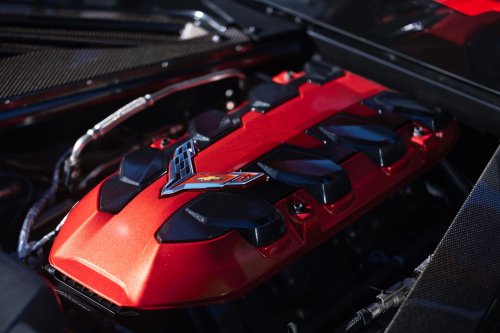
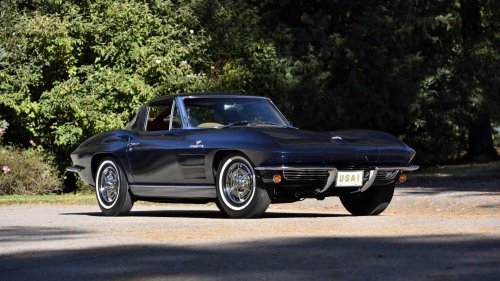
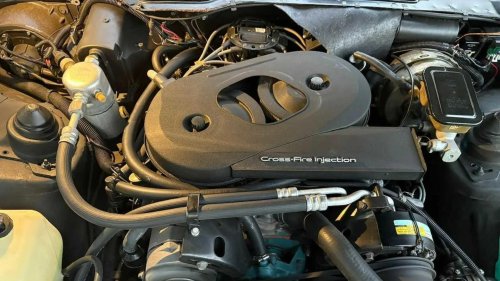
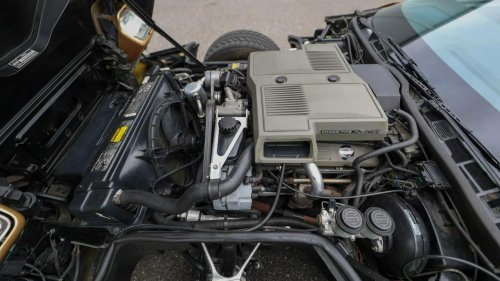
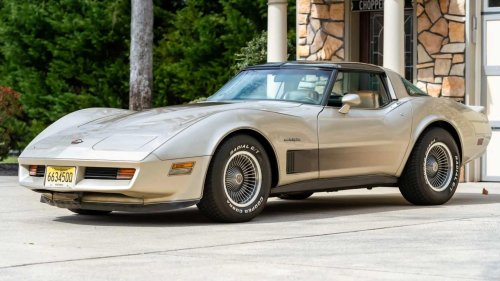
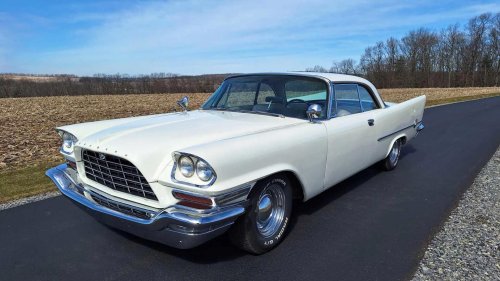
Throughout the course of automotive history, there have been loads of innovations that promised to make the use, ownership, and overall experience of owning a car easier, safer, and more exciting. Some of those innovations, such as the advent of disc brakes and the three-point seatbelt, have saved countless lives. Others, such as the turbocharger and independent suspension, have given the car as a whole a large dose of fun, along with a huge increase in driving pleasure. Of course, there are other "innovations" that seem to have done the opposite, i.e. make matters worse.Some of the most difficult times in automotive history were the 1970s and 1980s, when a slew of new emissions and safety regulations came into effect, forcing automakers to adapt quickly. Because of the fast shift, brands needed to think outside the box for solutions. One such idea, birthed by GM and featured on both select Pontiac and Chevrolet models, was called the "Cross-Fire Injection" system. It promised better power, reliability, and fuel economy. Sadly, though, virtually none of those promises were delivered. A Long Time Coming Bring A Trailer Quick Facts About GM's Cross-Fire Injection Introduced in 1982 Most prominently found in the 1982 and 1984 Chevrolet Corvettes Marked the first year since 1965 that GM would offer fuel injection Also offered in the 1982 and 1983 Chevrolet Camaro and Pontiac Firebird Axed following the 1984 model year While the Cross-Fire system was the first fuel injection configuration offered by GM since 1965, it wasn't the first overall. That's because, in 1957, General Motors introduced the Rochester Ramjet mechanical fuel injection system. It was a primitive setup designed to be more efficient in both its fuel usage and power delivery than a traditional carburetor. The Ramjet stuck around until 1965, when it was phased out due to a lack of consumer interest because of its expensive nature, temperamental operation, and complex make-up.Mecum With the Ramjet's departure, General Motors again focused solely on carburetion for all of its engine's air/fuel needs. That is, until 1981. That year, Chevrolet began installing a single injector in the Corvette's carburetor in order to help it pass emissions testing, although this setup was still considered to be a traditional carburetor. Then, a year later, the Cross-Fire injection system made its debut, but its inception was anything but smooth.Dave McLellan, a senior engineer at GM, was in charge of the Cross-Fire project. He was also head of Corvette design at the time, meaning his plate was quite full. He worked alongside the Rochester Product Division, a subsidiary of General Motors, in order to come up with an improved version of the '81 Corvette's Franken-carburetor. Emissions regulations were becoming ever-more strict, meaning carbureted cars were forced to become more and more choked out, leading to smaller power outputs. This did not bode well for the Corvette, seeing as it was, and still is, the pride of GM's road-going performance vehicles. A Great Idea... In Theory Bring A TrailerIn order to make the Cross-Fire system a reality, McLellan and his colleagues needed to get inventive. There wasn't time for an all-new design, which would also be an expensive undertaking. So, a simple visit to the GM parts bin sufficed. For example, the Cross-Fire system's top intake plate was borrowed from the Trans-Am, although modified to take two throttle body injectors sitting kitty-corner from one another. The Cross-Fire's actual injectors were borrowed from the 1981 Corvette's single-injector setup.One of the first issues to crop up was the Cross-Fire's poor performance at low speeds. The Trans-Am intake was meant for racing applications, meaning it was bred for high revs and loads of airflow. Sitting in traffic, or tootling about town at speeds under 30 mph, was not in its original job description. In order to make up for the lack of low-speed performance, McLellan's team needed to compensate by programming the Cross-Fire system to provide more fuel. In doing so, the system was already doomed to be less fuel efficient than originally planned.Bring A Trailer There was also an issue of electronic complexity. In order to run optimally, the Cross-Fire system needed constant input from several key systems, including throttle position, engine vacuum, intake air temperature, coolant temperature, ignition timing, and the car's oxygen sensors. If any one of these systems failed, the Cross-Fire system was thrown into a state of disarray, running poorly and becoming extremely difficult to keep running. Fuel delivery was metered by the car's in-tank fuel pump, which would go between 9 psi at idle and up to 13 psi when the throttle was wide open. Performance Bring A TrailerWith all systems running as they should, it was reported that the Cross-Fire system worked adequately. Many owners reported good throttle response, along with reasonably better fuel economy, despite its richer tune. In total, two engines offered the Cross-Fire system, with the 1982 and 1984 Corvette carrying the "L83", a 5.7-liter V8. 1982 and 1983 Chevrolet Camaros and Pontiac Firebirds equipped with the injection configuration utilized the "LU5" 5.0-liter V8.In 1984, after the Camaro and Firebird lost their Cross-Fire option, Chevrolet decided to give the system a much-needed refresh to coincide with the introduction of the fourth-gen C4 Corvette. However, the actual "refresh" work was minor. In total, GM revised the electronics to be, reportedly, a bit more robust and reliable. Also, its fuel system and throttle response were also improved. However, these fixes didn't do much to improve the Cross-Fire system's reputation for poor reliability.We'll flesh out the Cross-Fire Injection system's detailed performance specs in the table down below for both the 1983 LU5-equipped Chevrolet Camaro and the L83-equipped 1984 Chevrolet Corvette: America's First Electronic Fuel Injection System Bring A TrailerWe touched on the first American fuel injection system already, that being the Rochester Ramjet from 1957. However, just one year after, Chrysler introduced America's first electronic fuel injection system to the mass market. Teaming up with a company called Bendix, Chrysler featured the Bendix "Electrojector", a then-new, novel way to fuel an engine that didn't require messing with mixture screws or other means of mechanical adjustment.Instead, the Electrojector system relied on an analog computer of sorts. The system relied on a series of vacuum tubes and resistors that were responsible for powering the unit, along with metering the air/fuel mixture going into the motor's intake. This was yet another idea that looked great on paper and in testing, but would ultimately prove to be a failure in the real world. Almost immediately, problems began to crop up.It was quickly made apparent that the Electrojector system did not like heat. An engine bay can get hot, especially when stuck in traffic on a hot day. The Electrojector would fail randomly in hot-weather situations, stranding motorists. It was also prone to AM radio interference, which would force the car to rev randomly or stall. The injector also leaked profusely in certain cases. All of these issues prompted most folks who opted for the system to convert their engines to carburetion. Because of all of these issues, and its extremely poor sales numbers due to a high cost, Chrysler axed the Bendix Electrojector at the end of 1958.



















 +19 others