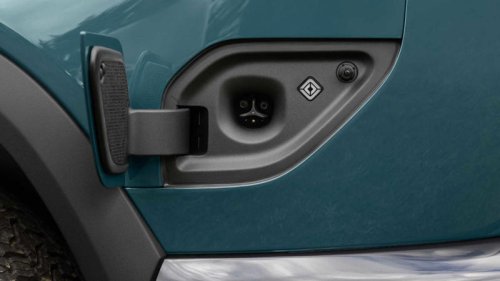
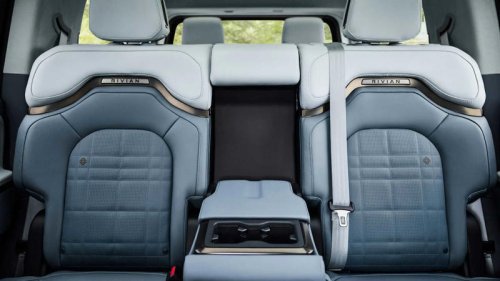
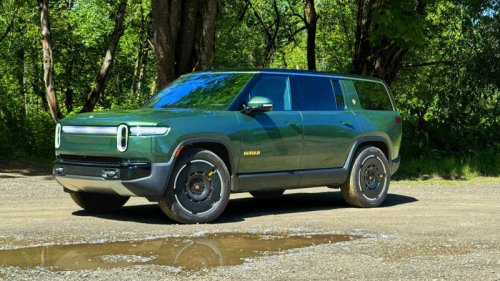
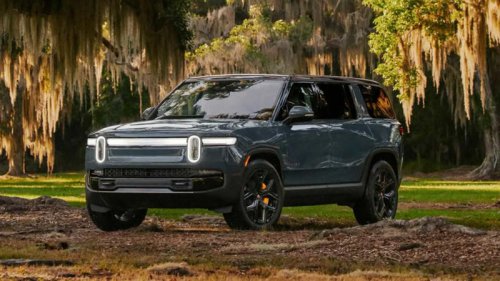
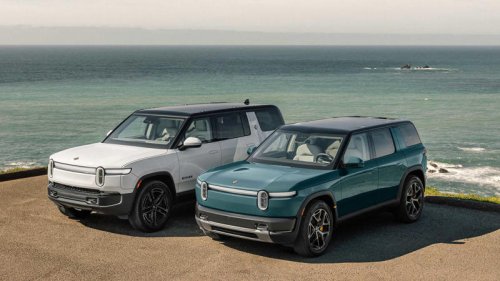
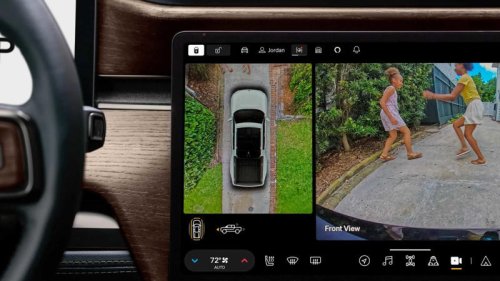
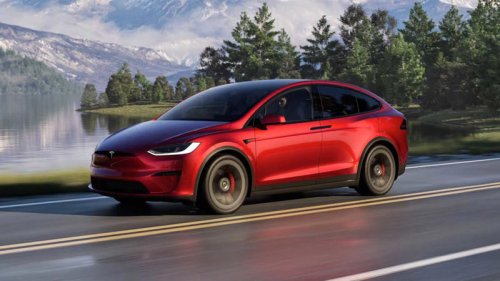
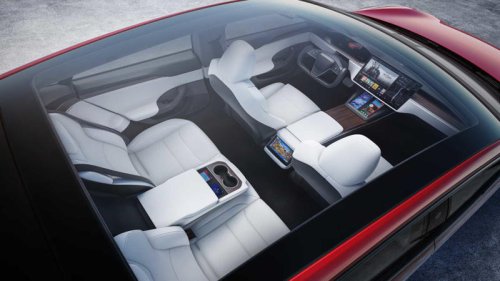
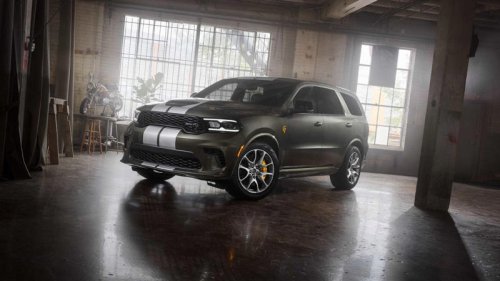
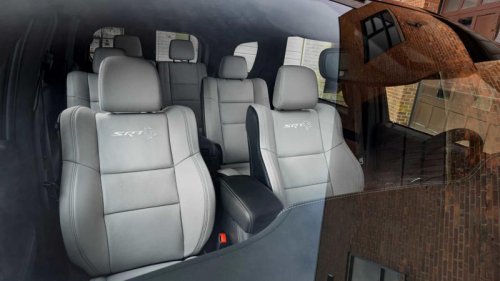



















For years, the three-row SUV lived under a simple stereotype. It was big, useful, and usually about as eager as a couch after Thanksgiving dinner. That old picture has gone blurry, as modern three-row performance SUVs now hit 60 mph in the mid-two-second to mid-three-second range. Numbers that used to belong to serious sports cars, not rolling daycare centers with cupholders and snack crumbs in the carpet. That shift changed the whole point of the class. The quickest family haulers no longer rely on brute force alone. They use instant torque, smart software, and chassis tricks that would have sounded ridiculous in this segment not long ago. At least, when they come from Rivian. EVs Blew Up The Old Horsepower Playbook Rivian The old performance recipe was easy to understand. More cylinders helped, more boost helped, more gear ratios helped mask weight. Big SUVs could be quick, but they usually felt like they had to think about it first. EVs killed that delay. Electric motors make full shove right away, and they do it without waiting for revs, downshifts, or the turbos to wake up. That is why huge family SUVs now post 0-60 mph times of 2.5 and 2.6 seconds while carrying extra seats and a week’s worth of Costco ambition.EVs also broke the old tradeoff between huge power and daily usefulness. With gas, a fast three-row SUV usually burned a ton of fuel, made noise, and accepted range as collateral damage. The newest electric examples are different. How about 1,025 horsepower and an EPA-estimated 374 miles of range? That’s not fiction, but a production vehicle you can buy right now in the United States. And if you can charge at home, you’ll pay just a few dollars per 60 miles.Rivian Of course, batteries do not suspend the laws of physics. They add mass, and mass can make any SUV feel clumsy if the suspension and software lag behind the motor output. That is why the best performance EVs now obsess over tuning, not just power numbers.Rivian, for example, says its second-generation R1S got a full suspension rethink, new dampers, new air springs, and a new hydraulic roll-control system tuned specifically for the SUV. Tesla also retuned the Model X air suspension and added new stabilization hardware for better high-speed handling. In simple terms, the power war matured. Horsepower still sells the poster, but chassis control closes the deal. The Rivian R1S Quad Is The Most Powerful Three-Row SUV In The World Jared Rosenholtz/CarBuzz/ValnetR1S Quad stands at the top of the three-row SUV mountain on raw power. Officially, it makes 1,025 hp and 1,198 lb-ft of torque, runs from 0 to 60 mph in 2.6 seconds, and carries an EPA-estimated 374 miles of range. It also keeps what matters in this class. Seven seats, real cargo room, and a normal-looking SUV shape that does not scream for attention like a concept car escaped from an auto show. At $121,990 before extras, it also makes clear that this much absurdity does not come cheap.The punch line is how narrow the win looks on paper and how broad it feels in context. The Rivian edges the Tesla Model X Plaid by just 5 hp. That sounds like a rounding error, and it kind of is. But the R1S wraps that edge inside a much more SUV-like package. Rivian gives it 14.7 inches of maximum ground clearance, a 7,700-pound tow rating, and seating for seven.Rivian The smarter part of the R1S story sits below that magic horsepower number. The second-generation R1S got a smoother ride tune, recalibrated spring rates, new dampers, and hydraulic roll control that Rivian compares to systems found in supercars. That matters because a 1,025-hp family SUV could easily have turned into a one-note party trick. Instead, Rivian worked on the boring bits, which is often where the best enthusiast cars separate themselves from the noisy ones. Nobody frames new dampers on the garage wall, but everybody feels them on a broken road. Four Motors For Supercar Levels Of Performance RivianThe R1S quad earns its name the honest way. It uses four motors, one for each wheel. Rivian says that setup gives the SUV torque vectoring in all four corners, plus the ability to adjust torque at each wheel for precise traction control and instant power. The result is finer control over where the power goes and when it arrives, in addition to brutal force.Rivian also hid some clever engineering in the drive units. Its latest Quad uses a smaller two-motor front unit tuned for efficiency at cruising speeds and a larger rear unit geared to maximize torque at the tires’ traction limit. In Conserve mode, the system can automatically disconnect the rear drive hardware when demand drops, then bring all-wheel drive back when it is needed. Rivian also says all its motors are oil-cooled, which helps thermal performance in hard, low-speed work like rock crawling while also supporting efficiency during lighter high-speed running.Then come the raw numbers, and they read like typo bait. Rivian quotes a 10.5-second quarter-mile and says the Quad can rip from 60 to 80 mph in just 1.5 seconds when Launch Mode is in play. It also gives the SUV party tricks that make old-school performance rigs look almost serious.The official drive-mode list includes Drift and Rock Crawl, and the Quad page adds Kick Turn for tight loose-surface maneuvers. A three-row SUV with Drift mode sounds like somebody left a keyboard unattended, but it is real. That is what happens when electric power lets engineers chase both precision and mischief at the same time. A Real Adventure Vehicle For The Entire Family Rivian What keeps the R1S Quad from feeling like a one-trick launch machine is that the rest of the vehicle backs up the powertrain. Rivian still builds the R1S like a real adventure SUV. Official specs list 14.7 inches of max ground clearance, a 35.8-degree approach angle, a 34.4-degree departure angle, seven seats, and a 7,700-pound tow rating. A maximum water fording height of 43.0 inches for the R1S is impressive, but that number depends on the suspension setting and wheel choice.Rivian also thought about the less glamorous side of adventure. The Gen 2 R1S uses hydraulic roll control to cut body roll on-road and improve wheel articulation off-road, which helps both handling and comfort. The SUV’s drive modes include All-Terrain, Soft Sand, Rally, Drift, Rock Crawl, and Conserve, so it has settings for everything from fire roads to bad ideas. The Tesla Model X Plaid Is Right Behind In Power TeslaThe closest threat to the Rivian’s crown comes from Tesla. The Model X Plaid packs 1,020 hp from a tri-motor setup, runs from 0 to 60 mph in 2.5 seconds, covers the quarter-mile in 9.9 seconds, and tops out at 163 mph. So yes, the Rivian wins on peak power, but the Tesla still hits harder in the quarter-mile and stretches its legs better at the top end.That says a lot about mission. The Model X Plaid acts like a low, slippery street missile that happens to have extra seats. The Rivian feels more like an all-terrain hammer with a launch button. Both are ridiculous. They just speak different dialects of ridiculous.The latest refresh of the Model X, which will soon be discontinued, added a quieter cabin, more insulation, improved active noise canceling, a revised air suspension tune, new stabilization components for better high-speed handling, and more third-row shoulder space. Tesla also says the electric SUV adopted the same Plaid powertrain philosophy that made the Model S famous, with refined motor hardware and a huge emphasis on speed and daily comfort in one package.Tesla But the Tesla’s packaging still asks for compromise. Official Tesla dimension charts show a third row, but that space remains tight, with 29.8 inches of legroom in the seven-seat layout and 32.3 inches in the six-seat version. Reviews call the third row a kid-only zone and also knock the falcon-wing doors for being slow and awkward for tall passengers.Tesla rates the Model X Plaid to tow 5,000 pounds, well below the Rivian’s 7,700-pound rating. Its official cargo figure in current U.S. trim hits 94.5 cubic feet, so it is still useful, but the Rivian leans much harder into the whole “adventure vehicle” part of the brief. The Tesla remains the sharper on-road missile. The Most Powerful Gas-Powered Three-Row SUV DodgeThe gas-powered alternative comes from Dodge, because of course it does. The 2026Dodge Durango SRT Hellcat Jailbreak remains the king of the gas three-row crowd with 710 hp and 645 lb-ft from a supercharged 6.2-liter Hemi V8. Dodge says it will hit 60 mph in 3.5 seconds and tow up to 8,700 pounds when properly equipped. It is currently the most powerful production gas-engine SUV ever to hit the road, which sounds exactly like the kind of line a Hellcat should wear with pride.Unfortunately, the gas field no longer gets close to the electric ceiling. Mercedes-AMG’s GLS 63 makes 603 hp and seats seven, or six with the optional layout. BMW’s ALPINA XB7 pushes to 631 hp and offers an optional six-seat arrangement. Both are seriously fast, lavish three-row SUVs. Neither gets near the Dodge on raw gas output, and neither even sniffs the current electric leaders.Dodge The Durango still deserves respect because it offers something the EVs do not. It turns performance into a full sensory event. The supercharged V8 announces itself brutally. It has the sort of brute-force personality that made muscle SUVs a guilty pleasure in the first place. It also keeps a genuine SUV skill on hand with that 8,700-pound tow rating, which actually beats the Rivian and the Tesla. So while the electric leaders win the power war, the Dodge keeps the old-school charm offensive alive. It remains the loud relative at the family cookout, and frankly, the party would feel duller without it.Still, the numbers show where the class is heading. A 710-hp three-row SUV used to sound cartoonish. Now it trails the Rivian R1S Quad by 315 hp, and that is not a small gap. That is a different era. The fastest family SUVs now get their edge from batteries, software, and motor control.Source: Rivian, Tesla, Dodge, Car and Driver