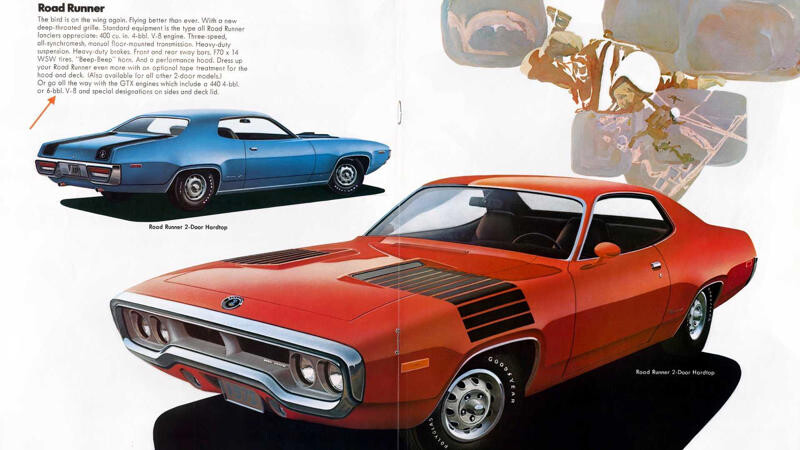
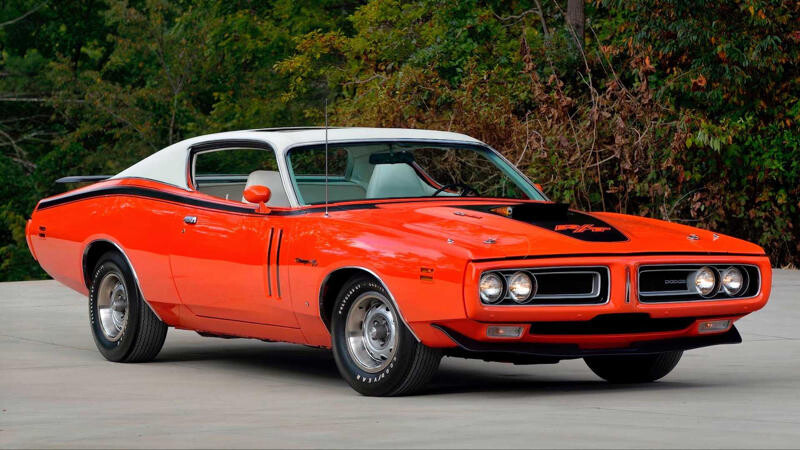
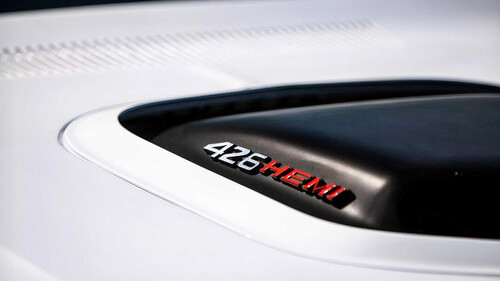
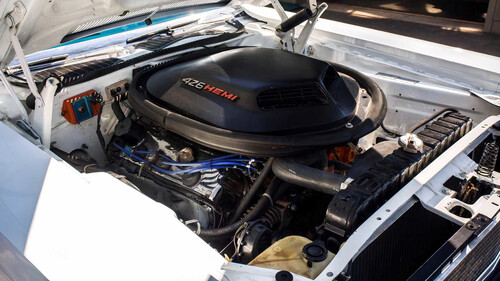
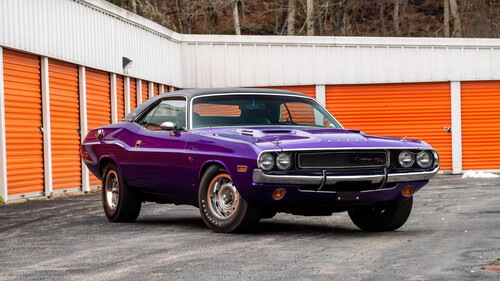
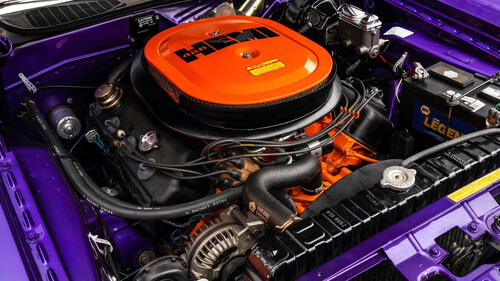
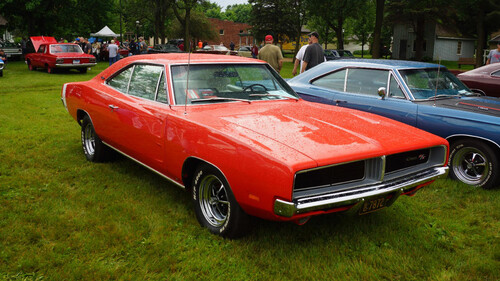
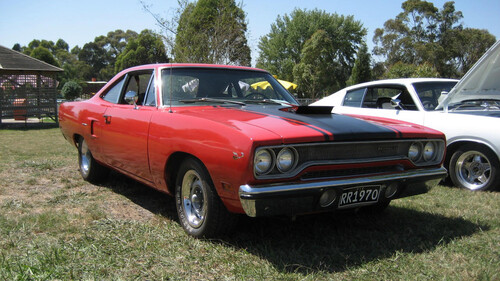
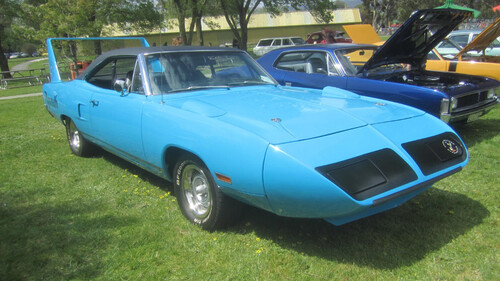
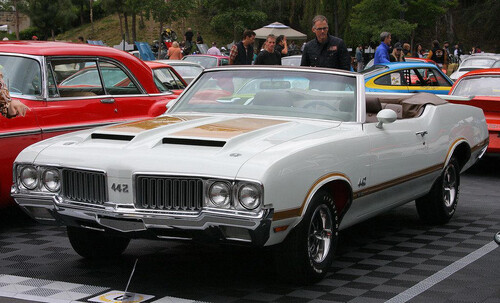
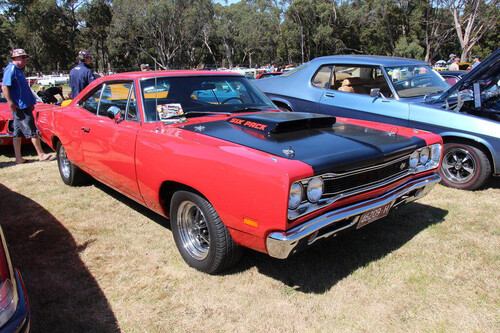
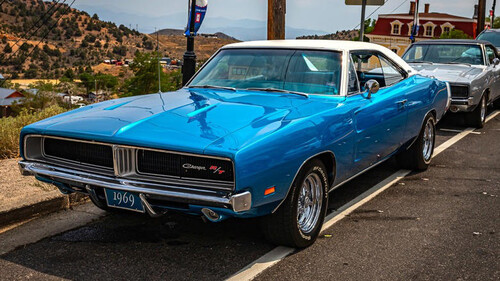
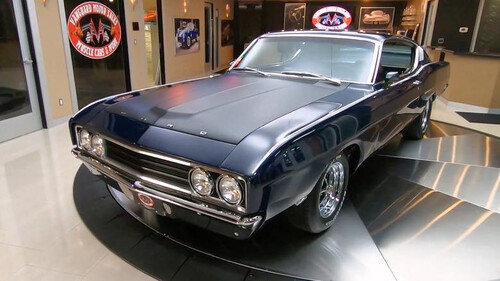
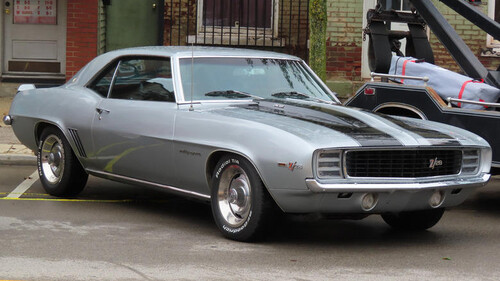
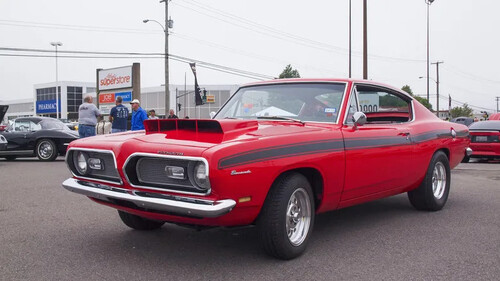
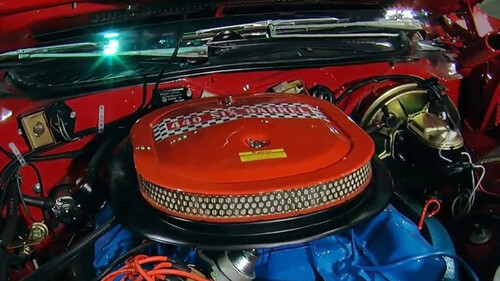
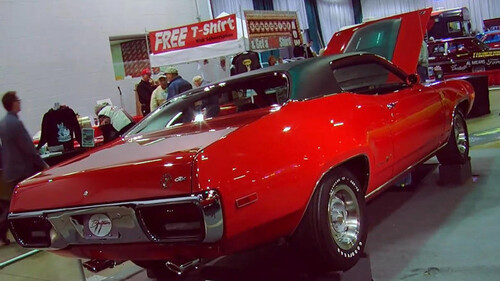
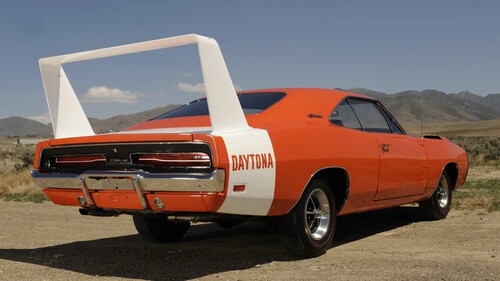
Though there are a few exceptions, generally speaking, Mopars are the most collectible rides of the Golden Age of American muscle, and the reason is simple: they are rarer. Chevy built millions of Chevelles and Camaros during the classic era, while only 343,307 Dodge Chargers left the factory between 1966 and 1971, and just 184,721 Plymouth Road Runners over that same time.The first-gen Challenger and third-gen 'Cuda are even more elusive because they only had two-year runs before the detuned Malaise Era set in. When factoring in rare engine options like the 440 Six-Pack or 426 Street Hemi, Mopars start treading in unicorn car territory, and command six-figure to million-dollar prices at auction.There were 116 Six-Pack-equipped 1970 Charger R/Ts and 30 1971 GTXs with a Hemi, but those seem almost common compared to Mopar's ultimate unicorn car. Everyone knows that 1971 was not only the last great year for American muscle, but also for the Hemi and 440 Six-Pack, which were discontinued, but somebody at the factory didn't get the memo. A small number of Charger Rallye and Road Runner GTX cars slipped through in 1972 with 440 Six-Pack/6BBL V-8s, making them the baddest things on the street that year. This Chrysler oopsie also makes these cars genuine Mopar Holy Grails that collectors are chasing, but can't find. The Impossible 1972 Plymouth Road Runner GTX 440+6 Due to consumer demands for better fuel economy and, more importantly, government emissions standards, all of Detroit either ditched or detunned their most potent big-block V-8s after 1971. For Chrysler, this meant putting the kibosh on the 426 Street Hemi as well as the 440 Six-Pack/6BBL and neutering the four-barrel 440. Another thing that bit the dust after '71 was the Plymouth GTX, which became a trim package of the Road Runner in '72.There weren't supposed to be any Mopars with killer engines in 1972, but sometime in the early 1980s, a Road Runner GTX 440+6 was randomly found, and it had the V-code in the VIN, so it was a legitimate 440 6BBL car. Until that point, nobody even thought such a car could exist, but it turns out that three were actually built, and it's likely that only one still exists. Cataloged Then Blackballed Plymouth Early 1972 model year catalogs and brochures clearly show that both Dodge and Plymouth intended for the 440ci V-8 with a three-two-barrel carburetor set-up to be an option on certain muscle cars. Then, in August 1971, when the '72s were about to roll out, Chrysler allegedly tested the 440 Six-Pack/6BBL and determined that it would not meet emissions standards and pulled the plug. We use the term "allegedly" here because that's the popular explanation for why the 440 Six-Pack/6BBL was nixed for '72, but there's no way they didn't know this beastly engine wasn't eco-friendly, having produced it for three years prior.A perhaps more likely scenario is that the engine hadn't been that popular in the previous year, and they didn't want the expense of making an engine that people weren't going to option. Perhaps the few that slipped through were leftover stock. '72 Dodge Charger Rallye Six-Pack Mecum Actually, more common than the '72 Plymouth Road Runner GTX 440+6 is the '72 Dodge Charger Rallye Six-Pack, of which there are six possible examples. The thing is, however, that only two have ever been identified, and nobody has seen either one since the early 1980s. That car pictured above was listed on Mecum in 2013 and billed as a 1972 Charger Rallye with a 390-horsepower 440ci Six Pack V-8.Unfortunately, the VIN reveals that the car originally came with a 340ci V-8, so it's definitely not the Holy Grail collectors are looking for. With at least six out there, chances are there's a '72 Rallye Six-Pack sitting in a garage, barn, or backyard, waiting to be discovered, but so far that ain't happening. Rarest Mopar Option Combos Mecum We've already established that classic era Mopar muscle cars were not produced in the same volume as rides from Ford and GM, as well as the rarity of the killer 426 Street Hemi and 440 Six-Pack/6BBL engines, but there are other factors that make them unicorns.The first big one is being a convertible, which Dodge and Plymouth made in incredibly small numbers, but we'll get to that in just a sec. Options like the highly desirable four-speed transmission can make a Mopar ultra-rare, like the 1972 Dodge Charger Hemi Super, of which only 9 were made. Also, weird stuff like a sunroof can send prices soaring, as that heavily-optioned '71 Charger R/T above sold for $550,000 at Mecum Kissimmee, which is more than any second-gen Charger has ever done at auction. Elusive Drop Tops Mecum 426-equipped Mopar convertibles are the most collectible factory muscle cars of the classic era, and the 1971 Plymouth Hemi 'Cuda is the top of the class. One just sold at Mecum Kissimmee 2026 for $3.3 million, which is a little less than the current record holder (pictured above), which dropped the gavel in 2014 at $3.5 million. There was a Winchester Gray '71 Plymouth Hemi 'Cuda that went up for auction in 2021 and hit a high bid of $4.8 million, but failed to hit the reserve and didn't sell.Only 12 '71 Hemi 'Cuda convertibles were ever built, with seven automatics and five manuals, so there's a pretty good reason why these cars go for so much. More recently, a '71 440 6BBL 'Cuda convertible almost hit a million bucks at auction, proving what a money-maker the drop top option is. Unicorn Coupes MecumMopars with Hemis and roofs are no slouches either, with 1969 Charger Daytonas often selling in the millions, including one that crossed the block for $3.3 million back in 2024. While non-aerocar Mopar coupes and hard tops have several examples of selling in the half-million+ range, they generally aren't as valuable as convertibles, simply because more of them exist. There is, however, one ride that could challenge the drop-top aristocracy, and that's the 1966 Dodge Coronet Deluxe four-door Hemi.To help promote the 426ci Hemi engine that was introduced for production vehicles in '66, Dodged decided to drop a few into the dorky Coronet family sedan, which was odd back then and even more bizarre now. Only four or five were made, and only two may still be around. One of them sold for $660,000 at Barrett-Jackson auction in 2007, but this car's legend has grown since then and would definitely be a million-dollar Mopar now. Road Runner GTX 440+6 Prices And Values Because there is only one known example of a 1972 Plymouth Road Runner GTX 440+6, which has never been sold or even listed at an auction, it's impossible to set a firm value on it. We can speculate the hell out of this, however, because nobody can prove us wrong. It's doubtful that this Holy Grail Mopar would go for as much as a primo '69 Daytona or '71 Hemi 'Cuda, simply because '72 is not a collectible year, and this car isn't widely known.That being said, if it were to come up for auction, $500,000 wouldn't be a surprise, and if the right Mopar Maniacs got into a bidding war, it could hit the million-dollar mark. Whatever the case, this car will never be anyone's daily driver and probably belongs in a museum as the rarest classic Mopar muscle car of all time. Highest Road Runner Auction Sales MecumWhen Plymouth unleashed the Road Runner in 1968, it was a no-frills street machine that anyone could afford, but more than half a century later, it's a big-money collectible. '69 A12s with the 440 6BBL regularly sell in the six figures, and a '70 Hemi Road Runner blew up Mecum Kissimmee, selling for $341,000. It's the second-gens that are really killing it, as that triple-black '71 Hemi pictured above crushed it at Mecum Indy 2023 with a final sale of $500,000.For cars that originally sold for around $3,000, nothing has given a better return on an initial investment than a Plymouth Road Runner. If only someone had the foresight to buy a '71 Hemi Road Runner and sit on it for 50 years, that no-mileage, all-original Mopar could be a million-dollar auction champ. Quest For The Mopar Holy Grail Russell Morgan is the Ferdinand Magellon of Mopar muscle cars, as he is the one who discovered the 1972 Plymouth Road Runner GTX 440+6 at a North Carolina junkyard in either 1982 or 1983. Paying just $150 for the car, he was shocked to see the V-code on the VIN, which meant it left the factory with a 440ci 6BBL V-8, which was something that shouldn't have been possible for a '72. Until that point, nobody had any idea this car actually existed, kind of like when Magellan stumbled upon the Pacific Ocean. Through his research, Morgan learned that just three of these rarities were ever made, and speculated that it had been a Plymouth executive's ride and was never actually sold at a dealer.Morgan sold the "car that never existed" to Larry Dantonio on April Fool's Day 1995 for an undisclosed amount, and some time after, it ended up with the Brothers Collection private car museum in Salem, Oregon. The car was expertly restored by Magnum Auto Restoration from LaSalle, Illinois, and is now a semi-frequent touring show car. This is actually the best fate for this Mopar Holy Grail, because if some private collector were to snatch it up, it would be gone from our collective consciousness. As a museum piece and show car, anyone who wants to can enjoy the rarest and arguably most spectacular factory muscle car ever built.Sources: Hagerty, Mecum.