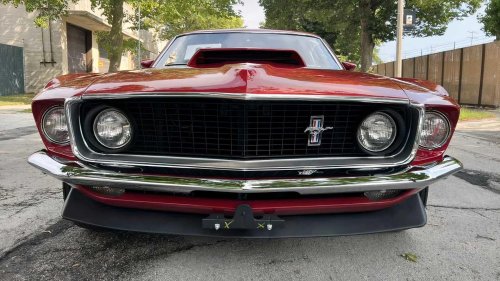
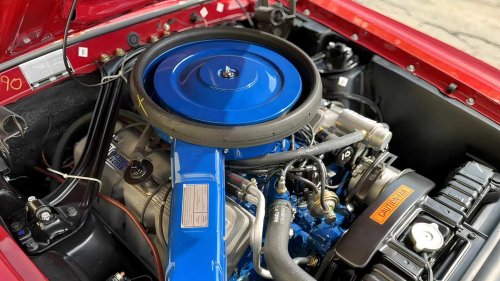
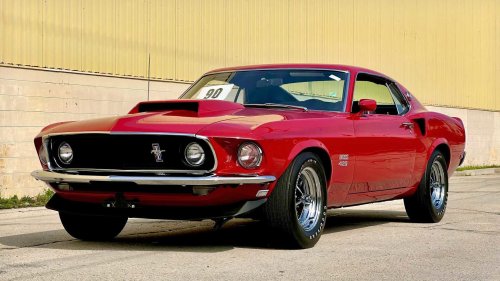
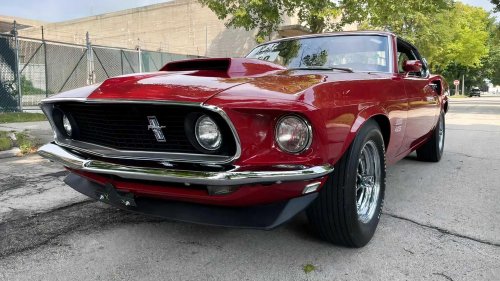
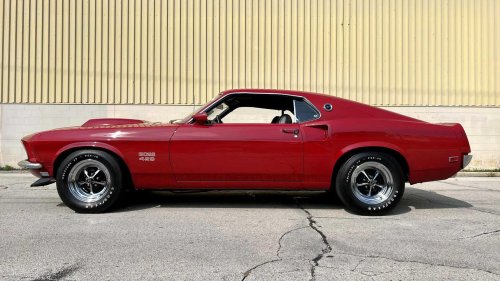
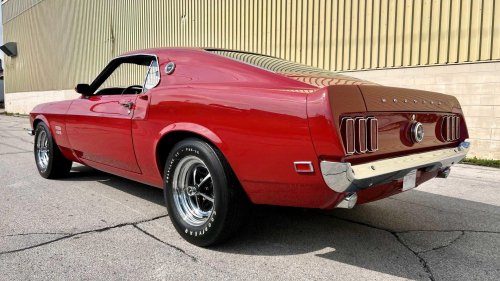
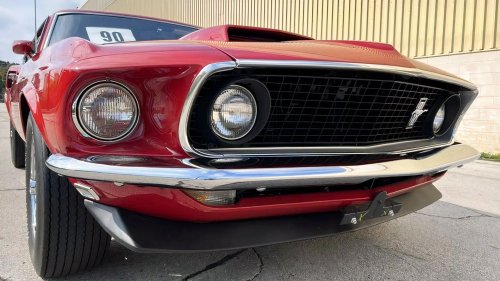
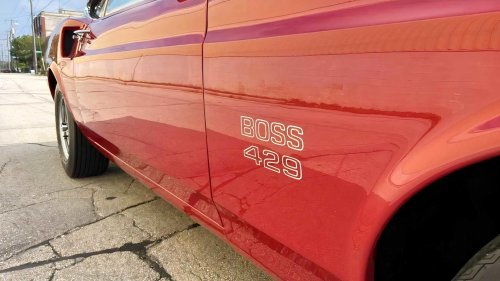
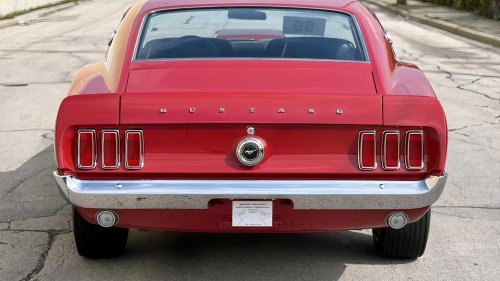
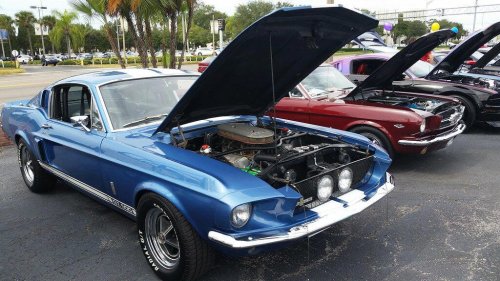
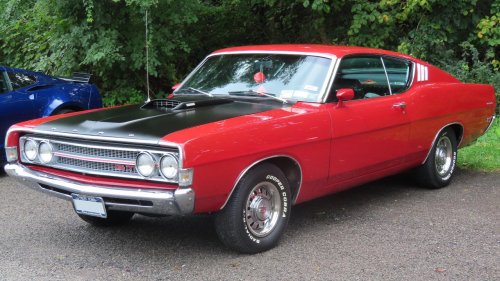
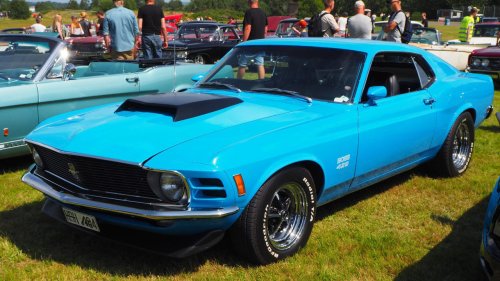
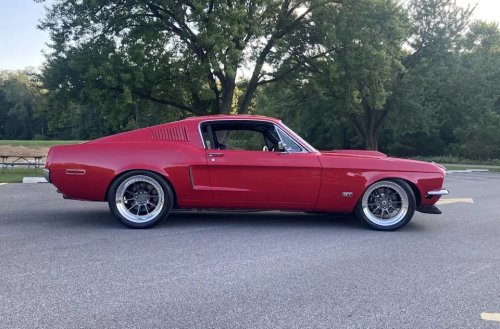
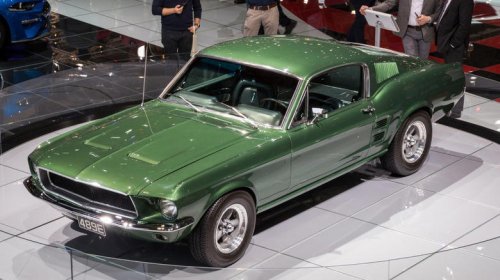
Before the horsepower wars peaked, Ford built a legendary muscle car with an engine that barely fit. It's brilliant, wild, uncommon, and hard to get. Even back then, it didn’t feel like a car made for ordinary showroom traffic. It felt like somebody inside Ford had found a loophole, grinned, and decided to see how far they could push it.That’s a big part of why collectors have been obsessed with it for decades. The engine was a purpose-built answer to a racing problem, stuffed into a body that only barely agreed to the arrangement. The world wouldn't be the same without it, and it was one of Ford’s strangest and most fascinating muscle cars, the kind of machine that still makes auction watchers hover over 'refresh' like it’s concert ticket day. Ford Was Chasing Something Bigger Than A Street Car Bring A TrailerBy the late '60s, Detroit’s performance race had split into two battles. One happened in dealerships, where every brand wanted the loudest, meanest, most bench-racing-friendly thing on the lot. The other happened in NASCAR, where bragging rights came with engineering consequences. Ford was chasing Chrysler’s 426 Hemi, and that meant building an engine that could survive sustained punishment at speed.That engine was the semi-hemispherical 429 big-block, designed as a serious competition piece with massive heads, serious breathing ability, and the kind of architecture that made engineers smile and packaging teams groan. NASCAR homologation rules required production-based hardware. So, if Ford wanted that engine on the track, it needed to put it in a street car. That’s where things got entertaining. No Space? No Problem! Bring A TrailerThe Mustang fastback became the host platform, not because it was the easiest fit, but because Ford wanted its halo performance effort wearing the company’s most recognizable performance badge. The problem was simple enough to say and awful enough to solve: the engine didn’t really fit. This was the automotive equivalent of trying to move a refrigerator into a studio apartment and insisting the couch stay where it is. The Mustang Boss 429 Was The Ultra-Rare Answer Ford Was Looking For Bring A TrailerFord’s solution became the Mustang Boss 429, and it arrived in 1969 as one of the most specialized factory muscle cars of the era. In the version of the story you’ll hear most often, Ford built 859 of them for the 1969 model year. However you count it, the point lands the same way. This thing was rare from day one, and nobody was ever going to confuse it with a mass-market Mustang.Part of that exclusivity came from how the car was built. Ford sent Mustang bodies to Kar Kraft, the Michigan contractor already known for its work on high-level Ford performance programs, including the GT40. Kar Kraft then modified the cars so the giant 429 could actually live up front. That extra labor made the car expensive when new, with a base price of $4,798, and it helped turn the Boss 429 into the costliest non-Shelby Mustang of its time. How To Fake It Bring A TrailerThen there was the engine itself. Ford rated the 429 at 375 horsepower and 450 lb-ft of torque, but almost nobody has taken that number at face value for decades. Even period coverage and modern retellings treat that figure like a polite corporate understatement. That wasn’t unusual in the era, when insurance companies and official paperwork had a funny way of making fast cars sound slightly more civilized than they really were. The Boss 429 knew how to fake it for a minute. Engineered Like A Race Car Disguised As A Mustang Bring A TrailerWhat made the Boss 429 brilliant was the amount of engineering chaos Ford accepted in order to make the whole thing work. Kar Kraft widened the shock towers, revised the front suspension geometry, and relocated the battery to the trunk. The car also came with a four-speed manual, a 3.91:1 rear axle, heavy-duty hardware, quicker steering, and front disc brakes.The engine itself read like a racing cheat sheet. It used aluminum heads with crescent-shaped combustion chambers, big valves, high-flow ports, four-bolt mains, and a forged steel crankshaft. This was a high-revving NASCAR-minded brute that wanted to breathe hard and stay alive at speed.People expected a drag-strip monster, and what they got was something more specialized. The Boss 429's purpose was homologation first, theater second. In a weird way, that makes it more interesting now. Plenty of muscle cars were built to be fast, but far fewer were built because the rulebook forced a company to get weird.There’s also something appealing about how understated it looked compared with what sat under the hood. The car had simple decals, a functional hood scoop, Magnum 500 wheels, and a stance that suggested business without shouting over everybody else in the parking lot. It was the automotive equivalent of a guy in a plain jacket who turns out to be the most dangerous person in the room. You Rarely See One Come Up For Sale And That’s The Point Bring A TrailerThat rarity never went away. If anything, it kind of hardened over time. Boss 429s tend to disappear into serious collections, reappear only occasionally, and then remind everyone why people keep tabs on them in the first place.When one does show up, the numbers get your attention quickly. The Boss 429 has an averageselling price of $353,763, with the top sale recorded at $627,000. That’s “I’ve wanted this thing since Nixon was in office” money.Close up of 1969 Ford Mustang Boss 429 grille What’s also telling is how auction appearances become events. A recent example got attention simply because a 1969 Boss 429 in strong condition still feels like anything but a routine listing. When these cars surface, people notice, and they notice fast. The market treats them like highly specific artifacts from one of Ford’s most unhinged engineering moments. Decades Later, It Still Sits At The Top Of Ford’s Muscle Car Hierarchy Bring A TrailerThe Boss 429 has stayed at the top because it checks every box that matters in the collector world. It’s rare, has a genuine motorsports origin story, carries one of Ford’s most revered big-blocks, and it was expensive and unusual even when new. Think about it; very few have all of them at once.It also helps that the story still feels so gloriously overcommitted. Ford could’ve found an easier route if the mission had been to build a simple showroom star. Instead, it created a car that required outside contractors, structural changes, and enough determination to make common sense tap out early. Collectors remember it because it's factory special from a time when manufacturers occasionally acted like mad scientists with expense accounts.Bring A TrailerAnd so, the hunt never really stops. The Boss 429 is desirable because it captures a moment when racing needs, engineering ego, and Ford’s willingness to bend a Mustang into something borderline ridiculous all came together in one machine. There are much faster cars now, easier cars to own, and cheaper ways to make noise. None of them, however, do this exact trick.