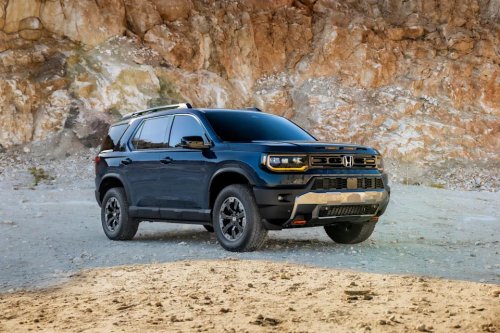
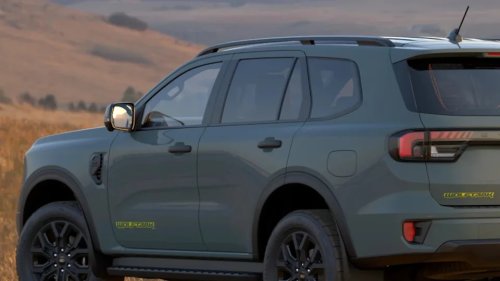
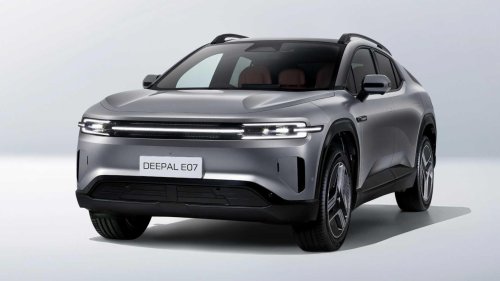
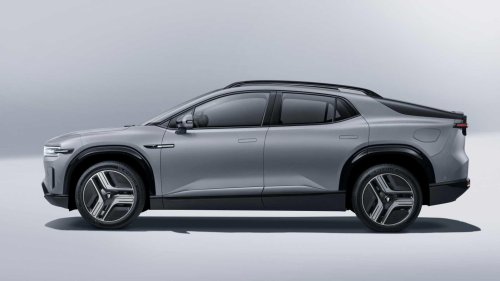
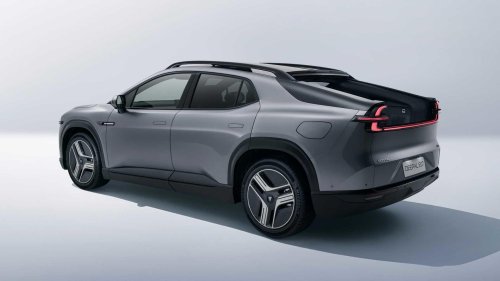
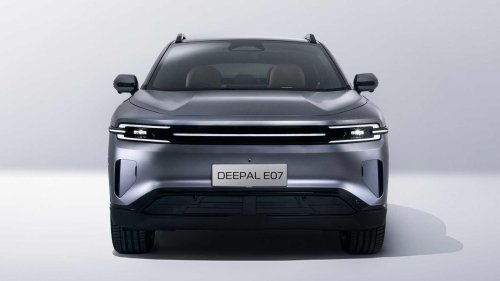
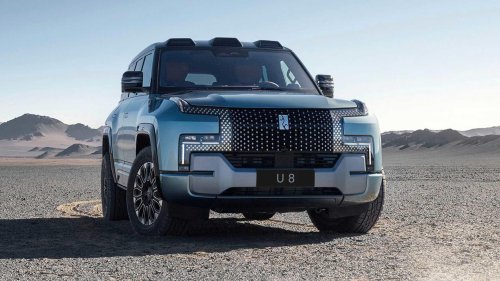
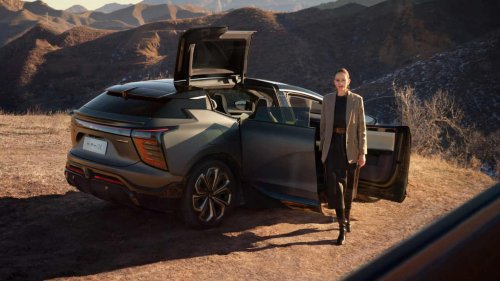
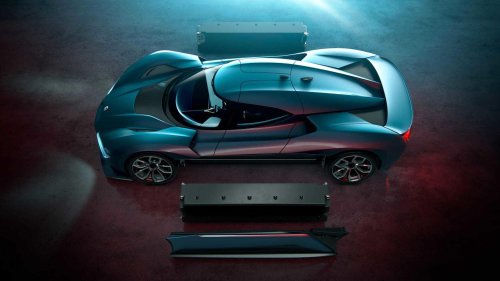
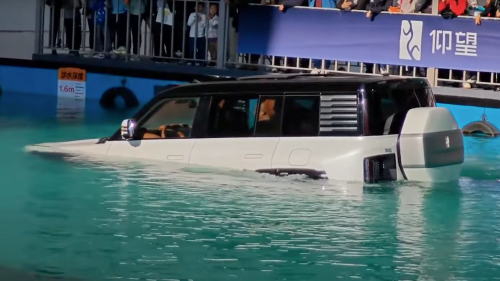
Our obsession with “2-in-1” combinations knows no bounds. In the 1970s, all-in-one laundry detergent and fabric softener had people wondering what they would think of next. Fifty years later, folks are squeezing mayochup onto hamburgers and lathering with 2-in-1 shampoo and body wash. Notwithstanding these consumer products, there have been a few combinations in the automotive industry that prove quite useful – and less likely to cause dandruff.The Deepal E07 is taking a stab at the gray area of vehicles that blend SUV proportions with pickup truck utility. This machine can flip between its two personalities at the push of a button. Keen readers might notice similarities between this cutting-edge Chinese EV and the blobby GMC Envoy XUV from the mid-2000s. The parallels between the concepts are uncanny, and even so, Deepal is determined to dust off the idea in hopes it survives longer than the 18 months the Envoy XUV lived. What Is The Deepal E07? DeepalFortunately for Deepal and its parent company, Changan, the E07 is not just another electric Chinese EV. Otherwise, it would’ve been lost in the sea of 16 million electric cars built in China last year. The “multitruck,” as Deepal calls it, is currently available in Australia and Pakistan as a vehicle that blends SUV characteristics with Ute functionality.A Ute is traditionally a two-door sedan front end with a pickup truck bed, and they're popular in Australia. These models are the modern equivalents of the Chevrolet El Camino and Ford Ranchero.Conversely, the E07 is a crossover-based vehicle and similar in stature to a Hyundai Santa Cruz (seecomparison above). The Deepal model employs a nearly 90-kilowatt-hour battery to power the single-motor RWD or dual-motor AWD powertrains, good for 338 horsepower and 590 horsepower, respectively. Not Your Father's XUV DeepalThe Deepal seems more useful than the old GMC Envoy XUV and could appeal to a younger crowd. The E07 can function in urban areas as a fairly compact crossover and then transform into a pickup during the few times the owner needs to carry larger cargo. The most similar vehicles in the US are the Santa Cruz and the larger Honda Ridgeline, a pickup with unibody construction that gives it more SUV-like personality than a body-on-frame truck.To transform into a pickup, the Deepal's rear glass section slides forward over the roof. The tailgate swings down to access the cargo bed. Drivers can start the transformation from the cabin.DeepalPrices start at $70,130 AUD ($48,298 USD) for RWD models and $79,580 AUD ($54,806 US) for AWD Performance models. So, while it's similar in size to the Santa Cruz, the E07 starts around $19,000 more than the Hyundai's base price. While it's only available in a few countries so far—the United States is not among them for the foreseeable future—the E07 is a unique take on the "XUV" with its smaller proportions and strong hauling figures.There are 18.5 cubic feet of storage in the cargo area with the seats up and roof shut, but that number grows to 58.4 cubic feet with the rear seats folded. Open the roof, and the sky's the limit. The Tesla Model Y, for comparison, has 76 cubic feet of storage with the rear seats folded, but can't transform into a pickup when a run to the dump is in the cards. Will the Deepal Survive Down Under? DeepalThe Deepal seems to have a real chance of working out. It offers a sleek design, luxurious cabin, and capable EV powertrain. Plus, there's the neat trick of transforming into a pickup in a pinch. The E07 is a great one-car solution for people who only need a truck a third of the time they use their vehicle. A car that can go from being an SUV to part truck is a much better application of a transforming vehicle than one that starts as a truck and works the other way.It’s unlikely we’ll see Chinese EV’s make their way to our shores anytime soon. Until then, a truck like the Ridgeline seems like the closest Americans can get to what the E07 offers. Don't expect GMC to make another Envoy XUV or Ford to build an electric Ranchero. Who knows, but Deepal’s 2-in-1 car sets a strong precedent for something similar to sell here. Move over, mayochup. Our Favorite Chinese EV Features BYDSome innovative and eye-catching tech found in many new Chinese EVs stems from simple principles. After tracing the genealogy of some others to find their closest living relatives, while most aren't nearly as quirky or useful as our headliner, they are still worthy of mentioning for their new takes on both modern and old technology. HiPhi: Rear Wing Doors HiPhiThe HiPhi Y has a complex way to access the rear seats. A pair of coach doors with frameless windows open to create a huge opening in the center. At the back, there are additional hinged sections that create more space for folks accessing the rear seats. The layout means there's a decreased likelihood of bonking your head during ingress and egress. Xpeng: Sleep Space XPengCamping in your car isn’t anything new, nor are vehicles that allow you to configure the seats into more comfortable positions for catching some shuteye. One of the first cars to market this sort of feature was the Nash Ambassador from the late 1940s. In China, some Xpeng models come with a “Sleep Space” mode that gives drowsy travelers the option of folding the seats into a single or double bed. Controls on the center screen operate the seats, requiring some effort on the driver’s part because the headrests need to be removed. NIO: Power Swap NioIf, at any point, you wondered why you couldn’t swap the battery of a fully-electric vehicle like the AA batteries in a Hess Truck, you're not crazy for thinking that. The EV company NIO has set up a couple of thousand battery-swapping stations for its vehicles, where owners can swap out their car's battery in minutes. Drivers pull into the container-like structure, and robots do all the work to remove the vehicle's battery and install a new one in the time it takes a conventional ICE vehicle to fill up. YangWang: Floating Car DiscoverChinaAuto/YouTubeThe duck boat premise is simple yet underutilized in mainstream vehicles. Reserved for tourists of the Boston Harbor and alligator hunters, floating passenger cars are quickly becoming a top priority for BYD’s YangWang nameplate. The YangWang U8 might look like it’s taking water in videos, but believe it or not, it’s treading on the surface just fine. BYD even dropped a tree on one, showing barely any battle scars after its encounter with nature.Sources: GMC, Deepal, HiPhi, Xpeng, NIO, BYD



















 +48 others