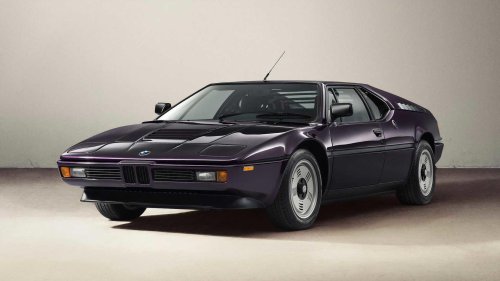
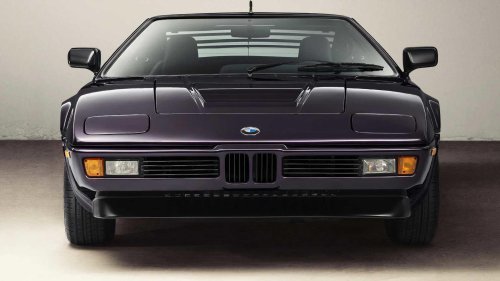
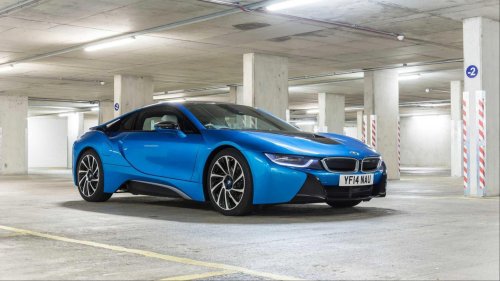
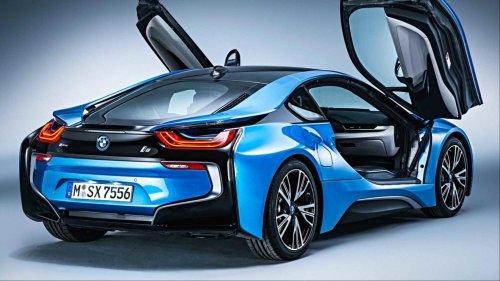
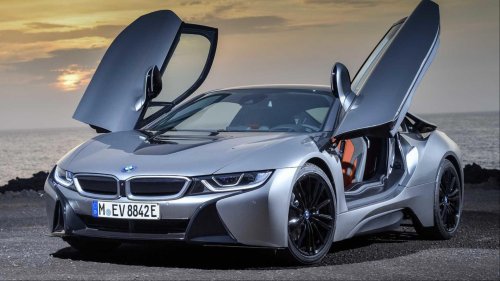
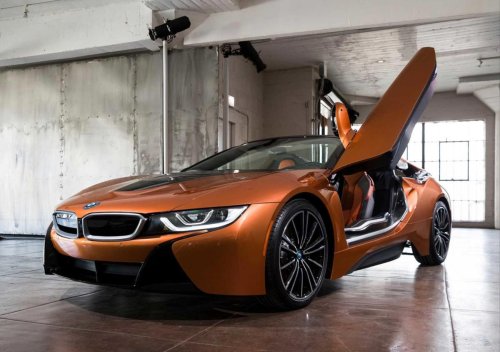



















Supercars come in all shapes and sizes, but there are normally two things that you can be sure of. Your average supercar, even on the used market, will have a huge engine and a huge price tag to match. But there is one from a few years back that dared to be different. It has clever tech that means it doesn't need to have a monster motor under the hood; but that doesn't mean it's dull. Jeremy Clarkson is a fan after all, and it has one of the most illustrious badges in the business on its nose.Now, six years after production ended, this model is outrageously cheap. But that isn't the only thing that will raise eyebrows. It still looks out of this world today, with looks that will turn heads quicker than cars double the price. Who wants to look like a millionaire on the cheap? BMW Is No Stranger To Supercars KithBMW has history when it comes to creating ground-breaking supercars. Even back in the '70s, the Bavarian company was trying something different by bringing the forward-thinking and straight awesome M1 to the growing supercar market. But while many supercars in the '60s and early '70s, such as the Lamborghini Miura (the world's first supercar, in fact), were fitted with a fire-breathing twelve-cylinder engine, BMW decided to fit the M1 with half the cylinders.Designed by Giorgio Giugiaro and created by BMW Motorsport GmbH, the compact and lightweight (2,866 lbs dry) M1 utilized a 277-horsepower inline six. This was enough to propel it to 60 mph in 5.4 seconds, which was faster than a V12-powered Miura P400. BMW Went Back To The Supercar Game 40 Years Later Kith But while the M1 seemed to be a vision of the future, it was shut down with only 430 units made, with around 40 built for racing. The car didn't go to waste, however, with the BMW M5 (E28) using a modified version of its 3.5-liter straight-six M88/3 engine. In many ways, this set the scene for BMW's future, focusing on fast, sporting sedans, rather than exotic supercars. That is, until 40 years after the M1 arrived, when BMW decided to have another shot at a supercar. The BMW i8 Was A Different Kind Of Supercar BMW BMW i8 Specs The M1 had bucked the trend of supercars by bringing a more pragmatic, sensible approach to the genre, and the i8 was no different. Launched in 2013, the i8 looked incredible, as if it had been teleported straight from a Hollywood sci-fi blockbuster to the BMW stand at the Frankfurt Motor Show. That svelte bodywork was made from carbon-fiber-reinforced plastic (CFRP), with an aluminum frame for the powertrain. BMW called it an "emotion-led visual impression based around established BMW i design language", but the reality was a clever mash-up of classical sports car proportions and concept-like design features.The doors open upwards like wings. There were cutting-edge full-LED headlights as standard, with innovative laser headlights (completely unique worldwide) available as an option. Black surfaces and blue detailing set the i8 apart, with flying buttresses that seemed to levitate at the rear. But if the look of the i8 was shocking, no one was prepared for what was powering this stylish contemporary supercar. The i8 Was Fast But Different BMW This was 2013, a time when hybrids were big, before EVs became big, then hybrids became big again. This meant that the i8 was launched with a jaw-dropping plug-in hybrid system. We say jaw-dropping, because this wasn't a hybrid V8, as we see in the latest M5, or even a V6 with electric assistance, no. The exotic-looking i8 is powered by a, wait for it, mighty three-cylinder petrol engine. OK, so it has BMW TwinPower Turbo technology, giving this 1.5-liter mill an output of 231 hp and maximum torque of 236 lb-ft. Throw in a model-specific hybrid synchronous electric motor, with lithium-ion high-voltage battery with liquid cooling, however, and the power goes up to 362 hp and 420 lb-ft.There is also a six-speed automatic gearbox to the rear wheels and a two-stage automatic transmission for the motor for the front wheels, combining to make all-wheel-drive. The i8 whooshes to 60 mph in 4.4 seconds, a limited top speed of 155 mph, and the fuel economy of a small car. When Jeremy Clarkson tested the i8, he chose it over the petrol M3. The i8 Looks Like A Million Bucks Even Now BMW Even today, six years after the i8 went out of production, it still looks like a million bucks. Somehow, this BMW sports/supercar manages to avoid the trap of looking futuristic at launch, only to seem old fashioned almost instantaneously. BMW managed to shift 20,465 i8s, so it's not exactly rare, but compare that to an Audi R8 (45,949 units) and it's not such a common sight. The fact that less than 7,000 i8s were shifted in the US also means you won't see one every day.But while Audi downplayed the styling of the R8, the BMW is still a sight to behold, especially on the glam drop-top which still has the butterfly doors. The design language is detailed without being fussy. You can see one 20 times, and you'll still spot something new on the i8. It's a car that doesn't allow your eyes to settle on the shape. Then there is the BMW badge, which is glued on the nose of so many classic drivers' cars. Few badges shout "attention to detail" like that blue propeller. Drive an i8 to Monte Carlo, stop outside the casino, and you will never look out of place. But then there is the price. The i8 Shouldn't Be This Cheap BMW The i8 is a huge bargain these days, with a price tag that is nowhere near what the i8 looks like it should cost. The $136,000 starting price wasn't exactly astronomical to start off with, but now prices are incredibly cheap. The first mid-engined BMW since the M1 now has an overall average price of $55,435, according to Classic.com. Early cars can be bought even cheaper, with 2015 models going for $47,122. Even 2017 cars, so less than 10 years old, only cost $51,911. A quick scoot through the classifieds reveals that high-mileage cars, above 70,000 miles, are selling for less than $40,000, with one 82,000-mile example going for $37,726. The i8 Is A lot Of Car For The Money BMW You may be thinking, well, that's just what happens to expensive cars when they get a bit long in the tooth. But that's not true. A 2015 Audi R8 V8, which retailed for around the same price as the i8 when new, now costs on average $91,167. This means that it's the powertrain that causes people to shy away.The complexity of the hybrid set-up in an i8 should be taken into account, but at least we know the engine bit (which comes from a MINI) is tried and tested. Over at Bimmerpost, owners generally say that their i8s have been reliable, with one saying "30,000 miles and no significant issues", and another adding, "mine has been very reliable, nothing major to report." One thing is for sure: for the money, nothing really touches the i8 for curb appeal and overall presence. It could just be the most underrated supercar of modern times.Sources: Hagerty.com; Classic.com