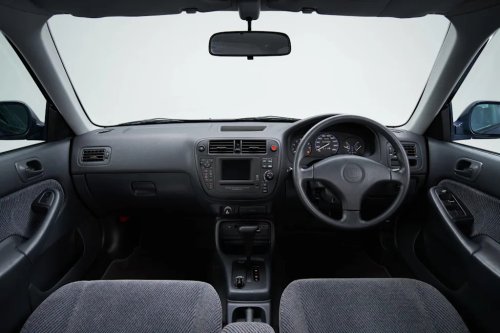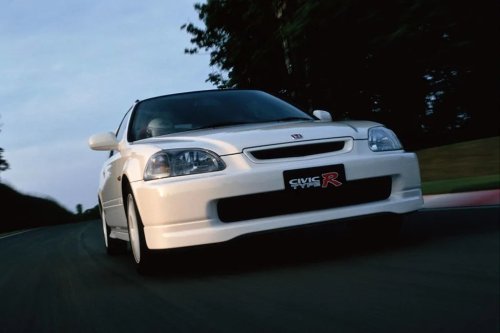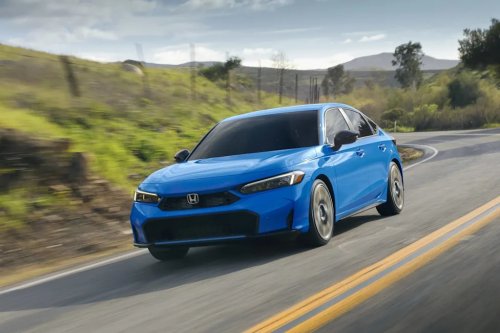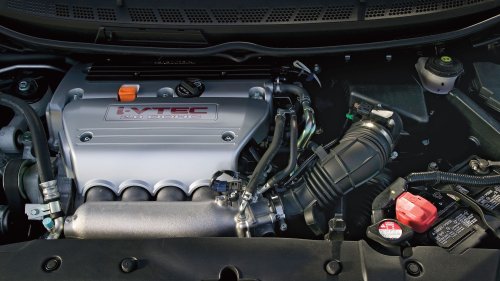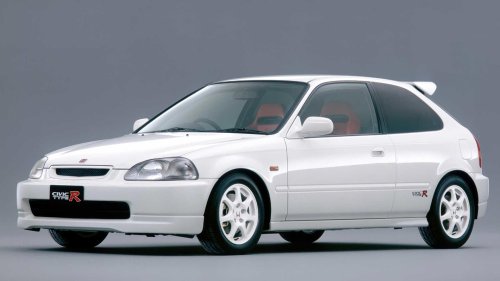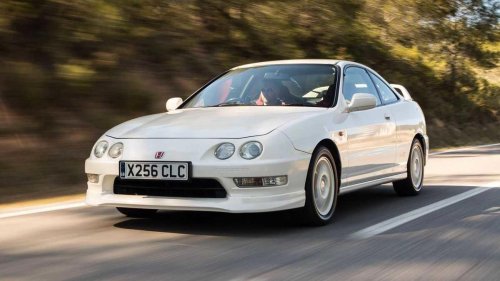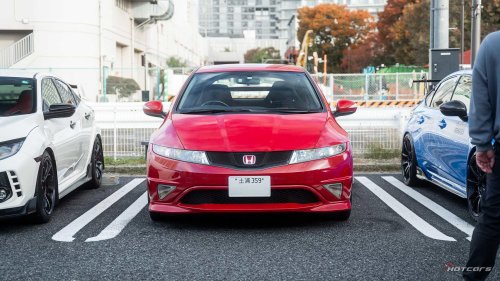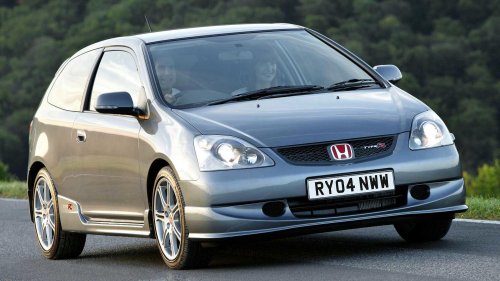
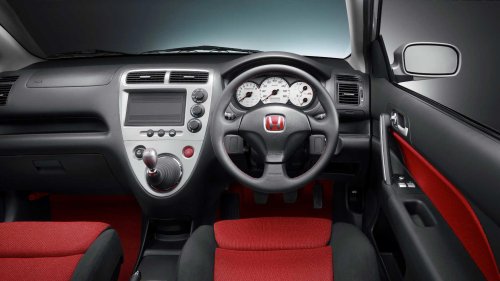
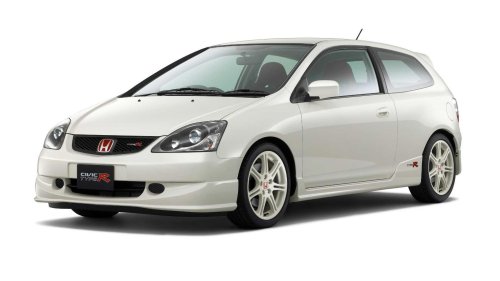
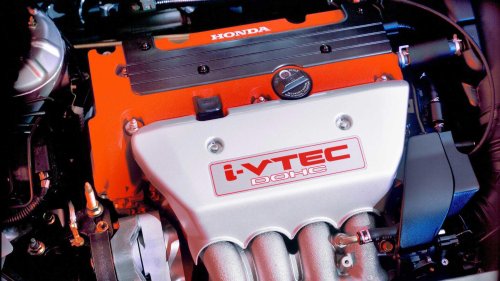
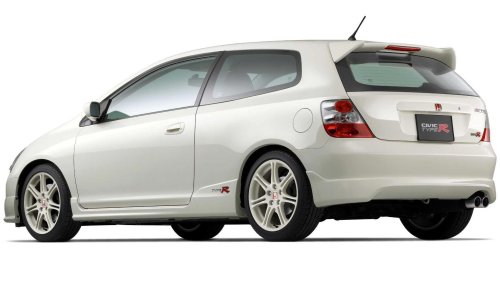



















When the Honda Civic Type R first went on sale in the US in 2017, it marked the long-awaited debut of a model that had, for so many years, seemed like the sweetest forbidden fruit for American buyers. Nine years and another generation on, it remains a shining light in an otherwise nearly-dead hot hatch market.However, that doesn't mean that the US missed out any less on those earlier Civic Type Rs that were sold in Japan and Europe. The good news is that slowly but surely, more and more of these older versions are becoming eligible for import under the 25-year rule. 2026 in particular marks a big moment for American Type R fans, because following the original Japan-only EK9 model becoming legal a few years ago, the first examples of the version that many still consider the best and most authentically 'Honda' in its execution – the EP3 Civic Type R – turn 25 this year. A Breath Of Fresh Air For Hot Hatches Honda The late 1990s and early 2000s generally weren't a good time for the hot hatch, in Europe at least. Spiraling insurance costs throughout the early ’90s saw the genre take a fairly spectacular nosedive from its ’80s golden age, and plenty of manufacturers had either abandoned the class altogether or were offering hot hatches that were a mere shadow of their predecessors.In 2001, Ford's offering, the Focus ST170, had failed to win much praise despite the standard Focus being hailed as one of the best-driving 'normal' cars in years. Meanwhile, the Mk4 Volkswagen Golf GTI represented a huge fall from grace from the early days of the badge, with a range of engines far too feeble to extract meaningful performance from the heavy car, and a chassis that offered very little in the way of involvement. It was still another year before either model would be kicked up another gear with the more extreme Focus RS and Golf R32. For genuinely good hot hatches, you had to turn to the French brands, and these offerings had their own issues: the also import-eligible Renaultsport Clio 172 was a size too small for many people and had a laughably cheap interior, and the Peugeot 306 GTi-6, while brilliant, was getting old and was on the brink of going out of production.So when Honda announced that year that the second iteration of its previously Japan-only Civic Type R, based on the newly released seventh-generation Civic, would be coming to Europe, it was a cause for celebration. Building on the success of the original EK9, which most people outside of Japan only got to experience in Gran Turismo, the new model, bearing the chassis code EP3, brought a tantalizing list of specs to the table.Honda Power was to come from an engine with Honda's high-revving VTEC variable valve timing system that had already helped make cars like the NSX and S2000 so exciting. With other promising-sounding changes over the standard model, including a close-ratio six-speed manual transmission, double-wishbone rear suspension and a bodyshell some 80% stiffer than the old Civic Type R, it looked set to take a defibrillator to the hot hatch market and zap it back into life. The JDM Model Is Worth Singling Out HondaRejuvenating the European hot hatch market is just what the EP3 Civic Type R helped to do. WIth 197 hp on tap from its 2.0-liter K20 four-cylinder engine, it was comfortably more powerful than the Focus ST170 or Golf GTI, and with a curb weight of around 2,654 lbs, it was noticeably lighter too. Honda claimed a 0-62 mph time of 6.6 seconds and a 146 mph top speed, again easily besting the figures the Ford or VW could muster.It wasn't just faster than those cars, though – it was way more exciting. There would be a noticeable change in the engine's soundscape when the VTEC kicked in (yo) at 6,000 rpm, and it wasn't making that peak power number until 7,400 rpm. The motor would keep screaming its way up to a scintillating 7,900 rpm redline. In league with the chassis tweaks, the scant curb weight, and the fact that the delectably slick manual shifter sprouted from the dash for quick, easy access, it was finally proof for European buyers that it wasn't only France that could still build a great hot hatch.In fact, Japan was so good at it that it kept the very best for itself, because there were in fact two distinct versions of the EP3 Type R. Both were based on the three-door hatchback version of the Civic – a body style nicknamed the breadvan, either affectionately or derogatorily, depending on your viewpoint – and both were built side-by-side at Honda's plant in Swindon, UK.Honda The version being shipped to Japan for sale in Honda's home market, though, boasted some notable tweaks that Europe wasn't party to. There was an uprated version of the K20 engine, sent over especially from Japan to be installed at the UK factory, which featured goodies like a rebalanced crankshaft, high-compression pistons, racier camshafts, a different air intake and exhaust manifold, and a lighter flywheel – the last of which came to Europe too with the 2003 facelift. All this meant the JDM model produced 212 hp (plus 149 lb-ft of torque – five more than the European version), easily breaking the magical and still-rare 100 hp-per-liter barrier in the process. It revved even higher too, not hitting the limiter until 8,300 rpm.It wasn't just the engine that was fettled: the transmission had shorter ratios, and a limited-slip differential was fitted to the front axle. Japan's beautifully smooth roads also allowed for a more aggressive suspension setup, with stiffer springs and thicker anti-roll bars. Finally – and perhaps most importantly for fast Honda aficionados – the JDM model could be ordered with Championship White paint and red Recaro bucket seats, both signature Type R visual cues that weren't offered to European buyers. How Much You'll Spend On An EP3 Today Honda With the earliest examples of the EP3 Civic Type R built in late 2001, it's likely a fair few US enthusiasts are patiently waiting for them to start becoming eligible for import later in 2026. The good news is that it still represents something of a used bargain, although values are steadily on the up from a few years ago. In the UK, prices for European-spec models start at around £4,000 – roughly $5,350 at current exchange rates. These tend to be cars with 100,000-plus miles, but because it's a Honda, the EP3 is generally a durable car as long as it's been well-looked after (given the high-revving nature of the engine, regular oil changes are particularly important).Sellers are now asking upwards of £10,000 – around $13,400 – for better condition European-market cars, while another 50% on top of that will net you a true collector's gem. Naturally, the higher-specced and rarer JDM model commands more than an equivalent condition Euro car, even if sourced from Japan, where used cars are generally cheaper than in Europe. Going down the JDM route also obviously means you'll have to deal with the inconvenience of right-hand drive, whereas sourcing a car from mainland Europe means you'll be able to get the steering wheel on the left side.Even if a JDM model is out of reach, though, a Euro-spec car shouldn't leave you feeling short-changed. It's still one of the best hot hatchbacks of its era, and one that's all the more appealing 25 years on thanks to its raw, naturally aspirated engine and slender curb weight – two things that, as wonderful as it is, the modern-day FL5 Civic Type R simply can't compete with. We wholly expect the EP3 Civic Type R to be a firm favorite of the import crowd once the first models become US-legal – and rightfully so.