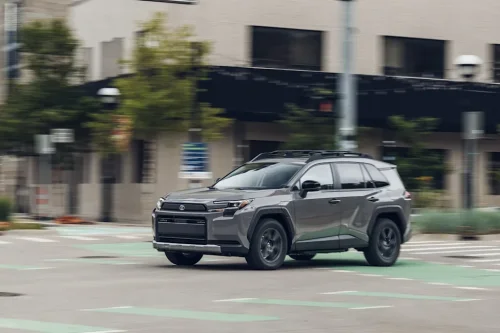
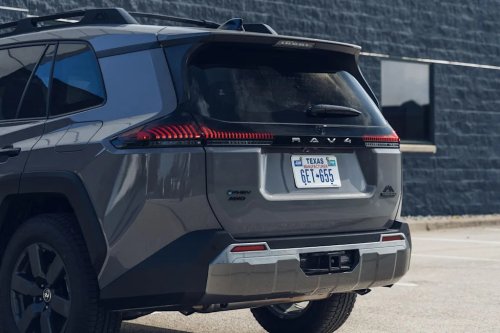
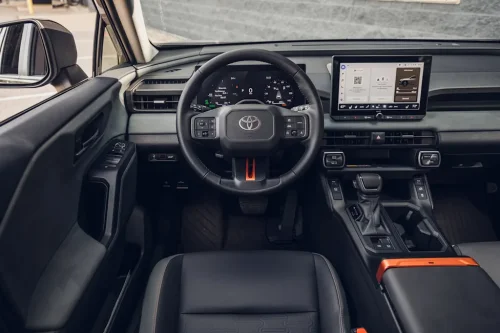
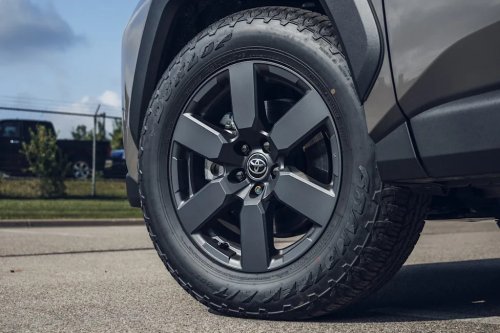
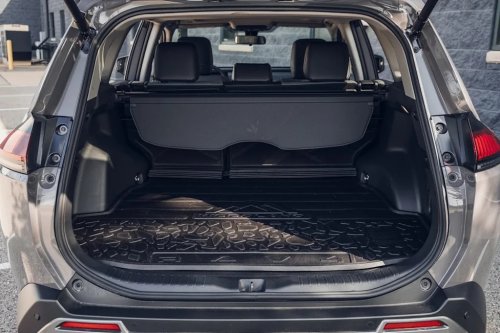
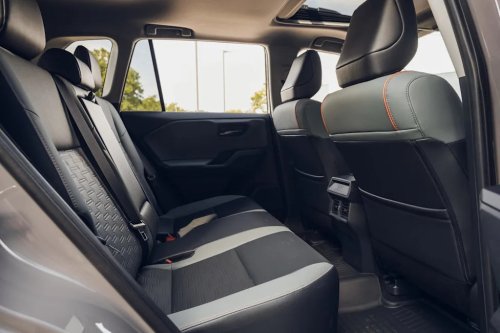
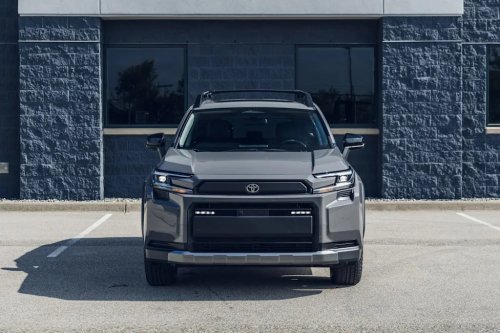
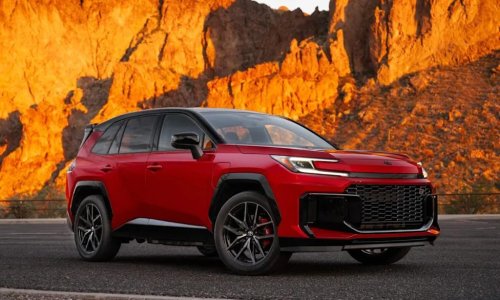
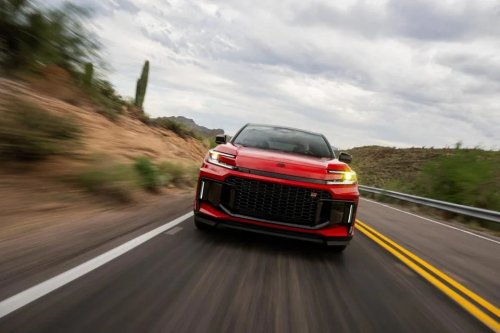
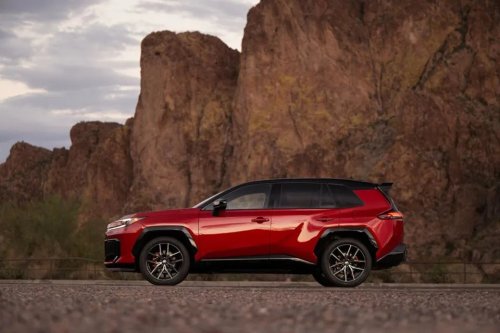
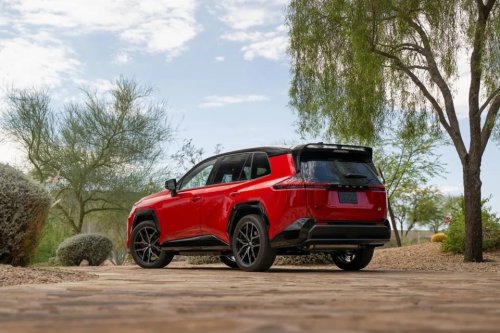
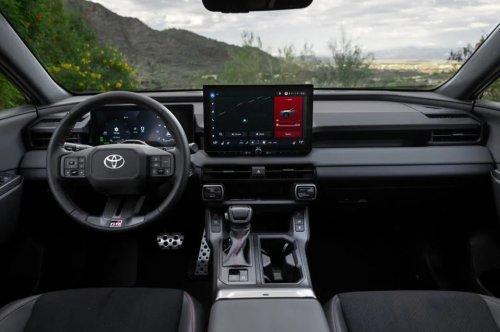
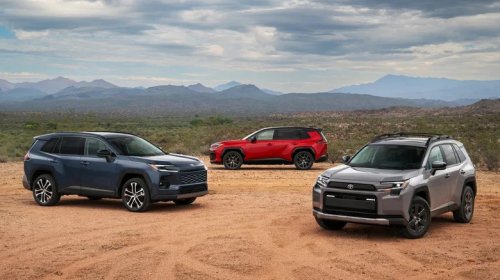
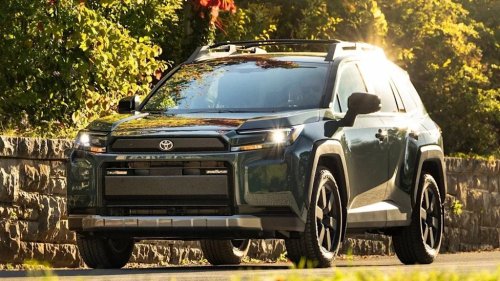
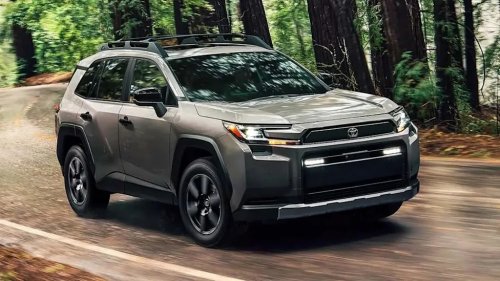
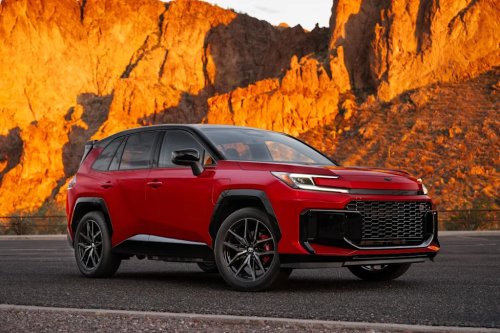
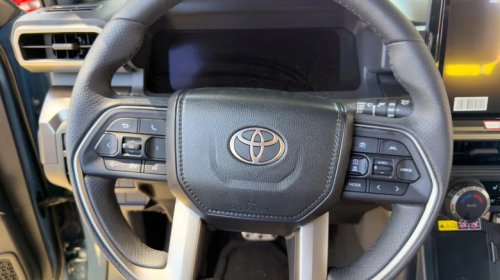
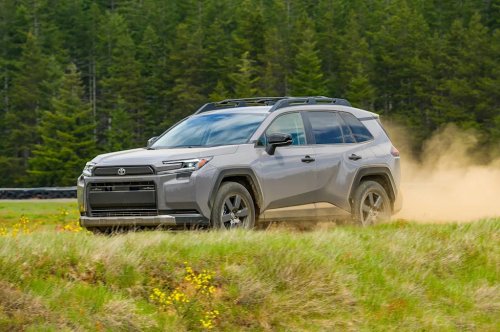
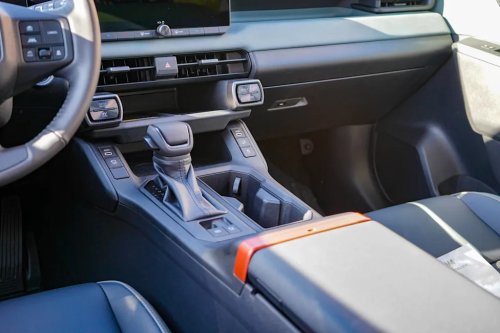
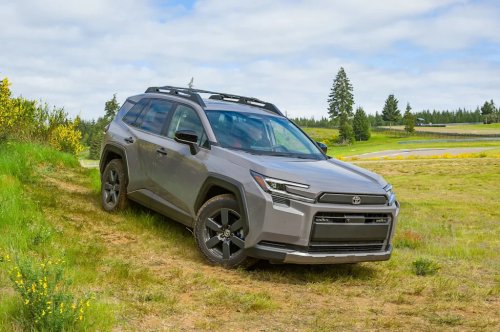
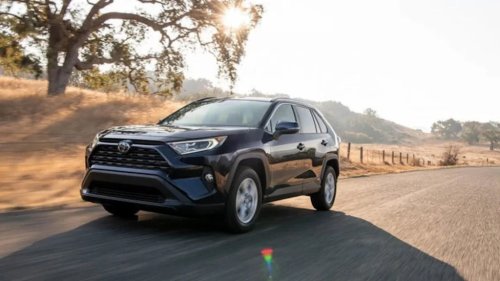
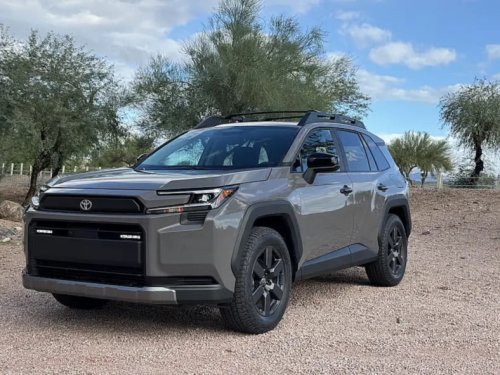
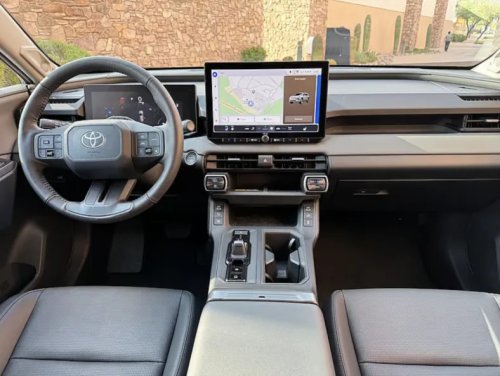
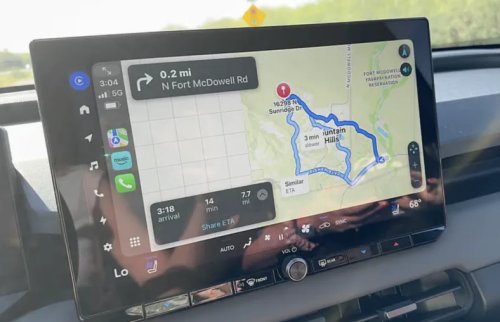
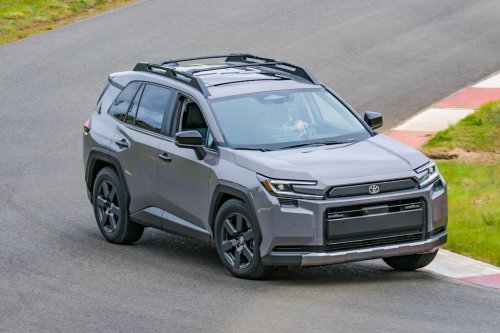
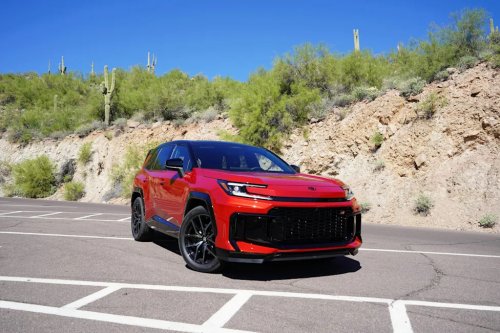
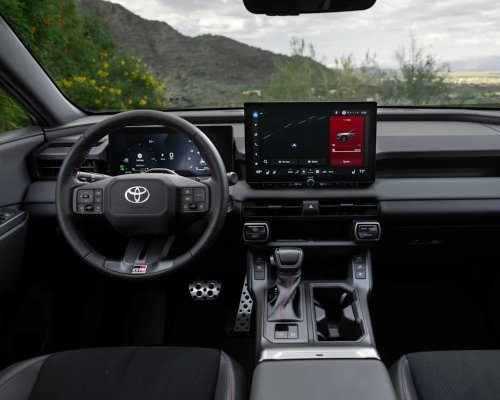
Test: Guess What the RAV4 Woodland PHEV Does BestMichael Simari - Car and DriverThink of your pants. Are you a slave to fashion? Of course you're not. But depending on how old you are, the cut of your pants has probably changed several times already. And though you're no fashionista, stylistic trends nonetheless creep quietly into our lives, reflect the zeitgeist, and stay awhile. It's the same for cars. The current fashion in SUVs is hiking-boot chic, the rugged off-road-inspired style that promises fun times away from pavement. The RAV4 Woodland PHEV plug-in hybrid nails the look—so we were curious to know how much of its style was backed by serious boulder-climbing, desert-running substance. It surprised us, but not in the way we anticipated.SUVs that look plucked from Patagonia ads are plentiful these days, and they come with a range of off-road skill sets that vary wildly. Some are fit for traversing rock-strewn trails and desert washes (think Lexus GX550 Overtrail), while others can't handle much more than a dirt road. Judging by its specs, the RAV4 Woodland PHEV appears to fall into the latter category, meaning it's more about off-road style than serious mudslinging.Michael Simari - Car and DriverWhat It IncludesThe Woodland trim is offered on both the standard and plug-in RAV4 hybrids, both of which come standard with all-wheel drive enabled by a second electric motor powering the rear wheels. Equipment revisions specific to the Woodland trim include a blunter-looking, blacked-out front fascia, a set of Rigid Industries LED fog lights, a tow hitch, black roof rails with crossbars, and knobby-looking tires on 18-inch alloys. The interior is highlighted with orange trim bits, businesslike rubber floor mats, and a clever front center console bin lid that flips over to become a small tray table.AdvertisementAdvertisementThis is otherwise a well-equipped model, appropriately so given the PHEV's $46,895 base price. It comes standard with faux-leather upholstery, a power driver's seat, a heated steering wheel and front seats, a power liftgate, a 10.5-inch infotainment screen running Toyota's latest software, a six-speaker sound system, wireless Apple CarPlay and Android Auto compatibility, a cargo-area 120V power outlet, and more. The only major extra on our test car was its $850 power moonroof; that, plus black-chrome wheel locks and an accessory light that plugs in to the dash, brought the as-tested price to $47,995.Michael Simari - Car and DriverToyota lists the Woodland's ground clearance at 8.5 inches, 0.4 inch more than the SE and XSE PHEV models and 1.0 inch more than the GR Sport PHEV. The additional lift comes not from any off-road-specific suspension changes but from the taller sidewalls on the fat 235/65R-18 Dunlop Grandtrek A/T tires. Their shoulders look appropriately knobby for an off-road vehicle, but that's a visual suggestion; their tread pattern is essentially that of a conventional all-season tire. Nor is there any underbody protection in the form of skid plates, further confirming that the Woodland is not intended for aggressive off-road action.Not that it would lack the power to tackle just about any terrain. The PHEV powertrain consists of an Atkinson-cycle 2.5-liter four-cylinder, plus front and rear permanent-magnet electric motors that combine for a robust 324 horsepower. The estimated-19-kWh battery enables up to 49 miles of all-electric driving range, according to the EPA. With its standard 11-kW onboard AC charger, Toyota says a Level 2 charging station can refill the pack in 2.5 hours, while a CCS charge port allows for DC fast-charging that can take the battery from 10 to 80 percent in 30 minutes, with a peak charging rate of 50 kilowatts.Michael Simari - Car and DriverHow It DrivesWhile the Woodland-specific additions to the standard-issue RAV4 don't promise much off-road capability, it's on the road where this plug-in hybrid surprises with its adeptness. In a serendipitous coming together of disparate elements, the Woodland PHEV's looks, interior design and materials, and driving character meld into an unexpectedly homogeneous and enjoyable on-road companion as if by alchemy. The Woodland PHEV is the best RAV4 in the lineup. We told you we were surprised.AdvertisementAdvertisementStraight-line performance was never going to be a problem, thanks to those 324 horses and the extra torque from its three electric motors. Our testing revealed that the Woodland PHEV shoots to 60 mph in just 5.2 seconds and through the quarter-mile in 13.9 seconds at 100 mph. That's right, 100 mph in the quarter—not what you'd expect from a low-key SUV like the RAV4, which normally takes 18.5 seconds to reach triple digits.What's more, when merging onto the highway or passing on a two-lane, the extra push from the motors means the gas engine works that much less, mitigating the high-rpm droning that Toyota's hybrid systems have been known for in the past. If it's quiet you're after, the gas engine won't wake up at all when in the PHEV system's default drive mode as long as the battery has energy. At highway speeds, the Woodland PHEV is every bit as quiet as the standard RAV4 Limited, its cabin registering 69 decibels (24 sones) in our testing, despite the Woody's roof crossbars and different tires.Running on electric, there are sufficient power reserves to keep up with traffic; at the proving grounds, the Woodland PHEV reached 60 mph in 8.7 seconds on battery power alone. The Toyota's got plenty of electric range for a lot of daily driving too; on our 75-mph highway test, it covered 38 miles before running out of juice. On that same test, with the battery depleted and running on gasoline, it returned 35 mpg.Michael Simari - Car and DriverThe Woodland PHEV is more than just a fuel-sipping stoplight hero. The other pleasant dimension to its personality is its way with the road—particularly the lumpy, patched, and potholed tarmac we have plenty of in southeastern Michigan. It rides softly, its supple springing and well-judged damping allowing the suspension to move through its travel and ease the RAV4 over pavement heaves.AdvertisementAdvertisementCoupled with the reduced impact harshness provided by the tires' fat sidewalls, you can comfortably bomb across broken-up roads without fear of bending a wheel or popping a tire, as you would in cars with low-profile rubber. It's freeing and fun. Mix that ability with accurate steering and decent grip from the all-terrain tires—0.78 g on our skidpad—and the Woodland PHEV begins to remind us of the Ford Ranger Raptor, a vehicle that editor-in-chief Tony Quiroga dubbed "the Michigan Miata" for its ability to dance untroubled over the state's rough roads (and make you feel good doing it).Michael Simari - Car and DriverSomehow, this ability to shake off nasty roads works with the Woodland's REI looks and its businesslike interior's materials—there's plenty of hard plastic below elbow level—to create a spunky, no-nonsense persona that says, "Go ahead, drive hard, and don't worry about me." We didn't think the sleepy RAV4 could be this much fun.If the Woodland PHEV seems a little pricey, and it does to us, know that this same hiking-boot trim is available on the standard, 236-hp RAV4 hybrid—all RAVs are hybrids or PHEVs now—for some $5400 less than the PHEV. Yes, you lose the capability to drive on electricity alone, but with 236 horsepower and a 60-mph time of 7.1 seconds, the performance is adequate, if no longer stellar. And it should be just as adept at traversing moonscape pavement as the PHEV, so you pay your money, and you take your choice.Michael Simari - Car and DriverIndeed, the Woodland version of the RAV4 has something special going for it: that little bit of magic that, by luck or design, makes it capable in ways unexpected. The RAV4 Woodland PHEV may have been inspired by the current SUV fashion, but fashion be damned: In this case, the rugged look has paid off with the best model in the lineup.AdvertisementAdvertisement➡️ Skip the lot. Let Car and Driver help you find your next car.Shop New Cars Shop Used CarsYou Might Also LikeGift Guide: Best Ride-On Electric Cars for KidsFuture Cars Worth Waiting For: 2025–2029