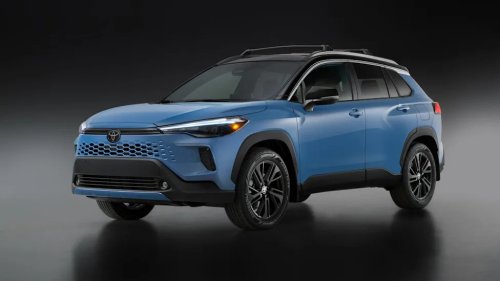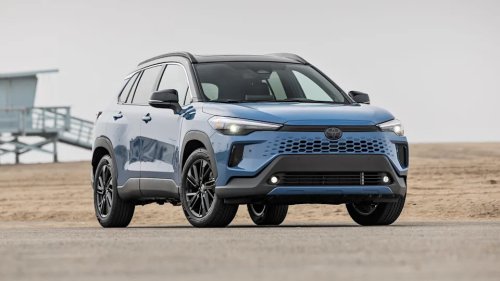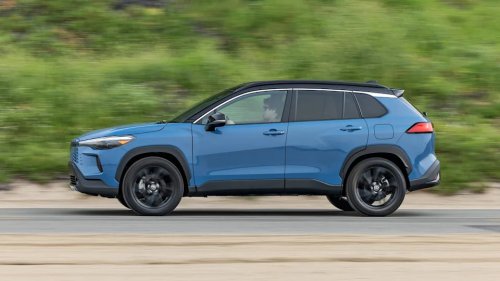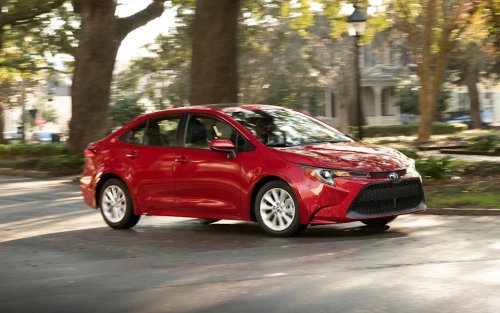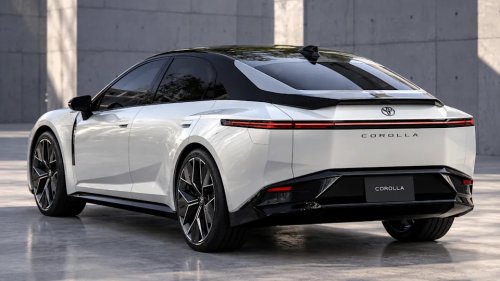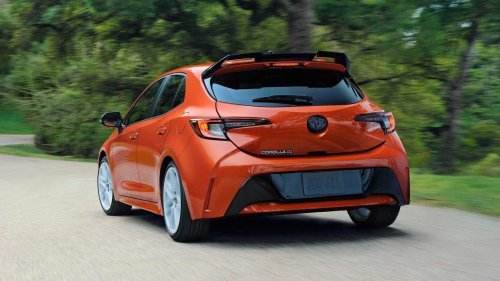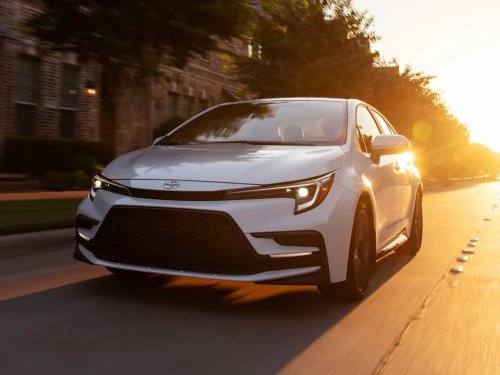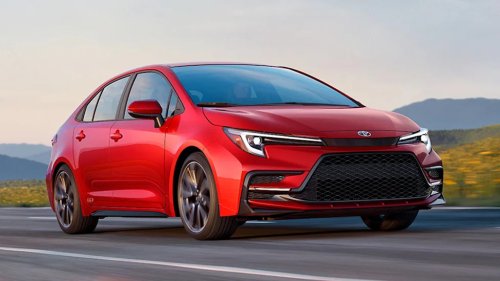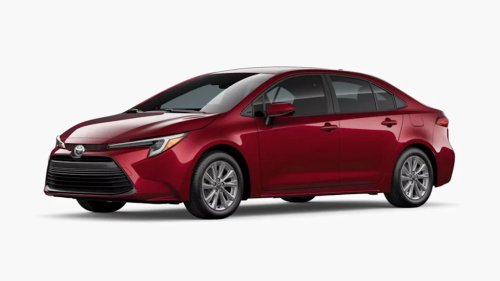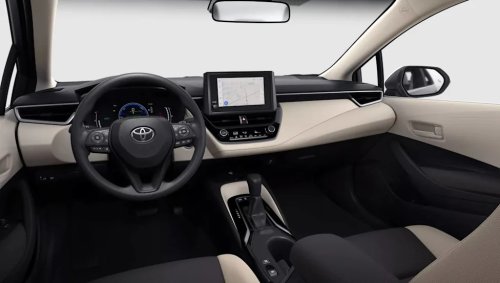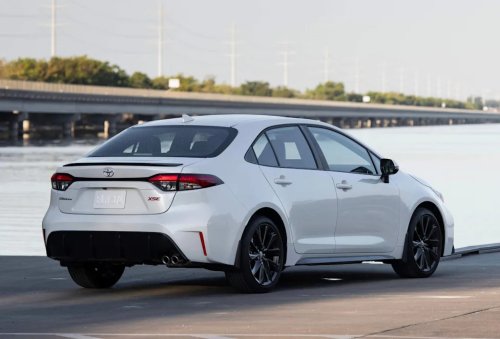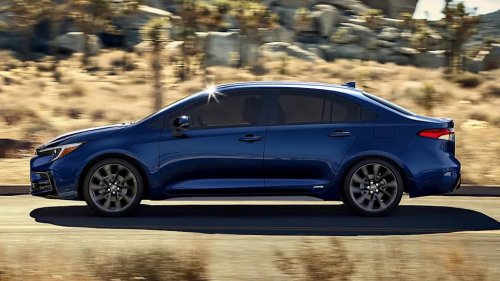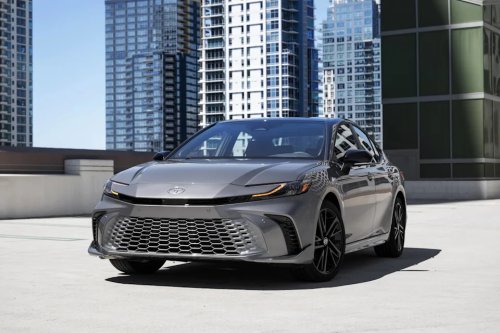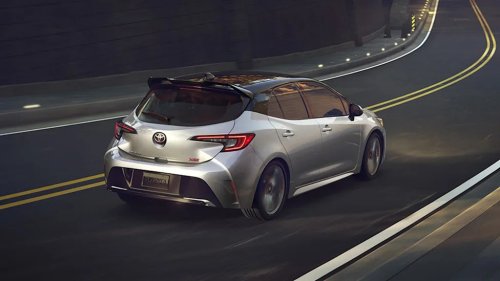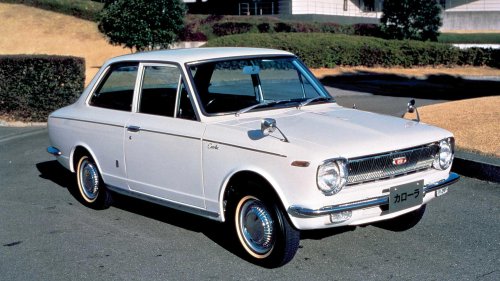
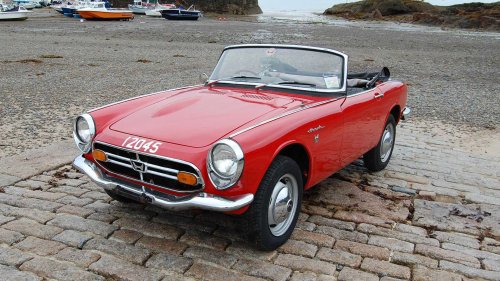
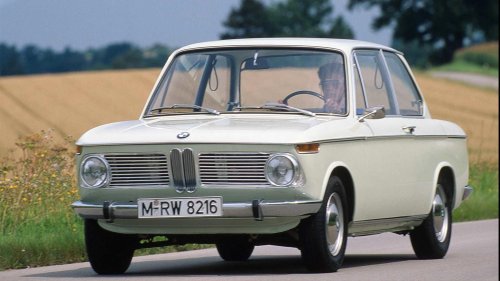
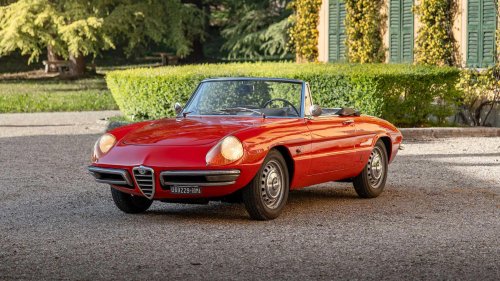
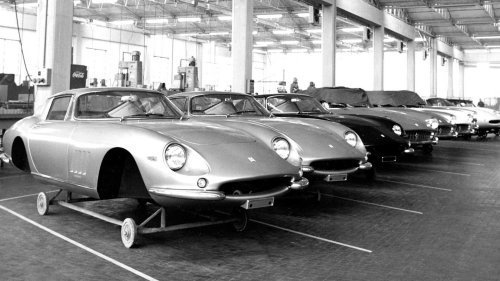
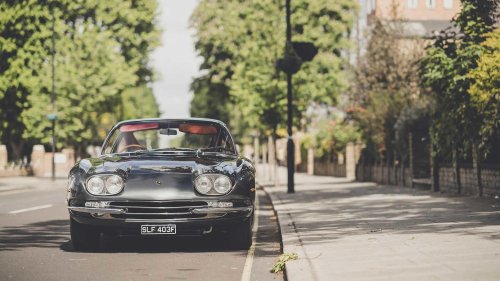
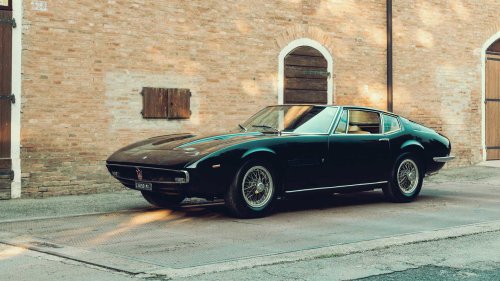
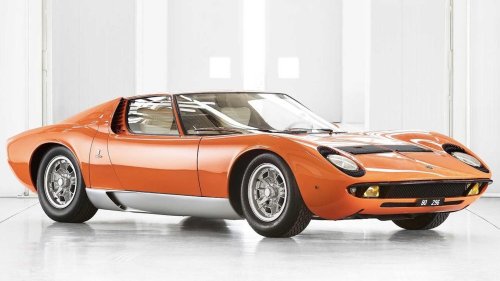
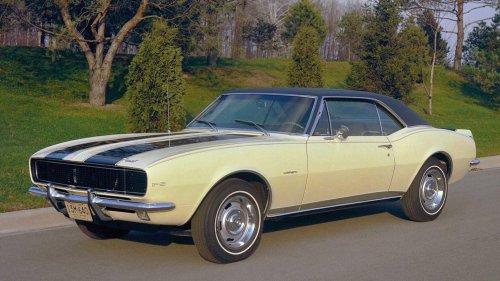
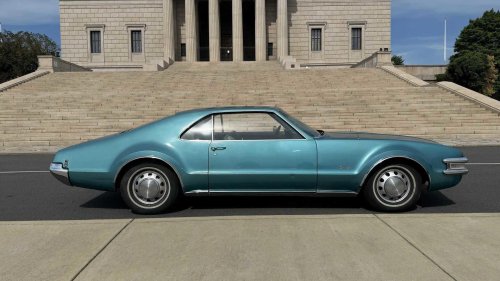
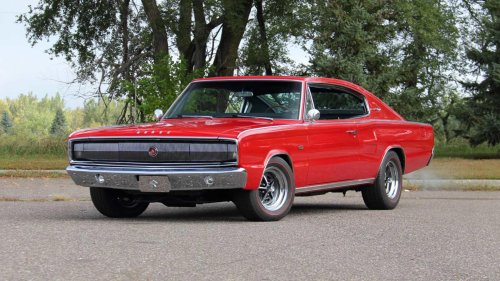



















Some years produce memorable cars, but 1966 was exceptional. It brought everything from tiny, high-revving sports cars and practical compact sedans to sophisticated Italian grand tourers, groundbreaking supercars, and powerful American V8 machines. They included the humble, yet extremely popular Toyota Corolla and the iconic Lamborghini Miura.Yet these cars would go on to become legendary for very different reasons. Some became established nameplates that dominated their respective markets, while others changed the way performance cars were engineered or became cultural icons in their own right. Six decades later, their influence remains remarkably varied, proving that 1966 was one of the most significant years in automotive history. Toyota Corolla Power: 60 bhp 1966 Toyota Corolla front sideThe Toyota Corolla began its remarkable journey in 1966, making its debut at the 13th Tokyo Motor Show before going on sale in Japan in November. It arrived as Japan entered an era of mass car ownership, and Toyota designed the Corolla to balance performance, quality, comfort, and affordability. Despite its modest beginnings, the first generation used a 1.1-liter four-cylinder producing 60 bhp at 6,000 rpm. That humble formula would eventually create one of the world's most successful automotive nameplates, with more than 50 million Corollas sold by 2021. Honda S800 Power: 70 bhp 1967 Honda S800 Roadster front three quarter redThe Honda S800 proved that small could be seriously exciting. Its 791 cc four-cylinder used double overhead camshafts and four carburetors to produce 70 bhp at 8,000 rpm, giving it an impressive specific output for the era. Just as impressive is its claimed top speed of 100 mph — quite an achievement at the time considering the modest performance. With a four-speed manual gearbox and rear-wheel drive, the lightweight S800 delivered genuine sports-car performance despite its tiny engine. Honda's own history describes the S800 as the culmination of its early S-series sports cars. At the same time, its racing success demonstrated that the company could build much more than economical small cars. BMW 1600-2 Power: 85 bhp 1966 BMW 1600-2 front three quarter drivingRevealed in March 1966, the BMW 1600-2 laid the foundation for the 02 Series and, ultimately, the modern 3 Series. Its compact two-door body combined rear-wheel drive with an 85 bhp four-cylinder engine, delivering the practicality of a small family car with the character of a sports saloon. The formula proved remarkably successful, with later 02 models including the iconic 2002 and sportier 2002 tii. More importantly, the 1600-2 established the compact, rear-wheel-drive performance formula that would become central to BMW's identity for decades. The 1600 sold more than 13,000 in its first year of production, quite an achievement for a car that was a completely new concept for BMW. Alfa Romeo Spider 1600 Duetto Power: 108 bhp 1966-alfa-romeo-spider-duetto-first-series frontThe Alfa Romeo Spider 1600 Duetto arrived in 1966 as one of Italy’s most elegant roadsters, with a 1.6-liter twin-cam four-cylinder producing around 108 bhp and driving the rear wheels. Its low, rounded Pininfarina body helped make it an instant design icon. However, its cultural impact extended far beyond its styling. The Spider became internationally famous after appearing in the 1967 film The Graduate, where Dustin Hoffman drove a red example. The film helped cement the Duetto’s place in popular culture and contributed to its enduring appeal.Many fans don't know that Alfa Romeo ran a competition among its European dealers to name the new Spider, and "Duetto" won. However, the name was already protected by a chocolate biscuit, so Alfa could not use it commercially. The result is that the car was officially launched as the Alfa Romeo Spider 1600, while the "Duetto" part survived as its unofficial nickname. Ferrari 275 GTB/4 Power: 300 bhp 1966 Ferrari 275 GTB4 factoryThe Ferrari 275 GTB/4 debuted at the Paris Motor Show in October 1966, bringing a four-camshaft version of Ferrari’s 3.3-liter V12 to the road. With 300 bhp at 8,000 rpm, it was the first Ferrari road car to use four camshafts. The wider 275 GTB family had already introduced independent rear suspension and a rear-mounted transaxle, giving Ferrari better handling and weight distribution. The GTB/4 built on that advanced foundation with an even more sophisticated engine, creating one of the most technically accomplished Ferraris of the 1960s.This also paid dividends in racing, as Ferrari adapted the 275 GTB for competition purposes. It built just three 275 GTB “Speciale” examples, which featured lighter chassis and tuned engines. The result was a podium finish, with one car taking third overall at the 24 Hours of Le Mans in 1965. Lamborghini 400 GT 2+2 Power: 320 bhp Lamborghini 400 GT 2+2 frontThe Lamborghini 400 GT 2+2 followed the 350 GT in 1966, adding greater practicality to the company’s emerging grand touring formula. Its revised body featured a raised roof and redesigned rear section, creating enough space for two occasional rear seats. Underneath was a new 4.0-liter V12 producing 320 bhp, making it a formidable grand tourer for its time. More importantly, this engine established the basis for a V12 architecture that Lamborghini would continue developing and refining for decades, powering many of its most important models.According to Lamborghini, it produced 250 cars between 1966 and 1968, with several updates during this period. Carrozzeria Touring transformed one 400 GT into a flamboyant shooting brake called the "Flying Star II". Maserati Ghibli Power: 330 bhp 1966 maserati ghibli front three quarterThe original Maserati Ghibli debuted at the Turin Motor Show on November 3, 1966, on the Ghia stand, with its dramatic shape designed by the young Giorgetto Giugiaro. Rather than being a pure sports car, it was conceived as a sophisticated grand tourer, combining striking styling with high speed and long-distance comfort. Its 4.7-liter dry-sump V8 produced 330 hp, while the long, low bonnet and fastback profile became defining features. The result was a glamorous GT that demonstrated Maserati's ability to blend performance with luxury. Lamborghini Miura P400 Power: 350 bhp 1968 Lamborghini Miura P400 front, three-quarterThe Lamborghini Miura P400 was unveiled at the Geneva Motor Show on March 10, 1966, and its transverse mid-mounted V12 helped redefine the architecture of the modern supercar. Lamborghini says the layout, with the engine positioned behind the cockpit, was a technical revolution for a production car. The original 3.9-liter V12 produced 350 bhp at 7,000 rpm, while a top speed of 174 mph made it the fastest production car of its time. Although launched in 1966, the bare Miura chassis was first shown at the Turin Motor Show in November 1965, four months before the finished car debuted in Geneva. Chevrolet Camaro Power: 375 bhp 1967-1969 Chevrolet Camaro Coupe Beige Front AngleThe Chevrolet Camaro reached showrooms in September 1966 as Chevrolet’s answer to Ford’s Mustang, launching one of America’s most enduring pony car rivalries. Chevrolet didn't take long to add serious performance, with the big-block 396-cubic-inch V8 available in the first model year.The range-topping L78 version produced 375 bhp, giving the Camaro genuine muscle-car credentials alongside its sporty styling. The combination of compact dimensions, rear-wheel drive and a broad engine range helped establish the Camaro as one of Chevrolet’s most enduring performance nameplates. Oldsmobile Toronado Power: 385 bhp 1968 Oldsmobile Toronado Turquoise Side ViewThe Oldsmobile Toronado was revolutionary for America, becoming the first front-wheel-drive production car built there since the Cord 810 and 812. Its ingenious layout placed a longitudinal 425-cubic-inch V8 alongside a specially modified transmission, with a Hy-Vo chain transferring power to the front wheels. The 385 bhp engine also made it remarkably powerful, producing 475 lb-ft of torque. This combination made the Toronado one of the most technically ambitious and unusual American cars of its era. Owing to this, it might not come as a surprise that MotorTrend magazine named it its "Car of the Year" in 1966. Dodge Charger Power: 425 bhp 1966 Dodge Charger 426 front quarterThe original Dodge Charger arrived in 1966 as a dramatic fastback, combining four bucket seats, a folding rear seat and distinctive hidden headlights. It became even more significant when Dodge offered the 426 Street Hemi, a race-derived V8 officially rated at 425 bhp and 490 lb-ft of torque. Although the slippery rear design looked like it could have aerodynamic benefits, at high speeds it actually created lift. The result was that a rear lip spoiler, available from the dealer, could be fitted on the deck. Dodge built only 468 Hemi-powered Chargers in the 1966 model year, making them exceptionally rare today.