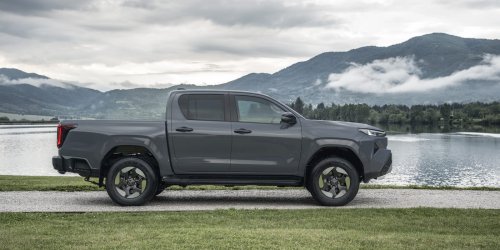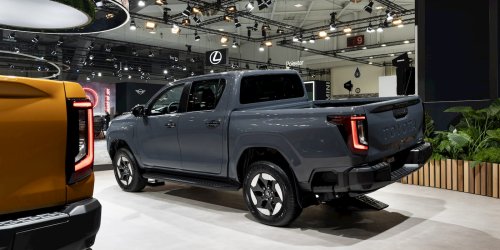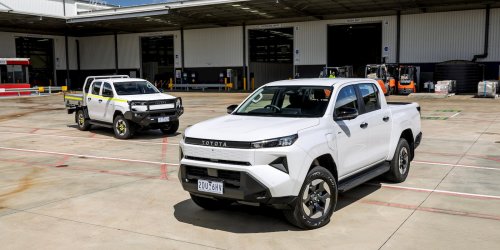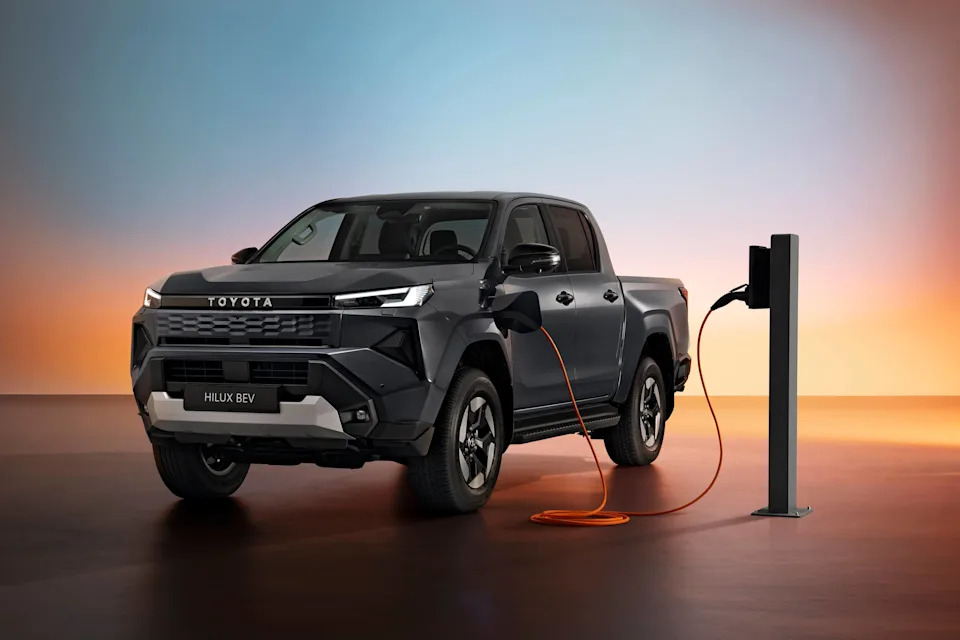
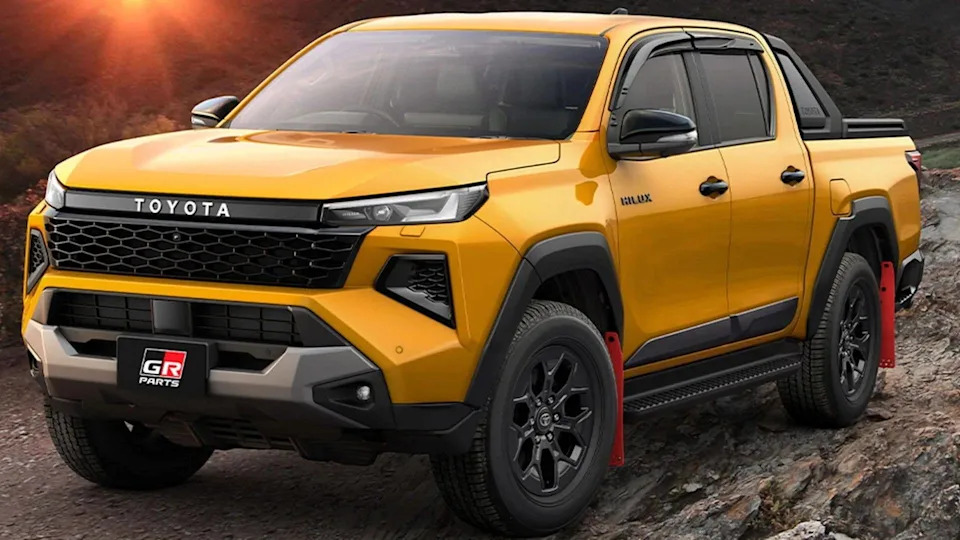



















Toyota Thinks Hydrogen Can Do What Its Electric Pickup Can’tAutoblogJarryd NevesSat, September 19, 2026 at 7:00 PM UTCAdd us on GoogleAutoblog and Yahoo may earn commission from links in this article.Toyota has confirmed that the ninth-generation Hilux, launched globally this year, will spawn a hydrogen-powered variant. The Japanese automaker claimed that the Hilux FCEV will debut in 2028 as part of the automaker's ambitions to "develop its reputation as an innovator in the segment.While specifications remain vague for now, Toyota is targeting a driving range of 248 miles on the WLTP cycle and aims for a towing capacity of up to 5,512 lbs. On paper, those figures would provide the Hilux FCEV with a sizeable advantage over its battery-electric sibling. The new Hilux BEV employs a 59.2 kWh battery and eAxles at the front and rear for permanent all-wheel drive, but its 160-mile (WLTP-estimated) range is notably shorter than the targets Toyota is chasing with the hydrogen version. What's more, the 3,527-lb towing capacity of the BEV also falls some way short of the FCEV's targeted rating.ToyotaThe company has yet to comment on what will power the production model beyond confirming its fuel-cell drivetrain, with outputs and additional technical data likely to be announced closer to its reveal date.AdvertisementAdvertisementToyota began development of a hydrogen-powered Hilux back in 2022, before revealing its first working prototype just a year later. By 2024, ten examples had been assembled at the company's manufacturing facility in Burnaston, UK, with five units put into use for field testing and the rest pressed into demonstration duty.Those prototypes borrowed heavily from the Mirai, using its fuel-cell technology together with three high-pressure hydrogen tanks mounted within the pickup's ladder-frame chassis. A 180-horsepower electric motor drove the rear wheels, while the tanks stored a combined 17.2 lbs of hydrogen. At the time, Toyota claimed an impressive driving range of up to 373 miles; those lofty claims don't seem to have carried over to the model due to arrive in 2028.Orange 2026 Toyota Hilux fitted with GR Parts ToyotaThe technology itself is hardly unfamiliar territory for Toyota. The company began development on fuel-cell powertrains as far back as 1993, with the original Mirai entering production more than two decades ago as one of the first series-production hydrogen fuel-cell passenger cars – earlier examples such as the Honda FCX Clarity, Toyota FCHV, and Honda FCX were leased in very limited numbers and through a specialised dealer network.Toyota has even experimented with hydrogen combustion, campaigning a specially developed GR Corolla in Japan's Super Taikyu endurance series. That car, however, burnt hydrogen in an internal combustion engine rather than using it to generate electricity.AdvertisementAdvertisementFor the Hilux, though, the appeal is fairly straightforward. Toyota believes fuel cells can provide greater range and towing ability than a battery-electric powertrain, without abandoning zero-emission driving. For a pickup expected to tow and cover long distances, those characteristics could prove particularly valuable.This story was originally published by Autoblog on Sep 19, 2026, where it first appeared in the News section. Add Autoblog as a Preferred Source by clicking here.