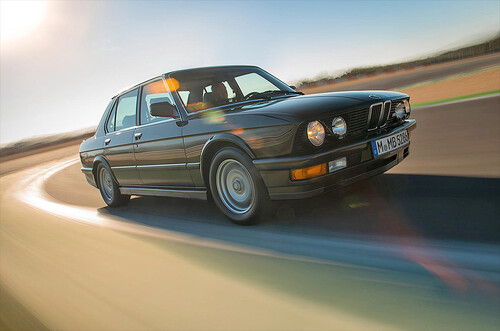
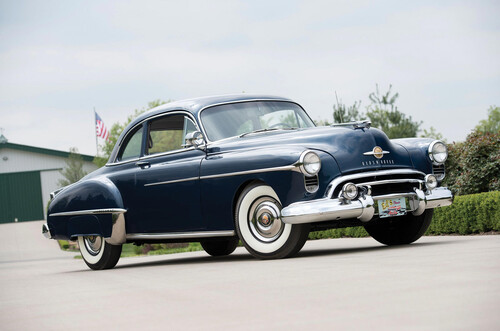
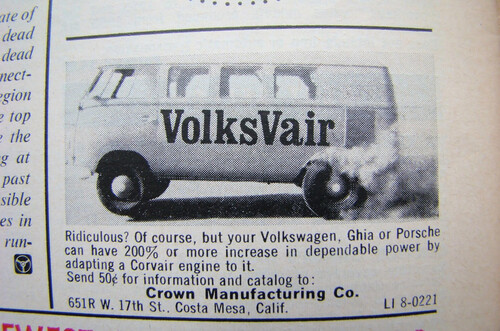
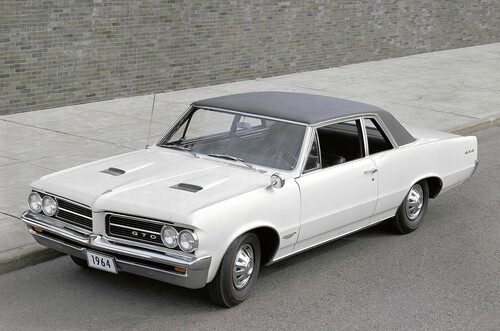
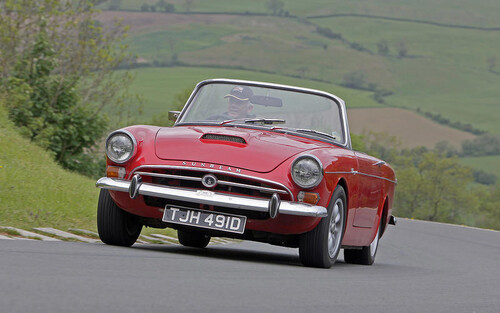
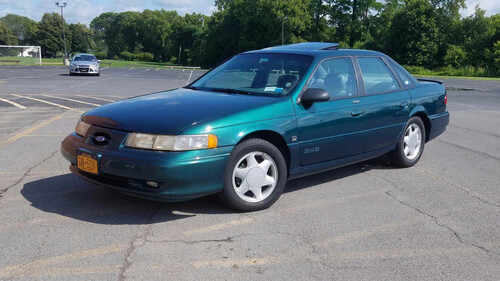
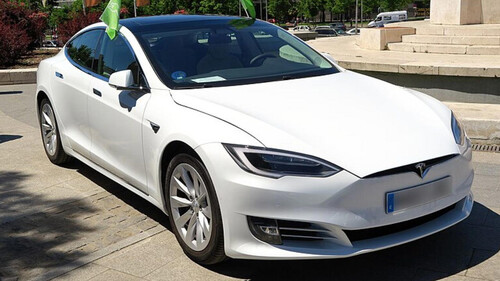
We don’t need to tell you the Audi R8 is quick.It would still look like a fast car even if it was powered by a lawnmower engine. On the other end of the spectrum, there is a whole group of cars that conceal often shockingly powerful drivetrains under the sheet metal of a mundane family hauler.From high-horsepower minivans to track-ready SUVs, we’re taking a look at some of the ultimate sleepers ever offered on the American market:Oldsmobile 88 (1949)Although America’s greatest muscle cars were built during the 1960s, Oldsmobile boldly experimented with the idea of putting a big engine in a small car when it released the 88 for 1949. On paper, the recipe was simple: it put the 135bhp Rocket V8 it designed for the 98 into the smaller, lighter 76 body. Its 12.2sec 0-60mph time sounds slow in 2020 but it was extremely impressive at the time.Performance sold well so Oldsmobile started setting stock car racing records to advertise its new model. It also won five NASCAR Grand National races in 1949. Part of its appeal was that it didn’t look quick; it was offered in six body styles (including a two-door coupe) and they all flew right under the radar.Chrysler C-300 (1955)Chrysler set out to steal the spotlight from Oldsmobile when it introduced the C-300 for the 1955 model year. Its Hemi V8 relied on a pair of four-barrel carburetors and a full race camshaft to deliver 300bhp, a number that made the C-300 the most powerful production car in America when went on sale.Enthusiasts could only order the C-300 as a coupe priced at $4109 (about $40,000 in 2020 money). It was Chrysler’s second-most-expensive car, and it looked the part, but only a handful of checkered flag-shaped emblems informed other motorists about the serious power hiding behind the grille.VolksVair (1960s)California-based Crown Manufacturing made some of the more unusual sleeper cars of the 1960s. Starting with an air-cooled Volkswagen, it removed the flat-four and replaced it with a flat-six pulled out of an unsuspecting Corvair. The result, according to period ads, was a 200% increase in power. Speed junkies got a stock-looking Bus or Beetle that could pop a wheelie while spinning its rear wheels.Production figures are lost to history. We’ve seen only one in the wild in recent years.Pontiac Tempest LeMans GTO (1964)In the 1960s, enthusiasts expected automakers to give performance cars a suitably loud look with fenders, stripes and vents. Pontiac bucked that trend when it introduced the Tempest’s GTO package for the 1964 model year. Hood scoops, emblems and wider wheels were all that set it apart aesthetically. Its subtlety is forgotten in 2020 because so many examples ended up modified with aftermarket parts.Pontiac pegged its 0-60mph time at 7.7sec thanks to a 325 hp, 6.4-liter V8 but it was a lot quicker than that in reality. Car & Driver recorded a 4.6sec time when it tested the model in 1964.Sunbeam Tiger (1964)The Tiger was one of the first sleepers imported (from England) to America – with a lot of American help. Pitched squarely against the MGB, the pokiest Sunbeam Alpine engine was a 100 bhp unit that displaced 1.7 liters. Keen to make the Alpine more appealing to US buyers Carroll Shelby was asked to pep things up a bit; his solution was to swap the four-pot for a 164 bhp 4.2-liter Ford V8. The result was the wonderful Sunbeam Tiger, and more than 7000 of which were built between 1964 and 1967.Mercedes-Benz 300 SEL 6.3 (1968)Mercedes-Benz enjoyed a global reputation for making comfortable, luxurious cars that offered ample power when fitted with a big enough engine. And yet, its four-door models lacked all-out performance until it put a 250 hp V8 from the massive 600 limousine into the smaller W109 chassis to create the 300 SEL 6.3. It instantly became a force to reckon with on Germany’s high-speed autobahn network.It somewhat surprisingly made a name for itself on the track, too. AMG, then a little-known tuner, drove a highly-modified 6.3 it called the red sow to class victory at the 1971 edition of the 24 Hours of Spa. Mercedes-Benz built 6526 examples of the 300 SEL 6.3 from 1967 to 1972.Mercedes-Benz 450 SEL 6.9 (1975)Mercedes-Benz planned to introduce the 6.3’s successor at the 1973 Geneva auto show but it delayed the launch to 1975 due to the oil crisis. Most buyers said the wait was well worth it. The 450 SEL 6.9 was based on a long-wheelbase W116 chassis and it received a bigger, 6.9-liter evolution of its predecessor’s V8 engine tuned to put 286 hp under the driver’s right foot. Period brochures quoted a 0-60mph time of 7.4sec, which was jaw-dropping considering it weighed 4265 lb, and a 140mph top speed.Large and in charge, the 450 SEL 6.9 coddled its occupants thanks to a hydropneumatics suspension system similar on paper to the setup Citroën fitted to its cars. And, here again, Mercedes chose to keep the model as low-key as possible; only a 6.9 emblem on the back set it apart from the 450 SEL. About 7380 examples were made between 1975 and 1980.BMW M5 E28 (1985)Many people assume this was the first ‘sleeper’, even though it wasn’t. But it did create a template for the super-quick mid-size family sedan that married relative affordability with everyday usability. Just look at it – you’d never think that the E28 featured the same 290 hp straight-six as the mid-engined M1 supercar, would you? And unlike later M5s, this first one was little changed from lesser models visually.Shelby GLHS (1986)There was nothing seriously exciting about the Dodge Omni, a small hatchback that traced its roots to Chrysler’s European division, yet Shelby managed to turn it into one of America’s all-time greatest hot hatches. The turbocharged, 2.2-liter four-cylinder was tuned to 175 hp, enough for a 7.0sec sprint to 60mph, and suspension modifications greatly improved its handling. It was a formidable performance car, it managed to out-GTI the Volkswagen GTI, and it lived up to its name: Goes Like Hell S’more.Shelby made 500 units of the GLHS so it’s even rarer than the GLH it’s based on. It’s still an Omni, though, and, few will suspect it’s capable of keeping up with a modern-day Fiat 500 Abarth.Dodge Caravan (1989)What in the world is a tall, boxy minivan doing here? Ask the folks at Dodge who decided, for the 1989 and 1990 model years, to offer the Caravan with a 2.5-liter four-cylinder turbocharged to 150 hp and bolted to a five-speed manual transmission. Its 9sec 0-60mph time didn’t quite land it in sports car territory but it looked about 10sec slower. Plymouth made the same drivetrain available in the Voyager.Ford Taurus SHO (1989)The original Ford Taurus introduced for the 1986 model year quickly became a common sight on America’s driveways, freeways and parking lots. Its ubiquity helped the Super High Output (SHO) model launched for 1989 conceal its performance credentials. The understated body kit signalled the presence of a Yamaha-built 3.0-liter V6 that shifted through a five-speed manual transmission. Putting 220 hp between the front wheels of a Taurus gave it a 6.6sec 0-60mph time.Ford launched the second-generation SHO for the 1992 model year. The nameplate lived on for years but it retired in 2019 when Ford ended Taurus production once and for all.Mercedes-Benz 500E (1990)It took a well-trained eye to tell the Mercedes-Benz 500E (W124) apart from its cheaper, less powerful siblings. It received a powertrain-specific front bumper, flared wheel arches and, of course, a 500E emblem on its rear end. Enthusiasts knew what they were looking at but motorists whose brain wasn’t soaking in Shell Rotella assumed it was an average, taxi-spec Mercedes with a blown-out suspension.Pushing the front wheels out was necessary to fit a 5.0-liter V8 borrowed from the SL. And, because the 500E was wider than the standard W124, it didn’t fit on the Mercedes production line so it was assembled by Porsche. The company’s archives department indicated making a 500E took 18 days. The V8 sent 326 hp to the rear wheels, giving the 500E a 0-60mph time of 6.1sec. Mercedes made the 500E between 1990 and 1995 and it sent most of the production run (1528 units) to America.GMC Syclone (1991)Against all reasonable odds, GMC turned the S-15 into a sports car-taming pickup truck by dropping a supercharged, 4.3-liter V6 into the engine bay and tuning it to 280 HP. Its 0-60mph time of 4.3sec allowed it to comfortably outsprint a Chevrolet Corvette while its $25,950 base price (about $49,000 in 2020) made it nearly as expensive as one. It didn’t take long for GMC to sell the 3000 units it planned to make and the Syclone was so popular that its powertrain ended up in an SUV named Typhoon in 1992.Nissan Sentra SE-R (1991)The run-of-the-mill variants of the third-generation Nissan Sentra didn’t exactly set the car world on fire. They were simple, value-packed economy cars designed for thrifty commuters. The SE-R model was the exception to the rule because it received a 140 hp, 2.0-liter four-cylinder engine with a 7500rpm redline. It was front-wheel drive, though Nissan added a limited-slip differential, and it weighed less than 2500 lb.Stylists settled for adding a new-look front bumper with air vents, a spoiler on the trunk lid and alloy wheels. To the untrained eye, it merely looked like a souped-up Sentra.Plymouth Sundance Duster (1992)Often ordered with racing stripes and a hood scoop, the original Plymouth Duster hardly qualified for the “wolf in sheep’s clothing” label. Plymouth resurrected the name as a trim package in 1979, 1985 and 1992; it’s the latter model that earns a spot on this bench. The company started with the Sundance, a mediocre economy car by most accounts, and gave it a 3.0-liter V6 rated at 141 hp.That was on par with Shelby’s version of the Sundance’s Dodge-badged twin, the CSX, but without the attention-grabbing visual add-ons. The Duster treatment was relatively subtle. The six sent the Duster from 0-60mph in 8.3sec, an admirable time for an economy car.Chevrolet Impala SS (1994)Chevrolet put the SS designation on some less-than-quick cars over the years so enthusiasts were skeptical when the Impala received it for the first time in decades in 1994. It looked a lot like a blacked-out police car but its 260 hp, 5.7-liter V8 sent it from 0-60mph in 7.0sec. If that doesn’t sound like much, keep in mind it used bulky, truck-like body-on-frame construction and it weighed over 4000 lb.American tuner Callaway offered its own version of the Impala SS equipped with a Corvette-sourced, 400 hp V8 plus a long list of chassis modifications. The extra horsepower lowered its 0-60mph time to 5.9sec, which was about on par with an E34-generation BMW M5. Chevrolet made nearly 70,000 examples of the Impala SS from the 1994 to 1996 model years.Volvo 850 T5-R (1994)Volvo showed its wild side when it created the 850 T5-R. Drawing lessons from its British Touring Car Championship (BTCC) program, and paying for Porsche’s input when needed, it increased the turbocharged five-cylinder engine’s output to 240 hp when a temporary overboost function kicked in. Period road tests suggest it took about 7.0sec to sprint from 0-60mph and it kept going until 155mph.It was impossible to keep a low profile in a yellow 850 T5-R (pictured) but Volvo also offered the model in black and dark green. Buyers who chose either gave more than a few unsuspecting red-light racers a run for their money. About 5500 examples (most painted black) were made for global markets.Buick Regal GS (1997)Buick made a serious attempt at luring enthusiasts into showrooms when it introduced a GS variant of the fourth-generation Regal in 1997. Advertised as “the official car of the supercharged family,” it received a 3.8-liter V6 supercharged to send 240 hp to the front wheels. Buick promised a 6.9sec 0-60mph time and a 14.9sec quarter-mile time in a package that looked like your grandpa’s Regal.Volkswagen Passat W8 (2001)For decades, Volkswagen executives argued they needed to position the Passat as a comfortable, family-friendly model rather than as a hot rod. They notably shot down engineering’s request to make a GTI model in 1977. Officials changed their mind in 2001 when, under the leadership of Ferdinand Piëch (1937-2019), they dropped a 4.0-liter, 270 hp W8 engine into the car’s nose.The humble Passat now took 6.3sec to reach 60mph from a stop, a time more commonly associated with low-slung sports cars, and it benefited from Volkswagen’s 4Motion all-wheel drive system. Better yet, in many markets it came standard with a six-speed manual transmission. Model-specific wheels, a small emblem on the back, and the muted roar of eight cylinders from quad exhaust tips set it apart from less powerful variants. Volkswagen made the Passat W8 from 2001 to 2004.Mercury Marauder (2003)The third-generation Mercury Marauder was based on the body-on-frame Grand Marquis and that alone was enough to dispel any suspicions of performance. How can retired America’s chariot of choice appeal to enthusiasts? With a tighter suspension and a Ford Mustang-sourced, 302 hp V8, it turns out.Mercury redesigned the bumpers, tinted the lights and added 18in wheels to achieve a subtle but purposeful look. It sold 11,052 units of the Marauder during the 2003 and 2004 model years.Volvo S80 V8 (2006)Few luxury cars look more innocuous than the S80. Most of these big sedans were powered by a 2.0-liter engine but it also was available with a silky-smooth 314 hp Yamaha V8 that sent its power to all four wheels. The thing is, the cars with V8 power look no different from those with much humbler engines, with only small V8 badging giving the game away.Audi S6 V10 (2006)Audi’s RS models are fearsomely fast but they also feature pumped-up bodywork that gives the game away. Not the S models though; all that gives these away is a set of four exhaust pipes and a very discreet badge. You’d never guess there’s a 440 hp V10 doing its thing up front.Tesla Model S Performance (2012)Low and wide, the Performance version of Tesla’s electric Model S certainly looks like it can move out of its own way but nothing about it suggests it’s one of the quickest cars in the world. The California-based company quotes a shockingly low 2.4sec 0-60mph time, which puts the sedan deep into hypercar territory.To add context, the McLaren P1 hybrid posted a 2.6sec time. Tesla hasn’t released an official horsepower figure but some estimates peg the powertrain’s output in the vicinity of 750 hp.Jeep Grand Cherokee Trackhawk (2018)The burly Grand Cherokee is part of the Jeep family so it’s normally not associated with any kind of on-road performance. We’d hate to take the Trackhawk off the pavement, however. It’s more at home on a drag strip because it’s powered by a supercharged, 6.2-liter Hemi V8 engine also found in the mighty Dodge Challenger Hellcat. It makes 707 hp and it spins the four wheels.The visual differences between the Trackhawk and the regular Grand Cherokee are minor so drivers won’t attract unwanted attention during their commute. The exhaust note is a different story.Let’s finish up by looking at other examples, mostly not sold in America:Triumph Dolomite Sprint (1973)Launched soon after the Morris Marina, the Dolomite Sprint was a compact executive car designed to play BMW at its own game. The first production car with four valves per cylinder, the 129 hp 2.0-liter Sprint looked little different from a lowly Dolomite 1300 which had less than half the power.Ford Sierra Sapphire RS Cosworth (1986)The problem with Ford of Europe’s regular Cosworth was that massive rear wing which gave the game away, but the four-door sedan that came later was far more discreet. Yet it still packed the same turbocharged 2.0-liter four-cylinder that gave up to 220 hp in four-wheel drive form – enough to give 0-60mph in 6.6 seconds, yet it looked hardly any more menacing than a 1.6-liter sales rep special.Lancia Thema 8.32 (1986)This is here simply because it’s an anonymous-looking three-box sedan with a Ferrari V8 stuffed in the nose. As such it’s a bit mad, but it’s not actually significantly faster than a Thema Turbo, with its boosted 2.0-liter four-pot engine. While the 8.32 could do 0-60mph in 6.8 seconds and topped out at 149mph, the Turbo – which cost only half as much – was pegged at 7.6 seconds and 140mph. Even worse, the later catalyzed 8.32s could manage only 7.2 seconds and 140mph.Still, the cachet and soundtrack of that V8 may have been well worth the money.Opel Carlton 3000 GSi 24v (1990)You were probably expecting the famous Lotus Carlton super sedan in this spot, but that 177mph super-sedan isn’t stealthy enough to be here thanks to its lairy body kit. Much more low key is the Carlton 3000 GSi 24v, which looked little different from cooking versions of Opel’s executive sedan yet it could manage 149mph.Rover 75 V8 (2002)The Buick-derived Rover V8 is one of the most admired engines of the last half-century, but towards the end of the company’s life it was rather better known for churning out affordable family cars with four-cylinder powerplants.But a handful of 75s (and MG ZTs) got V8 power, using Ford’s quad-cam 4.6-liter V8 to great effect. In naturally aspirated form it delivered 260 hp; a 385 hp supercharged edition was developed for the ZT, but it didn’t reach production. The 75 V8 Tourer wagon version is not only a total sleeper, but also a unicorn – just 17 were ever made.Brabus EV12 (2009)We’ve generally avoided modified cars here because where do you draw the line? However, we have to make an exception for this; a humdrum-looking sedan that packed a 800 hp 6.2-liter twin-turbo V12 that’ll go all the way up to 230mph. That was faster than any production Ferrari, Lamborghini, Porsche, McLaren or Aston Martin at the time, yet it’ll carry a family and their luggage in comfort – at insane speeds.