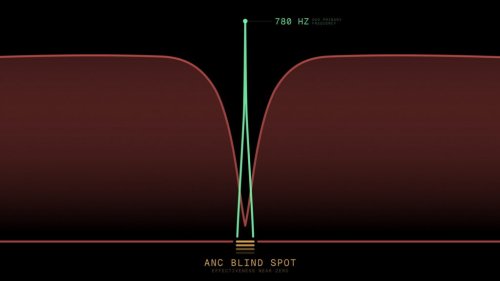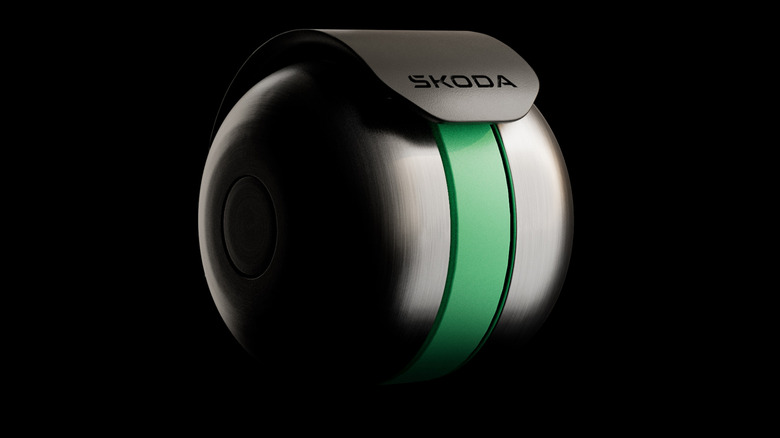



















Škoda Škoda is a Czech automaker that is now a part of the gigantic Volkswagen Group alongside Lamborghini, Porsche, and Audi, but like many car companies, Škoda actually got its start making bicycles. Last week, Škoda proved that it's still got a watchful eye on the bicycle market, as it unveiled the first ever bicycle bell that's capable of penetrating noise canceling headphones without simply being louder than a traditional bike bell. Called the DuoBell, it aims to reduce the recent 24% rise in cyclist-on-pedestrian collisions recorded in London in 2024, much of which is blamed on the increased popularity of pedestrians using noise cancelling headphones. In a press release, Škoda said, "In the streets of London, up to half of pedestrians wear [Active Noise Cancellation or ANC] headphones. Many of them are so effective that even the ringing of a conventional bicycle bell does not penetrate them." The DuoBell achieves this without relying on excessive volume or any electronics; it's fully mechanical, like a normal bike bell, but Škoda worked with scientists from the University of Salford to find a frequency that can penetrate ANC headphones. The innovative bell emits a sound between 750 and 780 Hz The scientists testing and developing the bell analyzed six leading active noise cancelling headphones and found that their frequency cancellation abilities cannot block out sounds between 750 and 780 Hz, a range they could then target to make it through the barrier provided by the headphones. Hugh Boys, Škoda's head of hardware development, said, "The problem with creating a frequency that low is the bell has to be huge, not ideal for a bike." In order to make the bell a reasonable size, they reduced the thickness of the metal and added precision cuts. They also added an additional resonator that produces rapid and irregular strikes. The result is a sound wave that noise cancelling algorithms can't act quickly enough to cancel — so the sound makes it through. Physically, the DuoBell is relatively small and uncomplicated, but in testing it, "demonstrated that pedestrians wearing active noise-cancelling headphones had up to 22 metres of additional reaction distance." That equates to around five extra seconds of time for a pedestrian wearing noise-cancelling headphones to react to the bell (and the fast-approaching bike, of course). For the bell's final test, Škoda gave DuoBells to delivery riders who work for London's popular food delivery service, Deliveroo, and the riders found it to be extremely effective. Oliver Stefani, Škoda's head of design, said, "This project is an expression of our design principles. It´s what we call at Škoda "Simply Clever," and we agree.