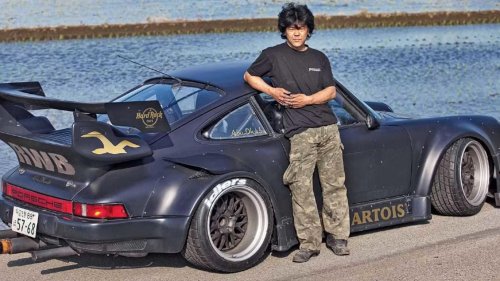
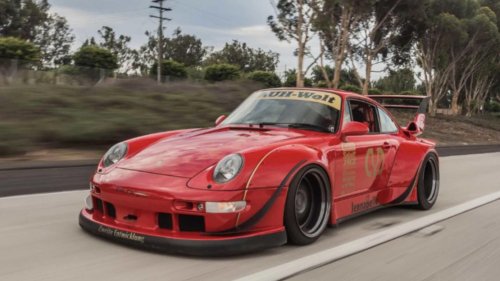
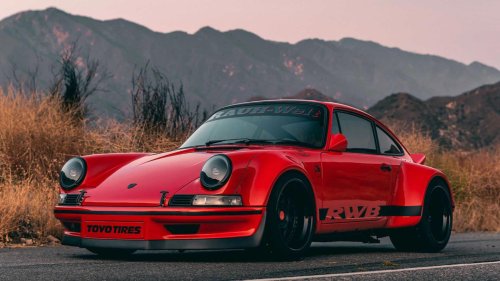
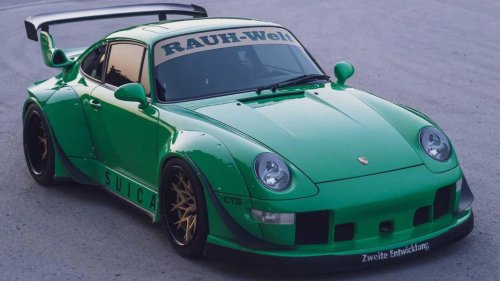
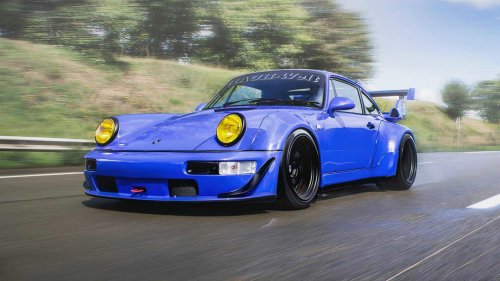
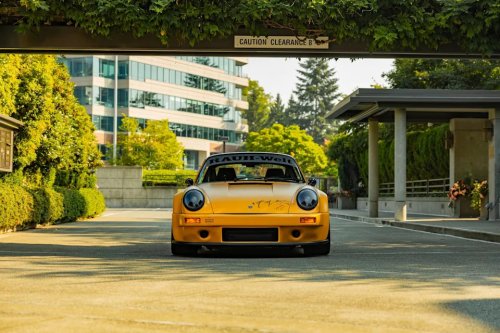
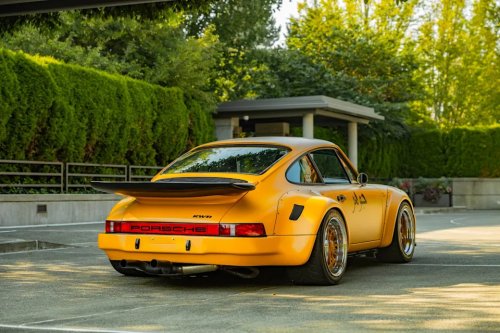
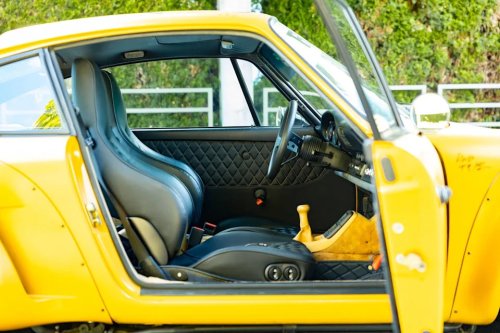
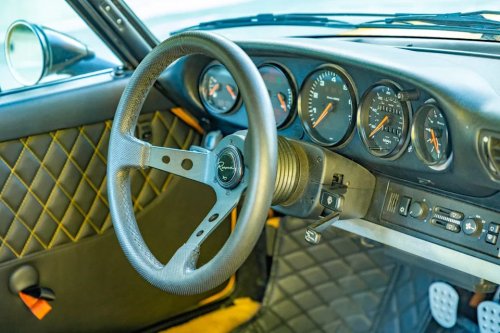
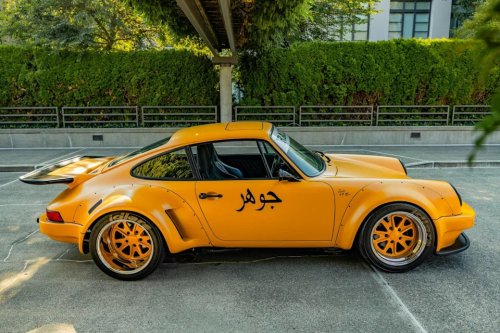
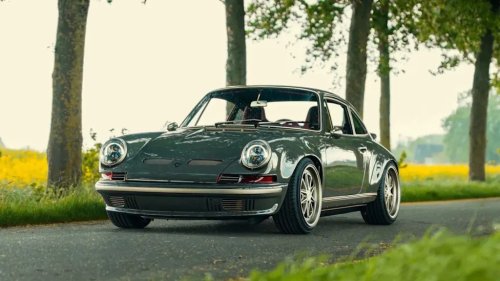
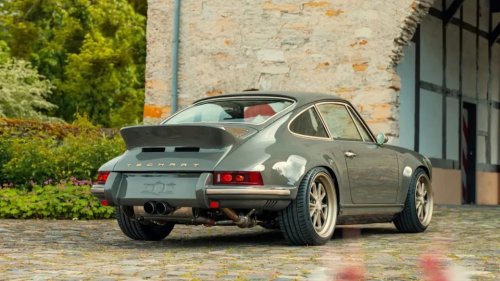
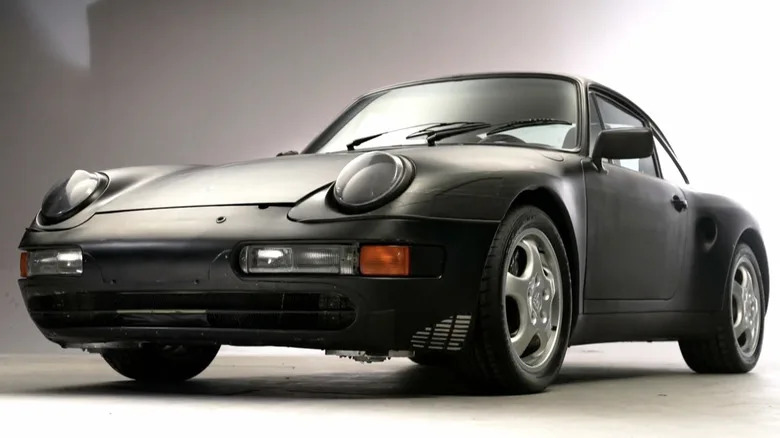
The RWB Porsche is one build style that has consistently split the automotive world. Often stylized as just "RWB," Rauh-Welt Begriff and its creator, Akira Nakai, operate a world-renowned tuning shop in Japan that fashions extreme wide-body modifications for the Porsche 911. These builds are typically handcrafted by Nakai himself, with a rough aesthetic, but here’s the most interesting part: if you want the RWB, you have to first purchase the body kit for $30,000, then Nakai flies to your location to perform the installation himself.Other modification companies like Singer Vehicle Design tend to obsess over building factory-perfect restorations, but Nakai-san is clearly the opposite. He uses an air saw to cut into the original body panels of your Porsche 911, then bolts on his exaggerated ultra-wide overfenders, leaving the rivets exposed, before he lowers the car into a stance that makes it look ready for both the street and the track. To Porsche purists, it’s nothing but outright sacrilege, but to fans, it’s art in motion. The Origins Of RWB Porsche 911 Builds Hotcars Nakai-san didn’t originally start the Porsche RWB as a global phenomenon, but in the late 1980s and early 1990s, it started as an underground car culture in Japan. Then, Nakai was part of the Rauh Welt, a Japanese drifting crew that modified Japanese performance cars. This was before he eventually turned his attention to the Porsche 911. In the late 1990s, when he was 28, Nakai-san purchased a 1985 Porsche 911 (930) and transformed it into the Stella Artois, a matte-black wide-body icon. This first major build became the blueprint for everything RWB would become.The Porsche 935 inspired Nakai’s Porsche RWB designs, helping him combine motorsport aggression with street presence by creating exaggerated wide-body designs. The looks of his builds were always unconventional, with deep-dish wheels, wide arches, and towering wings, but it always worked. By August 2011, Nakai’s builds had crossed the Japanese shores, with Thailand hosting the first RWB build outside what had originally begun in Chiba, Japan. Chin Kanitpong had commissioned Akira Nakai to modify a silver Porsche 911 (993) after discovering his work online and traveling to Japan to meet him earlier in the same year.A few months later, Akira Nakai traveled to the United States to build his first American RWB Porsche. This RWB was based on a 1990 Porsche 911 (964), a Mignonette Green version where he partnered with Mark Arcenal, the founder of Illest/Fatlace, and the automotive lifestyle brand, Hoonigan. It was dubbed the Pandora One, since during the build process, the Pandora Radio station kept playing in the workshop. It was converted to an all-wheel-drive vehicle, and its 3.6-liter engine was bumped up to produce 450 horsepower from the factory-fitted 247 horsepower. The Pandora Two followed, his second American RWB Porsche, this time based on a Porsche 911 (993), showcasing the wider, more flowing lines of the 993 generation. The Hoonigan style followed when Brian Scotto commissioned an RWB out of a white 1991 Porsche 911 (964) Turbo. This car eventually got featured in the Forza Horizon and Need for Speed video game series. In 2016, the owners of Profusion Customs, Raj Jagdev and his father, Jag, commissioned the Hibiki, the first official RWB build in the UK, based on a 1991 Porsche 911 (964). Performance: More Than Just Looks? Bring a trailerDespite the RWB mostly finishing as a very aggressive-looking Porsche 911, this modification isn’t mostly about tuning the engine. Nakai-san's modifications focus purely on the structural and aesthetic transformation of the vehicle. For powertrain upgrades, independent specialists are usually brought in, like for the Pandora One and the Hoonigan Style, meaning performance would vary depending on the car being modified. When Nakai modified his own Stella Artois, he enhanced the 3.3-liter air-cooled turbocharged flat-six engine's high-revving character, which increased its peak power output to 360 horsepower, a 60-horsepower bump over the original.Even at that, the RWB wide-body designs aren’t purely cosmetic. The wider track width improves the cornering stability of donor cars, while the larger wheels and tires increase grip. The modifications also introduce aerodynamic elements like splitters and wings, which enhance high-speed balance. In his Porsche RWB modifications, Nakai also uses KW V3 coilovers or high-end Aragosta to keep the vehicle planted whether on the street or the track. Since RWB mods typically don't alter the vehicle's engine, their factory performance tends to stay the same, except if the owner opts for a separate engine tuning from another provider. For instance, a standard 964 Carrera 2 or 993 can hit 0–60 mph in times of about 5.5 seconds. Best Porsche 911 Models for RWB Conversions Bring a trailer The RWB Porsche story started with the 930 in the late 1990s. Since then, the RWB lineup included only air-cooled Porsche 911s. After establishing his RAUH-Welt Begriff (which means Rough World Concept) shop in Kashiwa, Chiba Prefecture, Japan, in 1997, he expanded to the "Rough Evolution" project in Thailand with a silver 993. With the Pandora One, he included the 964 to his Porsche 911 lineup of RWB builds, before adding the 964 Turbo with the Hoonigan Style. The unique matte purple Rotana was the first time Nakai-san was involved in a turbocharged build. This 575-horsepower 1995 Porsche 993 featured a 3.6-liter 964 engine and a large Greddy turbocharger.After the video game Need for Speed used RWB and Nakai-san as its build icon, RWB went mainstream. What followed was another 964 build in the UK in 2016, and other 964 and 930 builds in Poland that same year when he opened the first official RWB branch in Poland. By early 2019, Nakai-san launched the first water-cooled RWB with a silver 997. In 2020, the RWB expanded to include the 996 with a Python Green Bi-Turbo unit completed personally by Nakai-san and dubbed “RWB Europe #11”. In June and July 2024, he built the first Canadian and UK 997s, respectively. By November of the same year, at the 2024 SEMA Show, he did a one-off live build of the 997 GT3. However, air-cooled models, especially the 930, 964, and 993 911 trims, have always remained the most sought-after mods due to their analog driving feel and collector appeal.In the end, RWB Porsche trims have included the 930, 964, 993, 996, and 997. RWB Porsche Cost: What It Really Takes to Build One Bring a trailer For people who commission an RWB Porsche, it isn’t like buying a modified car; it’s more along the lines of commissioning a piece of art. Unlike buying a special performance trim where you place your order and it gets shipped to your location, or buying a factory-perfect restoration where the kits are shipped to your location and you get to work on it, for the RWB, you have to start by securing a build slot, which often comes with a waiting period of up to three years. A deposit of around $31,000 locks your position, then Nakai personally travels to install the kit on your car.Now, what about the installation? It’s a famously intense process, where Nakai begins cutting into the original fenders of your Porsche within minutes. Hope you have a $40,000 hole burning in your pocket, because that’s the approximate cost of the rest of the project. Let’s dive into the breakdown. After he has modified your car, you'd need paint worth between $18,000 and $25,000. Then, you’d need deep-dish wheels that would set you back between $3,000 and $15,000, depending on your specific choice. Why not? Why stop there? You’d get the new suspensions for an air ride, and that would cost you anywhere from $4,000 to $8,000. You’d also need wider tires. And we haven’t even gotten to the optional performance and aesthetic upgrades you could also add. This is not a process that you can reverse because the factory metal is permanently altered. So… Market Value And Investment Potential Wikimedia Commons: RWB But here’s where that approximately $40k begins to look like a solid investment. RWB Porsches tend to occupy a unique space in the collector market. Some samples of Nakai-san's RWB Porsches for sale have commanded a premium ranging from approximately $90,000 for a lower-end listing to over $130,000, depending on spec and rarity. In 2025, an RWB 1993 Porsche 911 Carrera 2 Coupe sold for $168,000. This model got an FVD Brombacher stainless-steel exhaust system and a TPC Racing Eaton supercharger installed to supercharge its flat-six engine.In the same year, another RWB 1992 Porsche 911 Turbo sold for $286,000. With an original base MSRP of approximately $100,000 to $110,000 and an RWB modification cost of approximately $40,000, that represents a return of approximately $130,000. On the lower end, an RWB 2009 Porsche 911 Carrera S Coupe sold for $66,666 (strange choice of numbers) in Canada. The Porsche air-cooled models with tuned engines tend to command a higher premium, but build quality and components matter to most collectors. Nakai’s direct involvement in the modification is a major driver, but the rarity of the builds and their striking visual identity also play a major role. Unlike traditional restorations from companies like Singer Vehicle Design, an RWB won’t appeal to everyone, but for those it does, that exclusivity adds significant value. Owners of an RWB have access to events like Japan’s Idlers endurance race, where they can compete and celebrate the culture.Source: RWB, Bring A Trailer, MotorTrendFAQQ: What does RWB mean in Porsche?RWB stands for Rauh-Welt Begriff, the name of Nakai’s tuning company, and is a German phrase meaning “Rough World Concept”.Q: How much does an RWB Porsche cost?The kit alone starts at $30,000, with other build costs reaching $40,000+, excluding the donor car. Completed cars can cost more than $100,000.Q: Who builds RWB Porsches?Every RWB Porsche, no matter where it is in the world, is built by Akira Nakai himself. He travels worldwide to install each kit himself.Q: Are RWB Porsches street legal?Generally, RWB Porsches are street legal, but the legality of each one depends on your local regulations regarding vehicle width, ride height, and modifications.Q: How many RWB Porsches exist?Estimates range from 500 to over 1,300 globally, but there’s no way to know the official count due to the bespoke nature of each build.










 +69 others
![Porsche, It's finally here: Porsche puts wireless EV charging into production [video]](https://cdn.topcarnews.net/thumb/id/aHR0cHM6Ly9pMC53cC5jb20vZWxlY3Ry-ZWsuY28vd3AtY29udGVudC91cGxvYWRz-L3NpdGVzLzMvMjAyNi8wOS93aXJlbGVz-c19tYWluLmpwZWc_dz0xNTAwJmFtcDtx-dWFsaXR5PTgyJmFtcDtzdHJpcD1hbGwm-YW1wO3NzbD0x/1a04f9f19968e2d3eb15f335c21c92a5.jpeg?t=20260926&post_id=63825)
![Porsche, It's finally here: Porsche puts wireless EV charging into production [video]](https://cdn.topcarnews.net/thumb/id/aHR0cHM6Ly9lbGVjdHJlay5jby93cC1j-b250ZW50L3VwbG9hZHMvc2l0ZXMvMy8y-MDI1LzAzL0RFUy0xMDM4X0VsZWN0cmVr-LUJhbm5lcnNfRVZzXzA3OTdjMi5wbmc/e850e929e3168f8c7ff73cd888e54add.png?t=20260926&post_id=63825)