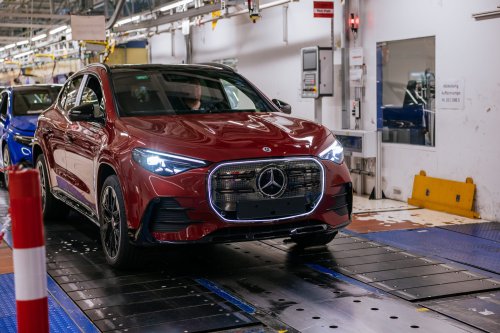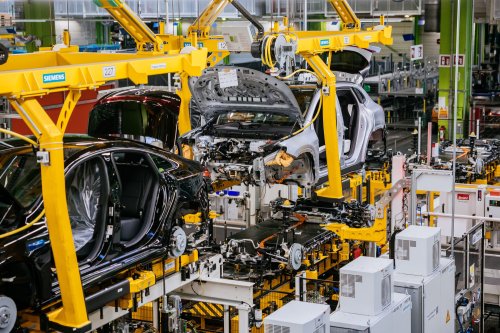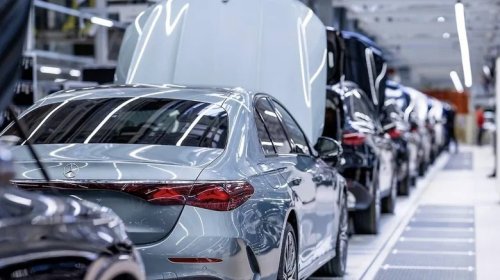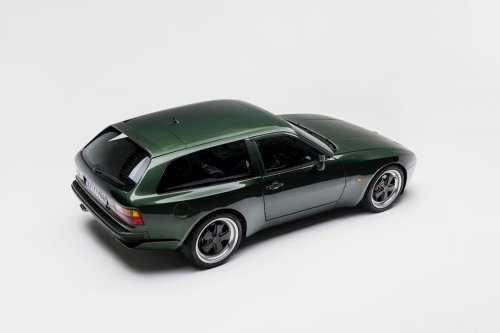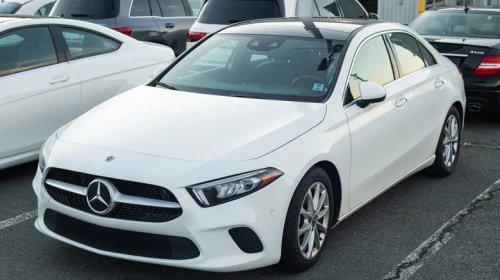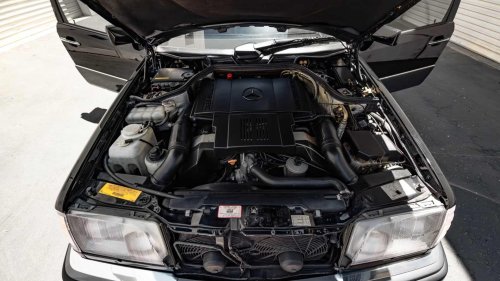
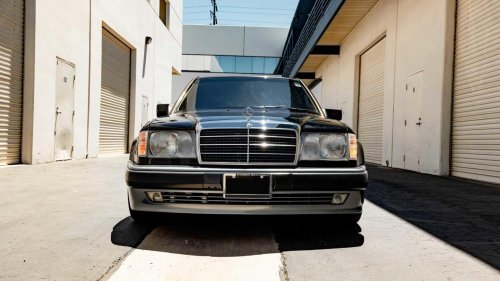
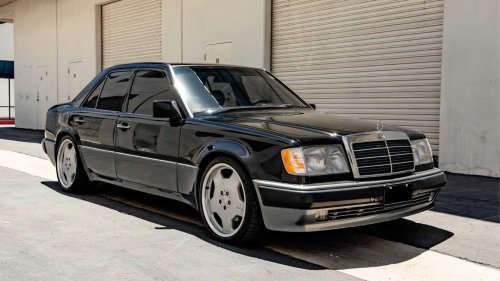
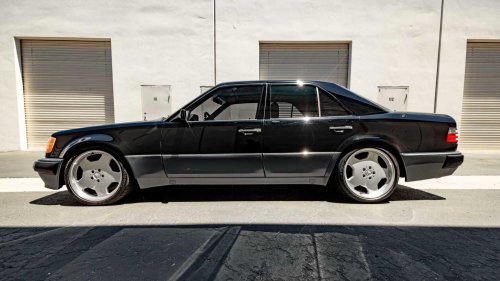
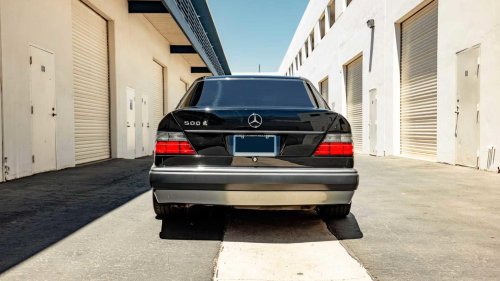
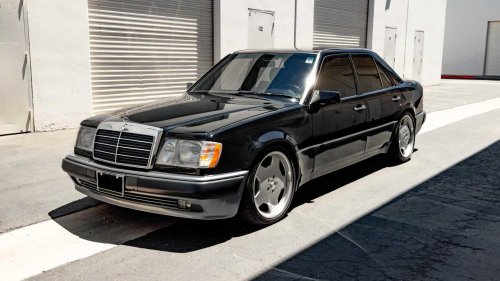
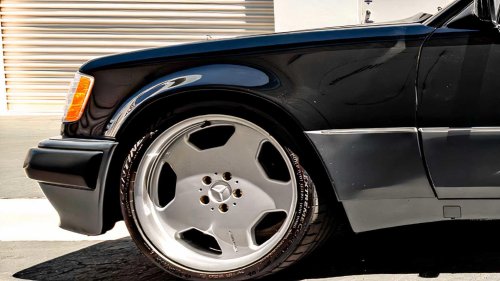



















There is a car in the Porsche Museum in Zuffenhausen that wears a three-pointed star. It is not a collaboration vehicle or a concept. It is a production car, one of 10,479 built between 1991 and 1995, that was developed by Porsche engineers, assembled by Porsche workers in a Porsche facility, and filed under a Porsche internal project code before being shipped to a dealership in Stuttgart wearing the badge of a different manufacturer entirely. The people who drove past it on the street saw a well-appointed executive sedan. The people who built it knew they had made something considerably more interesting than that. Why Mercedes Needed Porsche's Help Mecum The circumstances that produced this car were specific and, in retrospect, perfectly timed for both manufacturers. In 1988, the engineering department at Mercedes-Benz was fully occupied with the development of the incoming W140 S-Class. There was no capacity for a parallel project. The car being discussed required significant engineering work: the 5.0-liter M119 V8 from the R129 500 SL roadster needed to be fitted into the W124 E-Class body, which required modification of the frame rails, relocation of the front suspension geometry, and widening of the front track. The resulting body shell was 56 millimeters wider and 23 millimeters lower than a standard W124.That widened body then created a second problem. When the modified shell was brought to the W124 assembly line in Sindelfingen, it would not fit through three stations on the production line. Retooling those stations for a low-volume variant made no economic sense. The solution was to move the entire assembly process to a different facility. Porsche, at that exact moment, was navigating a financial crisis following the costly development of the 959 and a period of underutilized factory capacity at its Zuffenhausen plant. The Porsche Newsroom's 2021 retrospective confirms that the assembly order was critical for maintaining capacity utilization at Zuffenhausen and Weissach. Both manufacturers needed what the other could offer, and the 500E was the result. What Porsche Actually Did To The W124 Mecum The engineering brief that Daimler-Benz AG issued to Porsche AG in 1988 was formally titled "design and experimental series development of the base type W124." It covered the chassis redesign required to accommodate the V8, the suspension modifications, and the drivetrain integration. Porsche engineers modified the frame rails, repositioned the front suspension, relocated the battery to the trunk to improve weight distribution with the heavier engine forward, and installed the rear axle's self-leveling hydraulic suspension from the 300 TE wagon. The suspension was then recalibrated with shorter springs, stiffer Bilstein shock absorbers, and thicker anti-roll bars front and rear.Each car made the journey between Sindelfingen and Zuffenhausen four times during its build. Body shells were assembled and modified at Porsche's Reutter-Bau plant, returned to Mercedes for painting, sent back to Porsche for engine installation and final assembly, then returned to Mercedes for final inspection before delivery. The entire process took 18 days per car, six times longer than a standard W124. Initial production ran at ten cars per day before rising to twenty as the process was refined. Porsche knew the car internally as Type 2758. The final 120 special customer cars built between January and May 1995 were assembled in the Rössle building at Zuffenhausen alongside Audi RS2 sport wagons, using the same workforce that had built the 500E and E 500 throughout the production run. A Hand-Built Executive Sedan That Outgunned the BMW M5 MecumThe 500E was presented at the Paris Motor Show in October 1990 and went on sale in spring 1991. Performance was certainly on the agenda; 0-100 km/h came in at 6.1 seconds, and it went on to an electronically limited top speed of 250 km/h. The M119 5.0-liter V8, shared with the R129 500 SL, produced 326 hp and 354 lb-ft of torque, delivered through a four-speed automatic. The car was 56 mm wider and 23 mm lower than a standard W124. It was conceived as a rival to the BMW E34 M5, and on paper the M5 was faster. In practice, the 500E delivered its torque more accessibly from lower revs, and the ABS, Porsche-tuned suspension, and near-perfect weight balance made it a more complete daily performance proposition than the comparison suggests. A total of 10,479 examples were built by April 1995, of which 1,528 were imported to the United States. Why Most People Never Recognized Stuttgart's Best-Kept Secret Mecum The visual differences between a 500E and a standard W124 are present but understated. The front apron features a lower lip with integrated fog lights not found on lesser models. The front fenders are visibly wider, accommodating the broader front track. The ride height sits 23 mm lower than a standard W124, which is noticeable at the wheel arch gap. The standard 500E rode on 16-inch alloy wheels unique to the model, a step up from the 15-inch units on regular W124 variants. The 500E badge appears on the trunk lid. The 1994 facelift into the E 500 brought body-colored bumpers, a revised grille, and updated headlights that make the later cars easier to identify at a glance. The 1991-1993 cars are the more subtle and, for many, the more desirable for exactly that reason. Two Stuttgart Legends, One Production Line Mecum The Reutter-Bau building where the 500E was assembled is a few meters from the Porsche Museum. The workforce that assembled the final 120 special customer cars in the Rössle building in 1995 moved directly onto the Audi RS2 contract when the 500E production ended, the same people assembling two of Stuttgart's most significant performance cars in the same facility within weeks of each other. A 1995 E500 Limited from that final batch is currently on display in the Porsche Museum. The car wears Mercedes-Benz bodywork and a three-pointed star on the trunk lid. The museum that chose to display it belongs to the company that built it. What A 500E Is Worth Today MecumThe 500E and E 500 have been appreciating for several years in both US and European markets. Current auction data shows well-preserved examples consistently achieving $30,000 to $35,000, with the price aggregators placing the 500E between $41,000 and $42,500 for a typical good condition example. Exceptional low-mileage documented cars command significantly more: a 26,000-mile 1992 example attracted a highest bid of $63,500 in December 2023 before failing to sell, indicating buyer appetite at that level exists even if it has not yet been fully validated at auction.The most important purchase criterion beyond condition is documentation: a car with confirmed build records, demonstrable Porsche-assembled provenance, and a complete service history occupies a meaningfully different tier from one without. Known maintenance concerns with age include valve stem seals and wiring loom deterioration on higher-mileage examples, both manageable with specialist attention but worth budgeting for at purchase. Two German Legends, One Car Mecum Both manufacturers are headquartered in Stuttgart. Both were, at the moment this car was conceived, facing circumstances that the other could help resolve. The result was a car that neither could have produced independently at that point in their histories: a hand-assembled executive sedan whose body would not fit through a production line, carrying an engine from a roadster, with suspension developed and calibrated by the engineers who build sports cars. It competed with the BMW M5 and was conceived as its equal. It was built at Porsche and sold at a Mercedes dealership. Its production plaque carries a Porsche internal code. A 1995 example sits in the Porsche Museum. Every fact about this car is more interesting than the car looks. That is, entirely by design, the whole story.Sources: Porsche Newsroom, Classic.com, Mecum.