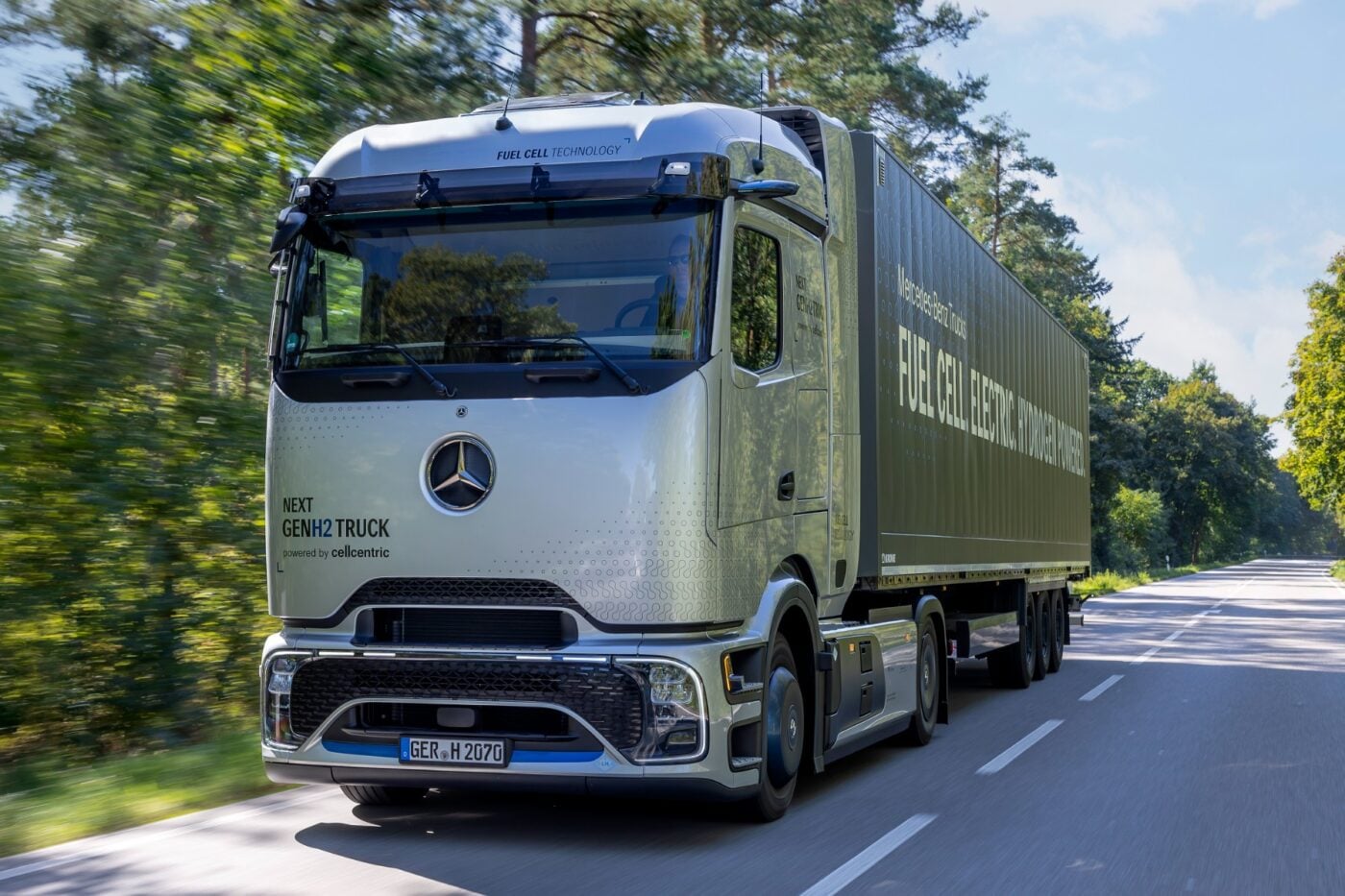
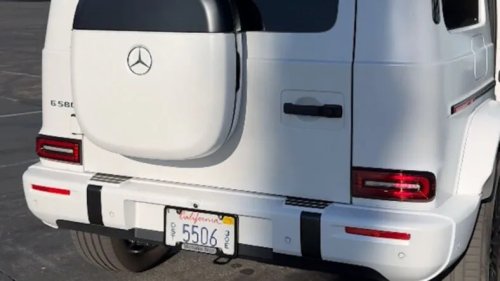
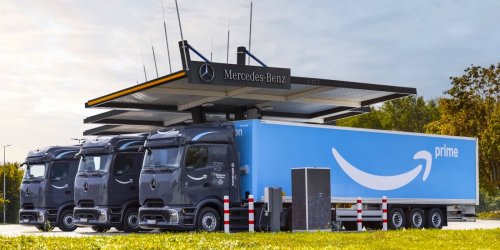
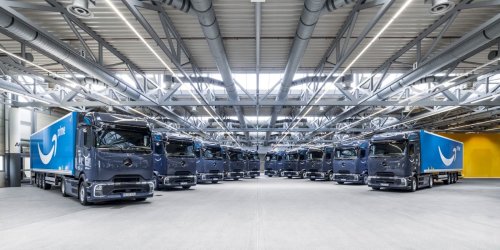
Image: Daimler Truck AGThe three hydrogen-powered trucks will be stationed at Dachser’s logistics centre in Karlsruhe and integrated into its existing system transport networks, including those extending into other European countries. The branch is located just 30 kilometres from the Mercedes-Benz plant in Wörth, where the fuel-cell truck is not only manufactured but where Dachser can also access a dedicated liquid hydrogen refuelling infrastructure.One of the standout features of the NextGenH2 Truck is its use of liquid hydrogen instead of the more widely available gaseous hydrogen. This liquid hydrogen, also known as subcooled liquid hydrogen (sLH2), was developed jointly by Daimler Truck and Linde. It is stored at -253 degrees Celsius and offers a significantly higher energy density than gaseous hydrogen. “This allows more hydrogen to be carried, which significantly increases the range and enables performance comparable to that of a conventional diesel truck,” the manufacturer recently stated. However, sLH2 is currently only available at a few specialised refuelling stations in Germany, including Wörth and the Duisburg area (North Rhine-Westphalia).“In logistics, if we want to sustainably reduce greenhouse gases and air pollutants from long-distance transport and, in the long term, replace diesel trucks completely, what we need is powerful and efficient zero-emission vehicles,” said Stefan Hohm, Chief Development Officer (CDO) at Dachser. “Development work on battery-electric trucks has come on in leaps and bounds in recent years. These vehicles are reliable, they operate very well, and some volume-produced vehicles now even have a range of over 500 kilometers. But getting ahold of sufficient grid connection capacity for them remains a major challenge.” Dachser’s network currently operates more than 190 electric trucks daily, including several Mercedes eActros 600 models.“Fuel-cell trucks with liquid hydrogen could supplement DACHSER’s e-truck fleet in the future—especially when very long ranges or short refueling times are called for,” Stefan Hohm continues. “Once hydrogen technology is mature and economical, it could meet logistical requirements that are currently difficult to handle with battery-electric trucks. That’s why we’re also involved in research and development in the field of hydrogen mobility.”According to Daimler Truck, the NextGenH2 Truck can achieve ranges of around 1,000 km, whereas the battery-electric eActros 600 offers approximately 500 km. However, the refuelling infrastructure for hydrogen trucks is currently a much bigger challenge than for battery-electric trucks. Additionally, drivers must adhere to mandatory break times, which electric truck drivers typically use for charging.In January, Daimler Truck announced plans to build an initial small series of 100 NextGenH2 Truck units – and the three vehicles in question will be part of this series. Mass production may be feasible from the 2030s onwards. However, the project is far from a foregone conclusion for Daimler Truck: the development, production, and practical deployment of the NextGenH2 Trucks are being supported by the Federal Ministry of Transport and the federal states of Rhineland-Palatinate and Baden-Württemberg with €226 million in funding.dachser.com